
Nearly 55 million people in West and Central Africa will struggle to feed themselves in the June-August 2024 lean season, according to the March 2024 Cadre Harmonisé food security analysis released by the Permanent Inter-State Committee for Drought Control in the Sahel (CILSS).
This figure represents a four-million increase in the number of people who are food-insecure compared to the November 2023 forecast and highlights a fourfold increase over the last five years. The situation is particularly worrying in conflict-affected northern Mali, where an estimated 2,600 people are likely to experience catastrophic hunger (IPC/CH phase 5). The latest data also reveals a significant shift in the factors driving food insecurity in the region, beyond recurring conflicts.
Economic challenges such as currency devaluations, soaring inflation, stagnating production, and trade barriers have worsened the food crisis, affecting ordinary people across the region with Nigeria, Ghana, Sierra Leone, and Mali being among the worst affected.
Prices of major staple grains continue to rise across the region from 10% to more than 100% compared to the five-year average, driven by currency inflation, fuel and transport costs, ECOWAS sanctions, and restrictions on agropastoral product flows. Currency inflation is a major driver of price volatility in Ghana (23%), Nigeria (30%), Sierra Leone (54%), Liberia (10%), and The Gambia (16%).
West and Central Africa remain heavily dependent on imports to meet the population’s food needs. Still, import bills continue to rise due to currency depreciation and high inflation, even as countries struggle with major fiscal constraints and macroeconomic challenges.
Cereal production for the 2023-2024 agricultural season shows a deficit of 12 million tons, while the per capita availability of cereals is down by two percent compared to the last agricultural season.
“The time to act is now. We need all partners to step up, engage, adopt and implement innovative programs to prevent the situation from getting out of control, while ensuring no one is left behind,” said Margot Vandervelden, WFP’s Acting Regional Director for Western Africa. “We need to invest more in resilience-building and longer-term solutions for the future of West Africa,” she added.
Malnutrition in West and Central Africa is alarmingly high, with 16.7 million children under five acutely malnourished and more than 2 out of 3 households unable to afford healthy diets. In addition, 8 out of 10 children aged 6-23 months do not consume the minimum number of foods required for optimal growth and development.
High food prices, limited healthcare access, and inadequate diets primarily drive acute malnutrition in children under 5, adolescents, and pregnant women. In parts of northern Nigeria, the prevalence of acute malnutrition in women aged 15-49 years is as high as 31%.
“For children in the region to reach their full potential, we need to ensure that each girl and boy receives good nutrition and care, lives in a healthy and safe environment, and is given the right learning opportunities,” said UNICEF Regional Director Gilles Fagninou. “Good nutrition in early life and childhood is the promise for a productive and educated workforce for tomorrow’s society. To make a lasting difference in children’s lives, we need to consider the situation of the child as a whole and strengthen education, health, water and sanitation, food, and social protection systems.”
Related Articles: Strengthening Urban Food Systems in Times of Crisis | Can We Fix Our ‘Broken’ Food Systems? | Reimagining Generational Gaps to Transform Africa’s Agri-food Systems
In response to increasingly growing needs, FAO, UNICEF, and WFP call on national governments, international organizations, civil society, and the private sector to implement sustainable solutions that bolster food security, enhance agricultural productivity, and mitigate the adverse effects of economic volatility. Governments and the private sector need to collaborate to ensure that the fundamental human right to food is upheld for all.
In Senegal, Mali, Mauritania, Nigeria, and Niger, millions of people now benefit from national social protection programs supported by UNICEF and WFP. Both agencies are expanding their support to the Chad and Burkina Faso governments. Similarly, FAO, IFAD, and WFP have joined forces across the Sahel to increase productivity, availability, and access to nutritious food through resilience-building programs.
“To respond to the unprecedented food and nutrition insecurity, it is important to mobilize for the promotion and support of policies that can encourage the diversification of plant, animal, and aquatic production and the processing of local foods (through the provision of agricultural inputs, access to productive resources for all to stimulate increased production and improve product availability)” said FAO Sub-Regional Coordinator for West Africa and the Sahel, Dr. Robert Guei.
“This is crucial not only to ensure healthy, affordable diets all year round, but also and above all to protect biodiversity, with the potential to mitigate the effects of climate change, and above all to counter high food prices and protect the livelihood of the affected population.”
** **
This article was originally published by the Food and Agriculture Organization of the United Nations (FAO) and is republished here as part of our editorial collaboration with the FAO.
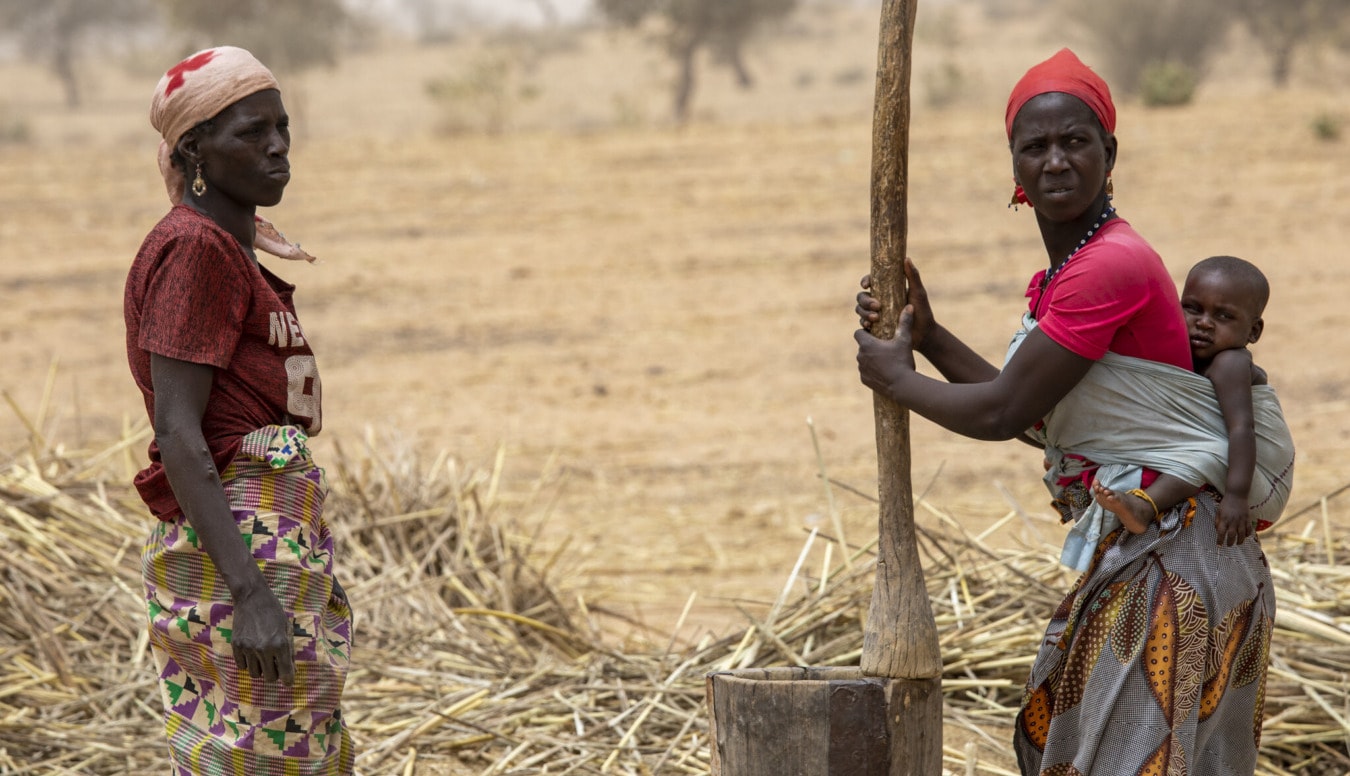
Editor’s Note: The opinions expressed here by the authors are their own, not those of Impakter.com — In the Featured Photo: Beneficiary taking a break from crushing the millet ears to extract the seeds in Niger. Featured Photo Credit: ©FAO.