Impakter
  • Environment
    • Biodiversity
    • Climate Change
    • Circular Economy
    • Energy
  • FINANCE
    • ESG News
    • Sustainable Finance
    • Business
  • TECH
    • Start-up
    • AI & Machine Learning
    • Green Tech
  • Industry News
    • Entertainment
    • Food and Agriculture
    • Health
    • Politics & Foreign Affairs
    • Philanthropy
    • Science
    • Sport
  • Editorial Series
    • SDGs Series
    • Shape Your Future
    • Sustainable Cities
      • Copenhagen
      • San Francisco
      • Seattle
      • Sydney
  • About us
    • Company
    • Team
    • Partners
    • Write for Impakter
    • Contact Us
    • Privacy Policy
No Result
View All Result
  • Environment
    • Biodiversity
    • Climate Change
    • Circular Economy
    • Energy
  • FINANCE
    • ESG News
    • Sustainable Finance
    • Business
  • TECH
    • Start-up
    • AI & Machine Learning
    • Green Tech
  • Industry News
    • Entertainment
    • Food and Agriculture
    • Health
    • Politics & Foreign Affairs
    • Philanthropy
    • Science
    • Sport
  • Editorial Series
    • SDGs Series
    • Shape Your Future
    • Sustainable Cities
      • Copenhagen
      • San Francisco
      • Seattle
      • Sydney
  • About us
    • Company
    • Team
    • Partners
    • Write for Impakter
    • Contact Us
    • Privacy Policy
No Result
View All Result
Impakter
No Result
View All Result

What Benefitting 110,000 Farmers Looks Like

byCGIAR
June 1, 2021
in Climate Change, Equal Rights, Food and Agriculture, SDG Series, Society

The Rwanda Climate Services for Agriculture project demonstrates significant productivity, income, food security and women’s empowerment benefits for 110,000 participating farmers.

On this World Telecommunications and Information Society Day, we reflected on the ways the CGIAR Research Program on Climate Change, Agriculture and Food Security (CCAFS) has been investing in digital transformation. One program that has been especially successful in bridging telecommunications and food security is the Rwanda Climate Services for Agriculture (RCSA) initiative.

From 2016 through 2019, RCSA engaged rural farming communities, agricultural extension staff, development NGOs and other intermediaries in Rwanda through a series of activities focused on climate risk management, including training and targeted research. The goals of the project were to improve the supply, communication and use of climate-related information in a balanced manner using products co-developed by both providers and users.

In addition to disseminating climate information via radio and mobile phones, the RCSA project employed the Participatory Integrated Climate Services for Agriculture (PICSA) process to train and facilitate 111,835 farmers across all 30 of Rwanda’s districts to understand and incorporate climate information into their management decisions.


Related Articles: Social Farming for Sustainable Development | Bringing Climate Action to Farming Communities

Evaluation shows that the 111,835 farmers, across all 30 districts, who participated in RCSA communication and capacity development interventions were more likely to act on weather and climate information; experienced an average 24% increase in the value of crop production and a 30% increase in income from crops; and perceived improvements in food security, investment in farming, coping capacity, and confidence as farmers. Project interventions increased women’s participation in household decision making and standing in their communities.

A subset of these farmers participated in Radio Listeners Clubs (RLC) that met weekly to discuss climate service radio programs, agree on management responses, take turns participating in call-in programs, and inform future program content.

VIDEO TESTIMONIALS

Learn more about RCSA from farmers and agricultural extension agents who participated in the project:

EVALUATING PROGRESS

A quantitative and qualitative evaluation, completed in 2020, shows that the participatory PICSA and RLC processes were effective in strengthening farmers’ capacity to act on climate information. Participation in PICSA and RLCs is associated with a substantial increase in the proportion of farmers that report changing crop, livestock and livelihood management practices. The main change in livelihood was the increased scale of enterprises. Participating farmers use climate services to make decisions on the types of crops to grow (75%), the types of crop varieties to plant (58%), the timing of planting and land preparation (75%) and when and how to prepare land (65%).

The evaluation also demonstrated livelihood and social benefits associated with climate service interventions. PICSA participation increased the value of crop production by an average of 24%, and income from crops by 30%, relative to non-participating communities. The combination of PICSA and RLCs was associated with a 47% average increase in the value of crop production and a 56% increase in income from crops. Participants in both PICSA and RLCs had a Household Dietary Diversity Score of 4.8, compared to a score of 4.1 for non-participating communities.

Participation in project interventions largely eliminated a gender gap in the use of weather and climate information for management that is apparent in the control sample. Women who had participated in PICSA and RLCs reported increased ability to cope and increased confidence in planning compared to women who had not participated in the interventions.

Results also show benefits related to women’s empowerment, in the form of increased participation in household decision making, and increased social standing in their communities.

— —

This work was informed by the CCAFS Gender and Social Inclusion Learning Platform, with particular thanks to the support of Sophia Huyer and Tatiana Gumucio. 

About the Authors: James Hansen is a Senior Research Scientist at the International Research Institute for Climate and Society (IRI) at Columbia University. Jacquelyn Turner is the Visual Storyteller Specialist at IRI.

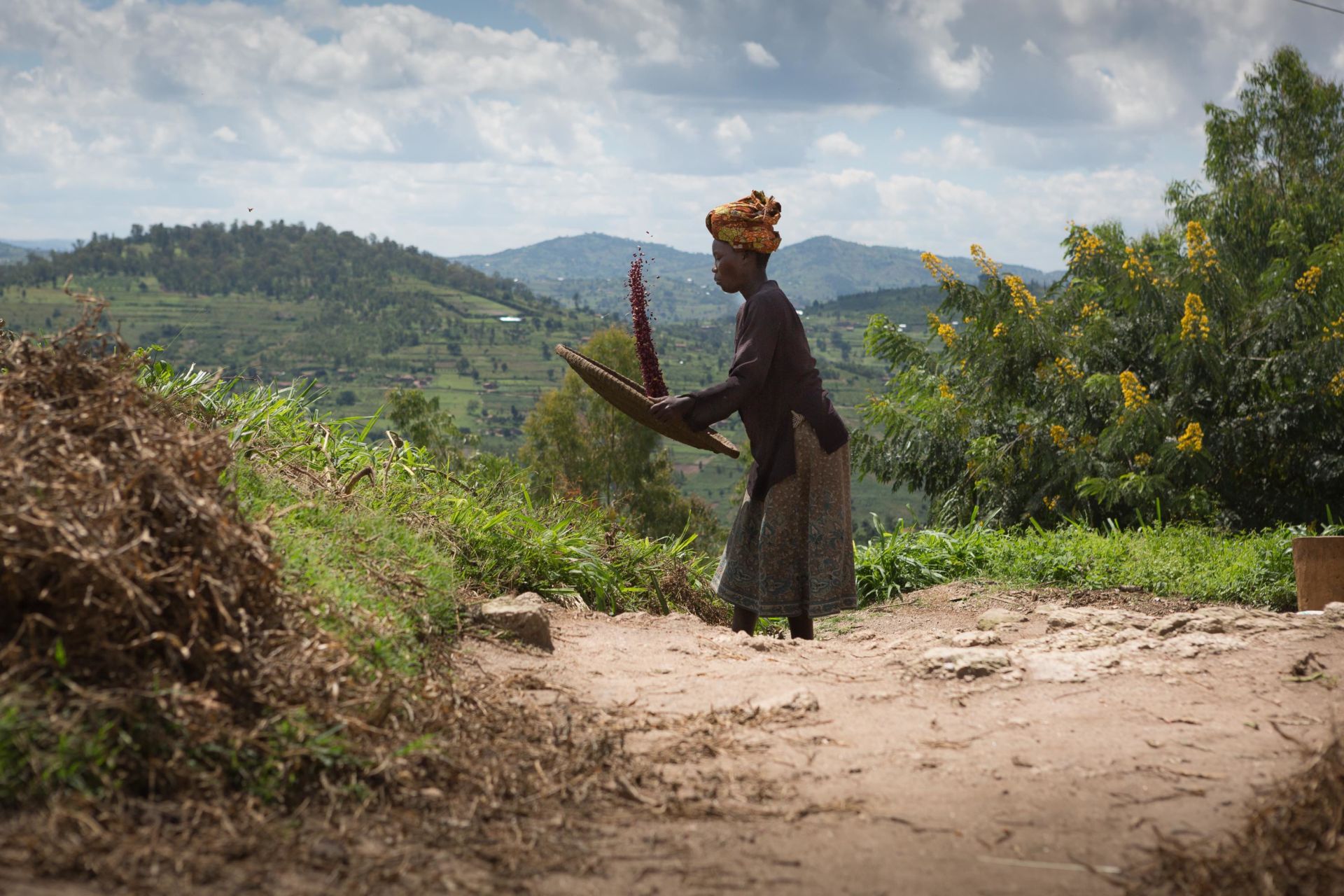
Editor’s Note: The opinions expressed here by Impakter.com columnists are their own, not those of Impakter.com. — In the Featured Photo: Christine Niragire from Nyanza district sorting her beans after harvest. Featured Photo Credit: © F. Fiondella (IRI Columbia University).


 

Tags: AgricultureCGIARfarmersFood securityRwanda Climate Services for Agriculturewomen
Previous Post

The Climate Emergency: Can Europe Be a Model for the World? 

Next Post

Are Cryptocurrencies A Sustainable Payment Solution?

Related Posts

A woman working on a Content Management Platform.
Business

The Role of Content Management Platforms in Online Marketing: Features, Value, and Use Cases

March 6, 2026
A man managing e‑commerce operations
Business

The 2026 Playbook: FBA Prep Services, AI Forecasting, and Greener 3PL Operations

March 5, 2026
A man sitting on his yoga mat, managing stress through meditation.
Health

Managing Stress Without Medication: Practical Tips

March 5, 2026
Next Post
Are Cryptocurrencies A Sustainable Payment Solution?

Are Cryptocurrencies A Sustainable Payment Solution?

Recent News

Personalised learning: a girl learning through dedicated video call

Empowering Educators with Attention Insights for Personalized Learning

March 6, 2026
A view of Scandinavia and its eco-friendly travel accommodation on the coastline near Hamnøy, Lofoten islands, Norway

How Scandinavia is Leading the Way in Eco-Friendly Travel

March 6, 2026

Impakter informs you through the ESG news site and empowers your business CSRD compliance and ESG compliance with its Klimado SaaS ESG assessment tool marketplace that can be found on: www.klimado.com

Registered Office Address

Klimado GmbH
Niddastrasse 63,

60329, Frankfurt am Main, Germany


IMPAKTER is a Klimado GmbH website

Impakter is a publication that is identified by the following International Standard Serial Number (ISSN) is the following 2515-9569 (Printed) and 2515-9577 (online – Website).


Office Hours - Monday to Friday

9.30am - 5.00pm CEST


Email

stories [at] impakter.com

By Audience

  • TECH
    • Start-up
    • AI & MACHINE LEARNING
    • Green Tech
  • ENVIRONMENT
    • Biodiversity
    • Energy
    • Circular Economy
    • Climate Change
  • INDUSTRY NEWS
    • Entertainment
    • Food and Agriculture
    • Health
    • Politics & Foreign Affairs
    • Philanthropy
    • Science
    • Sport
    • Editorial Series

ESG/Finance Daily

  • ESG News
  • Sustainable Finance
  • Business

About Us

  • Team
  • Partners
  • Write for Impakter
  • Contact Us
  • Privacy Policy

© 2026 IMPAKTER. All rights reserved.

No Result
View All Result
  • Environment
    • Biodiversity
    • Climate Change
    • Circular Economy
    • Energy
  • FINANCE
    • ESG News
    • Sustainable Finance
    • Business
  • TECH
    • Start-up
    • AI & Machine Learning
    • Green Tech
  • Industry News
    • Entertainment
    • Food and Agriculture
    • Health
    • Politics & Foreign Affairs
    • Philanthropy
    • Science
    • Sport
  • Editorial Series
    • SDGs Series
    • Shape Your Future
    • Sustainable Cities
      • Copenhagen
      • San Francisco
      • Seattle
      • Sydney
  • About us
    • Company
    • Team
    • Partners
    • Write for Impakter
    • Contact Us
    • Privacy Policy

© 2026 IMPAKTER. All rights reserved.