The people of Gaza are experiencing catastrophic levels of conflict-induced food insecurity and a high risk of famine, and that risk is increasing by the day, Deputy Director-General of the Food and Agriculture Organization of the United Nations (FAO) Maurizio Martina said yesterday at the United Nations Security Council High-Level Open Debate on the Protection of Civilians in Armed Conflict.
In this context, Martina called for the cessation of hostilities and restoration of humanitarian space throughout the Gaza Strip to deliver multisectoral humanitarian assistance and restore basic services to eliminate a risk of famine.
This includes immediately restoring cross-border water pipelines, resuming electricity distribution, and restoring health facilities, water infrastructure, facilities for waste management, food processing and production, financial facilities, telecommunications, among others.
The FAO Deputy Director-General highlighted the need for reopening border crossings, including for commercial traffic. Essential commodities must be allowed to move into and throughout Gaza without interruption or limitation, he underscored.
“All parties must respect their obligations under international humanitarian and human rights law and protect civilians and objects indispensable for their survival. An immediate ceasefire and peace are a prerequisite for food security, and the Right to Food is a basic human right,” Martina said.
People on the brink of famine
According to the latest Integrated Food Security Phase Classification (IPC) analysis, the entire population of about 2.2 million people in the Gaza Strip is estimated to be in Crisis or worse (IPC Phase 3 and above), the highest percentage of people experiencing such acute food insecurity that the IPC has ever classified for any given area or country.
About 50% of the population is projected to be in Emergency (IPC Phase 4) and at least one in four households (more than half a million people) is conservatively assessed to now be in Catastrophic or famine-like conditions (IPC Phase 5).
Related Articles: The War Zone in Gaza Will Leave a Legacy of Hidden Health Risks | Gaza War: From Extreme Violence To Human Kindness | Gaza War: An Innovative Idea to Untie the Gordian Knot | A New Arrangement for Gaza’s Future
Severe damage to agrifood systems
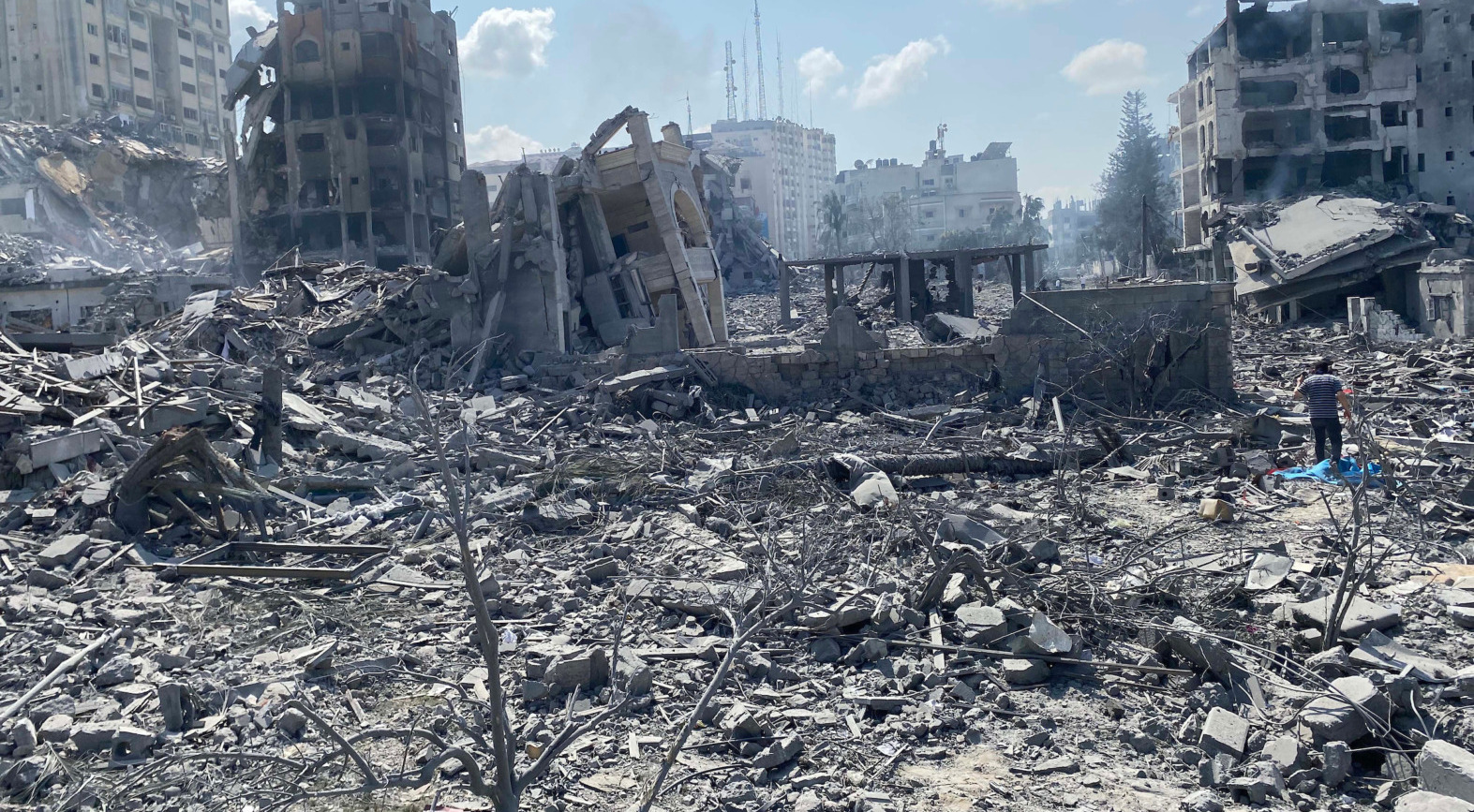
The FAO Deputy Director-General gave insights into the devastating impact of the conflict on agrifood systems in the Gaza Strip:
- Severe restrictions on fuel shipments are crippling the functioning of water infrastructure and desalination plants, the production and delivery of key food commodities, and the provision of electricity.
- Electricity blackouts are severely disrupting agricultural activities, food processing and distribution, and water infrastructure. The sole power plant in Gaza shut down after running out of fuel on 11 October, while electricity supplies from the Israeli authorities have been cut off since 12 October. The only electricity available in the Gaza Strip comes from solar panels and generators, for which there is little available fuel.
- Shortages of safe water – needed for food processing – persist. As of late December, the water supply was at only 7% of pre-October levels, with sources restricted to water trucking, one functional desalination plant, and one of the three main water supply lines. Around 97% of the ground water in Gaza is reportedly unfit for human consumption.
- The commercial sector has been decimated due to the near complete lack of imports of essential items, including food, because of the restrictions. The lack of imports means that food stocks have been rapidly depleted.
- Bakeries’ capacity to produce bread – a staple part of diets in Gaza – has been seriously hampered by direct damage, combined with lack of electricity, fuel, water and wheat.
- Before the current conflict, Gaza’s food production allowed self-sufficiency in most fruits and vegetables; the conflict has severely disrupted this.
- Satellite data analysis from December 2023 shows a significant decline in the health and density of crops across Gaza when compared to the preceding six seasons, linked directly to the conflict.
- As of 15 February 2024, over 46% of all cropland in the Gaza Strip was assessed to be damaged. Likewise, agricultural infrastructure has been devastated, with the highest levels of destruction to animal shelters, sheep farms, dairy farms, home barns and broiler farms.
- The harvest of olives and citrus fruits, which typically occurs around October–November and provides an important source of income, has been heavily impacted by the hostilities across all of the Gaza Strip.
- Lack of access to fodder and damage from airstrikes have taken a toll on livestock owners, with many breeders reporting substantial losses among their animals. By the end of January 2024, all broiler poultry are assumed to have been slaughtered or died due to lack of water and fodder. The mortality rate of calves is assumed to be between 50–65% and approximately 70% of beef cattle and 50% of small ruminants are estimated to be dead.
- Gaza’s sea fishing sector, an important source of nutrition and income in Gaza, indirectly providing livelihoods for over 100 000 people, has come to a standstill, due to destruction and damage to port infrastructure and fishing equipment, and complete restrictions on access to the sea.
The meeting was called at the request of Guyana and Switzerland after the United Nations Office for the Coordination of Humanitarian Affairs (OCHA) circulated a white note, dated 22 February, on food insecurity in the Gaza Strip. The note was sent to the Security Council in accordance with resolution 2417 of 24 May 2018, which requests the Secretary-General to report swiftly when “the risk of conflict-induced famine and wide-spread food insecurity” occurs.
** **
This article was originally published by the Food and Agriculture Organization of the United Nations (FAO) and is republished here as part of our editorial collaboration with the FAO.
Editor’s Note: The opinions expressed here by the authors are their own, not those of Impakter.com — In the Featured Photo: Palestinians inspect the damage following an Israeli airstrike on the El-Remal area in Gaza City, October 9, 2023. Featured Photo Credit: Wikimedia Commons.