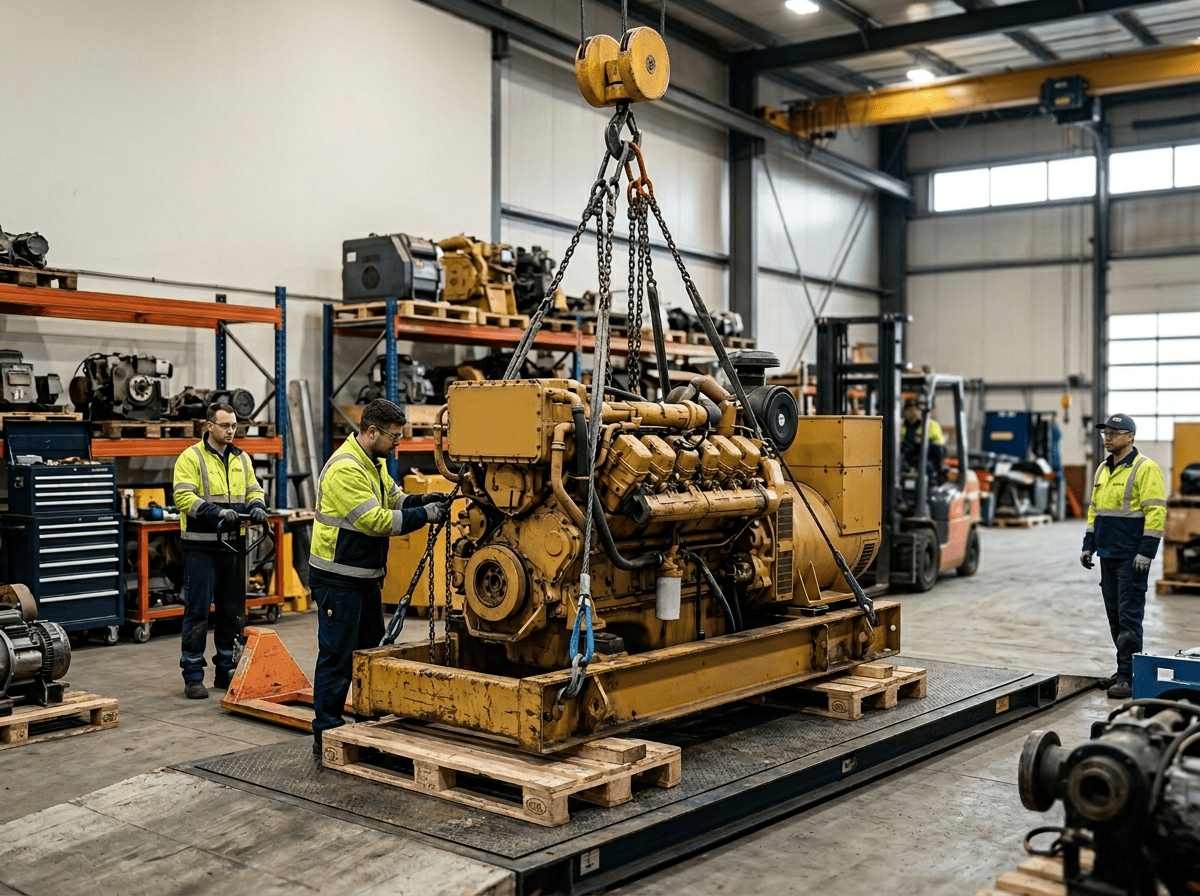
Industrial operations lose millions every year from wasted assets.
Slow-moving and obsolete inventory takes up warehouse space and locks away cash that could be working for your business.
The solution is a sustainable investment recovery model.
With the right structure, you can reduce waste, recover value, and improve cash flow without adding complexity to your supply chain. This approach is a core pillar of the circular economy, which seeks to design out waste and keep materials in use longer.
In this blog, I’ll walk you through Amplio’s model: a tiered system designed to help enterprises reduce idle inventory, recover maximum value, and unlock the capital needlessly tied up in your assets.
The Proposed Sustainable Investment Recovery Model For Industries That Reduce Waste and Unlock Capital
A sustainable investment recovery model must be structured and repeatable. It gives you a practical way to manage excess inventory before moving assets into external recovery channels.
The model begins with what you can control internally and expands outward step by step. Below is the tiered sustainable recovery model you can use to reduce waste, recover value, and make investment recovery more profitable.
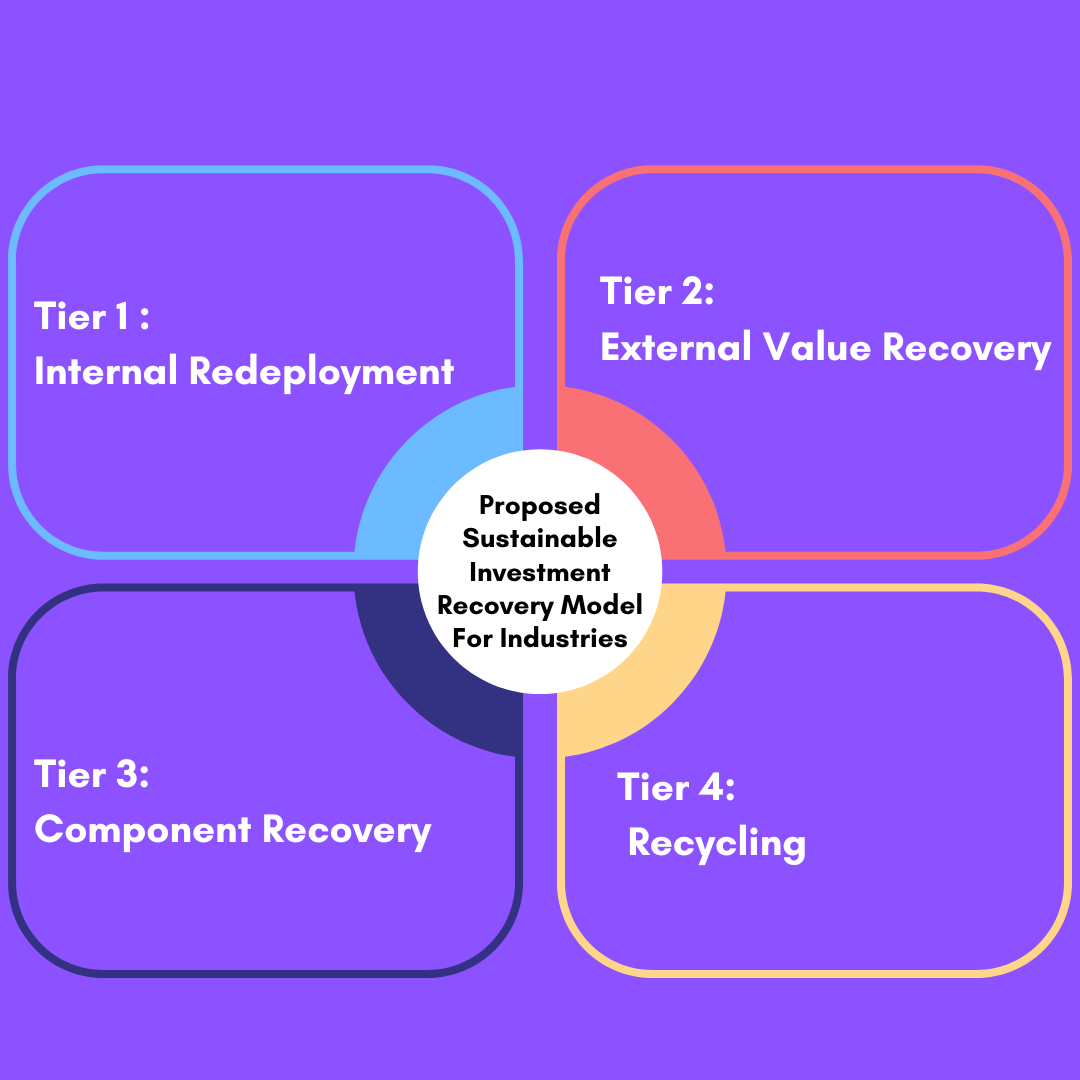
Tier 1 — Internal Redeployment
The first tier directs you to look inwards. Most manufacturers hold more surplus industrial equipment and MRO than they realize. With procurement teams working separately and no centralized inventory management, visibility is limited.
Many sites buy what they need without knowing that another facility already holds the same part in storage. As a result, valuable stock sits idle while new purchases keep draining capital.
A structured investment recovery model focuses on this and fixes this through redeployment.
By building network-wide visibility, you can track idle stock, compare it with open work orders, match items across sites, and easily redeploy assets across your facilities where needed.
When managed correctly, redeployment avoids unnecessary purchases, cuts carrying costs, and keeps equipment and components in active use.
Tier 2 — External Value Recovery
If assets cannot be redeployed internally, the next step is to move them into trusted secondary markets.
Idle inventory still holds value, but only if it is placed in front of the right buyers. Treating this tier as structured market engagement, not a one-off sale, is what separates effective and sustainable recovery programs from ad-hoc disposal.
A clear channel plan is essential.
Depending on the asset class, this may include B2B auctions for fast turnover, specialized liquidation marketplaces with targeted buyers, or vetted asset value recovery partners who act as your extension team. Each channel needs to be tested, benchmarked, and documented for compliance.
Pricing discipline is equally important.
Reserve floors prevent underselling, recent comparables from the secondary market help you set realistic expectations, and timed markdowns help clear inventory before it loses all value. Without guardrails, companies risk converting assets at a fraction of their worth or holding them too long.
Note: On the other hand, holding on to assets in order to try to maximize their cash recovery is also a common mistake that supply chains make. When selling assets on the secondary market, recovery rates are often 10% or less of the original purchase price. Consider that carrying costs typically average 21% of the asset’s price; holding on to a part for just half a year to try to sell it for more money will eat up more costs than the total sale price.
Tier 3 — Component Recovery
When assets cannot be sold as complete units, the next option in the proposed model is to extract usable parts and convert them into value.
This process, known as component recovery, ensures that even non-marketable equipment contributes returns instead of becoming stranded inventory.
The approach begins with dismantling idle units and harvesting components that still meet operational standards.
Each part should undergo bench testing, certification, and labeling to confirm quality and traceability before resale. This step is critical for building buyer trust and avoiding compliance issues in regulated industries.
To increase throughput, lotting strategies can be applied.
Bundling high-demand components with slower movers helps balance inventory, reduce holding times, and maximize total recovery per batch. This structured method turns units that would otherwise head straight to scrap into a reliable source of secondary revenue.
Note: As an expert best practice, companies should maintain a separate registry for harvested components. Tracking yield per unit and recovery per lot provides the visibility needed to measure effectiveness and refine harvesting decisions over time.
Tier 4 — Recycling
Recycling is the final outlet when all other recovery paths have been exhausted.
Even at this stage, the focus remains on sustainability and responsible value recovery. Assets that cannot be redeployed, liquidated, or harvested should never become unmanaged waste.
The process begins with certified recycling partners who provide full chain-of-custody documentation. This ensures accountability from pickup to processing and protects against compliance risks. Hazardous materials must be handled under strict safety protocols, and all exports require screening to meet international regulations.
Beyond compliance, recycling contributes to ESG reporting.
Documented landfill diversion and audit-ready records demonstrate that every item was processed in a way that supports both corporate responsibility and regulatory requirements.
As an industry best practice, recycling should be treated as a last resort, but never as an afterthought.
Quick Start Checklist
Implementing a sustainable investment recovery model does not need to be overwhelming. You can capture results quickly by setting up the foundation and proving value within one to three months.
Here’s a practical checklist to get started:
- Define policy and RACI (Responsible, Accountable, Consulted, Informed): Assign clear ownership across the supply chain, finance, and EHS (Environmental, Health, and Safety). Make it explicit who decides when assets move from one tier to the next.
- Stand up the registry and grading: Create a centralized database with condition codes, age, and cost basis. This ensures every item entering the model is visible and measurable.
- Load the first 200 high-value SKUs: Start small but impactful. Focus on assets with the highest cost or slowest movement to demonstrate early recovery wins.
- Set decision rules and reserves: Establish objective thresholds for redeployment, liquidation, parts harvesting, and recycling. Include reserve pricing to protect value in secondary markets.
- Draft a reporting mechanism on avoided capex and recovery dollars: Create a quarterly reporting framework that captures avoided capex from redeployment and recovery dollars from liquidation. Use standardized templates to record savings, validate figures against procurement data, and consolidate results into a single dashboard. This mechanism ensures transparent tracking and builds momentum with every reporting cycle.
Common Pitfalls and Fixes
Even with a structured recovery model, companies run into the same issues.
Here are some pitfalls you need to avoid. The good news is that each has a clear and practical fix.
- Poor Inventory classification
Without proper grading and inventory sorting, inventory decisions are slow and inconsistent.
Fix: Apply clear grading rules and status codes so every item can be routed quickly to the right tier.
- No single owner
When responsibility is spread too thin, assets get stuck in limbo.
Fix: Appoint an Investment Recovery leader with clear P&L targets and authority to move stock.
- One-channel liquidation
Relying on a single outlet limits recovery rates and slows the process.
Fix: Build a multi-channel strategy with auctions, marketplaces, and vetted partners. Use reserve pricing and markdown plans to balance value and speed.
- No disposition team
Many companies delegate disposition tasks to procurement or operations teams that are not equipped for this role. This leads to delays, poor recovery rates, and compliance gaps.
Fix: Establish a dedicated disposition function or partner with experienced industrial liquidators who can act as your disposition team. They bring market knowledge, connect you with qualified buyers, and guide you through the recovery process.
- Missing compliance proof
Without certificates and audit logs, recycling and resale create risks.
Fix: Retain all compliance documents in the asset record, including chain-of-custody and disposal certificates.
Conclusion:
A structured, tiered investment recovery model turns idle assets into cash while reducing waste.
Begin inside with network-wide visibility and redeployment; then move outward to disciplined external sales. When whole-unit sales stall, harvest components—and use certified recycling as the final, compliant outlet.
Anchor it with clear ownership (RACI), graded registries, reserve pricing, and audit-ready reporting to unlock capital in 1–3 months.
Author Name: Luke Crihfield
Bio: Director of Demand Gen at Amplio, helping manufacturers turn surplus into opportunity through AI-driven growth.
Editor’s Note: The opinions expressed here by the authors are their own, not those of impakter.com — In the cover: An example of Sustainable Investment Recovery ModelCover Photo Credit: Sari Williams/DeSmog.