Elections are often described as the cornerstone of democracy, carefully planned, highly coordinated, and deeply symbolic expressions of public will. But as a new report suggests, another force is beginning to interfere with this process in ways that are both unpredictable and increasingly difficult to manage: climate change-driven natural hazards.
The report, conducted by the International Institute for Democracy and Electoral Assistance (International IDEA), argues that extreme weather events such as floods, wildfires, earthquakes, and heatwaves are becoming systemic risks to electoral integrity. It is the first global analysis examining how natural hazards are disrupting elections.
As climate change intensifies, the report warns, these hazards are increasing in both frequency and severity, raising urgent questions about how democracies can safeguard elections in an era of environmental instability.
When Nature Disrupts the Vote
Polling stations can be destroyed or rendered inaccessible by floods. Wildfires and storms can displace entire communities, leaving voters unable to reach registration centers or cast ballots. Heatwaves, increasingly common in many parts of the world, pose health risks to both voters and election officials, reducing turnout and straining already fragile systems. In some cases, entire elections have had to be postponed.
According to the International IDEA report, which analyzed over 100 cases of disaster-disrupted elections between 2006 and 2025, at least 94 election events across 52 countries were disrupted by natural hazards during that period. In the 2024 “super-cycle” year alone, at least 23 elections primary, local, national, and supranational) were affected across 18 countries, including Austria, Czechia, Bosnia and Herzegovina, Romania, and Iceland in Europe; the United States, Canada, Brazil, and Mexico in the Americas; India, Indonesia, Iran, and the Maldives in Asia; Kenya, Mozambique, Nigeria, and Senegal in Africa; and Tuvalu in Oceania.
These incidents, once considered rare, are becoming more common and more consequential.
A Growing Structural Threat
The International IDEA report emphasizes that climate-related disruptions are no longer one-off crises. They are part of a broader structural challenge facing electoral systems worldwide.
Climate change is altering seasonal patterns, increasing the unpredictability of weather events and extending hazard “seasons.” This makes it harder for electoral bodies to plan effectively, particularly in countries with limited resources or weak infrastructure.
The implications are especially serious in regions already vulnerable to political instability or conflict. In such contexts, even minor disruptions can erode public trust in electoral outcomes or provide grounds for contestation. In other words, climate risk is becoming democratic risk.
Why It Matters Beyond Election Day
At the most basic level, elections determine political leadership and policy direction. When electoral processes are compromised, the legitimacy of those outcomes may be questioned, weakening governance structures.
There are also longer-term implications. Repeated disruptions can lead to voter apathy, reduced participation and declining confidence in democratic institutions. In extreme cases, they may even trigger political crises or exacerbate existing tensions.
The report highlights that marginalized communities, including rural populations, low-income groups, and displaced persons, are often the most affected. These groups already face barriers to political participation, and climate hazards only deepen those inequalities.
Related Articles
Here is a list of articles selected by our Editorial Board that have gained significant interest from the public:
From Emergency Response to Risk Management
Much like with other climate-related challenges, the report argues that reactive approaches are no longer sufficient. Instead, electoral systems must shift toward proactive risk management.
This includes integrating climate risk assessments into election planning, strengthening infrastructure to withstand extreme weather and developing contingency plans for disruptions. In some cases, it may also involve rethinking election timing or expanding alternative voting methods, such as early voting or mobile polling stations.
Data and coordination are critical. Electoral management bodies, meteorological agencies and disaster response institutions must work more closely together to anticipate and mitigate risks.
The report also calls for increased funding and international support, particularly for developing countries where capacity constraints are most severe.
What Happens Next?
The growing intersection between climate change and democracy presents a challenge that is both immediate and long-term.
Protecting elections in this context will require more than technical fixes. It demands a recognition that environmental stability is increasingly tied to political stability and that safeguarding one depends on addressing the other. As climate hazards continue to intensify, the question is no longer whether elections will be affected, but how prepared democracies are to respond.
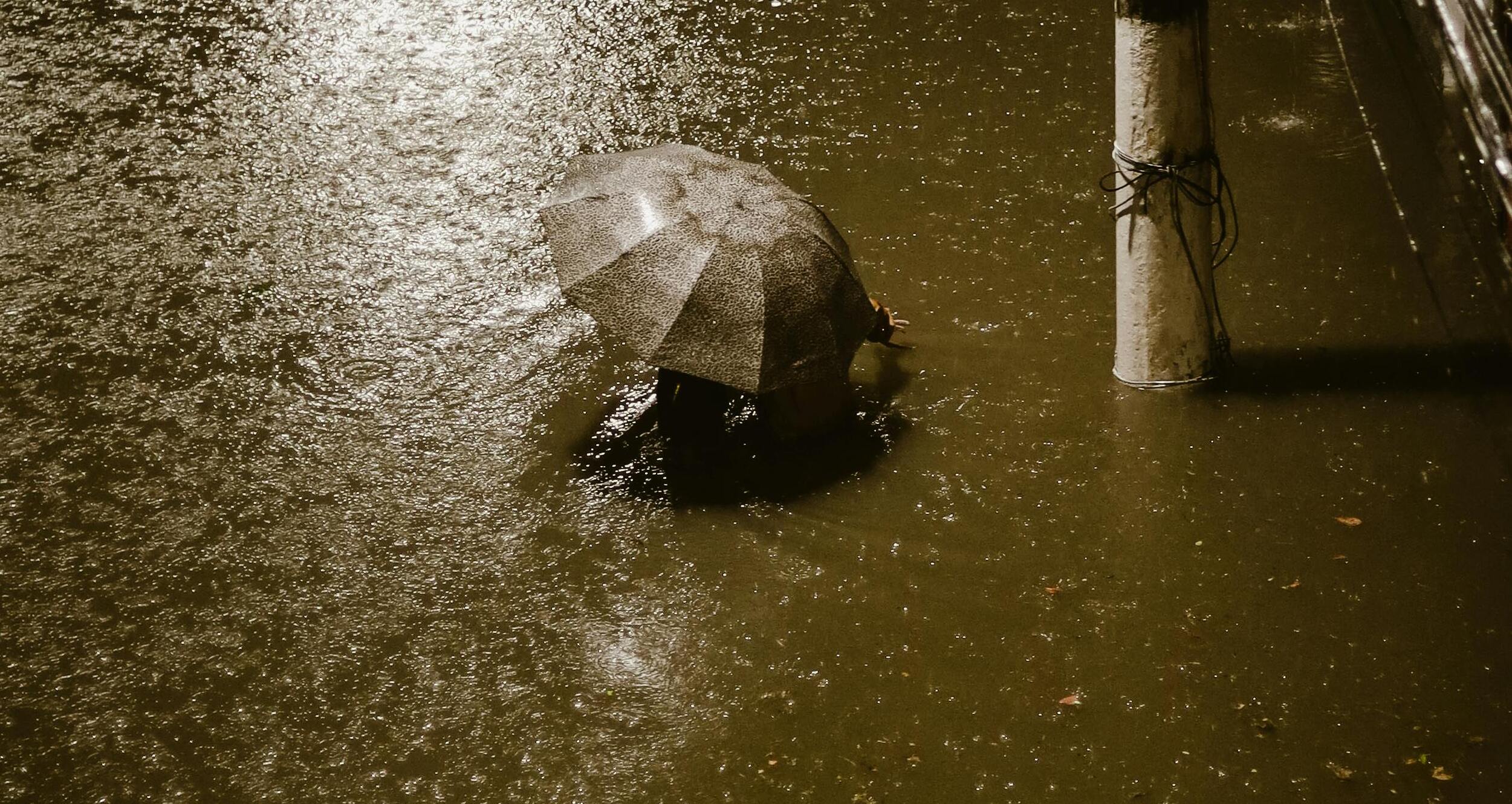
Editor’s Note: The opinions expressed here by the authors are their own, not those of impakter.com — In the Cover Photo: A person with an umbrella navigates a flooded street in Rio de Janeiro during heavy rain at night. Cover Photo Credit: Rafael Titoneli