Impakter
  • Environment
    • Biodiversity
    • Climate Change
    • Circular Economy
    • Energy
  • FINANCE
    • ESG News
    • Sustainable Finance
    • Business
  • TECH
    • Start-up
    • AI & Machine Learning
    • Green Tech
  • Industry News
    • Entertainment
    • Food and Agriculture
    • Health
    • Politics & Foreign Affairs
    • Philanthropy
    • Science
    • Sport
  • Editorial Series
    • SDGs Series
    • Shape Your Future
    • Sustainable Cities
      • Copenhagen
      • San Francisco
      • Seattle
      • Sydney
  • About us
    • Our Story
    • Team
    • Partners
    • Write for Impakter
    • Contact Us
    • Privacy Policy
No Result
View All Result
  • Environment
    • Biodiversity
    • Climate Change
    • Circular Economy
    • Energy
  • FINANCE
    • ESG News
    • Sustainable Finance
    • Business
  • TECH
    • Start-up
    • AI & Machine Learning
    • Green Tech
  • Industry News
    • Entertainment
    • Food and Agriculture
    • Health
    • Politics & Foreign Affairs
    • Philanthropy
    • Science
    • Sport
  • Editorial Series
    • SDGs Series
    • Shape Your Future
    • Sustainable Cities
      • Copenhagen
      • San Francisco
      • Seattle
      • Sydney
  • About us
    • Our Story
    • Team
    • Partners
    • Write for Impakter
    • Contact Us
    • Privacy Policy
No Result
View All Result
Impakter
No Result
View All Result
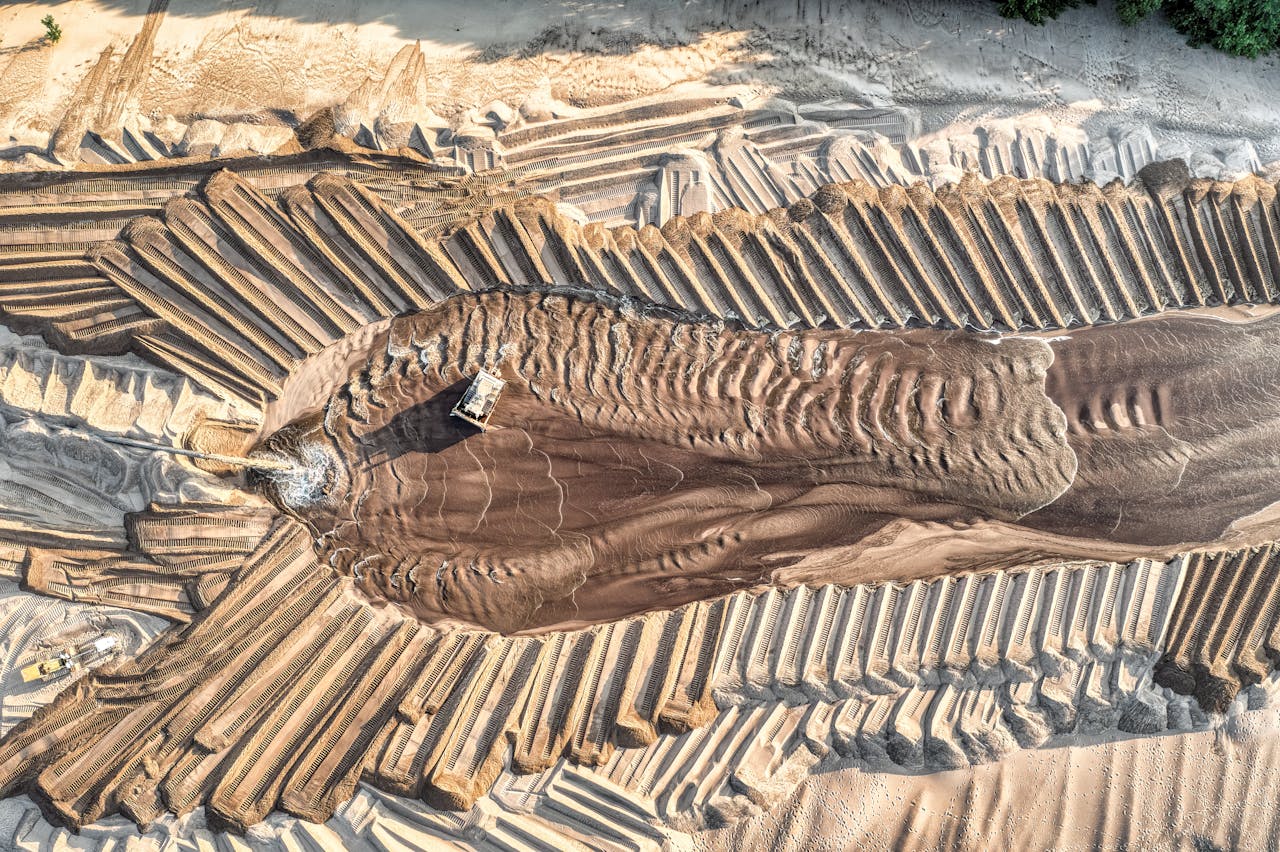
Aerial view of sand mining operations with machinery and patterned landscape in Reads Landing, MN.

As nations continue to develop, the demand for sand increases.

Inside the Global Sand Gap

The growing demand for sand is depleting one of the planet’s most vital natural resources and threatening ecosystems, new UNEP report

bySarah Perras
May 15, 2026
in Biodiversity, Environment

In the early morning hours of May 18, 2025, residents of Vietnam’s An Giang Province fled their homes as they crashed into the Ong Chuong River below. While no one was injured in the collapse, 10 families were displaced, losing their homes and many cherished belongings. 

Disasters like this in the Mekong Delta are a result of natural erosion combined with illegal sand mining. In 2017, Vietnam banned sand mining exports from the Mekong Delta, yet mining in the region continues. 

Sand, a vital resource, is the most extracted solid material on Earth, and demand for it continues to increase as populations, economies, and cities grow. A recent report from the UN Environment Programme highlights the critical importance of this resource and how demand is outpacing sustainable supply.

The Importance of Sand

Looking at a picture of the rolling, orange dunes in the Sahara Desert, one might think that sand is an infinite resource, spanning as far as the eye can see. Yet the reality is the opposite.

Due to constant wind erosion smoothing grains of desert sand, this widely available sand is not viable for concrete production. Therefore, sand must be taken from sensitive ecosystems full of life, including coastlands, riverbeds, and floodplains.   

Pascal Peduzzi, Director of the UNEP Global Resource Information Database Geneva, said: 

“Sand is sometimes referred to as the unrecognized hero of development, but its essential role in sustaining the natural services on which we depend is even more overlooked. Sand is our first line of defence against sea level rise, storm surges, and salination of coastal aquifers – all hazards exacerbated by climate change.”

Sand provides essential habitats for countless species, ranging from tiny microorganisms to the critically endangered gharial crocodiles in India and Nepal. It is a key part of Earth’s biodiversity, providing nesting sites for sea turtles and burrows for crabs.

Baby turtle in the sand
Photo Credit: David Sng

Sand also plays an important role in regulating ecological processes, providing drainage and filtration in soil and balancing water flow and riverbed stability. 

Despite sand’s vital importance, human activities are utilizing sand at an alarming rate, putting these vulnerable habitats and ecological processes at risk. 

The Sand Gap

Human use of sand is outpacing its replenishment, creating the sand gap.

Sand is created through geological processes that occur slowly and gradually. As rocks travel down rivers or streams and are eroded by weather conditions, they break down bit by bit, sometimes taking thousands of years to reach a sand-like consistency.  

On May 12, the UNEP published its third Sand and Sustainability report. The report highlights how 50 billion tonnes of sand are extracted for human use each year. This is expected to increase by 45% by 2060.

After water, sand is the most exploited natural resource. Unsustainable extraction of sand is destroying natural ecosystems and the livelihoods of people in affected areas. UNEP says that around half of dredging companies are operating within Marine Protected Areas (MPAs), which account for 15% of the total volume dredged.
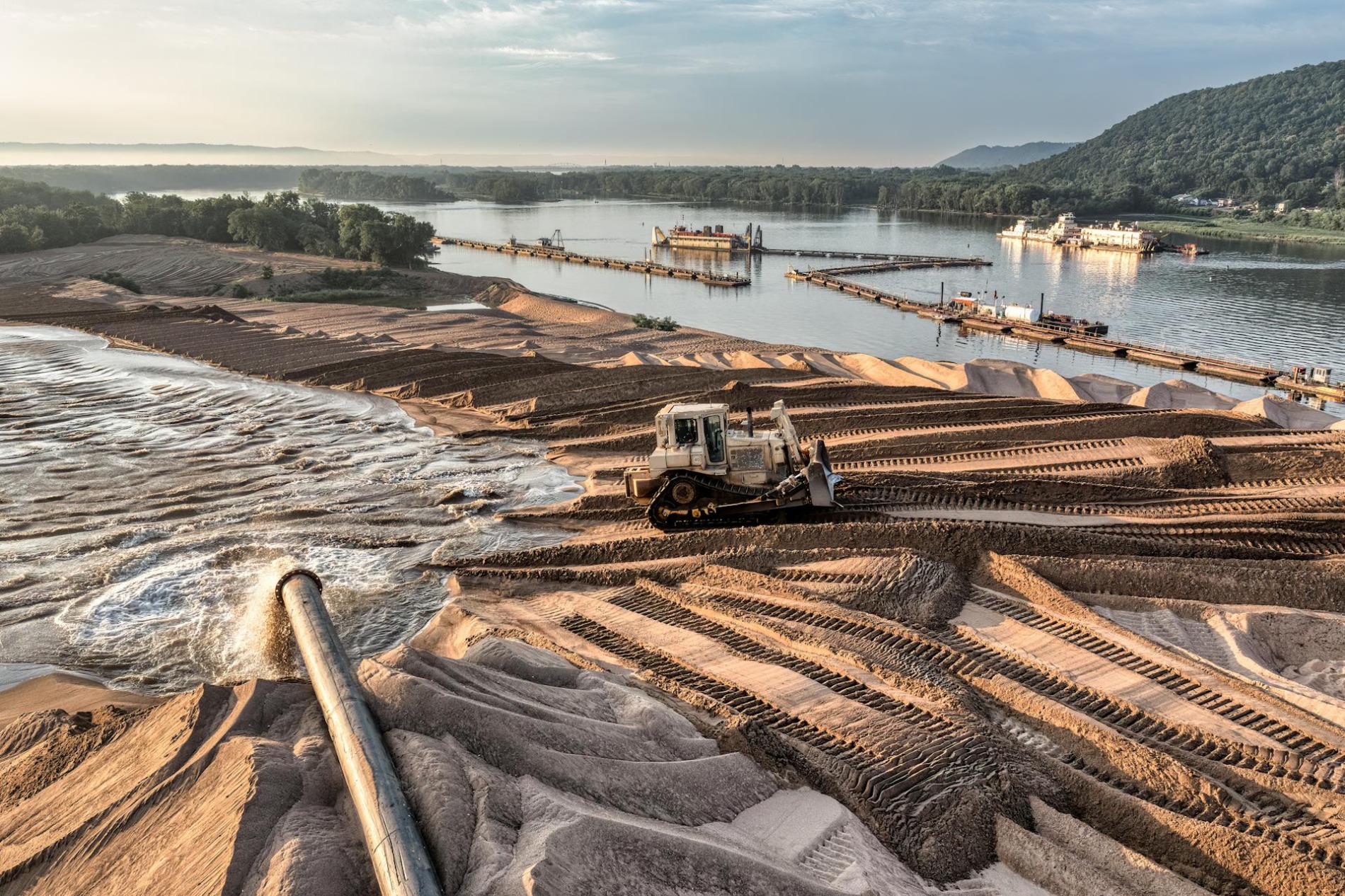
Aerial view of sand mining operation at sunrise next to a river in Reads Landing, Minnesota.
Photo Credit: Tom Fisk

Sand is categorized as “dead” and “alive.” “Dead” sand refers to sand used in concrete, glass, and other processes that remove it from natural systems. “Alive” sand provides essential functions for ecosystems and sustains life on our planet. Both states are in high demand across the planet as the sand gap grows.

Bridging the Gap

Sand is essential to our environment. Acknowledging its importance is key to protecting this vital resource.

In the report, the UNEP calls on governments to strengthen protections for sand by recognizing it as a strategic asset. It recommends creating national roadmaps for “responsible sand management.”

Several tools for creating these roadmaps are already in existence, such as the UNEP’s Marine Sand Watch and Sand Assessment Tool. Using these tools, governments around the world could create intervention systems that better sand governance.

The report also highlights a discrepancy between data and transparency. Increasing transparency and standardizing reporting would help deter illegal practices and enhance government control. 

Related Articles

Here is a list of articles selected by our Editorial Board that have gained significant interest from the public:

  • 20% of Soil Species At Risk of Extinction, Study Finds
  • The Economics of Biodiversity Loss
  • Reimagining the Agreement on Agriculture

Beyond government oversight, new, sustainable materials must be developed to curb the use of sand in construction. Scientists are developing sustainable concrete using recycled glass powder and agro-industrial waste, including sugarcane bagasse ash and coal bottom ash.

As the world continues to develop, sand demand will continue to grow. Solutions are needed now to close the sand gap and preserve global ecosystems and biodiversity.


Editor’s Note: The opinions expressed here by the authors are their own, not those of impakter.com — In the Cover Photo: Aerial view of sand mining operations with machinery and patterned landscape in Reads Landing, MN. Cover Photo Credit: Tom Fisk.

Share: Facebook X LinkedIn
Tags: biodiversityConcrete ProductionSand DemandSand GapUN Environment ProgrammeUNEPVulnerable Ecosystems
Previous Post

Climate Study Warns of Extreme Heat Risks at 2026 World Cup

Related Posts

How Climate Disasters Are Undermining Democracy Worldwide
Climate Change

How Climate Disasters Are Undermining Democracy Worldwide

May 13, 2026
The $1.2 Trillion Problem: Why Every Energy Crisis Strengthens the Case for Clean Public Finance
Energy

The $1.2 Trillion Problem: Why Every Energy Crisis Strengthens the Case for Clean Public Finance

May 13, 2026
Chinese companies started as parts manufacturers, which led them to being able to leverage the position of cheaper parts to create the full cars themselves
Business

How Chinese EVs Stormed the Market

May 12, 2026

Related News

Aerial view of sand mining operations with machinery and patterned landscape in Reads Landing, MN.

Inside the Global Sand Gap

May 15, 2026
ESG news regarding climate concerns ahead of the 2026 FIFA World Cup, Canada’s proposed industrial carbon pricing agreement with Alberta, U.S. approval of year-round E15 gasoline sales, and Egypt’s new financing deal to support food and energy security.

Climate Study Warns of Extreme Heat Risks at 2026 World Cup

May 14, 2026

Impakter informs you through the ESG news site and empowers your business CSRD compliance and ESG compliance with its Klimado SaaS ESG assessment tool marketplace that can be found on: www.klimado.com

Registered Office Address

Klimado GmbH
Niddastrasse 63,

60329, Frankfurt am Main, Germany


IMPAKTER is a Klimado GmbH website

Impakter is a publication that is identified by the following International Standard Serial Number (ISSN) is the following 2515-9569 (Printed) and 2515-9577 (online – Website).


Office Hours - Monday to Friday

9.30am - 5.00pm CEST


Email

stories [at] impakter.com

By Audience

  • TECH
    • Start-up
    • AI & MACHINE LEARNING
    • Green Tech
  • ENVIRONMENT
    • Biodiversity
    • Energy
    • Circular Economy
    • Climate Change
  • INDUSTRY NEWS
    • Entertainment
    • Food and Agriculture
    • Health
    • Politics & Foreign Affairs
    • Philanthropy
    • Science
    • Sport
    • Editorial Series

ESG/Finance Daily

  • ESG News
  • Sustainable Finance
  • Business

About Us

  • Team
  • Partners
  • Write for Impakter
  • Contact Us
  • Privacy Policy

© 2026 IMPAKTER. All rights reserved.

No Result
View All Result
  • Environment
    • Biodiversity
    • Climate Change
    • Circular Economy
    • Energy
  • FINANCE
    • ESG News
    • Sustainable Finance
    • Business
  • TECH
    • Start-up
    • AI & Machine Learning
    • Green Tech
  • Industry News
    • Entertainment
    • Food and Agriculture
    • Health
    • Politics & Foreign Affairs
    • Philanthropy
    • Science
    • Sport
  • Editorial Series
    • SDGs Series
    • Shape Your Future
    • Sustainable Cities
      • Copenhagen
      • San Francisco
      • Seattle
      • Sydney
  • About us
    • Our Story
    • Team
    • Partners
    • Write for Impakter
    • Contact Us
    • Privacy Policy

© 2026 IMPAKTER. All rights reserved.