For several years now there’s been a buzz around meatless meat. Food tech experts have long been trying to produce meat from plants, in an all-out effort to make vegans happy. In the past, we’ve reported several such attempts but now, with the rise of AI and 3D food printing, many food tech champions have arisen, and among them, Cocuus, a Spanish technology enterprise stands out.
Cocuus aims to transform the food industry by introducing innovative and unique solutions that benefit both the consumer’s health and the environment’s sustainability.
What makes them unique? “We’re the first company in the world that has managed to do this on an industrial, rather than an experimental, scale,” says Cocuus co-founder Patxi Larumbe. “Second, our imitation is total.”
The startup’s industrial solutions are designed to revolutionize the production process and offer attractive and nutritious alternatives to traditional food options. Vegans and vegetarians can benefit the most from a steak that is not really a steak. Even though lab-grown meat is a sustainable option, it has never been associated with 3D printing before. They specialize in developing advanced methods, such as 2D/3D laser printing, bioprinting, and mechatronics, to create animal, plant, or cellular protein analogues known as mimetic food.
Startups like Cocuus are raising the bar by developing plant-based meat substitutes that closely resemble the appearance, taste, texture, and flavor of traditional animal meats.
But Cocuus is not alone. This is turning into a race among food tech startups across Europe and America, and even China. Here are some notable examples:
- Redefining Meat is revolutionizing the way we think about meat consumption by developing innovative technology that produces animal-free meat.
- Dutch startup byFlow is dedicated to the advancement of 3D food printing technology, specifically designed for chefs, restaurants, and caterers. Their innovative web-based platform serves as a valuable tool for customers, enabling them to effortlessly create unique and customized 3D food designs.
- BeeHex, a startup based in the United States, offers innovative solutions for food preparation and customization through the use of cutting-edge 3D printing and robotics technology. The company specializes in providing fast and efficient personalized food options, using scalable systems that can adapt to the unique requirements of each customer.
- Shiyin Technology, a startup based in China, offers 3D food printers that cater to consumer needs. These innovative devices utilize artificial intelligence (AI) to cross-check input recipes with a cloud-based database before commencing the printing process.
How does 3D printing work?
At its core, 3D printing is an additive manufacturing process that involves the layer-by-layer deposition of materials to create three-dimensional objects. In the case of 3D-printed food, the process starts with the creation of a digital model using specialized software. This model is then translated into instructions that guide the 3D printer to deposit edible materials in a predetermined pattern.
The printer uses a variety of edible ingredients, such as dough, chocolate, or sugar, which are extruded through a nozzle or syringe-like device. These materials are carefully layered, building up the desired shape and structure of the food item. The printer’s precision allows for intricate designs and complex geometries that were previously impossible to achieve by hand.
While the technology itself is complex, the concept is relatively simple: design, slice, and print. With advancements in 3D printing technology, the possibilities for creating edible masterpieces are endless.
The benefits of 3D food printing
The advantages of 3D-printed food extend beyond its ability to create visually stunning dishes. One of the key benefits is the level of customization it offers. With 3D printing, chefs and consumers can easily tailor meals to meet specific dietary needs and preferences, which renders it an alluring option for vegans and vegetarians.
Additionally, 3D-printed food can address the issue of food waste. By precisely portioning ingredients, food can be created in exact quantities, minimizing leftovers and reducing waste. This not only benefits the environment but also helps save costs in commercial kitchens.
Furthermore, 3D printing enables the creation of complex textures and structures that can enhance the overall dining experience.
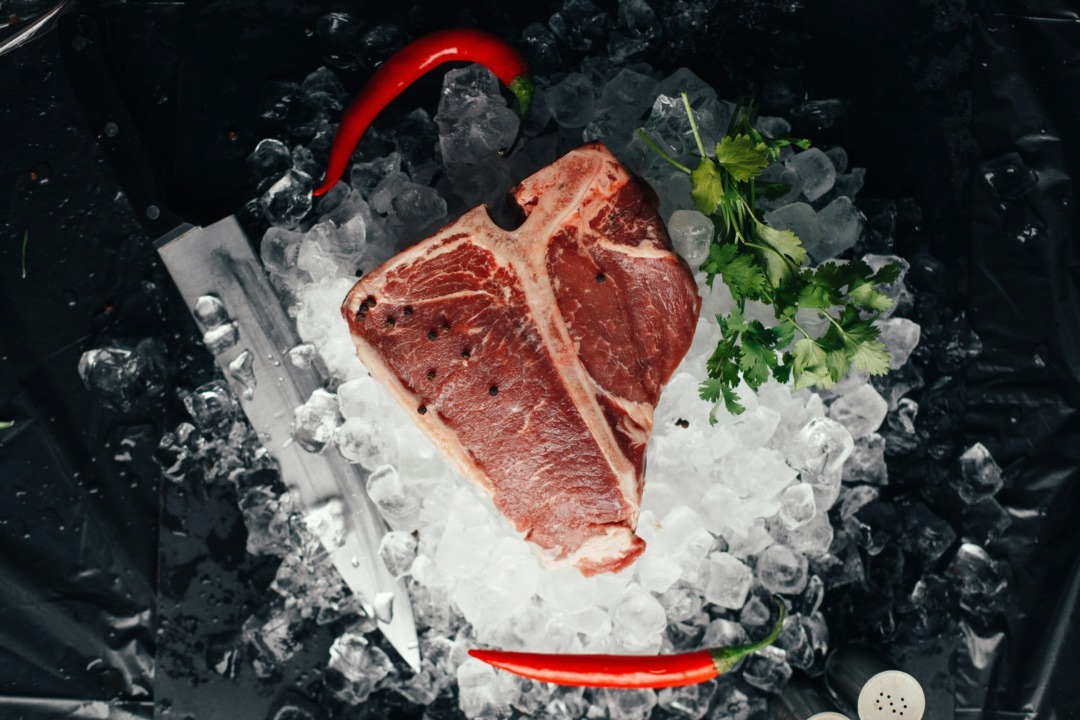
According to an article in the Guardian, While Cocuus’s bacon and foie gras is crafted using a dense vegetable mixture, their steak is composed of authentic beef sourced from the 50kg of meat that would otherwise be discarded or repurposed as cat food during the process of cow slaughter. The marbling in the steak is composed of a blend of vegetables, resulting in a significantly reduced amount of saturated fat compared to traditional marbling.
3D printed food: The remaining challenges
While 3D-printed food holds immense potential, it also faces several challenges and limitations.
One of the primary obstacles is the cost associated with the technology. 3D printers capable of handling food-grade materials can be quite expensive, making them inaccessible for many individuals and smaller establishments.
Additionally, the cost of edible materials and the time required for printing can also be significant factors to consider.
Another challenge is the taste and texture of 3D-printed food as the end product may not always match the taste and texture of traditionally prepared food.
Moreover, food safety and hygiene are paramount concerns when it comes to 3D-printed food.
Related Articles: The Bullfight Between Plant Based Meat and Beef | Could Veganism Be Missing the Mark? The Case for Mindful Meat. | Is Lab-Grown Meat Better for the Environment? | Are Vegan Meats Really That Good? | Food Waste, Food Loss, and Hungry Americans | Future of Food: Reducing Waste | Can We Fix Our ‘Broken’ Food Systems?
Cocuus has set an ambitious target to manufacture up to 1,000 tonnes of plant-based bacon using 3D printing technology by 2024. This will be done at their newly opened industrial facility located in Northern Spain.
The facility is specifically designed to produce alternative proteins on a large scale, which will be made available for purchase in supermarkets and other distribution channels.
In October 2023, Cocuus successfully launched its 3D-printed, plant-based bacon under the Foody brand, with approximately 400 Carrefour supermarkets in Spain stocking the product.
According to meatpoultry.com, at present, Cocuus manufactures 250 kilograms of plant-based bacon per hour using only one machine at their facility. They have plans to expand their operations in the future and introduce large-scale production of vegan tuna and vegan shrimp.
A bright future for 3D-printed food?
3D-printed food is poised to revolutionize the food industry and redefine the dining experience. From personalized meals tailored to individual dietary needs to visually stunning creations that push the boundaries of culinary artistry, this technology offers endless possibilities.
While there are still challenges to overcome, such as cost, taste, and safety considerations, the potential benefits far outweigh the drawbacks.
As 3D printing technology continues to evolve and become more accessible, we can expect to see its widespread adoption. Cocuus appears poised to play a central role at the heart of this attempt to create innovation on a grand scale.
The future of food is being shaped by innovation, and 3D-printed food is at the forefront of this culinary revolution.
Get ready to taste the future!
Editor’s Note: The opinions expressed here by the authors are their own, not those of Impakter.com — Featured Photo Credit: Victoria Shes.