Impakter
  • Environment
    • Biodiversity
    • Climate Change
    • Circular Economy
    • Energy
  • FINANCE
    • ESG News
    • Sustainable Finance
    • Business
  • TECH
    • Start-up
    • AI & Machine Learning
    • Green Tech
  • Industry News
    • Entertainment
    • Food and Agriculture
    • Health
    • Politics & Foreign Affairs
    • Philanthropy
    • Science
    • Sport
  • Editorial Series
    • SDGs Series
    • Shape Your Future
    • Sustainable Cities
      • Copenhagen
      • San Francisco
      • Seattle
      • Sydney
  • About us
    • Company
    • Team
    • Partners
    • Write for Impakter
    • Contact Us
    • Privacy Policy
No Result
View All Result
Impakter logo
No Result
View All Result
acute hunger

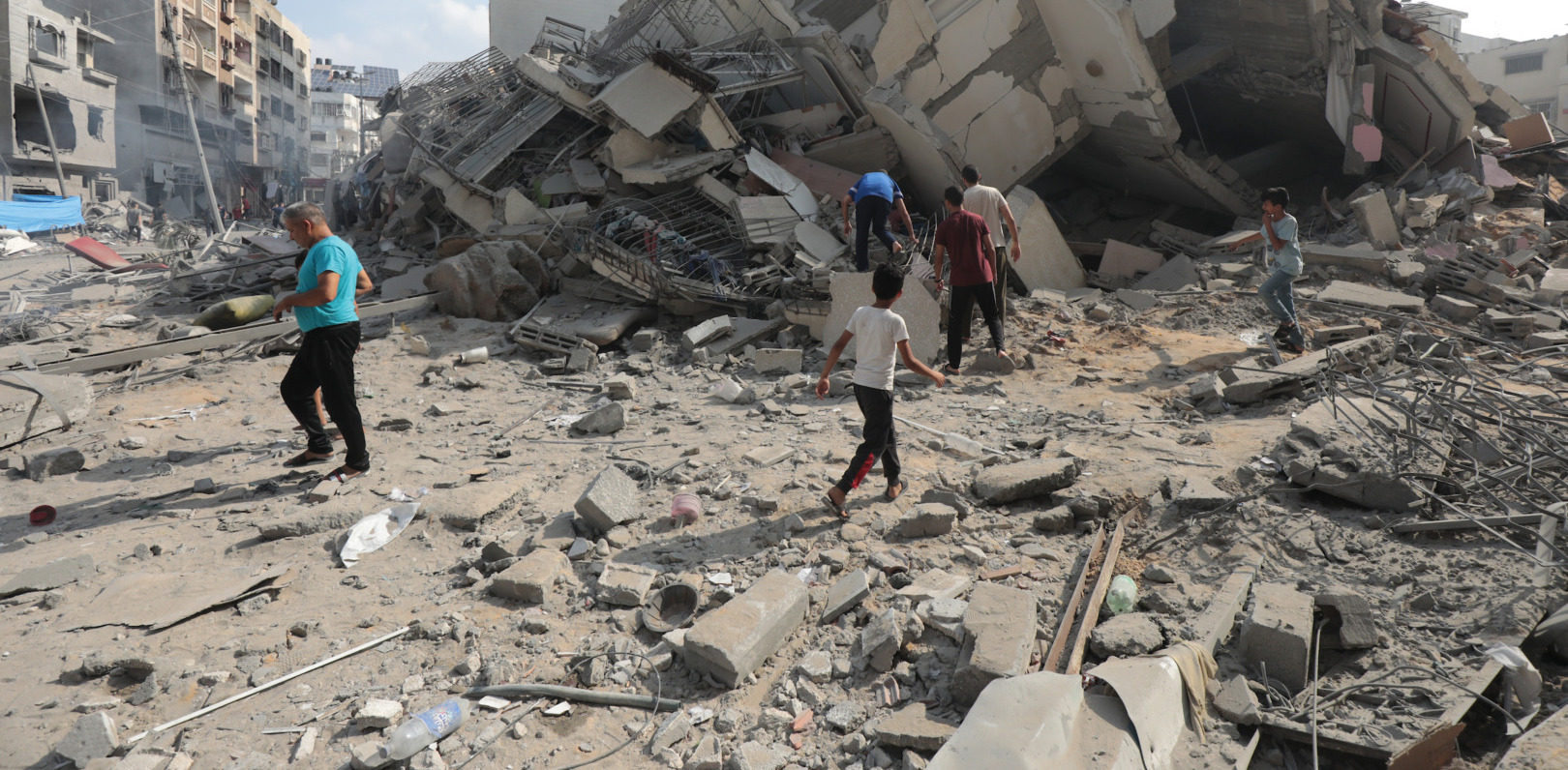
Palestinians inspect the ruins of Aklouk Tower destroyed in Israeli airstrikes in Gaza City on October 8, 2023. The death toll from the devastating Israeli war on the Gaza Strip has risen to 313 since early yesterday morning, with more than 1,990 others injured, according to medical sources. Photo by Naaman Omar apaimages

Acute Hunger: 1 in 5 People in Need of Critical Urgent Action

Global Network Against Food Crises’ partners call for a transformative approach to break the cycle of acute hunger

The Food and Agriculture Organization of the United Nations (FAO)byThe Food and Agriculture Organization of the United Nations (FAO)
April 24, 2024
in Food and Agriculture
0

According to the latest Global Report on Food Crises (GRFC), nearly 282 million people in 59 countries and territories experienced high levels of acute hunger in 2023 — a worldwide increase of 24 million from the previous year. This rise was due to the report’s increased coverage of food crisis contexts as well as a sharp deterioration in food security, especially in the Gaza Strip and the Sudan.

For four consecutive years, the proportion of people facing acute food insecurity has remained persistently high at almost 22% of those assessed, significantly exceeding pre-COVID-19 levels.

Children and women are at the forefront of these hunger crises, with over 36 million children under 5 years of age acutely malnourished across 32 countries, the report shows. Acute malnutrition worsened in 2023, particularly among people displaced because of conflict and disasters.

The Global Network Against Food Crises urgently calls for a transformative approach that integrates peace, prevention and development action alongside at-scale emergency efforts to break the cycle of acute hunger which remains at unacceptably high levels.

“This crisis demands an urgent response. Using the data in this report to transform food systems and address the underlying causes of food insecurity and malnutrition will be vital,” said António Guterres, UN Secretary-General.

Protracted hunger

Thirty-six countries have been consistently featured in the GRFC analyses since 2016, reflecting continuing years of acute hunger, and currently representing 80% of the world’s most hungry.

There has also been an increase of 1 million people facing Emergency (IPC/CH Phase 4) levels of acute food insecurity across 39 countries and territories, with the biggest increase in the Sudan.

In 2023, more than 705,000 people were at the Catastrophe (IPC/CH Phase 5) level of food insecurity and at risk of starvation — the highest number in the GRFC’s reporting history and up fourfold since 2016. The current situation in the Gaza Strip accounts for 80% of those facing imminent famine, along with South Sudan, Burkina Faso, Somalia and Mali.

According to the GRFC 2024 future outlook, around 1.1 million people in the Gaza Strip and 79,000 people in South Sudan are projected to be in Catastrophe (IPC/CH Phase 5) by July 2024, bringing the total amount of people projected in this phase to almost 1.3 million.


Related Articles: Strengthening Urban Food Systems in Times of Crisis | Can We Fix Our ‘Broken’ Food Systems? | Reimagining Generational Gaps to Transform Africa’s Agri-food Systems | Worsening Hunger Grips West and Central Africa Amid Persistent Conflict and Economic Turmoil

Key drivers of food crises

Intensifying conflict and insecurity, the impacts of economic shocks, and the effects of extreme weather events are continuing to drive acute food insecurity. These interlinked drivers are exacerbating food systems fragility, rural marginalization, poor governance, and inequality, and lead to massive displacement of populations globally. The protection situation of displaced population is additionally impacted by food insecurity.

Conflict remained the primary driver affecting 20 countries with nearly 135 million people in acute food insecurity — almost half of the global number. The Sudan faced the largest deterioration due to conflict, with 8.6 million more people facing high levels of acute food insecurity as compared with 2022.

Extreme weather events were the primary drivers in 18 countries where over 77 million people faced high levels of acute food insecurity, up from 12 countries with 57 million people in 2022. In 2023, the world experienced its hottest year on record and climate-related shocks impacted populations, with episodes of severe floods, storms, droughts, wildfires, and pest and disease outbreaks.

Economic shocks primarily affected 21 countries where around 75 million people were facing high levels of acute food insecurity, due to their high dependency on imported food and agricultural inputs, persisting macroeconomic challenges, including currency depreciation, high prices and high debt levels.

Breaking the cycle of food crises

Tackling persistent food crises requires urgent long-term national and international investment to transform food systems and boost agricultural and rural development alongside greater crisis preparedness and critical lifesaving assistance at scale, where people need it most. Peace and prevention must also become an integral part of the longer-term food systems transformation. Without this, people will continue to face a lifetime of hunger and the most vulnerable will starve.

Since 2023, needs have outpaced available resources. Humanitarian operations are now desperately overstretched, with many being forced to scale-down and further cut support to the most vulnerable.  More equitable and effective global economic governance is imperative and must be matched with government led plans that seek to reduce and end hunger.

To turn the tide on rising acute food insecurity the international community has made a range of bold commitments including through the recent G7 and G20 initiatives. The Global Network Against Food Crises offers to leverage its unparalleled knowledge of hunger in the most fragile countries to strengthen the linkages and build coherence where possible between these various global initiatives to ensure innovative and concrete impact for those affected by food crises.

** **

This article is published here as part of an editorial collaboration with the Food and Agriculture Organization of the United Nations (FAO).


Editor’s Note: The opinions expressed here by the authors are their own, not those of Impakter.com — In the Featured Photo: Palestinians inspect the ruins of Aklouk Tower destroyed in Israeli airstrikes in Gaza City on October 8, 2023. Featured Photo Credit: Wikimedia Commons.

Tags: acute food insecurityConflictExtreme WeatherFAOfoodFood and Agriculture Organization of the United Nationsfood insecurityFood securityGazaGlobal Network Against Food CrisesGlobal Report on Food CrisesGRFCHungerSouth SudanSudan
Previous Post

Wind Energy Surges to Record Heights

Next Post

Climate Change Poses Dire Health and Human Rights Risks

Related Posts

World Health Organization
Health

Why America’s Withdrawal From the WHO Is Bad News for Everyone

The United States was formally withdrawn from the World Health Organization (WHO) by President Donald J. Trump on January 22,...

byDr. Bruce Kaplan - Epidemiologist formerly at the CDC/EIS and USDA-FSIS Office of Public Health and Science & Co-Founder of the One Health Initiative
February 5, 2026
WEF Report Ranks Environmental Challenges as Greatest Long-Term Threat to Global Stability
Business

WEF Report Ranks Environmental Challenges as Greatest Long-Term Threat to Global Stability

The World Economic Forum’s Global Risks Report 2025 found that environmental risks are deteriorating faster than other threats and challenges.  ...

byBenjamin Clabault
February 2, 2026
Food Waste in India
Climate Change

India’s Food Waste Is Turning Into an Environmental Time Bomb

India, a key player in this fight, is currently battling a confluence of climate-driven disasters. Last year’s punishing extreme heatwave,...

byPranjali Chowdhary - Research and Policy Associate at the Institute for Governance and Sustainable Development, Indiaand1 others
January 30, 2026
The Imperative of a Nature-Positive Future
Biodiversity

The Imperative of a Nature-Positive Future

For most of human history, survival was a gamble. Half of all children never reached puberty. Life expectancy hovered around...

byMarco Lambertini
January 16, 2026
soil
Biodiversity

To Prevent Ecological Collapse, We Must Start With the Soil

Soil is the single most biodiverse habitat on Earth, home to at least 59% of all species, including over 80%...

byMarcela Quintero - Associate Director General of Research Strategy and Innovation at the Alliance of Bioversity International and CIATand1 others
January 15, 2026
Is It Time to Recognize Climate Refugees?
Climate Change

Is It Time to Recognize Climate Refugees?

Climate displacement has become a defining feature of our present. Climate shocks now shape human (im)mobility, humanitarian crises, and political...

byDr. Shepherd Mutsvara - Research Fellow at the University of Münster, Germany
December 30, 2025
Freshwater
Environment

Renewable Water Availability per Person Plunges 7% in a Decade as Global Scarcity Deepens

Renewable water availability per person has continued to decline by a further 7% over the past decade, while pressure on...

byThe Food and Agriculture Organization of the United Nations (FAO)
December 23, 2025
How Climate Change Could Help Foster Peace in Yemen
Climate Change

How Climate Change Could Help Foster Peace in Yemen

Yemen's tragedy is traditionally depicted through the limited perspective of humanitarian need and political divisiveness, but there is a greater...

byTareq Hassan - Executive Director of the Sustainable Development Network Canada (SDNC)
December 17, 2025
Next Post
climate change health

Climate Change Poses Dire Health and Human Rights Risks

Recent News

Friedrich Merz Proposing the Architectural blueprint of European institutions illustrating the Merz-Meloni non-paper strategy for EU deregulation

The Merz-Meloni non-paper – How the New Germany-Italy Axis Could Destroy Europe

February 10, 2026
India–EU Trade Is Set to Grow. Its Environmental Costs May Grow Faster

India–EU Trade Is Set to Grow. Its Environmental Costs May Grow Faster

February 10, 2026
The Era of ‘Global Water Bankruptcy’ Has Begun

The Era of ‘Global Water Bankruptcy’ Has Begun

February 10, 2026
  • ESG News
  • Sustainable Finance
  • Business

© 2025 Impakter.com owned by Klimado GmbH

No Result
View All Result
  • Environment
    • Biodiversity
    • Climate Change
    • Circular Economy
    • Energy
  • FINANCE
    • ESG News
    • Sustainable Finance
    • Business
  • TECH
    • Start-up
    • AI & Machine Learning
    • Green Tech
  • Industry News
    • Entertainment
    • Food and Agriculture
    • Health
    • Politics & Foreign Affairs
    • Philanthropy
    • Science
    • Sport
  • Editorial Series
    • SDGs Series
    • Shape Your Future
    • Sustainable Cities
      • Copenhagen
      • San Francisco
      • Seattle
      • Sydney
  • About us
    • Company
    • Team
    • Partners
    • Write for Impakter
    • Contact Us
    • Privacy Policy

© 2025 Impakter.com owned by Klimado GmbH