Impakter
  • Environment
    • Biodiversity
    • Climate Change
    • Circular Economy
    • Energy
  • FINANCE
    • ESG News
    • Sustainable Finance
    • Business
  • TECH
    • Start-up
    • AI & Machine Learning
    • Green Tech
  • Industry News
    • Entertainment
    • Food and Agriculture
    • Health
    • Politics & Foreign Affairs
    • Philanthropy
    • Science
    • Sport
  • Editorial Series
    • SDGs Series
    • Shape Your Future
    • Sustainable Cities
      • Copenhagen
      • San Francisco
      • Seattle
      • Sydney
  • About us
    • Company
    • Team
    • Partners
    • Write for Impakter
    • Contact Us
    • Privacy Policy
No Result
View All Result
Impakter logo
No Result
View All Result
More Natural Disasters and Water Stress Threaten Asia-Pacific

More Natural Disasters and Water Stress Threaten Asia-Pacific

Institute for Economics & PeacebyInstitute for Economics & Peace
April 26, 2021
in Environment, Society
0

A brief look into the Asia-Pacific region’s ecological threat profile.
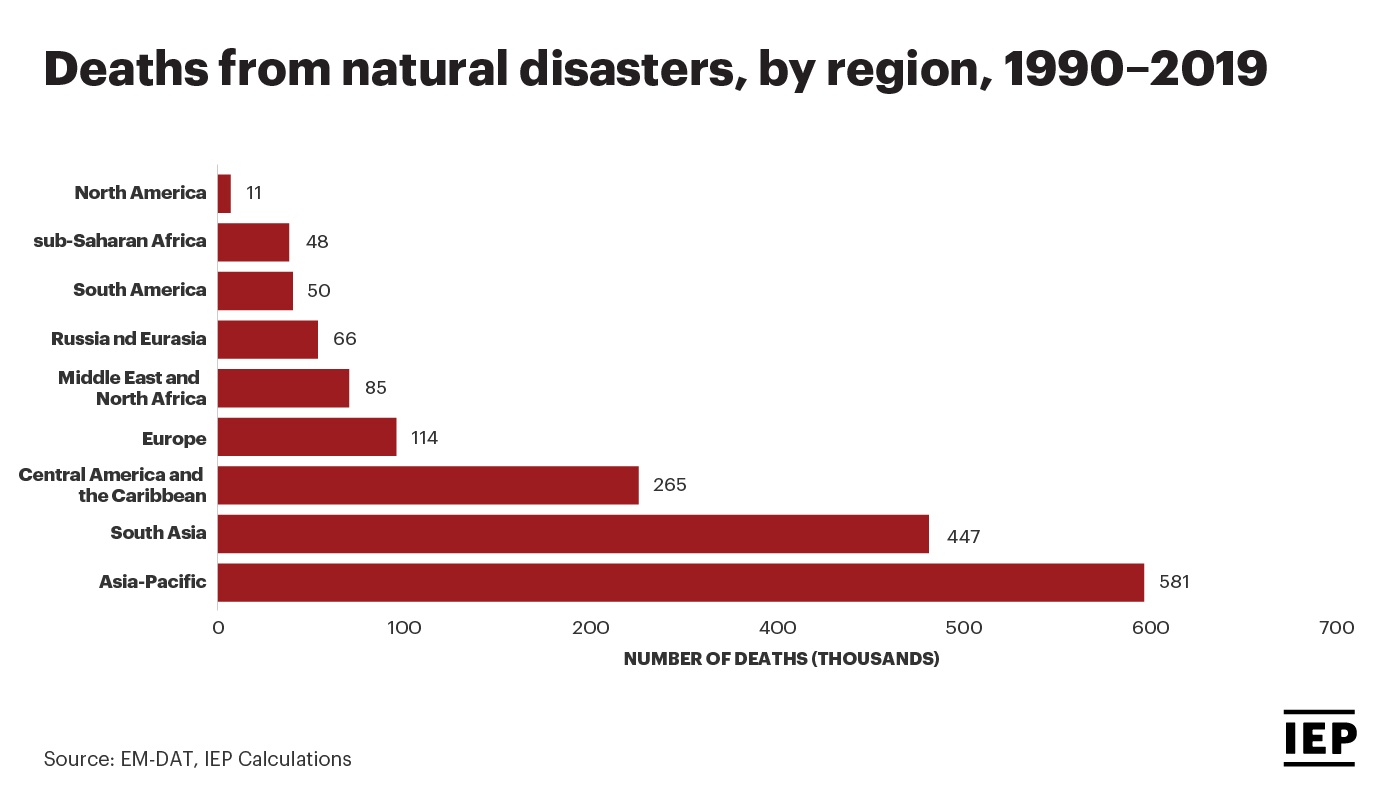
The Asia-Pacific region has suffered the most natural disasters in the last 30 years, and it will witness a major increase in water stress over the next 20 years, according to the 2020 Ecological Threat Register (ETR).

While the region is labelled as a medium risk group of countries according to the ETR, with no country exposed to more than three ecological threats, it maintains a notable threat profile with flooding posing the biggest risk to 13 out of the region’s 19 countries.

Understanding the threats facing countries and regions allows for preparation and resilience building. The ETR shows that ecological threats and climate change pose serious challenges to global development and peacefulness and that the adverse impacts will disproportionately affect the world’s poorest and most vulnerable populations. Building resilience to ecological threats will become increasingly important and requires substantial investment.

Natural disasters

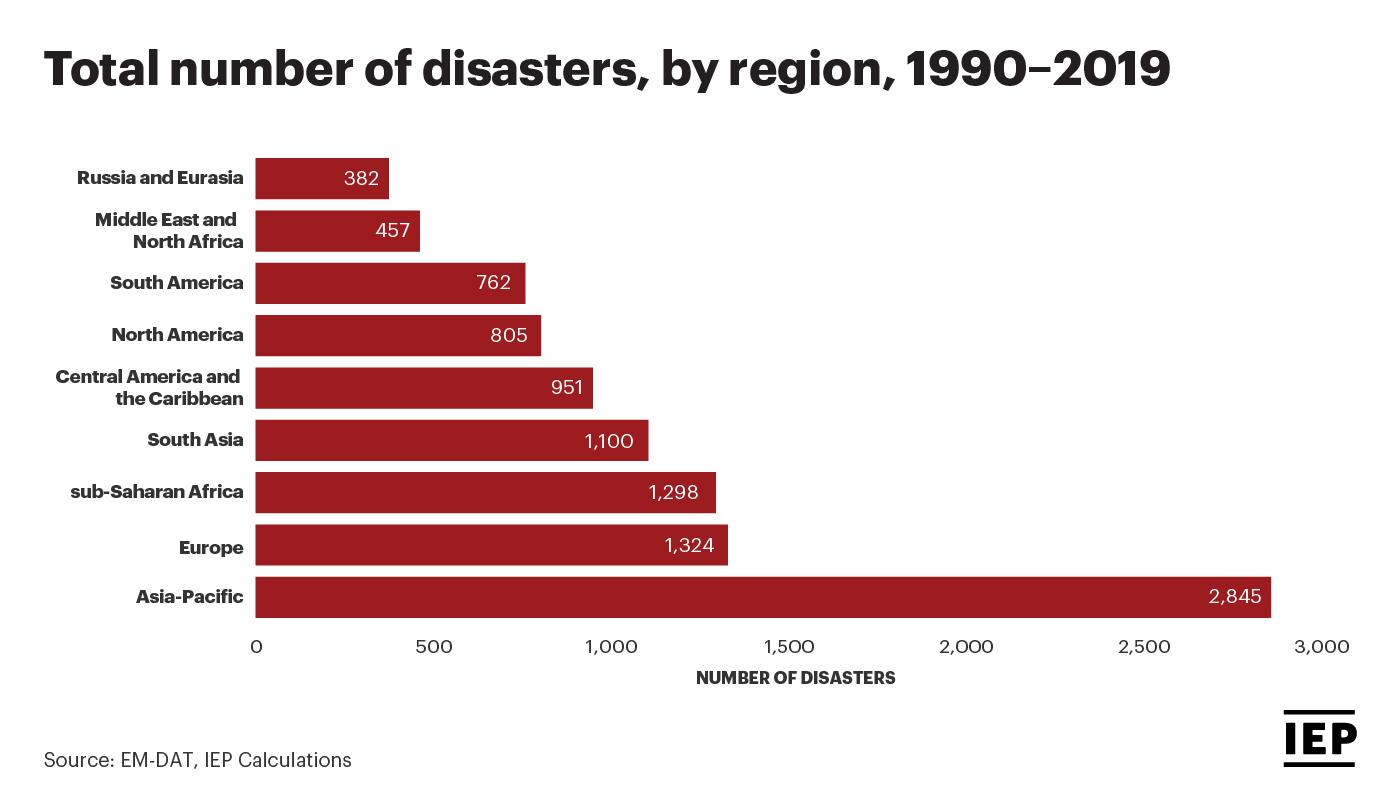
Asia-Pacific is the most affected region, with 29% of global natural disasters occurring in the region in the 30 years to 2019. The region was exposed to the largest number of natural disasters with 2,845 events in the last 30 years.

Floods and storms make the largest share of the total natural disasters in the Asia-Pacific at more than two thirds of the total. The most affected countries in the region are China, the Philippines, Indonesia, Japan and Vietnam.

While global data analysis shows that the number of natural disasters has drastically risen around the world – a tenfold increase since the 1960s – the Asia-Pacific region has been exposed to the largest portion of these events since the 1990s.
Water stress

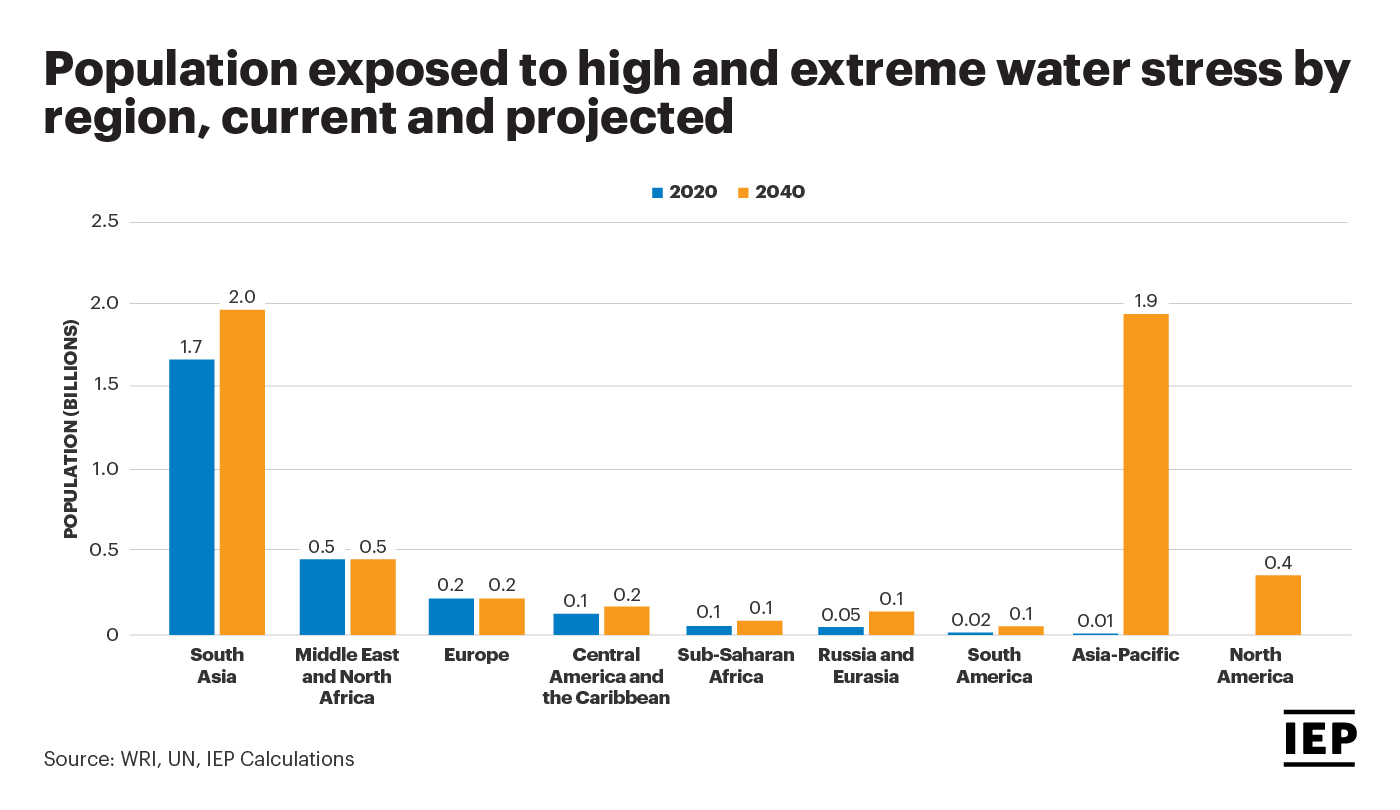
Globally, 2.6 billion people are exposed to high and extreme water stress, with the majority living in South Asia and the Middle East and North Africa region. By 2040 this number will grow to 5.4 billion, driven by increasing water stress in the Asia-Pacific.

Water stress is projected to increase in the Asia-Pacific, mainly as a result of the rapid development of agriculture and manufacturing and more intense use of hydroelectricity.


Related Articles: Water Scarcity: How Climate Crisis is Unfolding in India | Your Search Engine’s Secret: The Gallons of Water Behind Data Consumption

Today, a majority of the countries in the Asia-Pacific region experience medium-level water stress. By 2040 an additional 1.9 billion of its inhabitants will be living in countries exposed to high and extreme levels of water stress.

Currently, only one country in the region suffers from high to extreme water stress — Singapore. By 2040, six additional countries within the region will also face the same level of threat.

China and Indonesia are two of the six countries that will transition into high or extreme water stress levels in the region, largely contributing to the 1.9 billion that will be living in countries exposed to high levels of water stress. The other four countries are Australia, Mongolia, the Philippines and Timor-Leste.
Displacement

The Asia-Pacific region recorded the highest number of new displacements between 2008 and 2019 with over 150 million as a result of climate-related hazards including droughts, extreme temperatures, seasonal floods and storms.

In 2019 alone, almost 25 million people were displaced in the Asia-Pacific region with China, India and the Philippines accounting for 53 percent of all displacements.
Food security

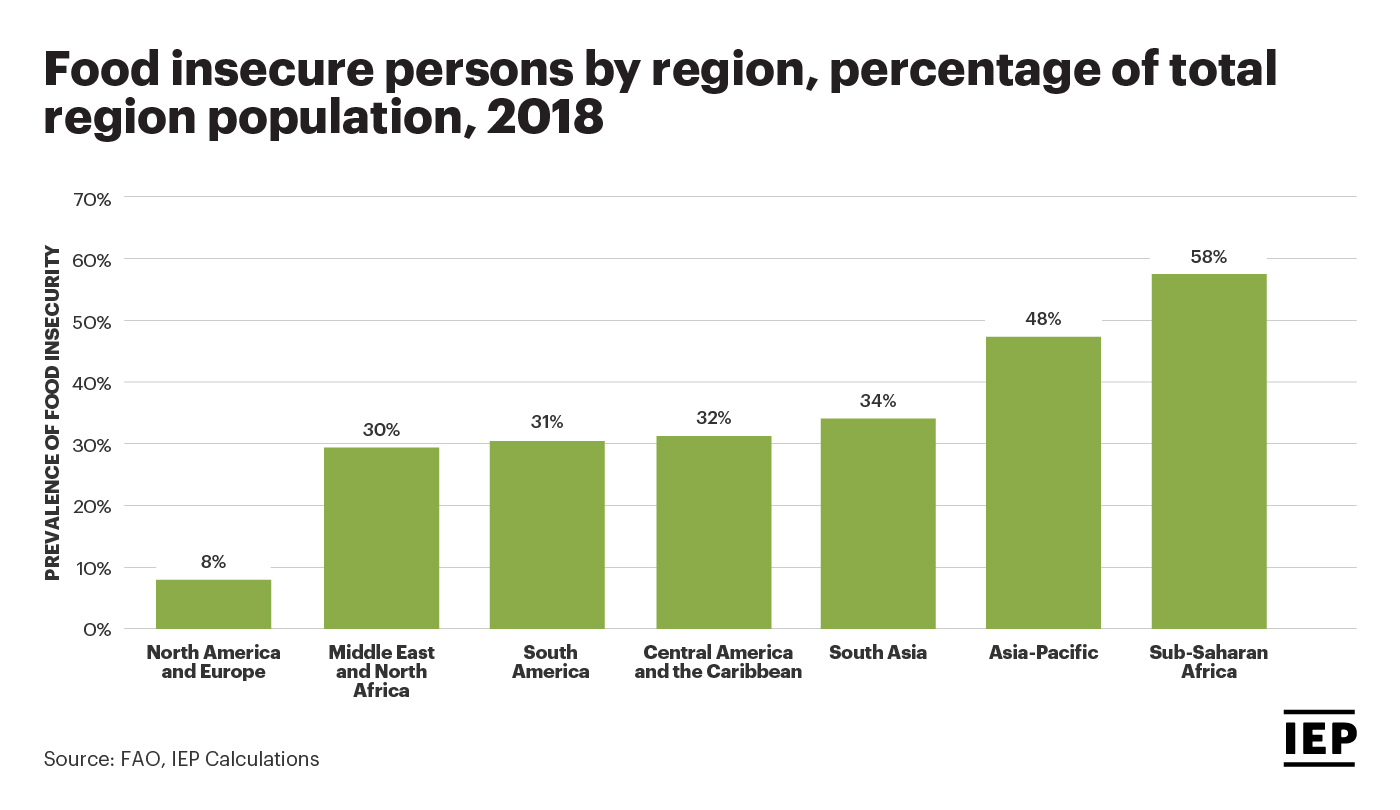
More than two billion people globally face food insecurity, defined as uncertainty in access to a sufficient quantity of food necessary for a healthy life. The global number of food insecure people has been on the rise, increasing by 300 million people since 2014.

Asia-Pacific has the second highest prevalence of food insecurity with 48% of the population deemed food insecure.

——

About the author: The article has been written by the Vision of Humanity Editorial staff — brought to you by the Institute for Economics & Peace (IEP). The IEP investigates the impact of COVID-19 and future trends in economics, politics, social dynamics, conflict and development.


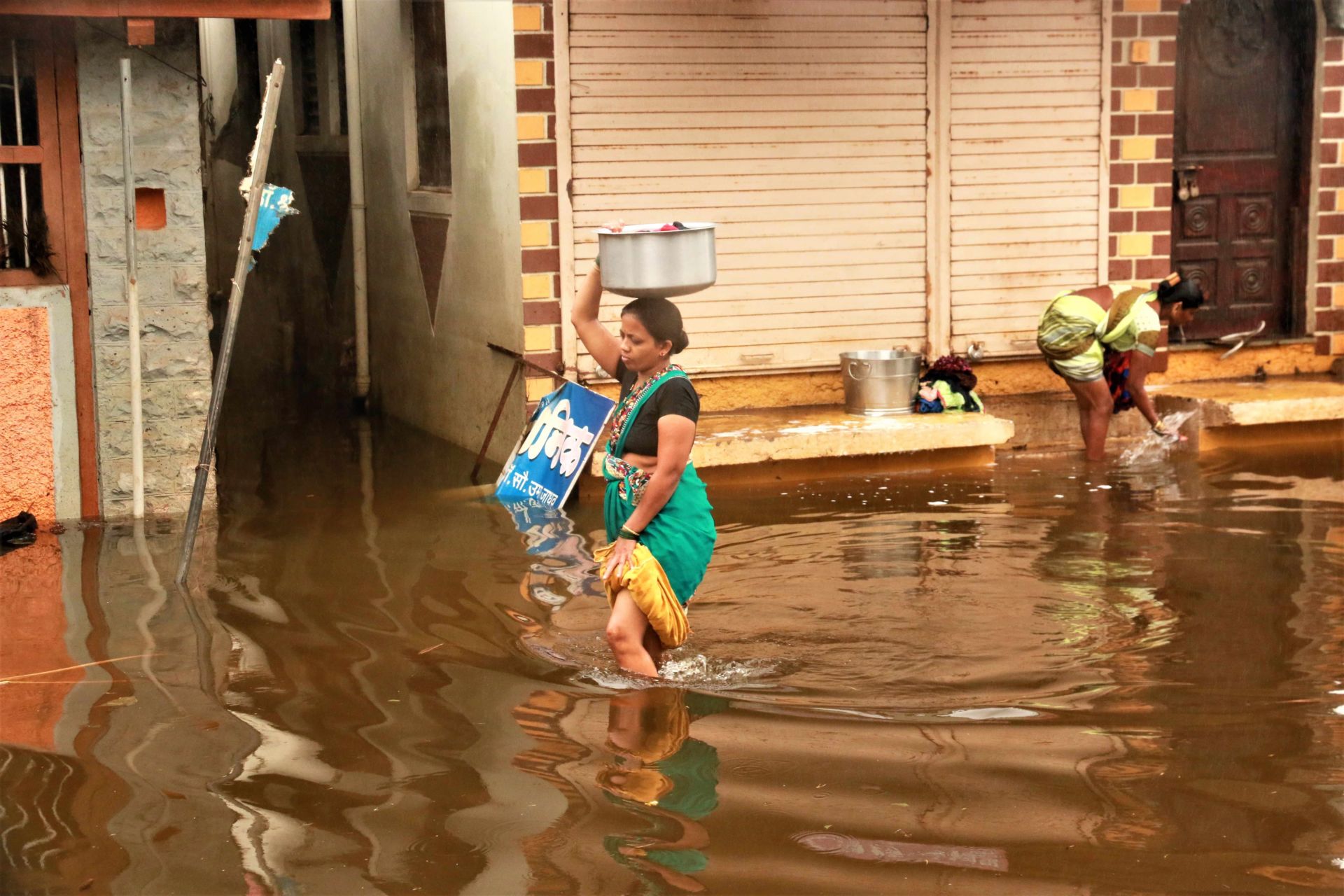
Editor’s Note: The opinions expressed here by Impakter.com columnists are their own, not those of Impakter.com. — In the Featured Photo:  Woman paving her way through a flood, Herwad, India. Featured Photo Credit: Wikimedia Commons. 
Tags: Climate Crisisecological threatsFood securityNatural Disasterswater stress
Previous Post

America’s New Climate Goal: Can It Be Trusted?

Next Post

The Origins of Fast Fashion: From The Industrial Revolution to ZARA

Related Posts

The Era of ‘Global Water Bankruptcy’ Has Begun
Climate Change

The Era of ‘Global Water Bankruptcy’ Has Begun

Humanity’s long-term water usage and damage have exceeded nature's renewal and safe limits, a situation scientists and the media have...

byNmesoma Ezetu
January 30, 2026
Food Waste in India
Climate Change

India’s Food Waste Is Turning Into an Environmental Time Bomb

India, a key player in this fight, is currently battling a confluence of climate-driven disasters. Last year’s punishing extreme heatwave,...

byPranjali Chowdhary - Research and Policy Associate at the Institute for Governance and Sustainable Development, Indiaand1 others
January 30, 2026
Is It Time to Recognize Climate Refugees?
Climate Change

Is It Time to Recognize Climate Refugees?

Climate displacement has become a defining feature of our present. Climate shocks now shape human (im)mobility, humanitarian crises, and political...

byDr. Shepherd Mutsvara - Research Fellow at the University of Münster, Germany
December 30, 2025
How a Framework Convention Could Address Climate and Socio-Economic Displacement
Editors' Picks

How a Framework Convention Could Address Climate and Socio-Economic Displacement

The unprecedented shift in human (im)mobility has seen over 120 million forced to flee their homes due to war, violence,...

byDr. Shepherd Mutsvara - Research Fellow at the University of Münster, Germany
December 18, 2025
ESG News regarding 500+ Scientists Urge Rapid Climate Action, UK ends $1.15bn support for TotalEnergies Mozambique LNG project due to climate and security risks
Environment

500+ Scientists Warn: Halve Emissions by 2030 or Miss the 1.5°C Window

Today’s ESG Updates Dartington Declaration: 500+ scientists urge leaders to halve emissions by 2030 and hit net zero by 2050,...

byAda Omar
December 2, 2025
Transboundary Animal Diseases Pose Urgent Threat to Global Food Security
Biodiversity

Transboundary Animal Diseases Pose Urgent Threat to Global Food Security

The Director-General of the Food and Agriculture Organization of the United Nations (FAO), QU Dongyu, urged Member Countries to reinforce...

byThe Food and Agriculture Organization of the United Nations (FAO)
December 1, 2025
Animal Health
Biodiversity

Better Animal Health Is the Low-Risk, High-Reward Climate Investment We Need

Imagine if there was a way to reduce emissions from the meat, egg and dairy sector by nearly a quarter,...

byCarel du Marchie Sarvaas
November 26, 2025
ESG news regarding SBTi proposes flexible Corporate Net-Zero Standard V2 with new Scope-1/2/3 pathways and strict credit guardrails, COP30 in Belém during the UN climate summit, Simon Stiell addresses COP30 in Belém, warning governments to act on climate or face famine, conflict and inflation, Carbon Direct acquires Pachama to add AI and satellite MRV for forest-carbon projects
Business

SBTi Draft Plan Gives Companies More Ways to Reach Net Zero

Today’s ESG Updates SBTi Proposes Net-Zero Standard V2: Multi-path targets across Scopes 1–3, tighter credit rules; consultation open until December...

byAda Omar
November 11, 2025
Next Post
woman with fast fashion apparel

The Origins of Fast Fashion: From The Industrial Revolution to ZARA

Recent News

Software testing tool

How AI-Powered Testing Tools Are Revolutionizing Flutter App Development

February 2, 2026
Architectural visualization

From Blueprint to Visual Story: How Buildings Are Presented Today

February 2, 2026
Business Applications found on a Website Platform

How to Choose a Website Platform Without Technical Knowledge

February 2, 2026
  • ESG News
  • Sustainable Finance
  • Business

© 2025 Impakter.com owned by Klimado GmbH

No Result
View All Result
  • Environment
    • Biodiversity
    • Climate Change
    • Circular Economy
    • Energy
  • FINANCE
    • ESG News
    • Sustainable Finance
    • Business
  • TECH
    • Start-up
    • AI & Machine Learning
    • Green Tech
  • Industry News
    • Entertainment
    • Food and Agriculture
    • Health
    • Politics & Foreign Affairs
    • Philanthropy
    • Science
    • Sport
  • Editorial Series
    • SDGs Series
    • Shape Your Future
    • Sustainable Cities
      • Copenhagen
      • San Francisco
      • Seattle
      • Sydney
  • About us
    • Company
    • Team
    • Partners
    • Write for Impakter
    • Contact Us
    • Privacy Policy

© 2025 Impakter.com owned by Klimado GmbH