
Impakter
  • Environment
    • Biodiversity
    • Climate Change
    • Circular Economy
    • Energy
  • FINANCE
    • ESG News
    • Sustainable Finance
    • Business
  • TECH
    • Start-up
    • AI & Machine Learning
    • Green Tech
  • Industry News
    • Entertainment
    • Food and Agriculture
    • Health
    • Politics & Foreign Affairs
    • Philanthropy
    • Science
    • Sport
  • Editorial Series
    • SDGs Series
    • Shape Your Future
    • Sustainable Cities
      • Copenhagen
      • San Francisco
      • Seattle
      • Sydney
  • About us
    • Company
    • Team
    • Global Leaders
    • Partners
    • Write for Impakter
    • Contact Us
    • Privacy Policy
No Result
View All Result
Impakter logo
No Result
View All Result
Deal of the Week: Natural Disasters Resilience in the Technology Age

Water Scarcity: How Climate Crisis is Unfolding in India

Impakter Editorial BoardbyImpakter Editorial Board
September 18, 2019
in Environment, Impact, Uncategorized
0

With many rivers dwindling and the groundwater nearly exhausted, an acute crisis is underway in the world’s second-most populous nation.

—

Taps have run dry in India as millions of people brace themselves for the dreaded blend of extreme heat and water shortages during the summer. A combination of climate change, inefficient water use, and inadequate infrastructure has thrown the nation into a full-blown water crisis forcing the government to create a brand new ministry–‘Jal Shakti Ministry’–to tackle the issue.

This year, more than 330 million people are affected due to water shortage as half of the nation’s land area grapples with drought-like conditions. 12% of the population, majority of them living in metropolitan cities like Bengaluru, Chennai, Delhi, and Hyderabad, are already facing the ‘Day Zero’ scenario, wherein most of their water supplies came to a complete halt. As many as 21 major cities including the national capital–New Delhi–is poised to run out of groundwater next year, according to a report by government-run think tank NITI Aayog.

By definition, India now is a water-stressed country, where annual per capita water availability is below 1500 cubic metres. Half a century ago, it was 5200 cubic metres.

An assessment by the government indicates that the nation is gradually inching towards a calamity with the annual per capita availability likely to drop below 1000 cubic metres.

Climate change has pushed India’s climate towards extremes disrupting the quantity and frequency of rainfall. The country witnessed below average monsoon for the last two consecutive years. The North-East monsoon which provides 10-20% of India’s rainfall was deficient by 44% in 2018 as per data from the India Meteorological Department (IMD). This compounded the rainfall deficit in the South-West monsoon that provides 80% of the country’s rainfall, which fell short by 10% last year. Lower rainfall has reduced water levels in reservoirs across the country. During the first half of this year, 91 major reservoirs recorded 32% drop in their water capacity.

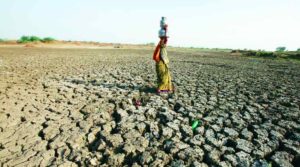
Chennai, a coastal city of 10 million, had 55% less rainfall this year. The city went without rain for 200 days with its four water reservoirs turning into puddles of cracked mud causing the worst water crisis in 70 years.
Unusual temperatures caused by climate change have made rainfall erratic with significant changes in monsoon patterns making droughts and floods more common in many parts of India. In 2015, a massive flood, spurred by unusually massive rainfall, devastated Chennai killing more than 500 people and leaving the city ravaged. Last year, flash floods in the states of Kerala and Karnataka caused distress while cyclones wreaked havoc in Tamil Nadu and Odisha.

India is rated ‘high risk’ in the Climate Change Vulnerability Index with major Indian cities are projected to experience a higher number of consecutive drought days with less rainfall in the near future. Changes in temperature, precipitation, and humidity will significantly impact the quality and quantity of water across the country, where water resources are also under unprecedented pressure from population growth, rapid urbanisation, and inefficient water use.

The water crisis is not unique to India. Globally, over 880 million people–about one in every nine people in the world–do not have access to clean water within 6 km of their homes. The United States Agency for International Development (USAID) predicts that approximately one-third of the world population will face chronic water crisis by 2025.

Freshwater constitutes only 2.5% of the total water on our planet and much of it is trapped in icecaps and glaciers, making it inaccessible for us. In reality, a meager 0.007% of the planet’s total water is available to feed its 7.7 billion people.

To avoid the impending catastrophe, India and other vulnerable countries need effective climate change adaptation strategies that reflect the importance of water management in reducing vulnerability and building climate resilience. It is also necessary to bring in technology to help harness water more efficiently and build long-term water conservation plans.



 

Previous Post

Imagining challenging climate futures

Next Post

Shape Your Future With Anne Lynam Goddard, CEO of ChildFund

Related Posts

nature finance
Biodiversity

New Tested and Scalable Investment Model Can Unlock Billions in Much-Needed Financing for Nature

The Landscape Finance Approach comes at a critical juncture when the global biodiversity funding gap has reached almost a trillion...

byWWF
November 14, 2025
food waste
Business

COP30: UNEP Launches New Initiative to Halve Food Waste by 2030

Today’s ESG Updates COP30: Food Waste Breakthrough: UNEP plans to reduce food waste by half, reduce hunger and cut 7%...

byPuja Doshi
November 14, 2025
Australia’s Clean Energy Push Faces Setback for COP31
Business

Australia’s Clean Energy Push Faces Setback for COP31

Today’s ESG Updates Australia-Turkey Standoff Puts COP31 Hosting at Risk: Australia’s plan to host next year’s climate summit is delayed...

byJana Deghidy
November 13, 2025
plastic pollution
Environment

Biodegradable Plastics: Help or Hype?

The global annual production of plastics rose to 400 million metric tons in 2022 and is projected to double by 2050. Many items...

byThe Revelator
November 13, 2025
ESG News regarding global carbon emissions, Amazon claims AI will accelerate the clean-energy transition, Australia’s opposition party states it will drop the country’s net-zero target if elected, Portugal’s utility EDP focuses its clean-energy expansion in Southeast Asia
COP30

Global Carbon Emissions Reach Record High as Planet’s Natural Sinks Falter

Today’s ESG Updates Global Carbon Emissions Hit Record High as Natural Sinks Weaken: The Global Carbon Project report intensifies the...

byLena McDonough
November 13, 2025
Innovation in Accounts Receivable - Photo credits: reallywellmadedesks
Corporations

Why Intelligent Accounts Receivable Software Is the Next Big Shift in Fintech

The fintech industry is evolving at lightning speed projected to surpass $400 billion by 2027, according to Statista. But the...

byHannah Fischer-Lauder
November 12, 2025
ESG News regarding: only 16% of companies on track to hit net zero targets by 2050 per Accenture report, Orsted completes green transformation, EU and UK to begin carbon market link negotiations, China to expand renewable energy sector
Business

Only 16% of Large Companies on Track for Net Zero

Today’s ESG Updates Accenture Report Highlights Net Zero: While 89% of the world’s largest companies link decarbonization to business value,...

bySarah Perras
November 12, 2025
Bill Gates memo
Climate Change

Climate, Gates and COP30

Bill Gates’ recent article on the “three tough truths” of the ongoing environmental changes makes an essential point: we must...

byJosé Graziano da Silva - Former Director-General at FAO, Founder and Director of the Instituto Fome Zero, and Professor Emeritus at the University of Campinas
November 12, 2025
Next Post

Shape Your Future With Anne Lynam Goddard, CEO of ChildFund

Recent News

nature finance

New Tested and Scalable Investment Model Can Unlock Billions in Much-Needed Financing for Nature

November 14, 2025
food waste

COP30: UNEP Launches New Initiative to Halve Food Waste by 2030

November 14, 2025
Australia’s Clean Energy Push Faces Setback for COP31

Australia’s Clean Energy Push Faces Setback for COP31

November 13, 2025
  • ESG News
  • Sustainable Finance
  • Business

© 2025 Impakter.com owned by Klimado GmbH

No Result
View All Result
  • Environment
    • Biodiversity
    • Climate Change
    • Circular Economy
    • Energy
  • FINANCE
    • ESG News
    • Sustainable Finance
    • Business
  • TECH
    • Start-up
    • AI & Machine Learning
    • Green Tech
  • Industry News
    • Entertainment
    • Food and Agriculture
    • Health
    • Politics & Foreign Affairs
    • Philanthropy
    • Science
    • Sport
  • Editorial Series
    • SDGs Series
    • Shape Your Future
    • Sustainable Cities
      • Copenhagen
      • San Francisco
      • Seattle
      • Sydney
  • About us
    • Company
    • Team
    • Global Leaders
    • Partners
    • Write for Impakter
    • Contact Us
    • Privacy Policy

© 2025 Impakter.com owned by Klimado GmbH
