

This article explores livestock markets and the use of pastoralist mobility to gradually enhance the growing cattle economy in Karamoja, Uganda; cases are provided in this article of the best practices in the livestock trade and communities, involved both inside and outside of Karamoja. The challenges and recommendations that can lead to the creation of a better environment and help to redevelop the livestock market value chain and economy of the sub region are further discussed.
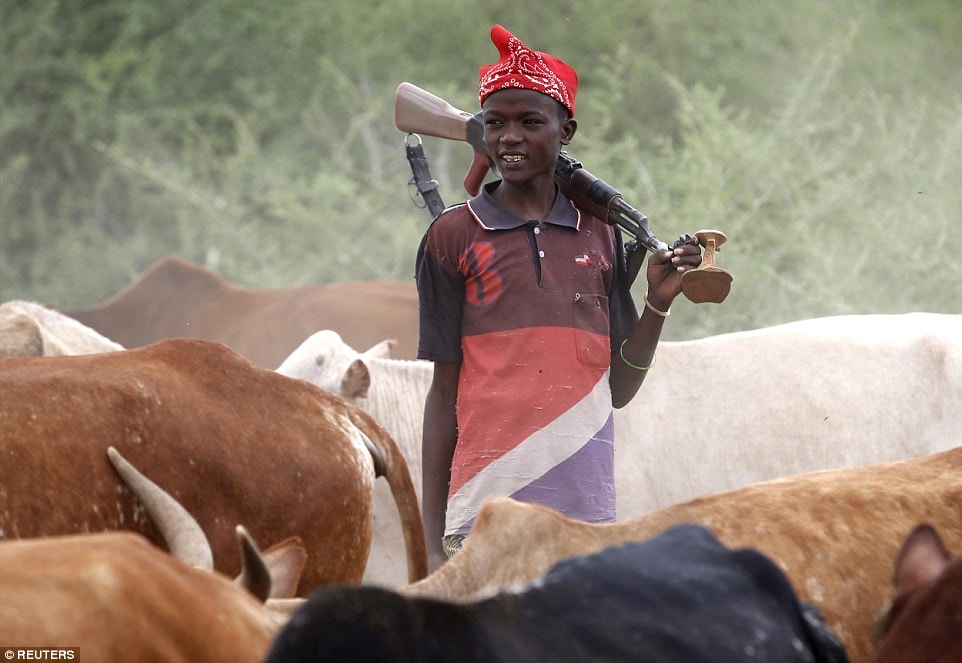
The Karamoja region of Uganda, comprising of the districts: Kaabong, Kotido, Abim, Moroto, Nakapiripirit, Amudat and Napak, is part of the pastoralist corridor – an area inhabited by semi-nomadic cattle keeping groups; the population of this group is estimated to be around 1.2 million people.
The region is characterized by climatic conditions which fail to follow a reliable pattern, this can be troubling for a population whose livelihood is heavily dependent on cattle not only for its high cultural importance, but for its economic value in terms of conversion. The livestock in the area consist of cattle, goats, sheep, donkeys, camels, pigs, chicken and turkeys.

According to a FAO/EU report in 2010, despite having the most cattle in Uganda, Karamoja remains the most underdeveloped and most impoverished region. This is a situation that has persisted for a considerable amount of time despite interventions from the government and other donors. US-based Feinstein International Centre states in its 2013 report, ‘The Livelihood Dynamics in northern Karamoja’, that “Livestock production is and will be the backbone of the economy in Karamoja and represents by far the biggest economic opportunity in the region.”
Future Prospects of Livestock Markets
According to Cees De Haan, etal, (2014), the price of meat is expected to remain high and there are indications, although disputed, that further growth of production is possible – a great positive for the people of Karamoja. However, unfortunately, livestock ownership is increasingly consolidated in the hands of wealthy people (Kraal leaders), who are mostly owners of large herds. Unfortunately, this structure functions only as a mediocre employment generator and shows large inter-annual variation (it amounts to a “boom and bust economy”).
Moreover, according to the report by CTA and IIRR (2016), Ethiopia’s livestock-dependent leather industry is the second-largest source of its foreign currency after coffee. In Uganda, pastoralists and small-scale livestock producers are the fourth-largest contributors to foreign currency earnings.
In this way, Dr. Chim Stem’s report of the Horn of Africa Livestock Export Trade termed as a business at cross (2016) highlights how the livestock export industry is the lifeblood of the 17 million pastoralists throughout the HoA region. Global demand for meat and livestock is at an all-time high and is currently in an unprecedented growth phase never seen before, and it is expected to grow by 6 – 7 million heads annually over the next 10 years.
Karamoja Livestock Markets
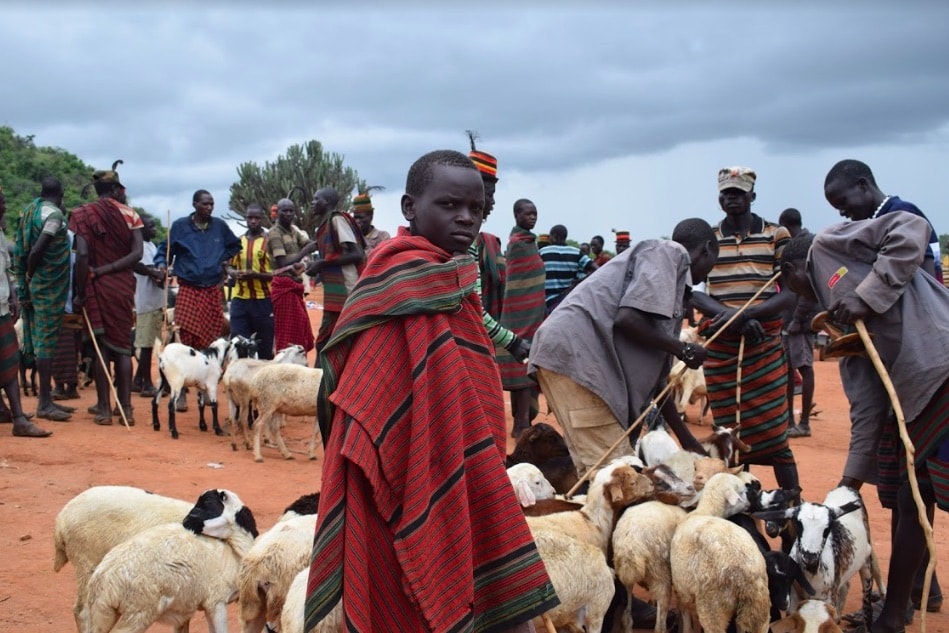
It should be noted that Karamoja hones 20 per cent of Uganda’s cattle, 16 per cent of the country’s goats and 50 per cent of their sheep (Livestock census, 2008). Such statistics are great indicators of the livestock market potential of the region. Local markets tend to have the lowest costs and risks, and are the easiest for pastoralists to serve.
According to the current best stock trading apps, there are four main livestock markets in Karamoja which are increasingly growing: Kanawat Livestock Market in Kotido, Naitakwae Market in Moroto, Komuria Livestock Market in Kaabong, and Lolachat Livestock Market in Nakapiripirit District. However, in 2010, FAO identified six popular cattle and crop commodity markets in the region, including Iriir, Matany, Kangole, and Nataikwae, in Napak and Moroto; they also noted Kacheri and Komuria in the Kotido and Kaabong districts respectively, but the structures at the market aren’t as great as expected.

The benefits resulting from Karamoja’s livestock ends far beyond its borders; the livestock creates more opportunities for Karamoja’s families to gain better access to income and services, such as quality education, health care, and food security at the prime level to withstand shocks. Livestock has long been considered the moving bank of a Karimojong, and this has been shown through the development of sustainable livelihoods by creating resilient systems across the whole region.
Resilience building and developing sustainable livelihoods are obvious in the livestock systems that are brought forward by “The Mobile Pastoralist – Moving Livestock Markets”. Mobility in pastoralism is not solely induced by water, pasture, diseases, security but also through access to better livestock markets and other opportunities.

Pastoralists have trekked around the neighborhoods, resulting in the discovery of alarming information. Importantly, from this cyclic mobility, the pastoralists were deeply affected and decided to impact upon the community through creating cheap livestock prices – hence the restocking in communities due to the mobility effect.
The Karimojong pastoralists have always participated in selling their livestock, but the numbers and the motives behind the marketing is induced by immediate family or household needs. The Resilience Learning Project (RLP/USAID, 2016 ) notes that the Karimajong are responding reasonably well to market opportunities as and when they happen, in a methodical way, by selling the right numbers of animals for their immediate cash needs. It is well known that it is much cheaper to purchase animals in the village, even those with the greatest weight and highest price, than in open market.

The cost for an animal (Cow or Bull) in the local livestock market is lower than expected because pastoralists face more financial factors that lead to such reductions. On average, cattle can cost from 900,000UGX to 1,500,000UX, and also prices range from 120,000UGX to 200,000UGX for Goats in any livestock market in Karamoja. Livestock sales are dependent on seasonality, and the animals are sold based on observation in Karamoja.
For future improvement of better sales, there is a need to improve or introduce the livestock weighbridges, formation of cooperatives and Livestock marketing Associations believe this can open a sense of trust and will develop a sustainable livestock markets value chain while eliminating individual monopoly in the system.
CASE OF BORONA COMMUNITY: LIVESTOCK MARKET IN NORTHERN KENYA
‘Livestock to Market’ is a very important program so far in Kenya; the program has empowered many pastoralists both men and women. In Northern Kenya, investors or organized groups of pastoralists business men purchase livestock (Cattle, Goats and Sheep) from pastoralists. The animals are weighed before payment. The animals are later taken to the ranches or Bomas for fattening for a given period of 2-4 months, depending on the weight and body condition of the animal. After fattening the animal, bulls and cows can be sold in an international, regional or local market at a price that is increasingly attractive. Fattened animals from the ranch will cost around 50,000 – 60,000KSH, which is about 2.1million UGX.
Livestock markets have steered the development of other institutions in Karamoja. For example, market days within Karamoja earn revenues for institutions such as municipalities, local town councils, sub counties and districts. In addition, livestock markets open access to other products such as crop produce, household utensils and products lead by women, such as local brews which also earn revenue to tax authorities in Karamoja.

Case of Komuria Livestock Market in Kaabong
Every market day the Kaabong town council earns an estimated amount of money wort, 110,760,000UGX (One Hundred Ten Million Seven Hundred Sixty Thousand Shillings Only) in tax in the livestock market in one year.
Gender in livestock markets plays a critical role in Karamoja, as not all genders participate in livestock marketing for the same species of animals. It is common in Karamoja women, girls, and some boys, to participate in the trade of small ruminants and poultry such as goats, poultry and pigs. Meanwhile, men and young boys participate in marketing larger ruminants such as cattle and donkeys.

The implication of this system is either a gender disparity by culture, or a Natural behaviour in societies that have since become an instinct. The orientation and upbringing of women and men in Karamoja society makes livelihood systems sustainable and productive, hence building resilience in societies. However, the income gained from livestock by different genders is drawn for the family welfare.
Technology Impact
Pastoralists are not static to change; they use mobile phones, mobile solar for scouting water, pasture and secure rangelands for livestock and humans, and they have further used mobile money networks to reach out to find the current livestock market prices index. Moreover, pastoralists have been using technology increasingly for responding to insecurity incidences around the grazing areas and homesteads. The mobile system has enhanced the amount of financial transactions, so the pastoralists are described now to be “the walking bank for communities both local and cross borders”.

Karamoja Livestock Markets Are Faced by:
- Limited access to veterinary services
- Increasing land degradation hence limited access to pasture and water in seasonal effect
- Climate Change
- Insecurity across borders
- Limited access to livestock markets information,
- Lack of weigh bridge so as pastoralists livestock traders are monopolized
- Transport systems,
- Underdeveloped market infrastructure.
- Monopoly of livestock market prices
Despite observing a tremendous growth in the system, it is also faced by numerous bottlenecks that cut across the socio-cultural, socio-economic, environmental and political atmosphere which are highly demanding in the sector. The key factor behind the slow development of the sector is heavily attributed to the lack of policies which protect pastoralists from exploitation by outside monopolies and lack of financial support onto the national livestock sector. Due to the above challenges, the livestock sector of Karamoja faces significant encounters which prevent development. The national governments, development partners and interest groups should focus on building on: Social and cultural thinking and practices, Market development, consumer preference and value chains, Natural Resource Management Governance and Tenure security and finally Policy and legislation frameworks.