“Climate change isn’t waiting for international pledges, and neither can the world’s most vulnerable nations — because every delayed dollar costs lives, livelihoods, and a chance at survival.”
The conclusion of COP29 reiterates a troubling reality for emerging economies — the yawning gap between climate finance needs and actual disbursements.
Estimates to address the escalating climate crisis stand at USD$1.3 trillion, but developed nations have pledged to mobilise only USD$300 billion annually by 2035.
Although touted as a tripling of the previous USD$100 billion annual target set in 2009, this commitment has met with sharp criticism from developing nations who deem it insufficient.
Analysts from the Centre for Global Development estimate that existing commitments, including contributions from multilateral development banks and private finance, could already account for approximately USD$200 billion annually by 2030.
Contributions from emerging economies such as China could potentially raise the total to USD$265 billion.
However, concerns about inflation eroding the real value of these funds persist.
By 2035, the USD$300 billion commitment is projected to shrink to the equivalent of USD$175 billion, assuming a 5% annual inflation rate.
The absence of explicit provisions for new and additional funding raises concerns about how much of this finance may be redirected from existing aid, potentially undermining sustainable development goals.
This financial chasm, symptomatic of a global system ill-equipped to address pressing climate challenges, demands a new approach.
Emerging economies, constrained by limited resources, cannot afford to rely solely on international pledges.
They must explore innovative, pragmatic strategies to mobilize capital, ensuring returns that align with the current economic structure.
The paradox of climate finance
Climate resilience hinges on mitigation and adaptation projects.
Mitigation focuses on reducing or preventing the causes of climate change, for instance, through renewable energy projects.
These include jobs such as those in construction, operations, and maintenance of renewable energy facilities.
Adaptation involves adjusting systems and practices to cope with the impacts of climate change. Flood protection and growing drought-resistant crops are examples.
But here’s the paradox.
Mitigation projects may generate tangible economic benefits such as direct, indirect and induced employment opportunities. But adaptation measures — equally essential, if not more — such as building climate-resilient infrastructure or improving water management, often lack direct revenue streams.
For emerging economies where public budgets are stretched thin, financing these efforts is particularly challenging.
Here, large sections of people don’t have the disposable income to invest in financial instruments such as green bonds or insurance schemes.
Thus, the key lies in reimagining climate finance frameworks to attract private capital while ensuring measurable returns.
This requires blending financial innovation with tangible incentives and institutional reforms.
Innovative solutions for climate financing
One promising approach is linking returns to local economic multipliers.
For instance, if the government invests in flood protection infrastructure, it generates jobs in construction, opportunities for suppliers providing material and allied local businesses.
These workers and businesses, in turn, spend their wages or profits on goods and services within the local economy, stimulating further economic activity.
This will ensure that investments generate tangible community benefits while offering returns to investors.
Another solution is tying payouts for impact-linked bonds to metrics such as job creation, agricultural productivity, or improved public health outcomes.
Such bonds, designed to finance projects with social or environmental objectives such as improving health and boosting agricultural productivity attract a diverse range of investors including governments, development banks, private investors and impact investment funds.
Unlike traditional bonds with fixed interest payments, these bonds offer payouts depending on the success of the project.
For instance, if a project meets specific goals such as reducing carbon emissions or improving literacy rates, the bond issuer may offer higher returns to investors.
This performance-based structure attracts investors who are looking to achieve both financial returns and positive social or environmental outcomes.
With partial underwriting by governments or international organisations, these bonds also reduce investor risk while driving societal benefits.
Similarly, local carbon credit markets can empower communities to take up projects such as reforestation or urban greening, and thus, generate carbon credits.
These credits can be traded internationally, providing revenue for reinvestment and compensating investors in the process.
Another avenue lies in monetising climate resilience through public infrastructure.
Green infrastructure projects such as flood-resistant housing or renewable-powered transit systems can be designed to generate revenue through user fees, tolls, or public-private lease agreements.
Shared energy-saving models, where savings generated from reduced energy consumption are shared between stakeholders are good solutions too.
Here, savings generated from energy efficiency improvements leading to reduced energy consumption are shared between all parties involved — building owners, tenants and investors.
Such models create financial incentives to invest in energy-saving technologies and practices.
Given the heavy debt burdens of many emerging economies, restructuring climate debt also offers a viable pathway to free up resources for climate projects.
Debt-for-climate swaps allow international creditors to forgive portions of debt in exchange for climate investment commitments.
A country could, for example, use these funds to build mangrove forests that serve as natural flood barriers, reducing future disaster costs.
International financial support might be available for countries that get debt relief, particularly if the project contributes to global climate goals.
Related Articles: ‘We Lost’: How COP29 Ended With a Deal That Made the Whole World Unhappy | COP29: Weak Finance Deal Is a Setback for Climate Action | Are COP29 Food Pledges Going to Succeed? COP28’s Impact Holds Clues | COP29 in Trouble: Calls for Drastic Reform | Inside COP29 | Finance and Equity Should Be the Core of COP29 Talks | Will COP29 Reach Consensus on More Funds for Climate Finance? | COP29: Agrifood Systems Transformation Holds Solutions for the Climate Crisis
Another option is issuing green sovereign debt instruments, which tie lower interest rates to achieving specific climate targets.
Impact investors looking for both returns and sustainability outcomes would be attracted to such measures.
The potential of the international diaspora remains largely untapped.
Governments can issue diaspora green bonds, appealing to communities abroad with higher disposable incomes and a vested interest in their home country.
These bonds could fund visible projects such as solar farms or water systems.
Remittance-based financing platforms could also automatically channel a fraction of remittances into dedicated climate funds, creating a steady funding pipeline for adaptation projects.
Technology-driven solutions can also address one of the biggest challenges in climate finance — perceived risk.
For instance, AI-driven climate risk insurance can use advanced analytics to design tailored insurance products that pool risks across industries or geographies.
The premiums collected could fund adaptation efforts, while payouts provide a safety net for investors if climate events disrupt projects.
Likewise, blockchain for transparent financing can boost investor confidence by ensuring accountability.
For example, blockchain could track funds raised for reforestation in real-time, verifying progress on planting, maintenance and carbon sequestration, thereby enhancing trust and reducing financial risks.
Balancing returns with social impact
Striking a balance between financial returns and social impact is critical.
Risk mitigation through guarantees from multilateral development banks or international financial institutions can play a pivotal role.
These could cover a portion of losses on climate bonds, making them more attractive to private investors.
Blending philanthropy and profit also offers a hybrid model where philanthropic funds cover high-risk costs, while private investors benefit from the profits.
Integrating social return metrics such as lives saved can further broaden the appeal of climate investments.
By adopting strategies such as tying investor returns to measurable local benefits, leveraging technology to reduce risks, and mobilising underutilised resources such as diaspora capital, emerging economies can reshape their climate financing landscape.
** **
This article was originally published by 360info™.
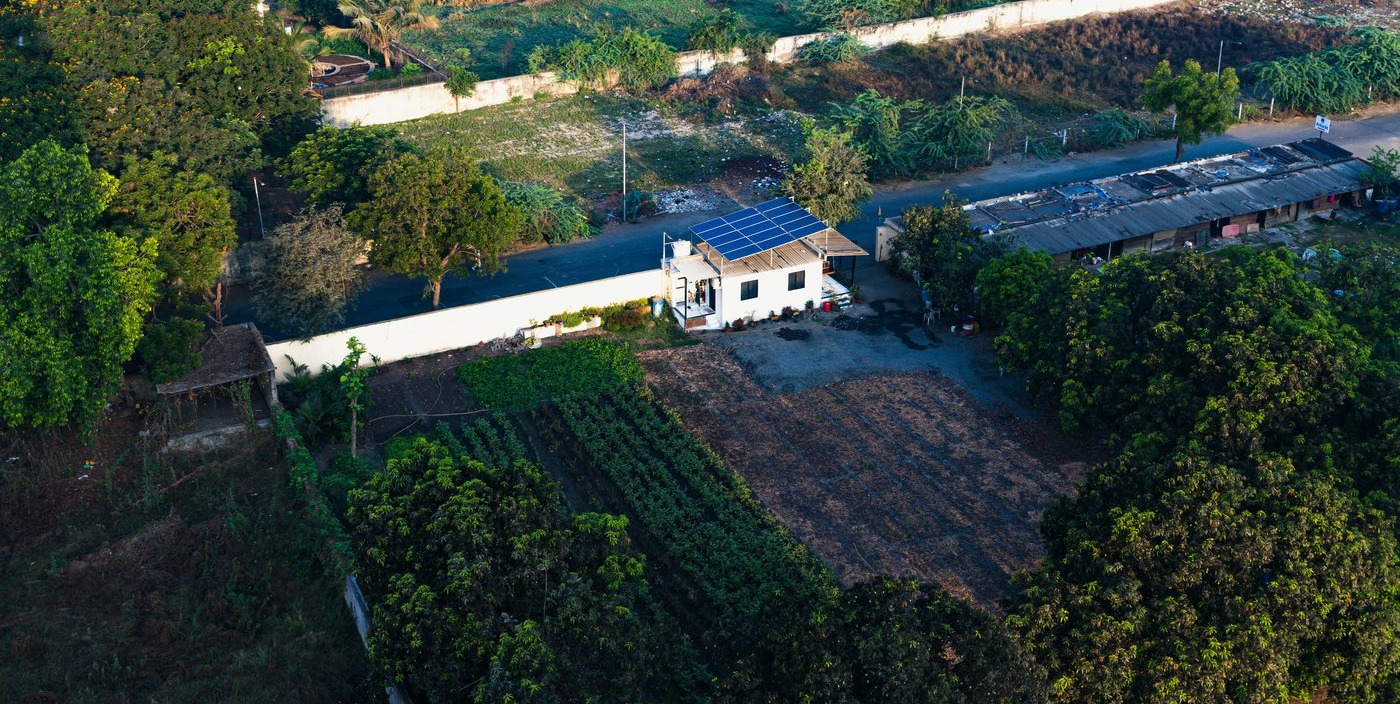
Editor’s Note: The opinions expressed here by the authors are their own, not those of Impakter.com — In the Cover Photo: A house with a rooftop solar panel in Gujarat, India. Developing nations need to re-imagine climate finance to attract private capital. Cover Photo Credit: VD Photography/Unsplash.