Impakter
  • Environment
    • Biodiversity
    • Climate Change
    • Circular Economy
    • Energy
  • FINANCE
    • ESG News
    • Sustainable Finance
    • Business
  • TECH
    • Start-up
    • AI & Machine Learning
    • Green Tech
  • Industry News
    • Entertainment
    • Food and Agriculture
    • Health
    • Politics & Foreign Affairs
    • Philanthropy
    • Science
    • Sport
  • Editorial Series
    • SDGs Series
    • Shape Your Future
    • Sustainable Cities
      • Copenhagen
      • San Francisco
      • Seattle
      • Sydney
  • About us
    • Company
    • Team
    • Global Leaders
    • Partners
    • Write for Impakter
    • Contact Us
    • Privacy Policy
No Result
View All Result
Impakter logo
No Result
View All Result
Ukraine agriculture

FAO and WFP Join Forces to Clear Ukraine’s Agricultural Land From Remnants of the War and Help Farmers Resume Production

The programme aims to prevent Ukraine from requiring food assistance in the long term

The Food and Agriculture Organization of the United Nations (FAO)byThe Food and Agriculture Organization of the United Nations (FAO)
June 23, 2023
in Food and Agriculture
0

The Food and Agriculture Organization of the United Nations (FAO) and the World Food Programme (WFP) have launched a joint programme in collaboration with mine action partner Fondation Suisse de Déminage (FSD) to support smallholder farmers and rural families most affected by the war.

The programme has already started in Kharkivska oblast, and will later expand to Mykolaivska and Khersonska oblasts, focusing on farmers with land plots smaller than 300 hectares as well as rural families growing food for their own consumption.

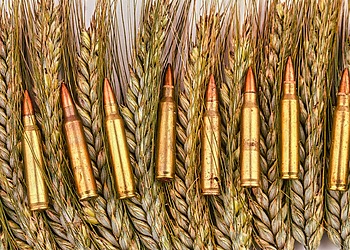
The programme is designed to safely release land back to productive use, including by clearing it from mines and other explosive remnants of the war, to help restore agricultural livelihoods, contribute to Ukraine’s economic recovery, and phase out the need for humanitarian assistance for thousands of rural families.

The war has damaged Ukraine’s agriculture and food production, disrupted supply chains and exports, increased production costs, and caused widespread mine contamination.

According to the Rapid Damage and Needs Assessment, published in February 2023, Ukraine’s production of grain and oilseeds decreased by 37 percent in 2022. Almost 90 percent of small-scale crop producers surveyed by FAO in Ukraine reported a decrease in revenue due to the war, and one in four reported having stopped or significantly reduced their agricultural activity.

“Making the land safe and free of explosive remnants of the war is the first step to rebuilding resilient and prosperous rural communities in Ukraine, who have been on the frontlines of this war, and preventing their long-term dependence on humanitarian assistance,” said Denise Brown, the UN Humanitarian Coordinator in Ukraine.


Related Articles: Including Women in Sustainable Reconstruction in Ukraine | Ukraine Reconstruction: IMF To Give Support

“Many families and small-scale farmers in front-line regions are not planting this season because they know their fields are dangerous or they are risking their lives to plant on mined lands or contaminated soils,” noted Pierre Vauthier, Head of FAO Ukraine Country Office. “We expect that the soil rehabilitation, remediation and conservation techniques conducted will support people’s return to farming, and restore rural livelihoods while helping to sustain Ukraine’s agricultural production.”

“Without urgent action, agricultural production in Ukraine will continue to collapse, with direct consequences on food security and diet diversity in the country, and potential ripple effects on regional and global markets,” said Matthew Hollingworth, WFP Representative and Country Director in Ukraine.

FAO, WFP and FSD in close coordination with communities, local authorities and the Ministry of Agrarian Policy and Food of Ukraine, will first identify and map lands that require demining by using satellite imagery. In the second phase, demining teams will survey and clear lands from mines and other explosive remnants of the war, prioritizing plots that can be quickly released with minimal clearance work. In the third phase, FAO and FSD will test soils to assess contamination by pollutants left behind by exploded weapons. FAO and WFP will simultaneously survey small farmers and rural families on the types of inputs and resources they need to restart agricultural production, and will provide direct in-kind or cash support where possible.

To date, the $100 million project is facing a funding gap of $90 million. FAO and WFP estimate potential annual savings of up to $60 million in direct food assistance to rural communities. The project has been supported by the Ukraine Humanitarian Fund, a UN pooled fund, as well as private donors.

— —

This article was originally published by the Food and Agriculture Organization of the United Nations (FAO) and is republished here as part of an editorial collaboration with FAO.


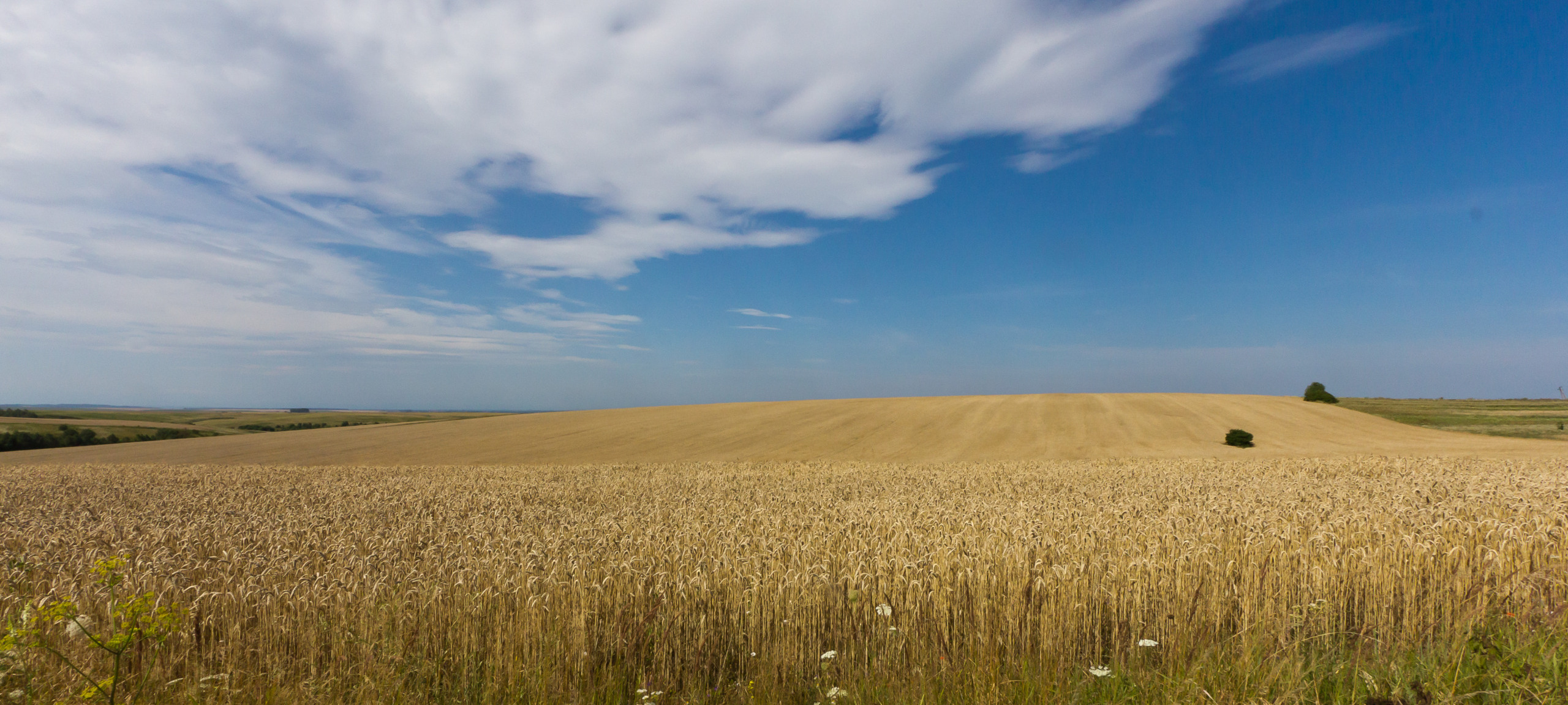
Editor’s Note: The opinions expressed here by the authors are their own, not those of Impakter.com — In the Featured Photo: Wheat fields in Ukraine. Featured Photo Credit: Wikimedia Commons.
Tags: AgricultureFAOFarmingUkraineUkraine warWFP
Previous Post

Sustainability News: World’s Largest Economies Commit to Unlocking More Funding for Sustainable Development

Next Post

Could Veganism Be Missing the Mark? The Case for Mindful Meat.

Related Posts

A New ‘Golden Age’ for Global Chaos
Politics & Foreign Affairs

A New ‘Golden Age’ for Global Chaos

One year since the inauguration of his second administration on 20 January 2025, when he promised to usher in a...

byCarlos Frederico Pereira da Silva Gama - Author & Assistant Professor at the Shiv Nadar Institution of Eminence
January 26, 2026
Why WTO Rules on Domestic Support Matter for Least Developed Countries
Business

Why WTO Rules on Domestic Support Matter for Least Developed Countries

The World Trade Organization (WTO) agriculture negotiations have been stalled for years. Members broadly agree on the need to discipline...

byInternational Institute for Sustainable Development (IISD)
January 20, 2026
Why Glyphosate, the World’s Most Widely Used and Sued Herbicide, Is Under New Scrutiny
Business

Why Glyphosate, the World’s Most Widely Used and Sued Herbicide, Is Under New Scrutiny

Glyphosate, the active ingredient in "Roundup," is applied on millions of acres of farmland worldwide. Its use has triggered a...

byRichard Seifman - Former World Bank Senior Health Advisor and U.S. Senior Foreign Service Officer
January 16, 2026
soil
Biodiversity

To Prevent Ecological Collapse, We Must Start With the Soil

Soil is the single most biodiverse habitat on Earth, home to at least 59% of all species, including over 80%...

byMarcela Quintero - Associate Director General of Research Strategy and Innovation at the Alliance of Bioversity International and CIATand1 others
January 15, 2026
Freshwater
Environment

Renewable Water Availability per Person Plunges 7% in a Decade as Global Scarcity Deepens

Renewable water availability per person has continued to decline by a further 7% over the past decade, while pressure on...

byThe Food and Agriculture Organization of the United Nations (FAO)
December 23, 2025
How Climate Change Could Help Foster Peace in Yemen
Climate Change

How Climate Change Could Help Foster Peace in Yemen

Yemen's tragedy is traditionally depicted through the limited perspective of humanitarian need and political divisiveness, but there is a greater...

byTareq Hassan - Executive Director of the Sustainable Development Network Canada (SDNC)
December 17, 2025
Unexpected Consequences of Investment Treaties in Times of War
Politics & Foreign Affairs

Unexpected Consequences of Investment Treaties in Times of War

Russian state entities are threatening to use the 1989 Belgium-Luxembourg (BLEU)–USSR bilateral investment treaty (BIT) to sue Belgium over the...

byInternational Institute for Sustainable Development (IISD)
December 11, 2025
Transboundary Animal Diseases Pose Urgent Threat to Global Food Security
Biodiversity

Transboundary Animal Diseases Pose Urgent Threat to Global Food Security

The Director-General of the Food and Agriculture Organization of the United Nations (FAO), QU Dongyu, urged Member Countries to reinforce...

byThe Food and Agriculture Organization of the United Nations (FAO)
December 1, 2025
Next Post
Could Veganism Be Missing the Mark? The Case for Mindful Meat.

Could Veganism Be Missing the Mark? The Case for Mindful Meat.

Recent News

Business without borders, a neon sign

Why Every Modern Business Needs Proxies for Market Research

January 29, 2026
RTA Cabinets

RTA Cabinets vs. Pre-Assembled: What to Choose

January 29, 2026
ESG News on India lithium and nickel processing incentives and EV battery supply chains

India Plans Incentives for Lithium and Nickel Processing

January 29, 2026
  • ESG News
  • Sustainable Finance
  • Business

© 2025 Impakter.com owned by Klimado GmbH

No Result
View All Result
  • Environment
    • Biodiversity
    • Climate Change
    • Circular Economy
    • Energy
  • FINANCE
    • ESG News
    • Sustainable Finance
    • Business
  • TECH
    • Start-up
    • AI & Machine Learning
    • Green Tech
  • Industry News
    • Entertainment
    • Food and Agriculture
    • Health
    • Politics & Foreign Affairs
    • Philanthropy
    • Science
    • Sport
  • Editorial Series
    • SDGs Series
    • Shape Your Future
    • Sustainable Cities
      • Copenhagen
      • San Francisco
      • Seattle
      • Sydney
  • About us
    • Company
    • Team
    • Global Leaders
    • Partners
    • Write for Impakter
    • Contact Us
    • Privacy Policy

© 2025 Impakter.com owned by Klimado GmbH