Impakter
  • Environment
    • Biodiversity
    • Climate Change
    • Circular Economy
    • Energy
  • FINANCE
    • ESG News
    • Sustainable Finance
    • Business
  • TECH
    • Start-up
    • AI & Machine Learning
    • Green Tech
  • Industry News
    • Entertainment
    • Food and Agriculture
    • Health
    • Politics & Foreign Affairs
    • Philanthropy
    • Science
    • Sport
  • Editorial Series
    • SDGs Series
    • Shape Your Future
    • Sustainable Cities
      • Copenhagen
      • San Francisco
      • Seattle
      • Sydney
  • About us
    • Company
    • Team
    • Global Leaders
    • Partners
    • Write for Impakter
    • Contact Us
    • Privacy Policy
No Result
View All Result
Impakter logo
No Result
View All Result
Ukraine agriculture

FAO and WFP Join Forces to Clear Ukraine’s Agricultural Land From Remnants of the War and Help Farmers Resume Production

The programme aims to prevent Ukraine from requiring food assistance in the long term

The Food and Agriculture Organization of the United Nations (FAO)byThe Food and Agriculture Organization of the United Nations (FAO)
June 23, 2023
in Food and Agriculture
0

The Food and Agriculture Organization of the United Nations (FAO) and the World Food Programme (WFP) have launched a joint programme in collaboration with mine action partner Fondation Suisse de Déminage (FSD) to support smallholder farmers and rural families most affected by the war.

The programme has already started in Kharkivska oblast, and will later expand to Mykolaivska and Khersonska oblasts, focusing on farmers with land plots smaller than 300 hectares as well as rural families growing food for their own consumption.

The programme is designed to safely release land back to productive use, including by clearing it from mines and other explosive remnants of the war, to help restore agricultural livelihoods, contribute to Ukraine’s economic recovery, and phase out the need for humanitarian assistance for thousands of rural families.

The war has damaged Ukraine’s agriculture and food production, disrupted supply chains and exports, increased production costs, and caused widespread mine contamination.

According to the Rapid Damage and Needs Assessment, published in February 2023, Ukraine’s production of grain and oilseeds decreased by 37 percent in 2022. Almost 90 percent of small-scale crop producers surveyed by FAO in Ukraine reported a decrease in revenue due to the war, and one in four reported having stopped or significantly reduced their agricultural activity.

“Making the land safe and free of explosive remnants of the war is the first step to rebuilding resilient and prosperous rural communities in Ukraine, who have been on the frontlines of this war, and preventing their long-term dependence on humanitarian assistance,” said Denise Brown, the UN Humanitarian Coordinator in Ukraine.


Related Articles: Including Women in Sustainable Reconstruction in Ukraine | Ukraine Reconstruction: IMF To Give Support

“Many families and small-scale farmers in front-line regions are not planting this season because they know their fields are dangerous or they are risking their lives to plant on mined lands or contaminated soils,” noted Pierre Vauthier, Head of FAO Ukraine Country Office. “We expect that the soil rehabilitation, remediation and conservation techniques conducted will support people’s return to farming, and restore rural livelihoods while helping to sustain Ukraine’s agricultural production.”

“Without urgent action, agricultural production in Ukraine will continue to collapse, with direct consequences on food security and diet diversity in the country, and potential ripple effects on regional and global markets,” said Matthew Hollingworth, WFP Representative and Country Director in Ukraine.

FAO, WFP and FSD in close coordination with communities, local authorities and the Ministry of Agrarian Policy and Food of Ukraine, will first identify and map lands that require demining by using satellite imagery. In the second phase, demining teams will survey and clear lands from mines and other explosive remnants of the war, prioritizing plots that can be quickly released with minimal clearance work. In the third phase, FAO and FSD will test soils to assess contamination by pollutants left behind by exploded weapons. FAO and WFP will simultaneously survey small farmers and rural families on the types of inputs and resources they need to restart agricultural production, and will provide direct in-kind or cash support where possible.

To date, the $100 million project is facing a funding gap of $90 million. FAO and WFP estimate potential annual savings of up to $60 million in direct food assistance to rural communities. The project has been supported by the Ukraine Humanitarian Fund, a UN pooled fund, as well as private donors.

— —

This article was originally published by the Food and Agriculture Organization of the United Nations (FAO) and is republished here as part of an editorial collaboration with FAO.


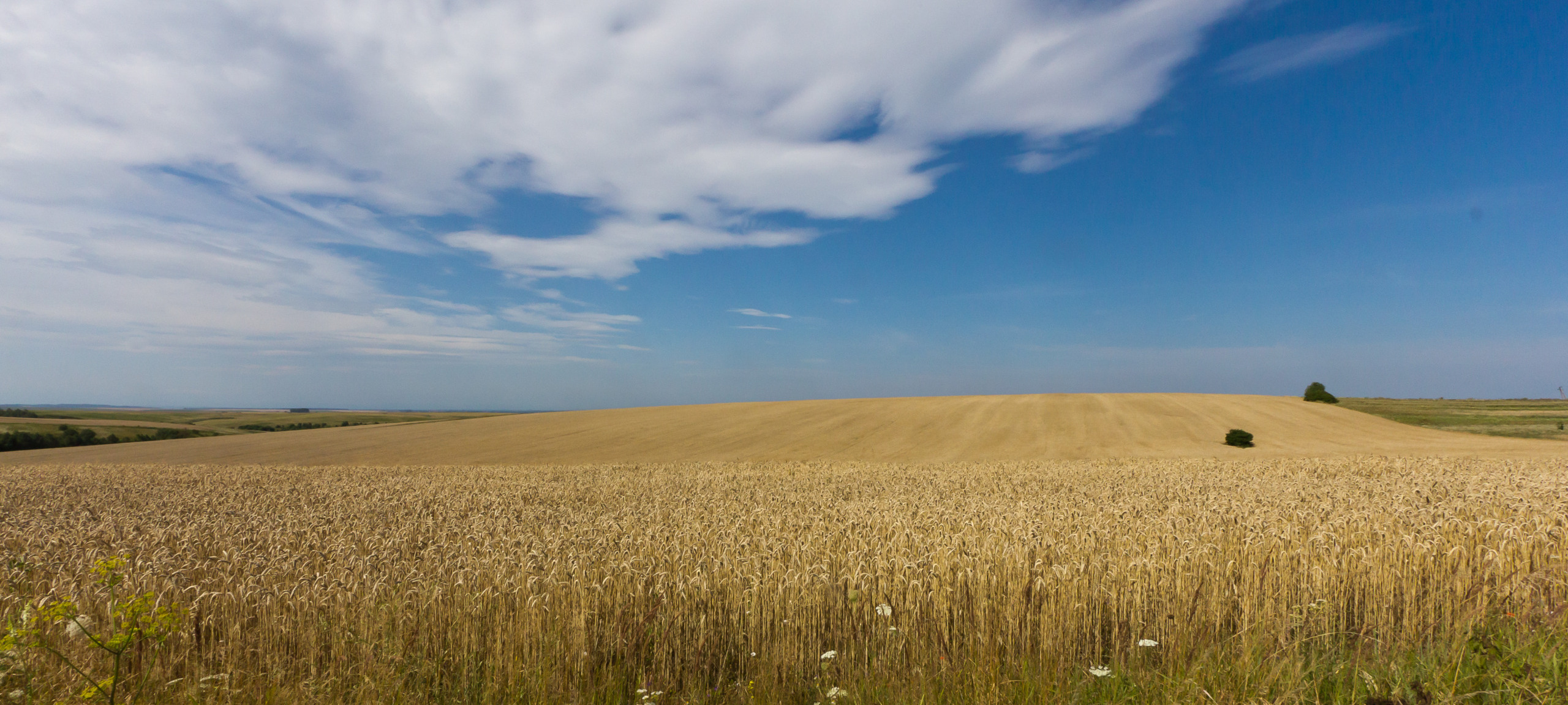
Editor’s Note: The opinions expressed here by the authors are their own, not those of Impakter.com — In the Featured Photo: Wheat fields in Ukraine. Featured Photo Credit: Wikimedia Commons.

Tags: AgricultureFAOFarmingUkraineUkraine warWFP
Previous Post

Sustainability News: World’s Largest Economies Commit to Unlocking More Funding for Sustainable Development

Next Post

Could Veganism Be Missing the Mark? The Case for Mindful Meat.

Related Posts

Bill Gates memo
Climate Change

Climate, Gates and COP30

Bill Gates’ recent article on the “three tough truths” of the ongoing environmental changes makes an essential point: we must...

byJosé Graziano da Silva - Former Director-General at FAO, Founder and Director of the Instituto Fome Zero, and Professor Emeritus at the University of Campinas
November 12, 2025
climate change and food
Biodiversity

COP30: Climate Extremes Are Already Impacting Food Yields Today

The 30th United Nations Climate Change Conference (COP30), taking place in Belém, Brazil, brings together world leaders, scientists, non-governmental organizations, and...

byThe Food and Agriculture Organization of the United Nations (FAO)
November 7, 2025
One Health
Biodiversity

Why and How to Apply the One Health Concept

One Health can be a complex and sometimes jargon-filled concept. Put simply: "One Health is the collaborative efforts of multiple...

byOne Health Initiative
November 6, 2025
Deforestation
Environment

FAO Report: Global Deforestation Slows, but Forests Remain Under Pressure

Deforestation has slowed in all of the world’s regions in the last decade, according to the Global Forest Resources Assessment 2025...

byThe Food and Agriculture Organization of the United Nations (FAO)
October 21, 2025
land stewardship
Business

Ranches: Blending Sustainable Living With Investment Potential

When I see firstly ranches for sale on Realmo, i bought it with more enthusiasm than discipline. I loved the idea...

byHannah Fischer-Lauder
October 21, 2025
World Restoration Flagships
Food and Agriculture

Healthy Nature for Better Food Systems: UN Awards New World Restoration Flagships

The United Nations (UN) has named four new World Restoration Flagships under the UN Decade on Ecosystem Restoration. Recognizing global efforts...

byThe Food and Agriculture Organization of the United Nations (FAO)
October 16, 2025
food waste
Food and Agriculture

Targeted Investments to Combat Food Loss and Waste and Generate Triple Wins

To mark the International Day of Awareness of Food Loss and Waste 2025, the Food and Agriculture Organization of the United...

byThe Food and Agriculture Organization of the United Nations (FAO)
October 1, 2025
poland drone attack
Politics & Foreign Affairs

Poland Was Targeted by Bigger Neighbors in 1939 and by Russia Now

Slightly more than 86 years ago, on September 1, 1939, Poland was invaded by Nazi Germany. This was the outcome...

byRichard Seifman - Former World Bank Senior Health Advisor and U.S. Senior Foreign Service Officer
September 12, 2025
Next Post
Could Veganism Be Missing the Mark? The Case for Mindful Meat.

Could Veganism Be Missing the Mark? The Case for Mindful Meat.

Recent News

ESG News regarding COP30 Declaration on Information Integrity on Climate Change, Trump’s tariff volatility, EV boom in South America, and protests at COP30

COP30 Declaration on Information Integrity on Climate Change

November 18, 2025
Business planning: engineer generating a plan

How Comprehensive Business Planning Can Drive Long-Term Sustainability

November 18, 2025
Encouraging Evidence of Momentum in Negotiations at COP30

Encouraging Evidence of Momentum in Negotiations at COP30

November 18, 2025
  • ESG News
  • Sustainable Finance
  • Business

© 2025 Impakter.com owned by Klimado GmbH

No Result
View All Result
  • Environment
    • Biodiversity
    • Climate Change
    • Circular Economy
    • Energy
  • FINANCE
    • ESG News
    • Sustainable Finance
    • Business
  • TECH
    • Start-up
    • AI & Machine Learning
    • Green Tech
  • Industry News
    • Entertainment
    • Food and Agriculture
    • Health
    • Politics & Foreign Affairs
    • Philanthropy
    • Science
    • Sport
  • Editorial Series
    • SDGs Series
    • Shape Your Future
    • Sustainable Cities
      • Copenhagen
      • San Francisco
      • Seattle
      • Sydney
  • About us
    • Company
    • Team
    • Global Leaders
    • Partners
    • Write for Impakter
    • Contact Us
    • Privacy Policy

© 2025 Impakter.com owned by Klimado GmbH