
Impakter
  • Environment
    • Biodiversity
    • Climate Change
    • Circular Economy
    • Energy
  • FINANCE
    • ESG News
    • Sustainable Finance
    • Business
  • TECH
    • Start-up
    • AI & Machine Learning
    • Green Tech
  • Industry News
    • Entertainment
    • Food and Agriculture
    • Health
    • Politics & Foreign Affairs
    • Philanthropy
    • Science
    • Sport
  • Editorial Series
    • SDGs Series
    • Shape Your Future
    • Sustainable Cities
      • Copenhagen
      • San Francisco
      • Seattle
      • Sydney
  • About us
    • Company
    • Team
    • Global Leaders
    • Partners
    • Write for Impakter
    • Contact Us
    • Privacy Policy
No Result
View All Result
Impakter logo
No Result
View All Result
Agroecology: A Key Piece to Climate Adaptation & Mitigation?

Agroecology: A Key Piece to Climate Adaptation & Mitigation?

CGIARbyCGIAR
May 14, 2021
in Climate Change, Environment, Equal Rights, Food and Agriculture, SDG Series, Society
0

COMBATING CLIMATE CHANGE OUTCOMES WITH AGROECOLOGY: EVIDENCE & ACTIONS NEEDED

Agroecology can be defined as the combination of research, education, action & change that brings sustainability to the ecological, economic & social aspects of food systems. It is increasingly seen as an approach that can bring much-needed transformation to food systems.
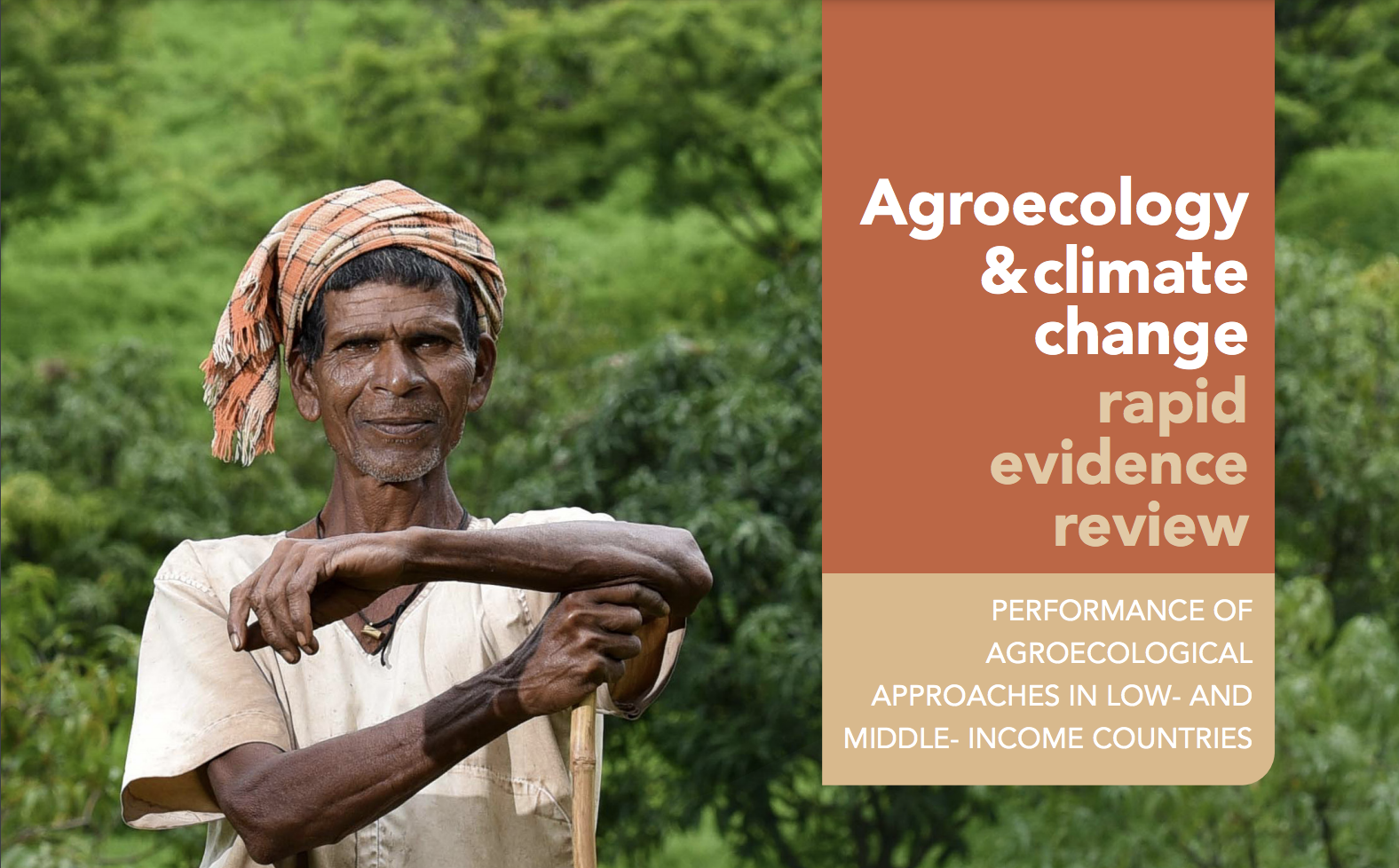
Read the review here.

A new academic review of over 10,000 studies finds substantial evidence that agroecological practices – like farm diversification, agroforestry and organic agriculture – can make a significant contribution in helping low- and middle-income countries (LMICs) meet their climate adaptation and mitigation targets through their food systems.

The study found that agroecology can play a major role in climate change adaptation and mitigation. However, we still don’t have enough data and evidence on what works, where and why. So, what does the available evidence tell us?

WHAT THE EVIDENCE TELLS US

CLIMATE CHANGE ADAPTATION

  • Farm diversification had the strongest body of evidence for impacts on climate change adaptation, which included positive impacts of diversification on crop yield, pollination, pest control, nutrient cycling, water regulation and soil fertility.
  • Substantial evidence exists for climate change adaptation associated with practices and systems aligned with principles of agroecology. However, more analysis is needed to understand agroecology’s resilience to extreme weather conditions.
  • Some agroecological practices, like agroforestry, have positive impacts on biodiversity, water regulation, soil carbon, nitrogen and fertility and buffering temperature extremes. Others, like organic agriculture, improve regulating (pest, water, nutrient) and supporting services.

CLIMATE CHANGE MITIGATION

The evidence on agroecology’s impact on mitigation is modest, except for enhancing carbon sequestration in soil and biomass.

Where there is strong evidence:

  • Tropical agroforestry had the strongest body of evidence for impacts on mitigation, which had associated sequestration of carbon in biomass and soil.

Where there is weak evidence:

  • As the GHG footprint of outcomes depends on where system boundaries are drawn, more multi-scalar analyses are needed to capture flows of inputs and impacts beyond the farm scale, especially in LMICs where there is almost a complete lack of data on GHG emissions from tropical agriculture.

Where there is moderate evidence:

  • There is a moderate and growing body of evidence for organic agriculture increasing soil carbon sequestration.
  • Evidence of nitrous oxide mitigation was modest for tropical agriculture overall, and data on methane generation or mitigation was also limited.
  • Evidence from the global North suggests that reliance on organic nutrient sources and organic farming will likely avoid increased nitrous oxide emissions compared to use of synthetic nitrogen fertilizer.

ADAPTIVE CAPACITY

  • Evidence suggests that agroecology provides more climate change adaptation and mitigation than conventional agriculture by emphasizing locally relevant solutions, participatory processes and co-creation of knowledge.
  • Specifically, co-creation and sharing of knowledge supported farmers’ capacity to adapt to local conditions.
  • Multiple lines of evidence show that engaging with local knowledge through participatory and educational approaches are effective at adapting technologies to local contexts, thereby delivering improved adaptation and mitigation.

Related Articles: Social Farming for Sustainable Development | Sustainable Agriculture in an Age of Commercial Farming | Bringing Climate Action to Farming Communities

YIELDS

  • Evidence for trade-offs exists between yields and climate change adaptation and mitigation, but it was not systematically reported.
  • There are win-win outcomes for yields and climate change mitigation associated with crop diversity and organic nutrient management, but not necessarily for organic farming or agroforestry.

DATA GAPS

  • There is a clear need for high-quality, long-term, research on farms and at landscape scales that compare agroecology against alternatives like conventional or climate-smart agriculture.
  • A large data gap was found for agricultural GHG emissions and mitigation, with almost no evidence from the global South. There were also evidence gaps for agroecology approaches involving livestock integration, landscape-scale redesign and for multi-scalar analysis.
  • A major concern is to what extent scaling up agroecology may restrict farmers’ optionsand becomes a poverty trap by maintaining the status quo by not providing access to possible growth through industrial and corporate models.
  • There is a lack of data or scenarios showing the impacts of agroecological transitions on economic development.

DONOR INVESTMENTS

Improve investment in agroecology for climate change will require long-term funding modalities, outcome target setting that includes environmental services and climate benefits, and systemic change and incentives to build farmer capacities (Fig 1). Rather than treating climate change adaptation and mitigation as co-benefits, global food systems must be actively managed for climate change benefits.
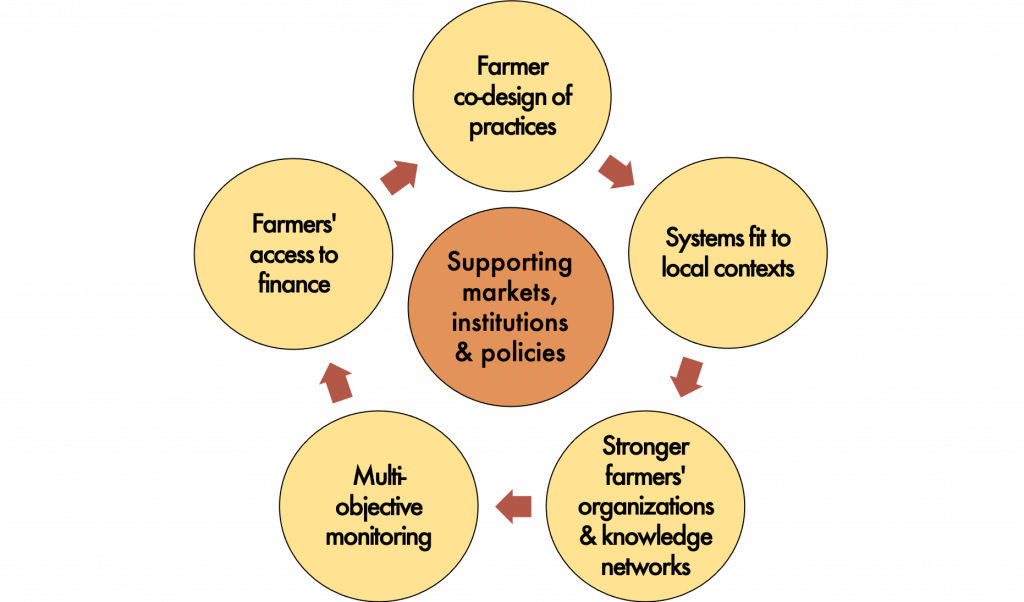
Figure 1. Key elements of exiting agricultural development programs to increase support for agroecology and climate change outcomes.

WHAT ACTIONS ARE NEEDED?

Tackling climate change has always required broad cooperation and diverse approaches. Implementing agroecology across organizations with different political visions for development will require transcending the many labels for sustainable agriculture and climate change (e.g., climate-smart agriculture, regenerative agriculture), including agroecology. The point is to spend less time debating what agroecology is, and more time on how it can be used to improve agricultural mitigation and adaptation to climate change.

RECOMMENDATIONS FROM THE REVIEW

  • An outcome-based approach is needed to understand the performance of integrating agroecological principles and climate change adaptation and mitigation indicators.
  • Direct agricultural development investments to agricultural diversification, local adaptation, and pathways to scaling both.
  • Increase investment for research on agroecology’s resilience to extreme weather events and climate change mitigation outcomes.
  • Invest in research to analyze approaches aligned with agroecology relative to other agriculture development approaches, across all scales and regions, for outcomes in multiple dimensions and their trade-offs, including cost-effectiveness.
READ THE REPORT HERE.
— —
About the Author: Sadie Shelton is the Communications Officer for the CCAFS Low-Emissions Development Flagship.

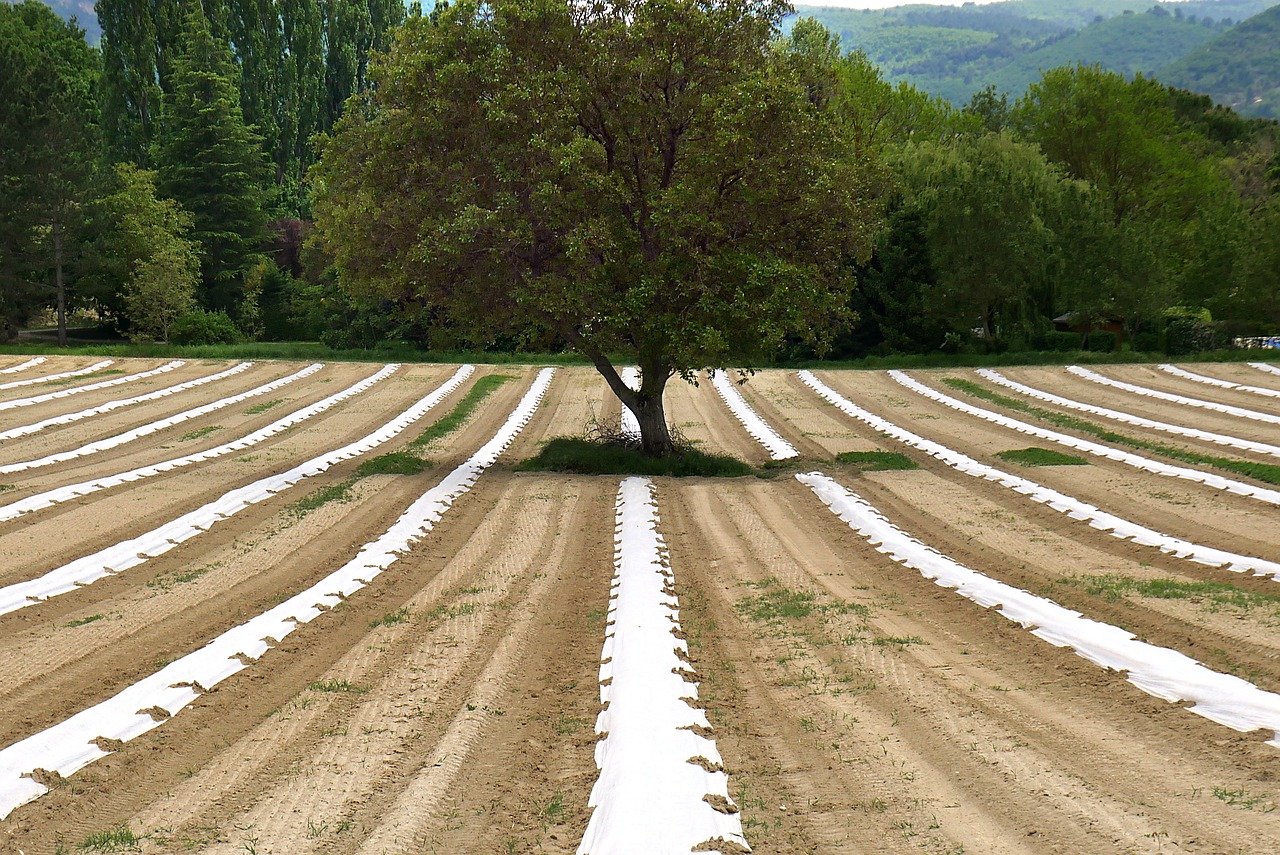
Editor’s Note: The opinions expressed here by Impakter.com columnists are their own, not those of Impakter.com. — In the Featured Photo: A field of asparagus. Featured Photo Credit: ybernardi.


Tags: AgricultureagroecologyAgroecology & Climate ChangeCGIARClimate Change AdaptationClimate Change Mitigation
Previous Post

3 Ways Solar Energy Powers the Fight Against COVID-19

Next Post

A (Non) Modest Proposal for the G20: A Sustainable World Commission to Achieve the SDGs 

Related Posts

Why WTO Rules on Domestic Support Matter for Least Developed Countries
Business

Why WTO Rules on Domestic Support Matter for Least Developed Countries

The World Trade Organization (WTO) agriculture negotiations have been stalled for years. Members broadly agree on the need to discipline...

byInternational Institute for Sustainable Development (IISD)
January 20, 2026
Why Glyphosate, the World’s Most Widely Used and Sued Herbicide, Is Under New Scrutiny
Business

Why Glyphosate, the World’s Most Widely Used and Sued Herbicide, Is Under New Scrutiny

Glyphosate, the active ingredient in "Roundup," is applied on millions of acres of farmland worldwide. Its use has triggered a...

byRichard Seifman - Former World Bank Senior Health Advisor and U.S. Senior Foreign Service Officer
January 16, 2026
soil
Biodiversity

To Prevent Ecological Collapse, We Must Start With the Soil

Soil is the single most biodiverse habitat on Earth, home to at least 59% of all species, including over 80%...

byMarcela Quintero - Associate Director General of Research Strategy and Innovation at the Alliance of Bioversity International and CIATand1 others
January 15, 2026
How Climate Change Could Help Foster Peace in Yemen
Climate Change

How Climate Change Could Help Foster Peace in Yemen

Yemen's tragedy is traditionally depicted through the limited perspective of humanitarian need and political divisiveness, but there is a greater...

byTareq Hassan - Executive Director of the Sustainable Development Network Canada (SDNC)
December 17, 2025
Animal Health
Biodiversity

Better Animal Health Is the Low-Risk, High-Reward Climate Investment We Need

Imagine if there was a way to reduce emissions from the meat, egg and dairy sector by nearly a quarter,...

byCarel du Marchie Sarvaas
November 26, 2025
COP30: Countries’ Climate Agrifood Ambitions Undermined by Funding Gaps, Report Finds
Biodiversity

COP30: Countries’ Climate Agrifood Ambitions Undermined by Funding Gaps, Report Finds

Developing countries recognize the urgent need to adapt agrifood systems to climate change, but most National Adaptation Plans (NAPs) are...

byThe Food and Agriculture Organization of the United Nations (FAO)
November 19, 2025
Bill Gates memo
Climate Change

Climate, Gates and COP30

Bill Gates’ recent article on the “three tough truths” of the ongoing environmental changes makes an essential point: we must...

byJosé Graziano da Silva - Former Director-General at FAO, Founder and Director of the Instituto Fome Zero, and Professor Emeritus at the University of Campinas
November 12, 2025
climate change and food
Biodiversity

COP30: Climate Extremes Are Already Impacting Food Yields Today

The 30th United Nations Climate Change Conference (COP30), taking place in Belém, Brazil, brings together world leaders, scientists, non-governmental organizations, and...

byThe Food and Agriculture Organization of the United Nations (FAO)
November 7, 2025
Next Post
A (Non) Modest Proposal for the G20: A Sustainable World Commission to Achieve the SDGs 

A (Non) Modest Proposal for the G20: A Sustainable World Commission to Achieve the SDGs 

Recent News

The Era of ‘Global Water Bankruptcy’ Has Begun

The Era of ‘Global Water Bankruptcy’ Has Begun

January 30, 2026
ESG news regarding: New Report Urges Urgent Action to Halt PFAS Contamination Across EU, US Proposes New Rule to Force Greater Transparency in Pharmacy Benefit Manager Fees, EU and Brazil Seal Landmark Deal Creating World’s Largest Free Data Flow Zone, Beijing Suspends Import and Use of Sun Pharma Alzheimer’s Treatment

Without Regulation, ‘Forever Chemicals’ Will Cost Europe €440 billion by Mid Century

January 30, 2026
Food Waste in India

India’s Food Waste Is Turning Into an Environmental Time Bomb

January 30, 2026
  • ESG News
  • Sustainable Finance
  • Business

© 2025 Impakter.com owned by Klimado GmbH

No Result
View All Result
  • Environment
    • Biodiversity
    • Climate Change
    • Circular Economy
    • Energy
  • FINANCE
    • ESG News
    • Sustainable Finance
    • Business
  • TECH
    • Start-up
    • AI & Machine Learning
    • Green Tech
  • Industry News
    • Entertainment
    • Food and Agriculture
    • Health
    • Politics & Foreign Affairs
    • Philanthropy
    • Science
    • Sport
  • Editorial Series
    • SDGs Series
    • Shape Your Future
    • Sustainable Cities
      • Copenhagen
      • San Francisco
      • Seattle
      • Sydney
  • About us
    • Company
    • Team
    • Global Leaders
    • Partners
    • Write for Impakter
    • Contact Us
    • Privacy Policy

© 2025 Impakter.com owned by Klimado GmbH