Impakter
  • Environment
    • Biodiversity
    • Climate Change
    • Circular Economy
    • Energy
  • FINANCE
    • ESG News
    • Sustainable Finance
    • Business
  • TECH
    • Start-up
    • AI & Machine Learning
    • Green Tech
  • Industry News
    • Entertainment
    • Food and Agriculture
    • Health
    • Politics & Foreign Affairs
    • Philanthropy
    • Science
    • Sport
  • Editorial Series
    • SDGs Series
    • Shape Your Future
    • Sustainable Cities
      • Copenhagen
      • San Francisco
      • Seattle
      • Sydney
  • About us
    • Company
    • Team
    • Partners
    • Write for Impakter
    • Contact Us
    • Privacy Policy
No Result
View All Result
Impakter logo
No Result
View All Result
World Water Day 2022

World Water Day 2022

World Water Day is celebrated on March 22 every year since 1993, in order to create awareness for water scarcity worldwide

Amber van UnenbyAmber van Unen
March 21, 2022
in Environment, Society
0

There are around 2 billion people currently living without access to safe water in the world. A core focus of World Water Day is to inspire action towards the Sustainable Development Goal; water and sanitation for all by 2030.

From 22-27 March 2022, a broad range of participants, including political and economic decision-makers, multilateral institutions, academia, civil society and the private sector will gather in Dakar, Senegal for the 9th World Water Forum under the theme: Water Security for Peace and Development.
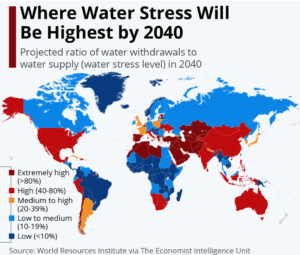
 

The 9th World Water Forum, the first of its kind in sub- Saharan Africa, is a big challenge. It focuses on the 2030 Agenda for transformative action. This vision is a roadmap with four priorities: water security and sanitation; cooperation; rural development; and means tools.

The World Water Forum represents one moment every three years where the international community can bring together a diversity of shared knowledge, raise awareness for water issues among political, social and economic decision makers. 

Today, UNESCO on behalf of UN-Water is launching the latest edition of the United Nations World Water Development Report, titled “Groundwater: Making The Invisible Visible” at the opening ceremony of the 9th World Water Forum in Dakar. 

The authors call on countries to commit themselves to developing adequate and effective groundwater management and governance policies in order to address current and future water crises throughout the globe. The report states: “Accounting for approximately 99% of all liquid freshwater on Earth, groundwater has the potential to provide societies with tremendous social, economic and environmental benefits and opportunities.”

The report describes the challenges and opportunities associated with the development, management and governance of groundwater worldwide. It aims to form a clear understanding of the role that groundwater plays in daily life, of the interaction with people, and of the opportunities for optimising its use in order to ensure the long-term sustainability of this largely available, yet fragile resource. 

Launched in conjunction with World Water Day, the report provides decision-makers with knowledge and tools to formulate and implement sustainable water policies. Exploring, protecting and sustainably using groundwater will be central to surviving and adapting to climate change and meeting the needs of a growing population.

The human dependence on groundwater is expected to rise as surface water availability becomes increasingly limited due to climate change. Globally, water use is projected to grow by roughly 1% per year over the next 30 years. 
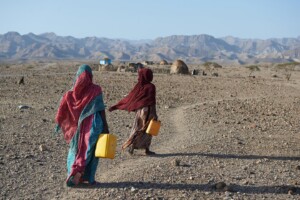
In the Photo: Water scarcity. Photo Credit: Shehzad Noorani via UNICEF.

For now, the quality of groundwater is generally good, which means it can be used safely and affordably, without requiring advanced levels of treatment. Groundwater is often the most cost-effective way of providing a secure supply of water in the rural sector. Unquestionably, the future of agriculture – and hence, feeding the world – will depend on it. 

For example, in Sub-Saharan Africa, the opportunities offered by the vast aquifers remain largely underexploited. Only 3% of farmland is equipped for irrigation, and only 5% of that area uses groundwater, compared to 59% and 57% respectively in North America and South Asia.

But there is a problem: As the report points out, low use of groundwater can be traced to a lack of investments in infrastructure, institutions, trained professionals and knowledge of the resource. 

The challenge is therefore not physical but human: It is a matter of mobilizing the necessary resources to achieve the goal of effective use of groundwater to continue to sustain the necessary agricultural production to feed the planet.


Editor’s Note: The opinions expressed here by Impakter.com columnists are their own, not those of Impakter.com.  In the Featured Photo: Water in the hands of a human. Featured Photo Credit: Flickr.
Tags: Climate ChangeGroundwaterUNESCOUnited Nationsworld water day
Previous Post

Mapping Climate Change: The Current Challenges of Cartography Between Art and Science

Next Post

To Combat Global Warming, Carbon Emissions Disclosure To Be Required by Market Regulators

Related Posts

How Climate Change Is Driving Evolution
Climate Change

How Climate Change Is Driving Evolution

As global temperatures continue to rise at alarming rates, climate change threatens to wipe out entire groups of animal species....

byYuxi Lim
February 5, 2026
biodiversity loss
Biodiversity

The Economics of Biodiversity Loss

In the 1990s, India’s vulture population collapsed due to the unintended knock-on effect of a veterinary drug for cattle, with...

byStefano Giglio - Professor at Yale Universityand2 others
February 4, 2026
The Era of ‘Global Water Bankruptcy’ Has Begun
Climate Change

The Era of ‘Global Water Bankruptcy’ Has Begun

Humanity’s long-term water usage and damage have exceeded nature's renewal and safe limits, a situation scientists and the media have...

byNmesoma Ezetu
February 4, 2026
A picture with a wind power generator
Society

Emissions and Economic Growth: Is There Still a Link?

In prior decades, economic growth and emissions co-existed. As countries grew richer, they produced more and emitted more. This relationship...

byFedor Sukhoi
February 3, 2026
Three sponsors for the 2026 Winter Olympics in Italy could generate 1.3 million tons of CO2
Climate Change

Winter Olympics Sponsorship Emissions: Who Are the Main Offenders?

The 2026 Winter Olympic Games are set to begin in Italy next month. Scattered across towns in northern Italy, from...

bySarah Perras
February 2, 2026
WEF Report Ranks Environmental Challenges as Greatest Long-Term Threat to Global Stability
Business

WEF Report Ranks Environmental Challenges as Greatest Long-Term Threat to Global Stability

The World Economic Forum’s Global Risks Report 2025 found that environmental risks are deteriorating faster than other threats and challenges.  ...

byBenjamin Clabault
February 2, 2026
Thames Water closes in on rescue deal;
Environment

Thames Water Closes in on £16bn Rescue Deal

Today’s ESG Updates: Thames Water Closes in on £16bn Rescue Deal: Thames Water is edging closer to a multibillion-pound rescue...

byAriq Haidar
February 2, 2026
Food Waste in India
Climate Change

India’s Food Waste Is Turning Into an Environmental Time Bomb

India, a key player in this fight, is currently battling a confluence of climate-driven disasters. Last year’s punishing extreme heatwave,...

byPranjali Chowdhary - Research and Policy Associate at the Institute for Governance and Sustainable Development, Indiaand1 others
January 30, 2026
Next Post
To Combat Global Warming, Carbon Emissions Disclosure To Be Required by Market Regulators

To Combat Global Warming, Carbon Emissions Disclosure To Be Required by Market Regulators

Recent News

ESG News regarding Nuclear Waste Storage; Canada Replaces EV Mandate; EU and Turkey Resume Trade Modernization Talks; Startup Raises $29M for Desk-Sized Fusion Reactor

Volunteers Needed for Nuclear Waste Storage

February 6, 2026
Rare Earth Metals 101

Rare Earth Metals 101

February 6, 2026
How to Spot Greenwashing in the Publishing Industry

How to Spot Greenwashing in the Publishing Industry

February 6, 2026
  • ESG News
  • Sustainable Finance
  • Business

© 2025 Impakter.com owned by Klimado GmbH

No Result
View All Result
  • Environment
    • Biodiversity
    • Climate Change
    • Circular Economy
    • Energy
  • FINANCE
    • ESG News
    • Sustainable Finance
    • Business
  • TECH
    • Start-up
    • AI & Machine Learning
    • Green Tech
  • Industry News
    • Entertainment
    • Food and Agriculture
    • Health
    • Politics & Foreign Affairs
    • Philanthropy
    • Science
    • Sport
  • Editorial Series
    • SDGs Series
    • Shape Your Future
    • Sustainable Cities
      • Copenhagen
      • San Francisco
      • Seattle
      • Sydney
  • About us
    • Company
    • Team
    • Partners
    • Write for Impakter
    • Contact Us
    • Privacy Policy

© 2025 Impakter.com owned by Klimado GmbH