Impakter
  • Environment
    • Biodiversity
    • Climate Change
    • Circular Economy
    • Energy
  • FINANCE
    • ESG News
    • Sustainable Finance
    • Business
  • TECH
    • Start-up
    • AI & Machine Learning
    • Green Tech
  • Industry News
    • Entertainment
    • Food and Agriculture
    • Health
    • Politics & Foreign Affairs
    • Philanthropy
    • Science
    • Sport
  • Editorial Series
    • SDGs Series
    • Shape Your Future
    • Sustainable Cities
      • Copenhagen
      • San Francisco
      • Seattle
      • Sydney
  • About us
    • Company
    • Team
    • Partners
    • Write for Impakter
    • Contact Us
    • Privacy Policy
No Result
View All Result
Impakter logo
No Result
View All Result
How Climate Change Is Driving Evolution

Scientists have found new data found regarding polar bears' gene adaptations.

How Climate Change Is Driving Evolution

Polar bears may be developing genetic adaptations to survive rising temperatures and rapidly changing climate conditions, new research shows

Yuxi LimbyYuxi Lim
February 10, 2026
in Climate Change, Environment
0

As global temperatures continue to rise at alarming rates, climate change threatens to wipe out entire groups of animal species. In an article published by Evolution Letters, researchers state that “[h]uman-induced climate change is increasingly molding the selective environment in which species must either adapt, move, or face extinction.” 

Now, scientists estimate that more than two-thirds of polar bears will go extinct by 2050, with total extinction predicted by the end of this century.

Polar bears show genetic changes linked to survival

In a recent study, researchers from the University of East Anglia found that polar bears have undergone changes in their DNA that would allow them to adapt more readily to warmer habitats. The full scale of adaptation, however, depends on whether polar bears have sufficient food sources and breeding partners. If these conditions are met, they may potentially survive the worsening climate conditions. 

The researchers found that some genes linked to heat stress, ageing, and metabolism behaved differently for the polar bears found in south-east Greenland. These were found alongside DNA changes in areas tied to fat processing. This finding suggests that the bears in the south-east region are slowly adapting to rougher plant-based diets, as compared to the northern populations of bears that typically feed on fatty seals. 

The changes in their genes were found to be strongly related to rising temperatures in south-east Greenland, which indicates that stressful environmental conditions, including rapidly warming climates, can accelerate the process of DNA evolution. 

Hybrid species emerge as habitats and ranges shift
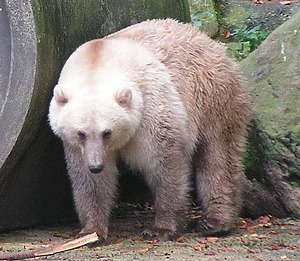
Hybrid between grizzly bear and polar bear. Photo Credit: Wiki Commons

Gene evolution and species hybridisation have been observed to be increasingly common phenomena in response to climate change. 

In 2023, a hybrid bird species (a cross between a green jay bird and a blue jay bird) was discovered for the first time. Due to environmental changes caused by climate change, the likelihood for interactions between species that have never interacted before increases, possibly leading to new ecological communities. 

The “pizzly” bear, a cross between a polar bear and a grizzly bear, is another example. As temperatures rise and polar bears spend more time on land and less time on ice, with brown and black bears also gradually infiltrating the Arctic, sightings of these hybrids are expected to climb according to experts.

Related Articles

Here is a list of articles selected by our Editorial Board that have gained significant interest from the public:

  • Climate Change, Zoos and Animal Conservation: Adapting to the Times
  • Behavioural Science Help Scale Climate Change Adaptation Solutions?
  • Toward a Systemic Adaptation to Heat

Adaptation has limits

Hybridisation may be beneficial for some species, and it may help them adapt to environmental changes. Such processes are not new or foreign. However, experts have expressed concerns that the rate at which this is occurring may be accelerating too quickly for it to be entirely beneficial. 

For example, when cold-blooded species like lizards, frogs, and fish undergo rapid adaptation to warmer temperatures, it often results in population declines as individuals unable to tolerate higher temperatures die. Even if they do adapt to survive climate change, their smaller populations may go extinct due to inbreeding, harmful new mutations, or misfortunes such as disease epidemics. 

Conversely, another concern is that the rate of evolution is disproportionately slow compared to the rate of climate change. For animals that take several years to reach breeding age, the climate would have worsened by the time their offspring are born. Subsequently, genes that were previously advantageous for the parents’ survival become redundant for their offspring. Each generation may fail to thrive due to their inability to accommodate to the changing environmental conditions, drawing even closer to extinction. 

At the same time, many animal species face the threat of the loss of their natural habitats due to human activity. Together, these pressures may alter ecosystems and biodiversity at a pace that Mother Nature cannot keep up with. This underscores the importance of mankind’s efforts to slow climate change before other species go extinct at the cost of our actions. 


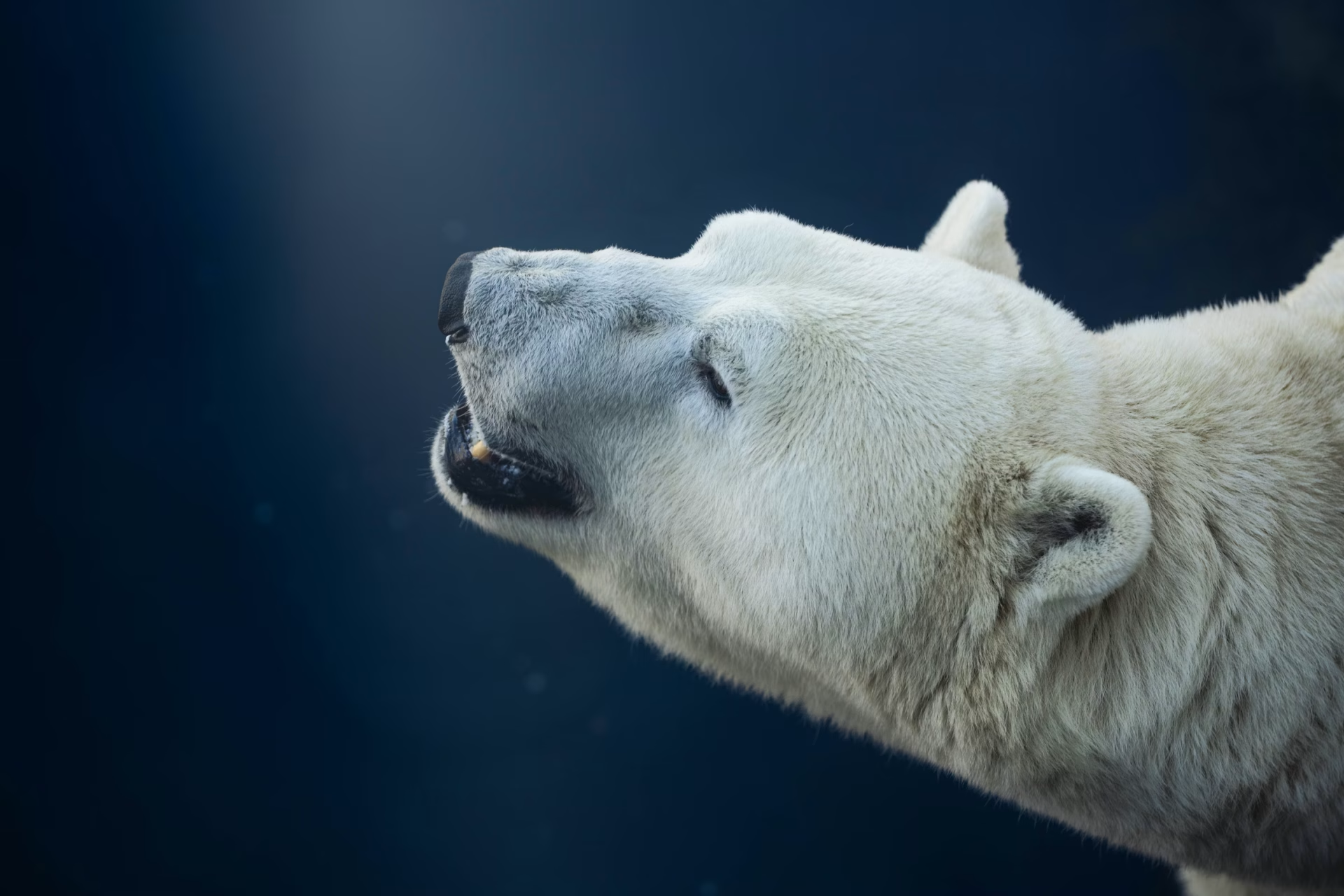
Editor’s Note: The opinions expressed here by the authors are their own, not those of Impakter.com — In the Featured Photo: Close-up shot of a polar bear. Featured Photo Credit: Valentin

Tags: climate adaptationClimate Changehybrid animalspolar bears
Previous Post

‘We Must Move Past GDP,’ Says UN Chief

Next Post

The Era of ‘Global Water Bankruptcy’ Has Begun

Related Posts

News about grey-headed flying foxes dying due to heatwaves caused by climate change.
Climate Change

Climate Change Brings Another Species Closer to Extinction

In January 2026, a series of extreme heatwaves across South-Eastern Australia caused one of the worst mass mortality events for...

byAnastasiia Barmotina
February 11, 2026
Underwater Wall to Protect the ‘Doomsday Glacier’: Necessary Intervention or Costly Distraction?
Climate Change

Underwater Wall to Protect the ‘Doomsday Glacier’: Necessary Intervention or Costly Distraction?

Thwaites Glacier in Antarctica earned its dramatic nickname, the “Doomsday Glacier,” because its collapse could trigger a catastrophic rise in...

byBenjamin Clabault
February 11, 2026
The Era of ‘Global Water Bankruptcy’ Has Begun
Climate Change

The Era of ‘Global Water Bankruptcy’ Has Begun

Humanity’s long-term water usage and damage have exceeded nature's renewal and safe limits, a situation scientists and the media have...

byNmesoma Ezetu
February 10, 2026
biodiversity loss
Biodiversity

The Economics of Biodiversity Loss

In the 1990s, India’s vulture population collapsed due to the unintended knock-on effect of a veterinary drug for cattle, with...

byStefano Giglio - Professor at Yale Universityand2 others
February 9, 2026
A picture with a wind power generator
Society

Emissions and Economic Growth: Is There Still a Link?

In prior decades, economic growth and emissions co-existed. As countries grew richer, they produced more and emitted more. This relationship...

byFedor Sukhoi
February 3, 2026
Three sponsors for the 2026 Winter Olympics in Italy could generate 1.3 million tons of CO2
Climate Change

Winter Olympics Sponsorship Emissions: Who Are the Main Offenders?

The 2026 Winter Olympic Games are set to begin in Italy next month. Scattered across towns in northern Italy, from...

bySarah Perras
February 2, 2026
WEF Report Ranks Environmental Challenges as Greatest Long-Term Threat to Global Stability
Business

WEF Report Ranks Environmental Challenges as Greatest Long-Term Threat to Global Stability

The World Economic Forum’s Global Risks Report 2025 found that environmental risks are deteriorating faster than other threats and challenges.  ...

byBenjamin Clabault
February 2, 2026
Thames Water closes in on rescue deal;
Environment

Thames Water Closes in on £16bn Rescue Deal

Today’s ESG Updates: Thames Water Closes in on £16bn Rescue Deal: Thames Water is edging closer to a multibillion-pound rescue...

byAriq Haidar
February 2, 2026
Next Post
The Era of ‘Global Water Bankruptcy’ Has Begun

The Era of 'Global Water Bankruptcy' Has Begun

Recent News

ESG News regarding EU’s competitiveness summit, Trump’s endangerment finding repeal, Trump’s coal push, and Deutsche Bank’s first European Green Bond

European Union Summit For Competitiveness

February 13, 2026
Career and automation: Automation Matters for Education Careers

Future Careers in Education: Why Automation Awareness Matters for Degree Seekers

February 12, 2026
REAIM speaker stands in front of an image that reads "Real or fake?"

Deepfake Fraud Goes Mainstream

February 12, 2026
  • ESG News
  • Sustainable Finance
  • Business

© 2025 Impakter.com owned by Klimado GmbH

No Result
View All Result
  • Environment
    • Biodiversity
    • Climate Change
    • Circular Economy
    • Energy
  • FINANCE
    • ESG News
    • Sustainable Finance
    • Business
  • TECH
    • Start-up
    • AI & Machine Learning
    • Green Tech
  • Industry News
    • Entertainment
    • Food and Agriculture
    • Health
    • Politics & Foreign Affairs
    • Philanthropy
    • Science
    • Sport
  • Editorial Series
    • SDGs Series
    • Shape Your Future
    • Sustainable Cities
      • Copenhagen
      • San Francisco
      • Seattle
      • Sydney
  • About us
    • Company
    • Team
    • Partners
    • Write for Impakter
    • Contact Us
    • Privacy Policy

© 2025 Impakter.com owned by Klimado GmbH