Dutch Disease describes the economic phenomenon where a country experiences rapid and sustained growth in one sector of its economy, often due to the discovery or exploitation of natural resources, resulting in a swift decline in the other sectors.
The term is named after the Netherlands’ experience in the 1960s when natural gas reserves were discovered, leading the country to a period of rapid economic growth.
While this growth can generate new revenue for private and public actors, natural resource exports cause a rise in the value of the country’s currency, making imports cheaper and exports more expensive. The country as a consequence will experience a process of de-industrialization as resources are diverted to the development of energy activities.
In the international arena, such capital influx coming from abroad will reduce the incentives to produce and decrease the international competitiveness of domestically produced non-resource tradable goods. In the long-term this will have an unfavorable impact on businesses and the manufacturing sector which will be forced to shut down, increasing the unemployment rate.
This phenomenon has been studied extensively in the past few decades, but it is especially relevant today in the context of the Russian economy.
According to the U.S. Energy Information Administration (EIA), Russia is the world’s largest producer of oil and the second-largest producer of natural gas. The country possesses vast reserves of fossil fuels, which it has used to solidify its position as a major exporter of energy to Europe and Asia.
In addition to oil and gas, Russia is also a significant producer of coal and a major exporter of nuclear technology.
As a result of its abundant natural resources, the energy sector plays a crucial role in the Russian economy, accounting for a significant portion of the country’s exports and government revenues. The largest share of Russia’s constant current account surpluses over the period from 2000–2022 can be attributed to its fossil fuel exports. Oil and gas make up roughly 42% of Russian export volumes and in 2020, the European Union (EU) accounted for 50% of those exports.
Thus, it can be demonstrated that Russia’s current account surplus is heavily financed by energy exports and, most importantly, by the energy imports of the EU.
Nevertheless, the Russian energy sector carries within itself a great vulnerability.
The debate around whether Russia is affected by the Dutch Disease is very broad and most of the time left open to discussions by scholars. Studies have been conducted to determine whether Russia displays each of these symptoms. Some studies indicate the existence of some of the symptoms, e.g., a real appreciation of the rouble, a rise in real wages, and a decrease in employment in manufacturing industries.
Related Articles: World Still United to End the War in Ukraine | EU to Cut Reliance on Russian Gas With New Plan
However, manufacturing production nonetheless increased, contradicting the theory of the Dutch disease. Moreover, despite the observed symptoms, scholars believe that they can also be attributed to other factors. For instance, the manufacturing sector in Russia received significant state support during Soviet times, while the service sector remained artificially undeveloped.
Whether or not Russia is suffering from a classic case of Dutch Disease, the country’s obvious vulnerability in the energy sector could provide a major opportunity to not only make feasible steps toward a just transition but also to end the current conflict taking place in Ukraine since February 2022.
Despite Russia’s position in the global energy market and the vulnerability that comes with it, since the beginning of the war, the West has not yet fully exploited its position.
Through its oil and gas imports the European Union is holding a huge advantage over Russia and can be a major turn point in weakening the conflict. Economic sanctions that undermine the Kremlin’s capabilities to keep the war on Ukraine are a critical component of the response to the invasion, however not enough to cause a complete economic meltdown.
Russia is already running a budget deficit of 2% of GDP and has seen its economic fund reduced from $643 billion to $268 billion. Nevertheless the energy sector has not been directly targeted yet. While economic sanctions have been effective to some extent, targeting the energy sector directly could be a game-changer.
In March 2022 the International Energy Agency (IEA) released “A 10-Point Plan to Reduce the European Union’s Reliance on Russian Natural Gas.” The report highlights the need to reduce reliance on the country’s gas exports but also the difficulties that would arise from such a decision are taken into consideration:
“Reducing reliance on Russian gas will not be simple, requiring a concerted and sustained policy effort across multiple sectors, alongside strong international dialogue on energy markets and security.”
The report tackles some very important points and presents policymakers and governments with an excellent opportunity to free themselves from their strong dependence on Russia.
Some of the actions suggested by the IEA’s report argue that no new gas supply contracts with Russia shall be undertaken, so that when the existing contracts with Russia expire, the minimum contractual levels for Russian imports can be reduced and greater diversity of supply can be achieved.
Accelerating the deployment of new wind and solar projects marks another important step towards a substantial reduction of Russian gas supply. As the report explains:
“Measures implemented this year could bring down gas imports from Russia by over one-third, with additional temporary options to deepen these cuts to well over half while still lowering emissions.”
With an action of this kind, the country’s economy would be heavily impacted, akin to the effects of Dutch Disease, with negative effects on the service and manufacturing sectors. This could result in a significant reduction in government revenues, exacerbating the country’s already precarious economic situation.
Therefore, the West has a unique opportunity to use its position as a major importer of Russian energy to weaken Russia’s economy, and potentially bring an end to the conflict in Ukraine. While the complete shutdown of the Russian energy sector may seem extreme, and require massive hardship and social changes, it could be not only the resolution of the ongoing conflict but also a crucial step towards a just transition.
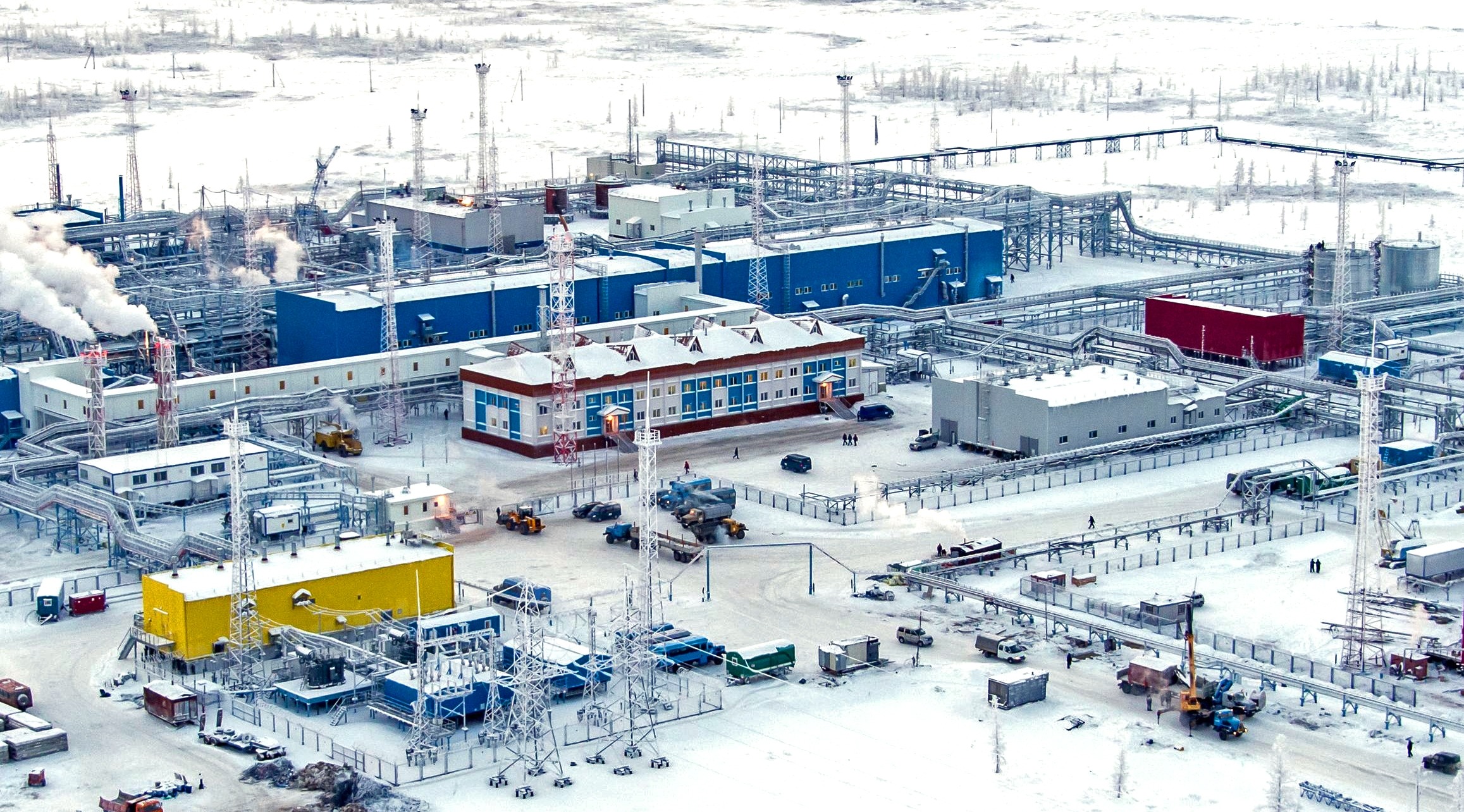
Editor’s Note: The opinions expressed here by the authors are their own, not those of Impakter.com — In the Featured Photo: Gas field in Zapolyarnoye, Russia, January 15, 2013. Featured Photo Credit: Wikimedia Commons.