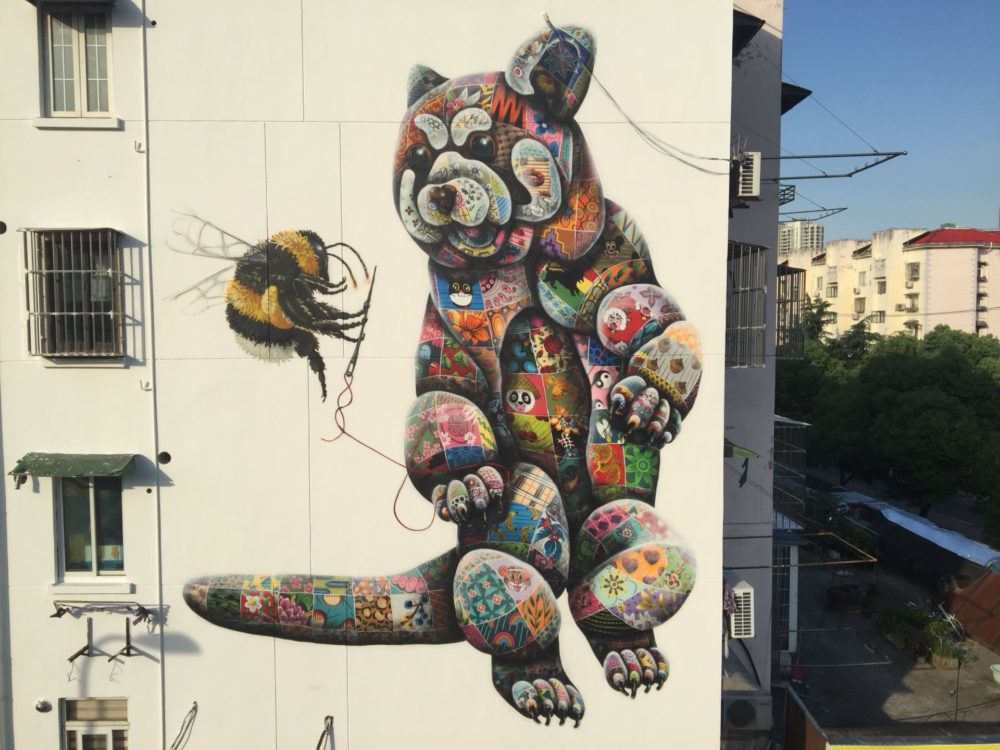
Louis Masai is a British painter, sculptor, illustrator and street artist, perhaps best known for his murals of endangered species. A graduate of Falmouth School of Art, he aims to use his artworks as a means for spreading climate change awareness. He is an artist first and foremost, but his strong beliefs heavily influence his practice. In 2016, Louis traveled around the United States for his “The Art of Beeing” tour, in which he painted about 20 murals in 12 different cities. The tour highlighted local species at risk of extinction and the urgent need to combat climate change. The tour was also supported by a series of mini documentaries.
Could you explain your work as an artist? How and when did you decide to pursue this career path?
Louis Masai: In all honesty, as cliché as it might sound, I’ve always wanted to be an artist. I think initially it wasn’t as clear for me as it is now, but art has always been a part of my life. I felt much stronger as a human being when I was creating art, but it was also something that I was rewarded for being good at when I was much younger. Nowadays, I’m privileged enough to be in a position where I can pursue my dream of being called an artist, so I therefore feel that it is my responsibility to ensure that the work I create has an explanation behind it, a message so to speak. My aim is to explore the topics of conservation, mass extinction, biodiversity collapse, climate change, and so on via my artwork. I spend about 60 percent of the time in the studio using acrylics, brushes or sculptures with many mediums, and the rest of my time painting large-scale, publicly placed murals with spray paint.
What steps are you taking in your life as well as in your artwork in order to create a more sustainable environment?
LM: My thought process is very much based around sustainability. Life influences our sense of creativity and creativity influences our lives; if I were disengaged from the environmental research needed to fulfill my artistic creativity within my everyday life, then I would be a massive hypocrite. I acknowledge that as a human being I am part of the problem we face as a species, but if I can attempt to improve my own interactions towards my environment, then I will be better today than I was yesterday. We can only work towards a better tomorrow, which means making the work we do today truly count.
So, to answer your question — I attempt to reduce my plastic consumption, even little things like bamboo toothbrushes are a step forward, right? I recycle what I do waste and I reuse as much as I can, including secondhand computers. I support forward-thinking lifestyle brands such as Ecoalf, THTC. I’m vegan. I have also found a way to make donations to charities related to the protection of certain species using the profits from my sold out print runs. I partner with NGOs and sustainable entreprises.

Lastly, I run a podcast called All Fruits Ripe. We have casual but informative discussions about the environment and the activists that are fighting to save the planet, wherever they may be. We do this while sitting around the massive Unit 137 Sound-System nicknamed Clementine and listening to vinyl records.
Why do you feel drawn to paint animals? How do you combine animal activism with your artwork?
LM: I think all artists will use a subject matter that they can relate to or identify with as well as maintain. That interest for me has always been nature and animals. I’m just very fascinated by it all, I cannot really explain why, it just is that way. I really do shy away from the label of activist for the simple reason that as a word, it can easily alienate a percentage of the demographic that is lacking in the discussion of climate change. So, I try to pursue a more subtle approach to activism.
For instance, the numerous patches that make up the silhouettes of my animal murals are filled with references towards conservation. Bananas are often problematic in regard to diseases in developing countries where plantains are prevalent, so I included bananas in some of my murals.
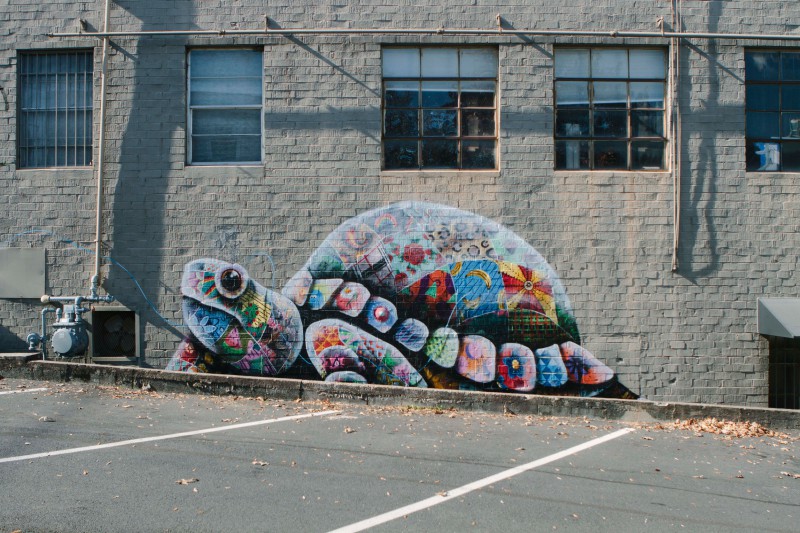
Fishing nets also result in the depletion of aquatic species and entanglement of others via by-catch. In a recent print release I completed, seahorses are holding plastic rubbish: straws, razors, cutlery, cotton ear buds, etc. I think that if the discussion of an issue as serious as mass extinction were to be had via multicolored cuddly toys, then the development of empathy amongst the public would increase. It is only through empathy that conditions will change for the better in my opinion, not through scare tactics.
Could you talk briefly about your project “The Art of Beeing”? What inspired you?
LM: Well this is a project that I completed back in 2016. I wanted to tour a country with a vast, ever-changing landscape and demographic of people, so the United States seemed to be a perfect fit, accessible to me at the time. I painted public murals from the northeastern coast to the southwestern coast and I finished in the southeast of the U.S. I painted about 20 or so murals in 9 weeks while touring with two good friends of mine under the name Wheres Kong.
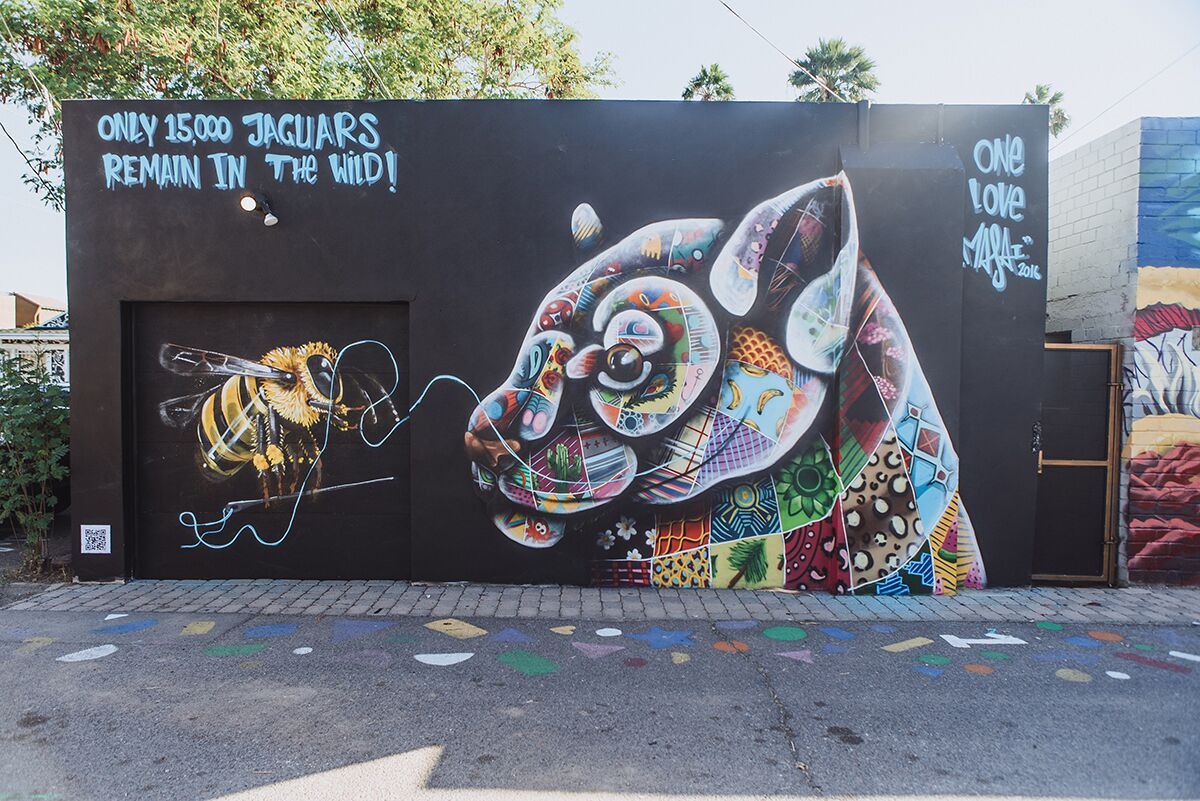
We made a series of short films that explored the impact paintings had on local communities. We also investigated the current situation of endangered species in the U.S. This of course all took place during the presidential election of Donald Trump, so fake news and climate change were already hot button topics at the time, which ended up making the tour all the more interesting.
Do you have a favorite piece of work?
LM: I don’t really believe in favorites. If I were to select one piece, all of the others would thereby become less relevant. In my work, each species and the artwork that goes along with it is equally relevant.
Editor’s Picks — Related Articles:
“The Art of Beeing: An Interview with Louis Masai”
 “ART 2030: Art for a Better World”
Have you ever experienced any backlash due to your artwork? If so, how did you combat it?
LM: In regard to my murals, luckily no. However, galleries often steal artwork as well as money, so I have definitely been taken advantage of on numerous occasions. Unfortunately, it is a common situation that we all experience as artists. Every now and again, someone will make an inappropriate comment that is best left unaddressed. It is actually quite upsetting that some people can so blatantly ignore the reality of climate change. Some people also get hung up on the fact that I use spray paint to create my murals, and there is nothing I can really do to justify it. I hope that one day there will be 100 percent eco-friendly paint, but even acrylics and emulsions come in plastic containers, so there is no fix-all solution as of yet.
Finally, do you have any advice for artists looking to use their talent as a positive force for the planet?
LM: If you want to create and be an advocate, then follow your gut instinct. There are many other individuals out there that want to be part of the discussion so let’s keep the conversation on conservation alive!