Impakter
  • Environment
    • Biodiversity
    • Climate Change
    • Circular Economy
    • Energy
  • FINANCE
    • ESG News
    • Sustainable Finance
    • Business
  • TECH
    • Start-up
    • AI & Machine Learning
    • Green Tech
  • Industry News
    • Entertainment
    • Food and Agriculture
    • Health
    • Politics & Foreign Affairs
    • Philanthropy
    • Science
    • Sport
  • Editorial Series
    • SDGs Series
    • Shape Your Future
    • Sustainable Cities
      • Copenhagen
      • San Francisco
      • Seattle
      • Sydney
  • About us
    • Company
    • Team
    • Global Leaders
    • Partners
    • Write for Impakter
    • Contact Us
    • Privacy Policy
No Result
View All Result
Impakter logo
No Result
View All Result
Regenerative Agriculture Is Our Most Powerful Relationship With the Earth

Regenerative Agriculture Is Our Most Powerful Relationship With the Earth

Says Savory Institute Co-Founder Daniela Ibarra-Howell

Jason WoodsbyJason Woods
April 2, 2021
in Climate Change, Environment, Equal Rights, Food and Agriculture, SDG Series, Society
0

This article is part of an editorial collaboration with Heifer International. It was first published on the Heifer International blog. 


Regenerative agriculture is a nature-based solution that can help heal the planet in the face of climate change, says Daniela Ibarra-Howell.

Ibarra-Howell is an agronomist and the CEO and co-founder of the Savory Institute, an organization that uses methods like regenerative agriculture and holistic planned grazing to renew grasslands at a large scale, which ultimately helps tackle issues of food security and climate change.

Unlike industrial feedlots and monocropping practices, which have well-documented negative environmental impacts, regenerative agriculture focuses on restoring and enriching the land.

“[Regenerative agriculture] is the production of food and fiber in ways that restore biological diversity,” Ibarra-Howell said. “[There is] a lot of focus on the health and microbiology of soil and its capacity to sequester carbon and hold carbon in place, which has been the dialogue tied to climate as nature-based solutions that can be the partners with cutting emissions and cooling the planet.”


Related Articles: What COVID-19 Means for Investment in Agriculture | Farmers in Ecuador Innovate a Whole New Food System

Ibarra-Howell notes that farmers and pastoralists are “living the answer,” as they build and maintain deep relationships with soil, plants and animals.

“I think it’s important to note that agriculture is our most powerful intervention and relationship with the Earth, with soil, with plants, with animals, with oceans,” she said. “And it’s highly traditional, it’s highly cultural, before industrial agriculture. Those bonds need to be rebuilt.”
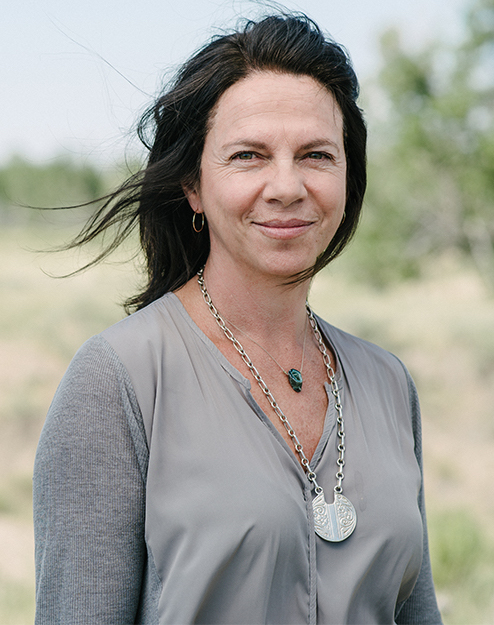
In the Photo: Daniela Ibarra-Howell of the Savory Institute. Photo Credit: Savory Institute.

An integral part of rebuilding those bonds is recovering soil health, but Ibarra-Howell says we may have to shift the way we think about measuring the impact of that work.

“It’s good to talk about carbon sequestration and the importance of nature-based solutions to help with that but don’t forget that it’s a larger conversation,” she said. “It’s about people, it’s about livelihoods, it’s about a whole web of life that needs to be nurtured. It’s about return on investment in very different currencies, again, not just financial.”

In conversation with Heifer International CEO Pierre Ferrari, Ibarra-Howell further elaborated on scaling regenerative agriculture to feed communities and combat climate change, tying that theme to the work of Savory Institute’s partners, or hubs. The Institute accredits Savory Hubs, which are independently owned and independently operated and equip farmers, ranchers and pastoralist communities with the tools and knowledge to regenerate grasslands in a localized context. Heifer Ranch in Perryville, Arkansas, is currently undertaking the rigorous process.

The discussion with Daniela Ibarra-Howell was a part of a speaker series, #HeiferTogether, which addresses the state of farmers around the world during the COVID-19 pandemic. In the live, 20-minute virtual conversations, Pierre Ferrari and other Heifer International leaders talk to experts about the present and future of our global food and farming systems, small farming in the United States, tech in agriculture, farming as it relates to the environment, and more.


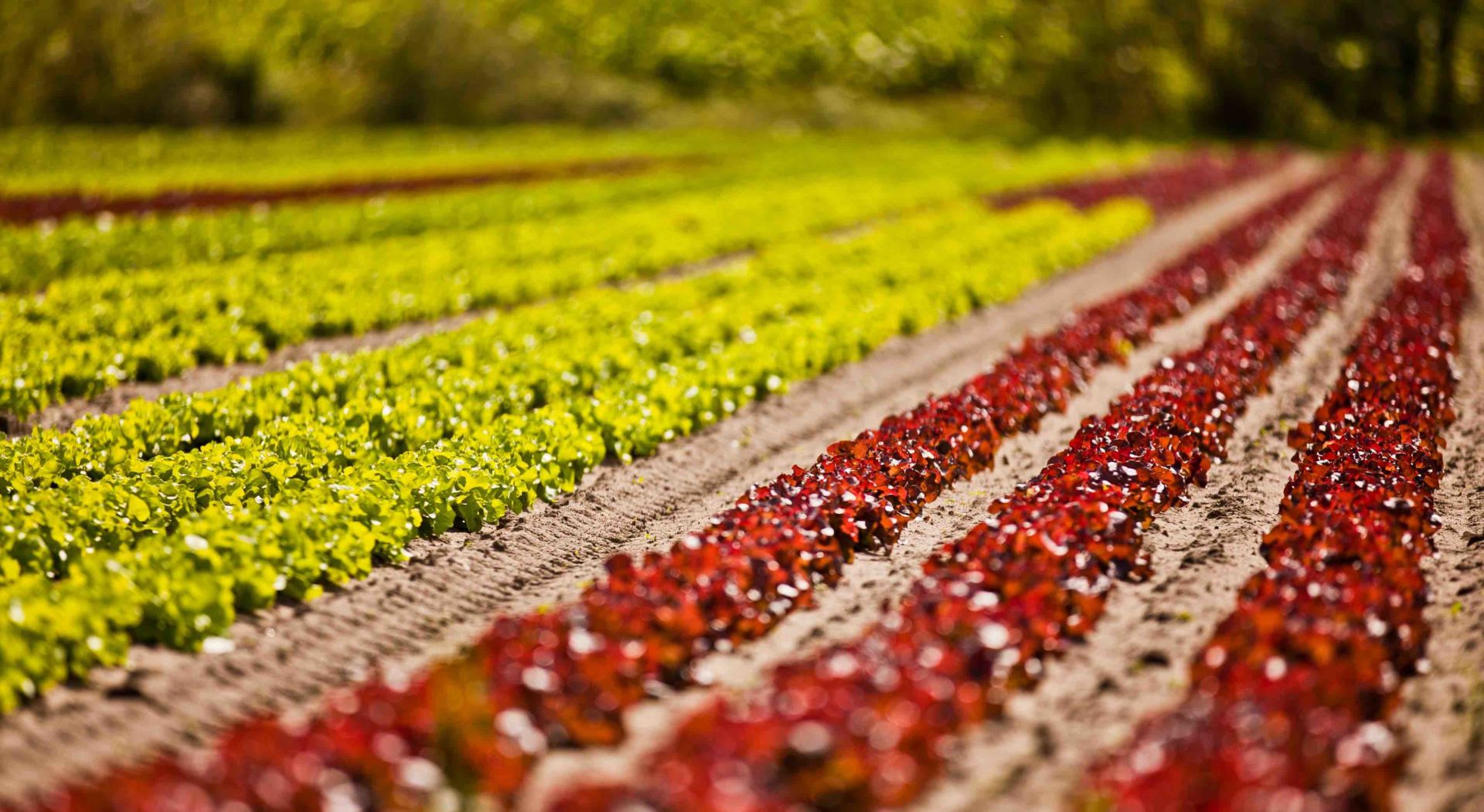
Editor’s Note: The opinions expressed here by Impakter.com columnists are their own, not those of Impakter.com. — In the Featured Photo: An agricultural field. Featured Photo Credit: PxHere.
Tags: AgriculturebiodiversityDaniela Ibarra-HowellfoodHeifer InternationalRegenerative AgricultureSavory Institute
Previous Post

Is Uniqlo’s ‘LifeWear’ as Sustainable as it Claims?

Next Post

Seaspiracy: Shocking Revelations but Wrong Data and Wrong Message

Related Posts

Impakter’s Most-Read Stories of 2025
Society

Impakter’s Most-Read Stories of 2025

In 2025, as in previous years, Impakter readers turned in large numbers to stories examining climate change and pollution, environmental...

byImpakter Editorial Board
December 31, 2025
soil
Biodiversity

To Prevent Ecological Collapse, We Must Start With the Soil

Soil is the single most biodiverse habitat on Earth, home to at least 59% of all species, including over 80%...

byMarcela Quintero - Associate Director General of Research Strategy and Innovation at the Alliance of Bioversity International and CIATand1 others
December 29, 2025
How Climate Change Could Help Foster Peace in Yemen
Climate Change

How Climate Change Could Help Foster Peace in Yemen

Yemen's tragedy is traditionally depicted through the limited perspective of humanitarian need and political divisiveness, but there is a greater...

byTareq Hassan - Executive Director of the Sustainable Development Network Canada (SDNC)
December 17, 2025
Animal Health
Biodiversity

Better Animal Health Is the Low-Risk, High-Reward Climate Investment We Need

Imagine if there was a way to reduce emissions from the meat, egg and dairy sector by nearly a quarter,...

byCarel du Marchie Sarvaas
November 26, 2025
One Health: Silo Barriers to Implementation and How to Overcome Them
Biodiversity

One Health: Silo Barriers to Implementation and How to Overcome Them

The One Health concept/approach must be central for governments to adopt collaborative, cross-sector policies in order to safeguard public health,...

byOne Health Initiative
November 26, 2025
Instant Thickener in food and clinical nutrition
Health

Instant Thickener Safety and Consistency Basics

Instant thickeners are widely used in the food, clinical nutrition, and healthcare fields. This range of products helps people with...

byHannah Fischer-Lauder
November 22, 2025
Mindful Eating - a practical guide
Foodscape

Mindful Eating for Modern Professionals: A Practical Guide

It is easy to rush through meals when your schedule is packed. Maybe you eat lunch at your desk, finish...

byHannah Fischer-Lauder
November 19, 2025
COP30: Countries’ Climate Agrifood Ambitions Undermined by Funding Gaps, Report Finds
Biodiversity

COP30: Countries’ Climate Agrifood Ambitions Undermined by Funding Gaps, Report Finds

Developing countries recognize the urgent need to adapt agrifood systems to climate change, but most National Adaptation Plans (NAPs) are...

byThe Food and Agriculture Organization of the United Nations (FAO)
November 19, 2025
Next Post
Seaspiracy: Shocking Revelations but Wrong Data and Wrong Message

Seaspiracy: Shocking Revelations but Wrong Data and Wrong Message

Recent News

ESG News regarding China restricting industrial renewable exports, UN warning that US climate treaty exit harms economy, UK firms lowering wage forecasts despite inflation, Meta partnering with TerraPower for new nuclear reactors.

To Save the Grid, China Forces Industries to Go Off-Network

January 9, 2026
Cleaner Air in Hospitals

How Cleaner Air in Hospitals Can Cut Infections and Climate Impact at the Same Time

January 9, 2026
Search cleanup, key activity to protect your data and tech devices.

A Simple “Search Cleanup” Plan for Busy People

January 9, 2026
  • ESG News
  • Sustainable Finance
  • Business

© 2025 Impakter.com owned by Klimado GmbH

No Result
View All Result
  • Environment
    • Biodiversity
    • Climate Change
    • Circular Economy
    • Energy
  • FINANCE
    • ESG News
    • Sustainable Finance
    • Business
  • TECH
    • Start-up
    • AI & Machine Learning
    • Green Tech
  • Industry News
    • Entertainment
    • Food and Agriculture
    • Health
    • Politics & Foreign Affairs
    • Philanthropy
    • Science
    • Sport
  • Editorial Series
    • SDGs Series
    • Shape Your Future
    • Sustainable Cities
      • Copenhagen
      • San Francisco
      • Seattle
      • Sydney
  • About us
    • Company
    • Team
    • Global Leaders
    • Partners
    • Write for Impakter
    • Contact Us
    • Privacy Policy

© 2025 Impakter.com owned by Klimado GmbH