 This article is part of our Editorial Series called “GFAR impakters”. This is done in partnership with GFAR – The Global Forum on Agricultural Research and Innovation – For more follow on Twitter: #GFARImpakters or view here.
The UN Committee on World Food Security (CFS) is the world’s largest and most inclusive platform for reviewing and following up on policies concerning world food security. Established after the food crisis of the 1970s, the Committee holds an annual plenary session that convenes member states, the private sector, philanthropic organizations, civil society, and research organizations to collaborate and coordinate work on the most pressing challenges to achieving the Sustainable Development Goals, in particular SDG2: End hunger, achieve food security and improved nutrition, and promote sustainable agriculture.
In the context of the CFS, the International Agri-Food Network (IAFN) serves as the focal point of the Private Sector Mechanism (PSM), a unique platform that facilitates the participation of the private sector in all CFS activities, including the annual plenary session and the work that is undertaken on an ongoing basis during the year through working groups, such as Youth in Agriculture, Nutrition, Partnerships, and Agroecology, among many others.
In addition to being the CEO of the Global Dairy Platform, I am honored to be the current IAFN Chair, whose membership is made up of 16 agribusiness and farmers’ associations. Representatives of these associations join other private sector members, who range from individual farmers and small and medium companies to representatives of some of the world’s largest multinational agrifood businesses.
IAFN, via its member CropLife International, is also on the steering committee of GFAR. In this capacity, we were delighted to attend the last steering committee meeting, held in May 2018 in Rome. This meeting reiterated the fact that no organization can act in isolation to achieve the SDGs and explored GFAR’s commitment to producing meaningful, clearly-defined and purposeful change in agricultural research. IAFN enthusiastically supports GFAR’s commitment to partnerships and support to local partners and national private sector initiatives.
We are also glad to support GFAR’s ambition to thoughtfully improve technology for farmers and agricultural professionals.
IAFN is proud to have very close synergies with GFAR’s priorities. I would like to showcase some standout examples of work being done by IAFN and PSM members that contributes to GFAR’s four thematic focus areas:
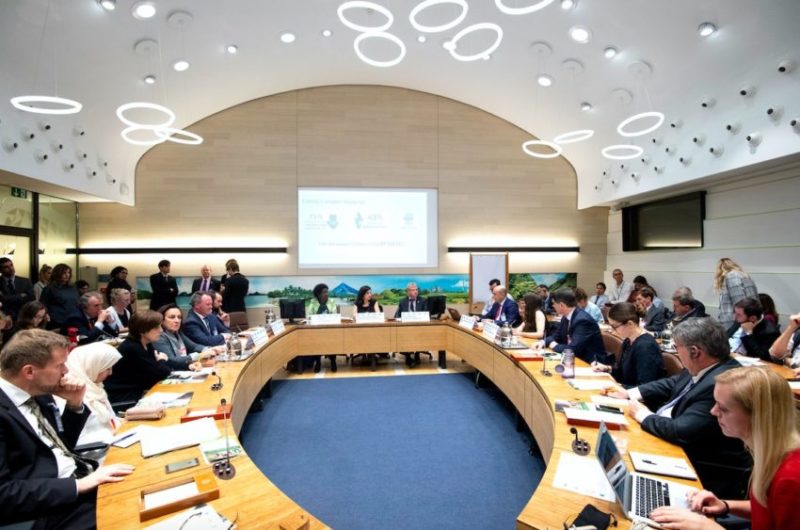 In The Photo: IAFN’s membership includes 16 associations, which in turn count thousands of companies and millions of individual farmers of all sizes. Photo Credit: Levi Morsy
1. Empowering Farmers at the Center of Innovation
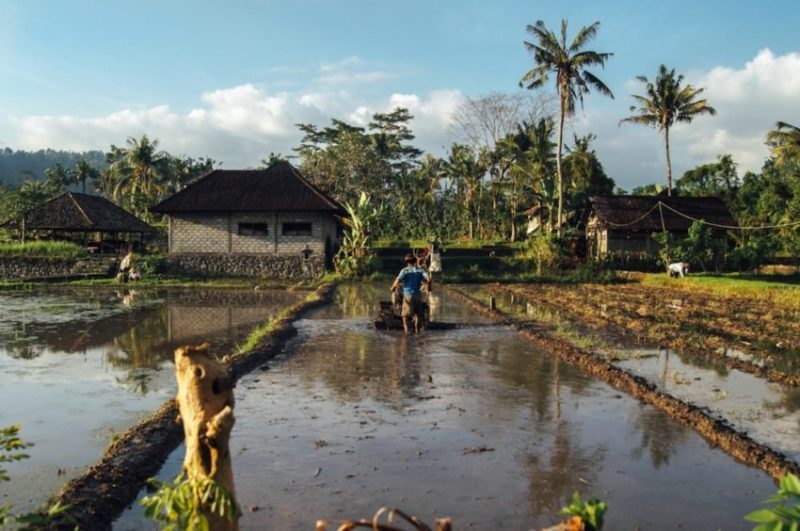 In The Photo: CFS Plenary is an opportunity for all stakeholders, including the private sector, civil society, philanthropic organizations, research groups, and representatives of UN Member States to engage in discussions related to SDG2: End Hunger. Photo Credit: ©FAO/Giuseppe Carotenuto.
Empowering farmers is at the core of the work prioritized by IAFN and PSM members. IAFN firmly believes that we need to bring the voice of farmers to policymaking so that no policy affecting farmers is developed without their purview. Farmers are fundamentally business people. The PSM takes immense pride in supporting the participation of farmers in CFS Plenary and in the CFS workstreams.
This year, thanks to grant funding and support from other PSM members, we will provide full funding to three exceptional farmers, who would otherwise not be able to travel to Rome for this gathering. Hailing from the Philippines, India, and Kenya, these individuals will be panelists at widely-attended side events, have the opportunity to speak on the plenary floor, and will benefit from the networking and learning opportunities that proliferate at CFS.
Last year, the same grant supported four outstanding people, including the female owner of a major dairy operation in Mexico; a business leader from Ghana whose business insights increased the country’s sorghum production by nearly ten times; a Kenyan entrepreneur whose one-of-a-kind consulting firm helps businesses to align their practices with the SDGs; and the president of an Indonesian farmers’ and fishers’ organization that includes over 60,000 smallholders. These truly extraordinary people bring increased meaning and depth to the deliberations taking place at the CFS because they can talk about the real-life impact of food security, nutrition and sustainable agriculture policies.
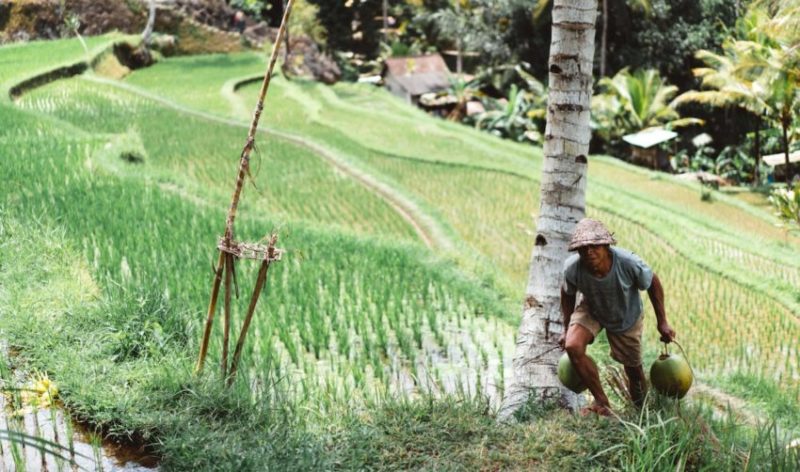 In The Photo: Farms of all sizes are essential to achieving sustainable food security for all. Photo Credit: Joshua Newton.
When you truly commit to empowering farmers, demonstrable impact and improved investments follow in due course. In 2017, IAFN helped to organize delegations at two regional agricultural biotechnology meetings organized by the FAO, one in the Philippines and the other in Ethiopia.
At the conference in Addis Ababa, nine people with expertise in agricultural biotech, ranging from farmers to non-profit directors to professors, spoke up in defense of a balanced and inclusive definition of biotech, holding firm against narrow definitions that would exclude many smallholder farmers from benefiting from the technological advances blooming in the biotech field. Through speaking interventions and strategic one-on-one conversations, they shared their personal perspectives with decision-makers.
In addition, this diverse cohort stays in touch even a year after they met in Addis, supporting each other as they publish articles, attend conferences, and teach courses on the potential of biotechnology in agriculture. Though their homes are spread across the continent, from South Africa and Zimbabwe to Kenya and Uganda, they were able to maintain and strengthen this new network with people passionate about improving productivity, profitability, and sustainability for farmers.
2. Turning knowledge and innovation into enterprise
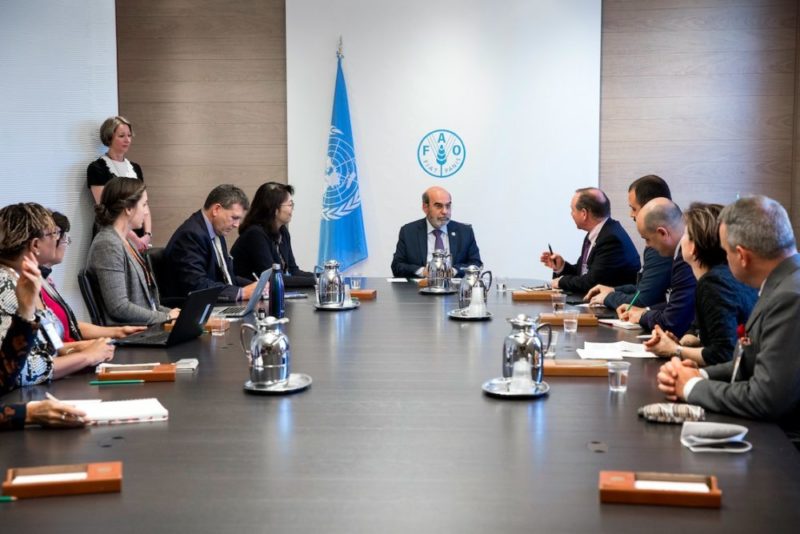 In The Photo: Donald Moore, together with 9 representatives of the Private Sector Mechanism (PSM), met with the Director General of FAO, Mr. Jose Graziano da Silva, during the 45th session of the Committee on World Food Security, October 15-19, 208. Photo Credit: ©FAO/Alessia Pierdomenico.
You cannot build a successful enterprise without solid knowledge and innovation. This is part of the reason why IAFN is committed to bringing farmers to FAO events on agroecology, including the upcoming International Symposium on Agricultural Innovation for Family Farmers: Unlocking the potential of agricultural innovation to achieve the Sustainable Development Goals, which will take place at FAO headquarters in Rome, November 21-23. Thanks to support from CropLife International, three farmers who would not otherwise be able to attend this key meeting will be present: the president of the Philippine Maize Federation; a farmer of wheat, soy, barley, soybean, corn, and livestock from Uruguay; and a farmer from South Africa who is a former Apartheid activist and winner of the Kleckner award.
Before ever stepping foot in the FAO building, these individuals are game-changers in their communities and countries. Adding a global perspective via the work of FAO to the detailed local and national expertise of these leaders in agriculture not only amplifies their impact; it also expands their networks in ways that repeatedly result in relationships that contribute to their businesses.
3. Demonstrating Impact and Improving Investments
 Photo Credit: International Agri-Food Network
In addition to bringing farmers to key meetings, IAFN also has the pleasure to encourage its members to pursue business-driven innovations that contribute to good nutrition and food security. Our members are leaders in such innovative areas as nutrient fortification, urban farming systems, coatings to extend shelf life and reduce food waste, scholarship programmes specifically for farmers, and a great deal more.
4. Transforming Organisations and Individual Capacities
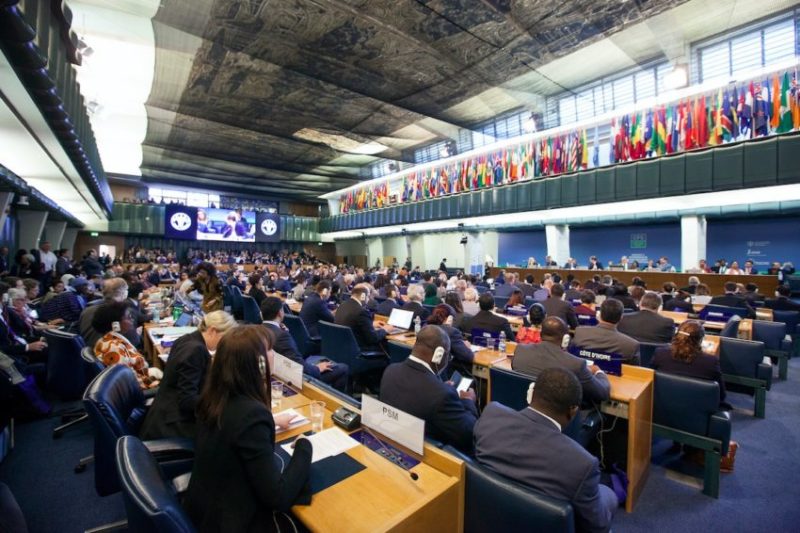 In The Photo: During CFS, Private Sector Mechanism members organized side events featuring innovative farmers as panelists. Photo Credit: ©FAO/Carlo Perla.
At the end of the day, the motive for all these activities is transforming organizational and individual capacities. IAFN and PSM are proud to count as members and partners several organizations whose core mission is exactly that:
- Nuffield International develops the farming leaders of the future by providing exceptional people from all over the world with funding to spend up to three months traveling the world in exploration of a farm-related research question, forming relationships with other farmers along the way.
- The Climate-Smart Agriculture Youth Network, present in 30 African countries, links together 18-35-year-old champions of sustainable agriculture and equips them with professional development and skill building to elevate their capacity.
- 4-H International is committed to changing the perception of agriculture among young people and give them the practical skills needed to succeed in the industry. The list goes on and on, and the potential for knowledge-sharing and capacity-building only increases when members of all these organizations find themselves sitting next to each other in the context of CFS, regional meetings, FAO Symposia, annual general meetings, and all the other fora where IAFN encourages them to gather.
I am immensely proud of the connections, knowledge, investments, and capacity that have grown as a result of IAFN and PSM’s work. Our networks look forward to a future of more impact, partnerships, and innovations. It is always encouraging to find organizations with whom you share goals, so it goes without saying that we are eager to continuing to work with GFAR and its partners. As we all know, real change only happens when we work together.