Wildfires in California have further driven up the state’s already rising electricity costs. Globally, wildfires are among the most economically destructive hazards, with costs steadily increasing. In California, electricity costs have spiked at a rate that outpaces inflation and diverges sharply from the national trend.
According to a report by the California Earthquake Authority and the Administrator of the Wildfire fund, wildfire-related charges add approximately 19% to customers’ total bills, amounting to around $41 more per month for customers of Pacific Gas & Electric (PG&E). Customers of Southern California Edison (SCE) and San Diego Gas & Electric (SDG&E) pay approximately $27 (17%) and $21 (14%) more, respectively.
The report also indicated that average monthly residential electricity bills had already increased by 37% from 2020 to 2025, and that they are expected to continue rising. These increases may be mirrored in the insurance market too, and costs will fall on every Californian holding an admitted-market homeowners policy, and not just those in the fire zone.
Recovery systems under strain
For many families and communities, the wildfires themselves mark the beginning of many challenges and difficulties. As noted in the report, the months and years that follow are “shaped by a set of interconnected systems, including insurance, utility liability, and public programs, whose collective performance determines whether recovery is possible and how long it takes.” Past data has demonstrated that the recovery process is often prolonged and uneven. For wildfire survivors, utility financial distress often signals delayed compensation.
Wildfire-related charges increasingly make up a part of California residential electricity bills, and financial schemes that were previously established to stabilise the electric utility sector following the 2017-2018 fire seasons are now under strain. The Wildfire Fund was designed to cover multiple catastrophic fire events, but the Eaton Fire incident, which occurred in January 2025 and spread across 14,210 acres, has likely exhausted the fund. This gap may result in the same challenges that sparked the initial creation of the financial mechanisms.
Related Articles
Here is a list of articles selected by our Editorial Board that have gained significant interest from the public:
Risks and climate pressures
The report stresses that underlying drivers of wildfires will not disappear on their own. These pressures, which include “a warming climate marked by longer droughts and more volatile precipitation, accumulated fuel loads, an expanding WUI, and the increasing interaction of fire with the built environment,” emerge as concrete and recurring costs.
Furthermore, in the wake of these fires lie irreversible damage to ecosystems, the disruption of essential services, and poor health of impacted communities. Hence, the mark left on survivors cannot be adequately quantified by mere financial terms alone.
The need for stronger systems
There is much evidence in the report to support that the current systems in place are not beneficial for consumers, the private insurance market, and survivors. With accelerating climate change, risks have grown more quickly than current mitigation measures can be implemented. There is a foundational need for dedicated efforts to reduce the impacts of catastrophes, and inaction will result in significant adverse short- and long-term consequences for California and its residents.
It is important for governments to improve their financial, institutional and legal systems to ensure that they can manage such catastrophes without worsening the impacts on communities, ratepayers, survivors, and markets that ultimately bear the brunt of the repercussions. Monitoring the trajectory of systemic conditions, especially alongside rapidly warming climates, then becomes crucial.
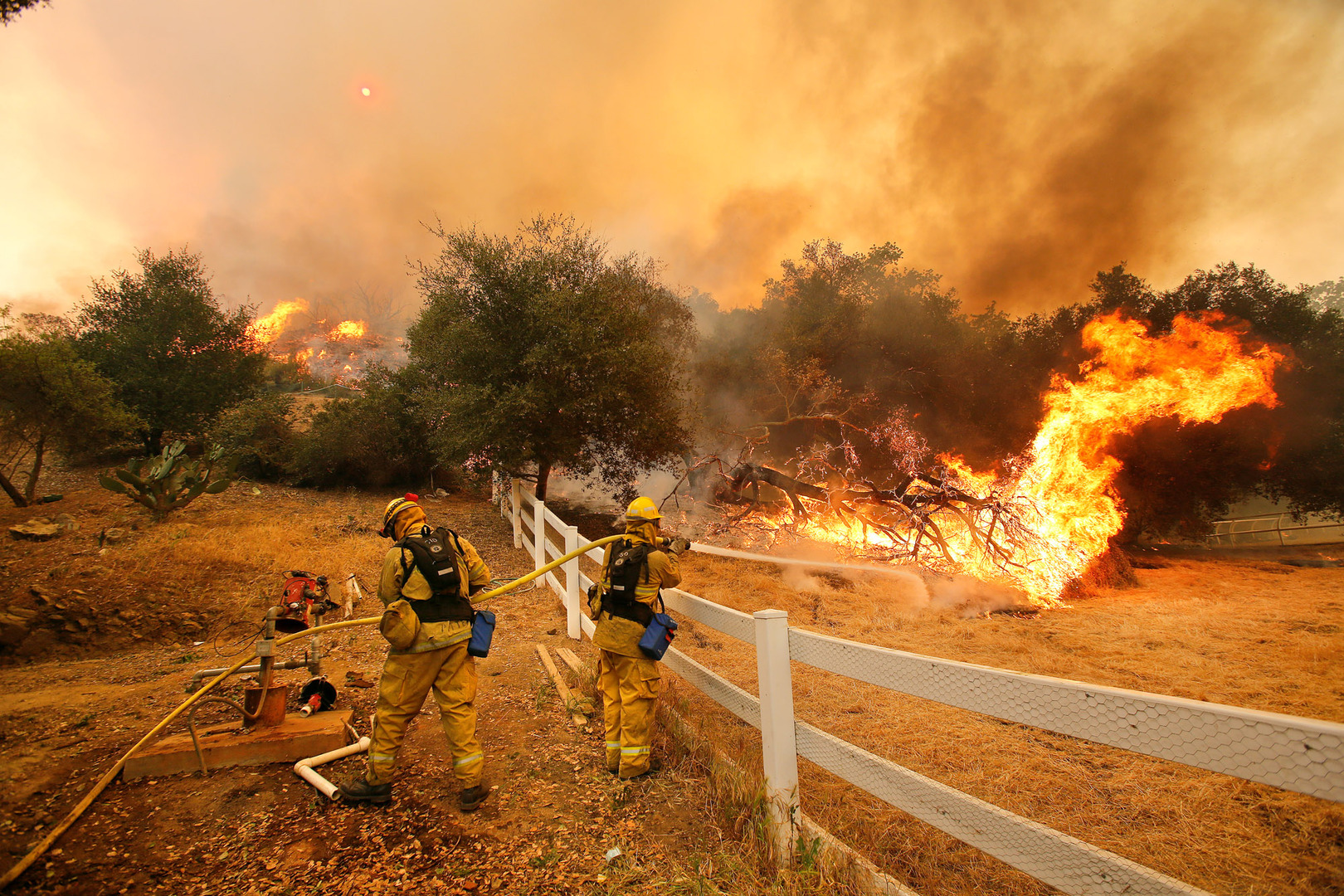
Editor’s Note: The opinions expressed here by the authors are their own, not those of Impakter.com — In the Featured Photo: Firefighters extinguishing wildfires. Featured Photo Credit: Daria Devyatkina