Impakter
  • Environment
    • Biodiversity
    • Climate Change
    • Circular Economy
    • Energy
  • FINANCE
    • ESG News
    • Sustainable Finance
    • Business
  • TECH
    • Start-up
    • AI & Machine Learning
    • Green Tech
  • Industry News
    • Entertainment
    • Food and Agriculture
    • Health
    • Politics & Foreign Affairs
    • Philanthropy
    • Science
    • Sport
  • Editorial Series
    • SDGs Series
    • Shape Your Future
    • Sustainable Cities
      • Copenhagen
      • San Francisco
      • Seattle
      • Sydney
  • About us
    • Company
    • Team
    • Global Leaders
    • Partners
    • Write for Impakter
    • Contact Us
    • Privacy Policy
No Result
View All Result
Impakter logo
No Result
View All Result
Food Security Despite the Pandemic: The Benefits of a Kitchen Garden in Odisha, India

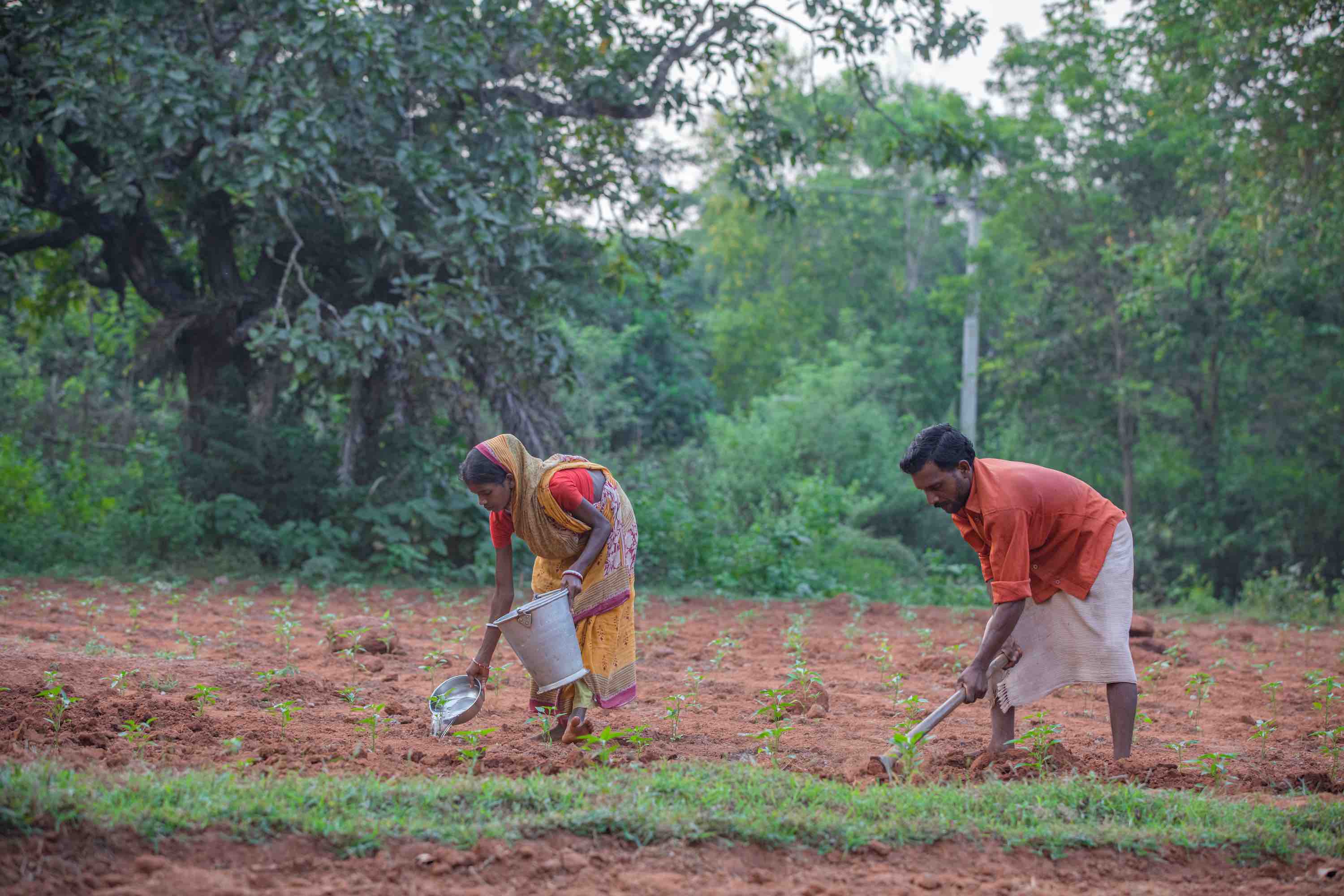
Budhuni Hansdah kitchen garden at Rangiam, Ganjam

Food Security Despite the Pandemic: The Benefits of a Kitchen Garden in Odisha, India

Heifer InternationalbyHeifer International
August 5, 2021
in Climate Change, Equal Rights, Food and Agriculture, SDG Series, Society
0

This article is part of an editorial collaboration with Heifer International. It was first published on the Heifer International blog. 


In the village of Rangiyam in the state of Odisha, India, Budhini Hansda and her husband, Barial Hansda, tend to their kitchen garden. Though they use hand tools to till the soil and buckets and bowls to irrigate their crops, their garden is well organized and beautifully managed.

In recent months, nurturing their crops has become more important than ever before. As the COVID-19 pandemic rages through India, Hansda and her young family have become reliant on their garden for food and an income.
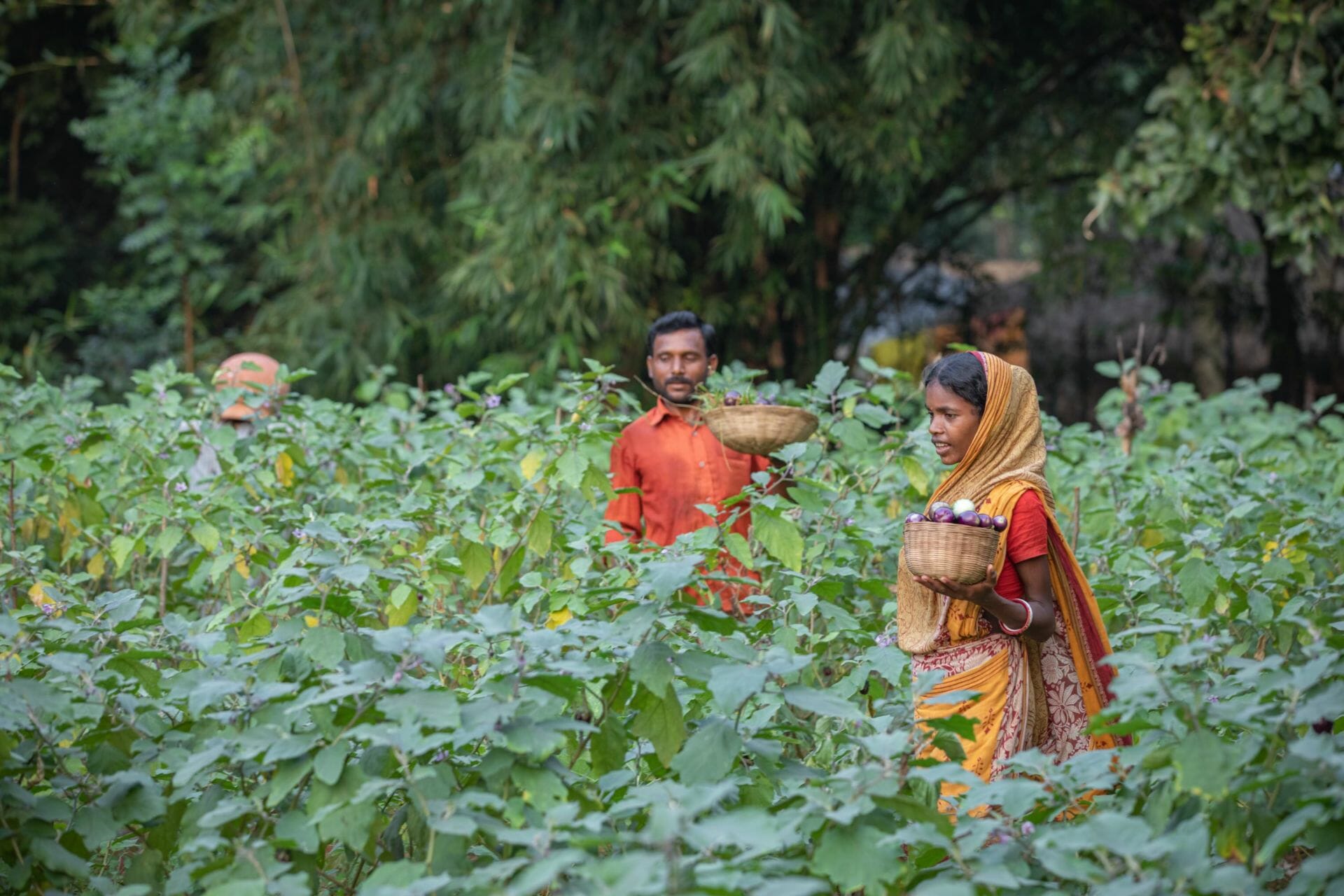
In the Photo: Hansda and her husband harvest eggplants in their garden. Photo Credit: Pranab K. Aich/Heifer International.

“We are food secure at a time when many people were unable to arrange even one proper meal a day,” she said, “because the garden allows us to reduce our dependence on markets and other sellers during the pandemic.”

This saves her family the expense of purchasing food, and also prevents unnecessary interactions that could lead to infection.

Coronavirus cases have spiked in India in recent weeks. The number of new cases reported daily has reached record highs, and experts warn the country’s worsening health crisis will have a devastating effect on the world’s most vulnerable people. Odisha recently reported the largest single-day spike in COVID-19 infections, and the state government imposed a 14-day lockdown that began on May 5, 2021.

This is expected to impede communities’ access to basic amenities including access to savings at banks, health care facilities and benefits of government-run programs. At the same time, the country is facing an acute shortage of oxygen supplies and other life-saving medicines, and the cost of critical drugs has increased exponentially.
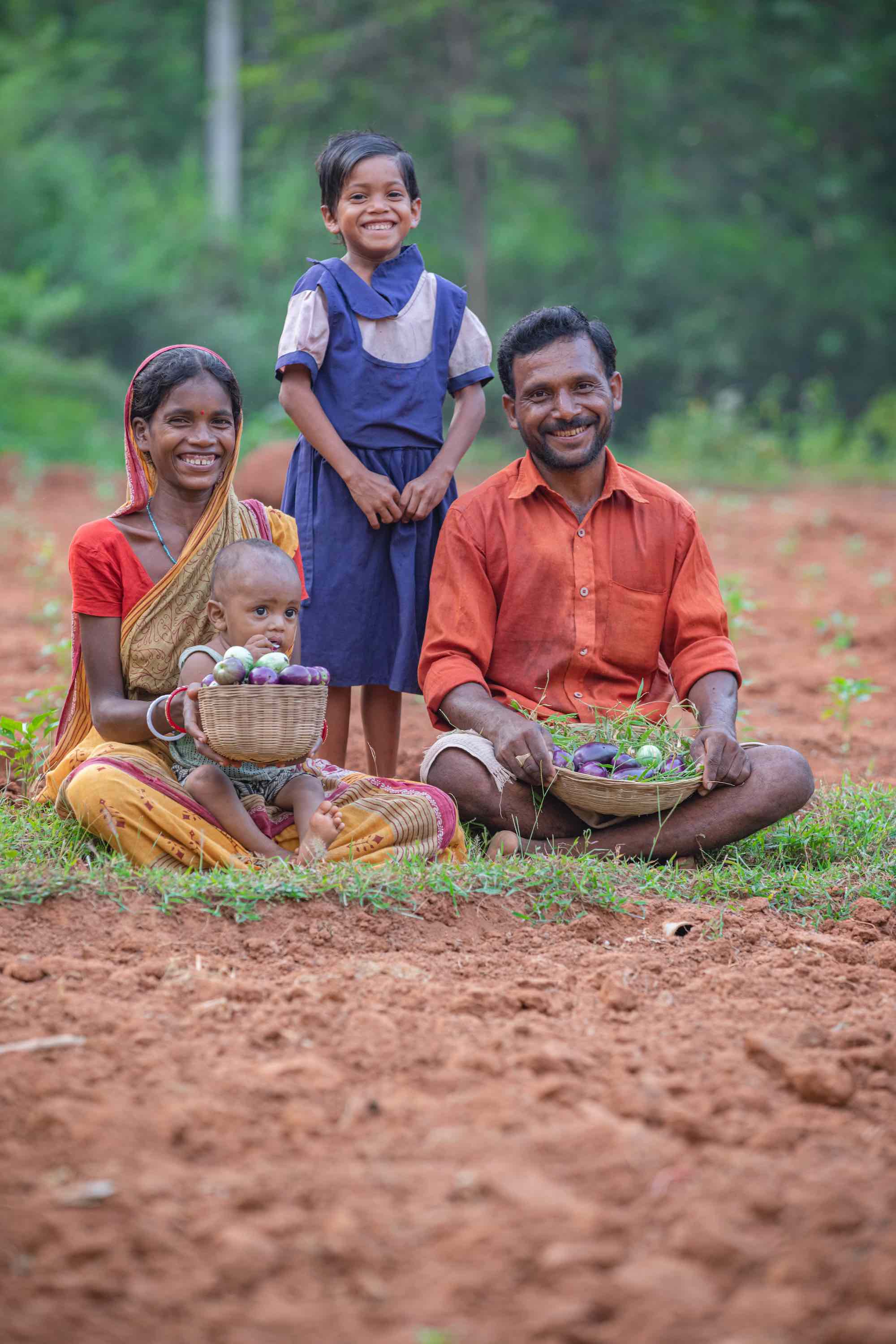
In the Photo: The Hansda family sits with vegetables from their kitchen garden. Photo Credit: Pranab K. Aich/Heifer International.

The economic impact of the pandemic has been devastating. Rural communities are therefore especially dependent on their own production, like poultry businesses and kitchen gardens, to ensure a sustainable income to support their families and attend to any immediate health crises.

During lockdown, the local haat bazaar — an open-air market where local traders, small-scale farmers and merchants take their wares in rural areas — closed. These bazaars are an economic lifeline in rural communities, but they are also presumed to be infection hotspots. Hansda notes that during the lockdown period, they cannot go to the haat and buyers cannot come to them.

On their one-acre plot, Hansda and her husband cultivate eggplant, cauliflower, beans, chili peppers, pumpkins, okra, cabbage and spinach according to the season. She also keeps some chickens and has a rice paddy. Hansda estimates that she has earned INR 60,000 ($833) per year from the sale of vegetables, and that her family, which includes her husband, their two children and her in-laws, consumes about INR 20,000 ($277) worth of vegetables annually. In addition to vegetables, they supplement their diet with eggs and chicken.

Hansda credits much of the kitchen garden’s success to the immensely beneficial training she received from Heifer International, because it’s difficult to scale up production without learning the right techniques.
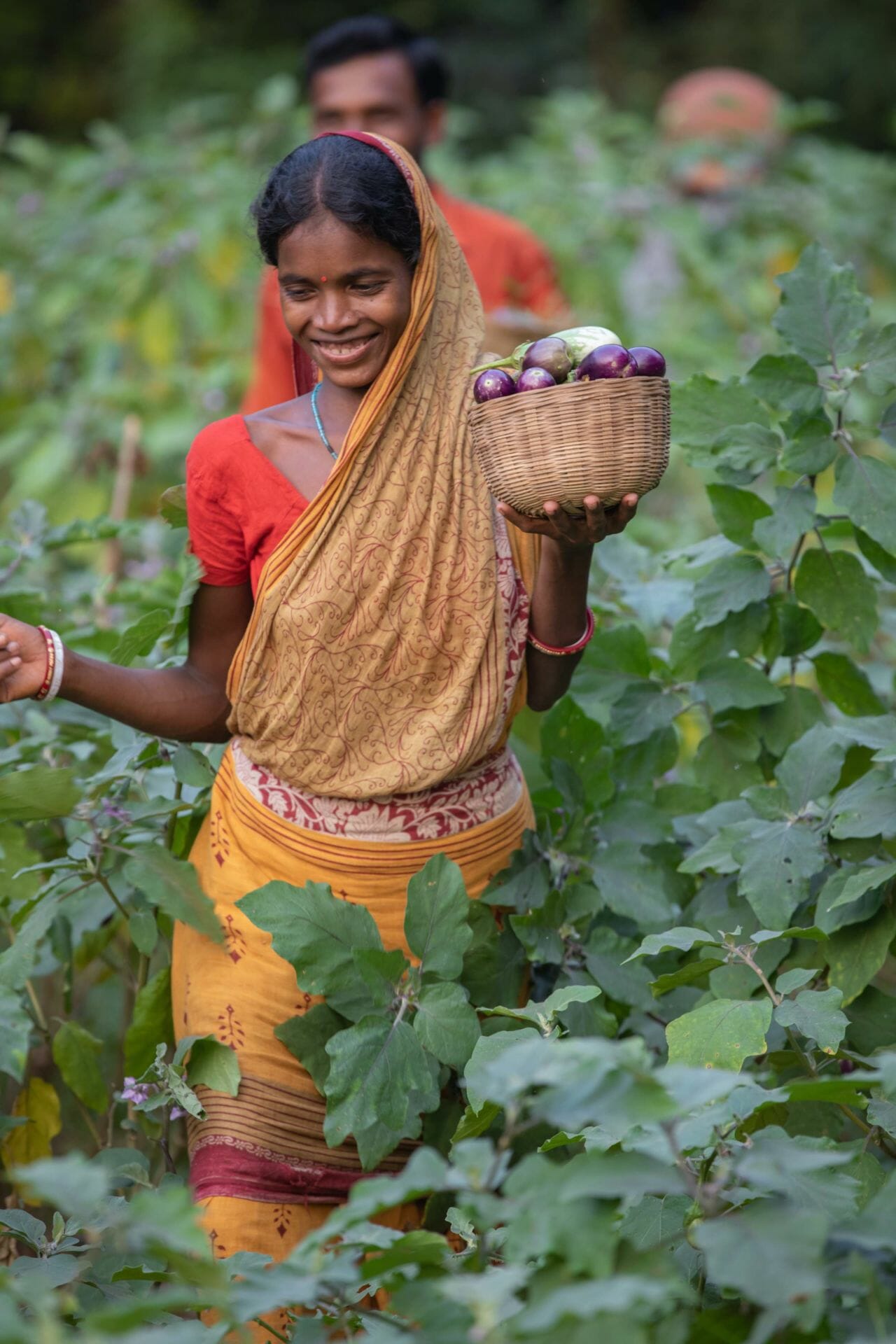
In the Photo: Hansda credits much of the kitchen garden’s success to Heifer training and support. Photo Credit: Pranab K. Aich/Heifer International.

“After training, my husband and I work together on a bigger kitchen garden to cultivate vegetables,” she said.

Alongside her poultry business and gardening training, Hansda also received instruction on nutrition, which has already had an impact on her family. She has prioritized her children’s protein intake and is making sure that she eats enough to stay healthy. “I am going to ensure a proper diet for all my family members,” she said.

Their kitchen garden feeds them and provides a much-needed income that can be used to pay for school fees for her 6-year-old daughter and other living expenses. Through this dark period, Hansda and her family are adapting and persevering — and they’re growing alongside their garden.

** **

You can help families in this time of crisis by making a gift to Heifer today. All funds raised will go directly to Heifer families to provide food, as well as urgent necessities such as face masks, hand sanitizer, medicine and more.


Editor’s Note: The opinions expressed here by Impakter.com columnists are their own, not those of Impakter.com. — In the Featured Photo: Budhini Hansda and her husband tend to their vegetables in Odisha, India. Featured Photo Credit: Pranab K. Aich/Heifer International.

Tags: foodFood securityHeifer InternationalIndiapandemic
Previous Post

Execution Rate Surges in Saudi Arabia During First Half of 2021

Next Post

US Gun Industry Sued for Fueling Mexican Gangs

Related Posts

The Imperative of a Nature-Positive Future
Biodiversity

The Imperative of a Nature-Positive Future

For most of human history, survival was a gamble. Half of all children never reached puberty. Life expectancy hovered around...

byMarco Lambertini
January 15, 2026
ESG News regarding Trump backing sanctions on Russian oil buyers, Norway’s oil and gas output declining, dog food linked to UK emissions, Trump climate treaty exit facing legal scrutiny
Business

U.S. Targets Russian Oil Buyers with New Sanctions Bill

Today’s ESG Updates Trump Backs Sanctions on Russian Oil Buyers: A bipartisan U.S. bill would impose tariffs of up to...

byAnastasiia Barmotina
January 9, 2026
soil
Biodiversity

To Prevent Ecological Collapse, We Must Start With the Soil

Soil is the single most biodiverse habitat on Earth, home to at least 59% of all species, including over 80%...

byMarcela Quintero - Associate Director General of Research Strategy and Innovation at the Alliance of Bioversity International and CIATand1 others
January 8, 2026
India’s Youth Boom: Promise or Pressure Point?
Editors' Picks

India’s Youth Boom: Promise or Pressure Point?

India surpassed China as the world’s most populous country in 2023, a demographic milestone that is both cause for optimism and concern....

byAneesh MR - Assistant Professor at Christ University, Bengaluru
December 26, 2025
women and extreme heat
Climate Change

Women and Extreme Heat: Simple Adaptations Make a Big Difference

One of the more damaging impacts of climate change is extreme heat. From Spain to Bolivia to Burkina Faso, unusual...

byKate Schecter - CEO of World Neighbors
December 23, 2025
ESG news regarding UK households navigating lower savings amid tax pressures, EU dairy products facing Chinese provisional duties, new trade deal to boost India-New Zealand commerce, Glencore acquiring majority stake in FincoEnergies
Business

Disposable Income Falls as UK Interest Rates Drop

Today’s ESG Updates UK Disposable Income Falls: Higher taxes reduce incomes as the saving ratio falls to 9.5% and real...

byAnastasiia Barmotina
December 23, 2025
AM Green and Mitsui explore investment and offtake opportunities for renewable-powered aluminium production in India
Business

India and Japan Consider Joint Move Into Green Aluminium

Today’s ESG Updates India and Japan Explore Green Aluminium Collaboration: AM Green and Mitsui are assessing investment and offtake opportunities...

byJana Deghidy
December 18, 2025
Transboundary Animal Diseases Pose Urgent Threat to Global Food Security
Biodiversity

Transboundary Animal Diseases Pose Urgent Threat to Global Food Security

The Director-General of the Food and Agriculture Organization of the United Nations (FAO), QU Dongyu, urged Member Countries to reinforce...

byThe Food and Agriculture Organization of the United Nations (FAO)
December 1, 2025
Next Post
US Gun Industry Sued for Fueling Mexican Gangs

US Gun Industry Sued for Fueling Mexican Gangs

Recent News

The Imperative of a Nature-Positive Future

The Imperative of a Nature-Positive Future

January 15, 2026
ESG News regarding BHP and Rio Tinto are teaming up to expand their iron ore production pipeline

BHP and Rio Tinto to Boost Australian Iron Ore Production

January 15, 2026
ESG News regarding Dimon warning that Trump’s attacks on Fed could raise inflation and rates, Venezuelan oil shipments to China setting to plunge under U.S. blockade, UK awarding offshore wind contracts to power 12m homes, 2025 being the third-hottest year on record as climate science faces political pushback

JPMorgan CEO Warns Trump’s Attacks on Fed Could Raise Inflation and Rates

January 14, 2026
  • ESG News
  • Sustainable Finance
  • Business

© 2025 Impakter.com owned by Klimado GmbH

No Result
View All Result
  • Environment
    • Biodiversity
    • Climate Change
    • Circular Economy
    • Energy
  • FINANCE
    • ESG News
    • Sustainable Finance
    • Business
  • TECH
    • Start-up
    • AI & Machine Learning
    • Green Tech
  • Industry News
    • Entertainment
    • Food and Agriculture
    • Health
    • Politics & Foreign Affairs
    • Philanthropy
    • Science
    • Sport
  • Editorial Series
    • SDGs Series
    • Shape Your Future
    • Sustainable Cities
      • Copenhagen
      • San Francisco
      • Seattle
      • Sydney
  • About us
    • Company
    • Team
    • Global Leaders
    • Partners
    • Write for Impakter
    • Contact Us
    • Privacy Policy

© 2025 Impakter.com owned by Klimado GmbH