Today’s ESG Updates
- El Niño Set to Cause Disruption on an Unprecedented Scale: UN chief Antonio Guterres warns the world is entering “uncharted waters” as this year’s El Niño reaches record intensity, threatening floods, drought and hunger across Africa and Asia.
- UN-Backed Report Finds Coordinated Climate Action Nets $15 for Every $1 Spent: A new UN-backed assessment finds tackling climate change and air pollution together could generate major economic and health returns worldwide.
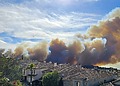
- Wildfire Smoke Is Reversing Decades of Clean Air Progress, UN Weather Agency Warns: The WMO says intensifying wildfires are undoing years of air quality gains, even as industry and transport emissions fall.
- Cathay Pacific and Google Use AI to Tackle Aviation’s Hidden Climate Problem: The pair are expanding trials of an AI system that helps pilots avoid the atmospheric conditions that create heat-trapping contrails.
El Niño set to cause disruption on an unprecedented scale
Sea surface temperatures have already been pushed 2.6°C above threshold this year due to El Niño, with forecasts expecting this to reach 4°C in November, substantially exceeding the typical 1-2°C of past events. UN Secretary-General Antonio Guterres warned the planet has entered “uncharted waters.” East Africa is bracing for heavy flooding while droughts are expected to intensify across the south, threatening livelihoods on both ends of the continent. The impacts are already evident in parts of the world, with unusually weak monsoon rains in India and wildfires in Indonesia.
The World Food Programme (WFP) warns the crisis could push 49 million more people into hunger, at a moment where humanitarian budgets are shrinking rather than growing. The WFP requires $13 billion for emergency food this year but is expecting only half largely due to wealthy nations pulling back on bilateral aid. For instance, Britain is cutting back bilateral aid to eight African countries by more than 80%, just as the need urgently grows.
Klimado – Navigating climate complexity just got easier. Klimado offers a user-friendly platform for tracking local and global environmental shifts, making it an essential tool for climate-aware individuals and organizations.
UN-backed report finds coordinated climate action nets $15 for every $1 spent
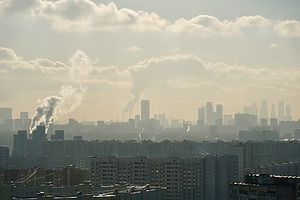
“For too long, we have treated climate action as a cost to be managed,” said UN Environment Programme (UNEP) executive director Inger Anderson, as a new UN-backed report makes the case for tackling climate change and air pollution together, rather than as separate problems.
Released by UNEP and the Climate and Clean Air Coalition, the assessment sets out 25 measures across six sectors from energy and transport to agriculture and waste. The report estimates that implemented together, they could generate roughly $15 in economic benefits for every $1 spent, with annual returns reaching 2.7% of global GDP by 2035 and climbing to 11.4% by 2100.
The health case is just as severe, with outdoor air pollution in 2025 alone linked to 6.4 million premature deaths. Full implementation of the measures could prevent 144 million such deaths by 2050, while halving global CO2 emissions. The report warns that fragmented policymaking could delay these gains by nearly eight years.
Related Articles
Here is a list of articles selected by our Editorial Board that have gained significant interest from the public:
Wildfire smoke is reversing decades of clean air progress, UN weather agency warns
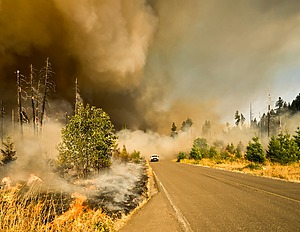
After decades of improved regulations cutting factory and traffic pollution, a new report from the World Meteorological Organisation (WMO) finds wildfire smoke is now one of the fastest growing threats to global air quality. Years of progress are now being undone, the WMO warns, as climate change continues to fuel more extreme wildfire seasons. Fires across Spain, France and Greece this year pushed particulate pollution well above long-term averages in northwestern Spain, with similar spikes recorded in northern Canada, Russia and western-central Africa.
WMO scientific officer Lorenzo Labrador claims even the cleanest cities aren’t immune to harmful wildfire smoke drifting in from elsewhere. With extreme fire-smoke events having tripled since the 1990s, the WMO warns that meeting the World Health Organisations (WHO) air quality guidelines will become increasingly difficult.

Cathay Pacific and Google use AI to tackle aviation’s invisible climate problem

Despite appearing harmless, aircraft contrails are estimated to account for roughly a third of aviation’s total climate impact, rivalling the sector’s carbon dioxide emissions. In response, Cathay Pacific and Google are expanding trials of an AI system designed to avoid them with aims to cut the impact without changing a single aircraft, engine or fuel type.
The technology combines predictive forecasting, satellite imagery and weather data to flag the specific areas where contrails are likely to form, letting pilots make small altitude adjustments around them. In late 2025, an initial trial across more than 80 Cathay flights found the warming impact of contrails to be cut by an estimated 40%. The next phase is set to expand the trial across Cathay’s Asia and trans-Pacific network, including ultra long haul routes.
Editor’s Note: The opinions expressed here by the authors are their own, not those of impakter.com — Cover Photo Credit: Daniel Lerman