


Today’s ESG Updates
- Relief for Industry, Rewired: What the BICS Regulations Really Signal: Effective November 6, 2026, BICS exempts eligible manufacturers from RO, FIT and Capacity Market levies, saving £35–40/MWh.
- Brazil Launches 18-Point Plan to Map Its Exit From Fossil Fuels: Brazil’s CNPE has set 18 directives and a 270-day clock for a cross-ministry working group to draft a national fossil fuel transition roadmap.
- Calm Winds, Steady Sun: Latin America’s Uneven Renewable Year: Solar stayed near normal through September, while wind speeds slipped across Brazil, Peru, and Argentina.
- Compounding climate risk: West Africa’s adaptation test is just beginning: S&P Global projects West Africa’s drought exposure will rise to nearly 2.5x, or 78 days annually, by the 2050s, with agriculture-dependent economies and coastal hubs like Lagos squarely in the firing line.
Relief for industry: what the UK BICS regulations really signal
On 6 November 2026, the Renewables Obligation (RO) and Electricity Capacity (Amendment) British Industrial Competitiveness Scheme (BICS) Excluded Electricity Regulations 2026 came into force, quietly enacting one of the most consequential shifts in UK industrial energy policy in a decade.
The instrument amends the Renewables Obligation Order 2015 and the Electricity Capacity (Supplier Payment etc.) Regulations 2014 to exempt eligible manufacturers from the indirect costs of the RO and Capacity Market, with a parallel instrument covering Feed-in Tariffs.
The Impact Assessment puts the prize at £35–40/MWh in savings for qualifying firms. Enough to move Britain from 1st to 4th most expensive among IEA countries for industrial electricity. The diagnosis is blunt: UK industrial electricity prices more than doubled between 2008 and 2025 and were the highest in the IEA dataset, over double the EU-14 median. Policy costs alone run at roughly £61/MWh for very large users, versus £2 in France and £10 in Germany.
The government’s answer is surgical rather than structural: rather than cut wholesale prices, it strips legacy policy levies from roughly 10,000–14,000 manufacturers in “frontier” and “foundational” sectors of the Modern Industrial Strategy, identified through four-digit SIC codes and HS commodity codes, subject to a minimum 33 MWh annual consumption threshold.
A tiered mechanism of 0%, 50%, or 100% exclusion, depending on the share of electricity used in eligible activity, plus annual declarations, year-two reviews, and anti-overlap rules with EII (Energy Intensive Industries) certificates, shows a scheme engineered for auditability, not generosity.
Crucially, the cost is deliberately not socialized onto other bill-payers: funding comes from re-indexing RO and FIT (Feed-in-Tariff) payments from RPI (Retail Prices Index) to CPI (Consumer Prices Index), removing the Carbon Price Support from 2028, and Exchequer top-ups routed through the Low Carbon Contracts Company.
The analytical question is whether the optimism holds. The central appraisal claims a benefit-cost ratio of 4.3 and an NPV of £13 billion over 2027–35. Still, sensitivity analysis shows the ratio falls to 2.4 under weaker investment elasticities, and quantified benefits rest almost entirely on firms responding to price relief with new investment.
The 2030 review, backed by ONS data-linkage evaluation, is therefore not bureaucratic garnish; it is the scheme’s credibility mechanism. For a government pursuing re-industrialisation, BICS is a wager that electricity price relief can substitute for a cheaper power system.
Klimado – Navigating climate complexity just got easier. Klimado offers a user-friendly platform for tracking local and global environmental shifts, making it an essential tool for climate-aware individuals and organizations.
Brazil launches 18-point plan to map its exit from fossil fuels

Brazil’s CNPE (Conselho Nacional de Política Energética, or National Council for Energy Policy) resolution turns Lula’s COP30 rhetoric into institutional machinery.
The CNPE has set 18 directives, an inter-ministerial working group, and a 270-day drafting timeline. The structure is deliberate: the chief of staff coordinates it alongside the energy, finance, and environment ministries, embedding transition planning in economic governance, not just climate bureaucracy.
The proposed energy transition fund signals recognition that financing, not ambition, is the binding constraint. Yet the timing is notable: the administration missed its own February 2026 deadline, and post-COP 30 momentum faded without a global deal. The guidelines buy Brazil credibility ahead of COP 31, but the roadmap itself remains unwritten.
Related Articles
Here is a list of articles selected by our Editorial Board that have gained significant interest from the public:
Calm winds, steady sun: Latin America’s uneven renewable year
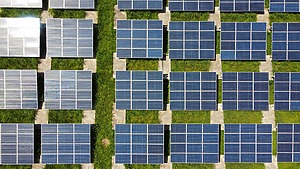
Latin America’s renewable outlook is diverging: solar output has remained broadly stable, while wind resources have weakened across much of the region.
Through September, Brazil saw a 0.3% solar-radiation surplus but a 2.9% wind-speed deficit, and Peru’s wind speeds were 8.0% below average. This matters because Brazil anchors both technologies, with 18,744 MW of solar and 31,160 MW of wind capacity.
Weaker winds could pressure wind-asset output, revenues, and regional power-market balances, while solar offers comparatively steadier resource conditions. The contrast is sharp, as Costa Rica’s winds were 22.8% above average, while Brazil’s Rio do Vento wind project was 5.1% below normal. The findings reinforce the need for geographic diversification, robust forecasting and portfolio-level resource-risk management.

Compounding climate risk: West Africa’s adaptation test is just beginning

West Africa’s climate threat is compounding, as drought exposure could hit 78 days annually by the 2050s, nearly 2.5 times today’s level, while agriculture generates over 25% of GDP in more than a third of countries.
Lagos, which produces 15–30% of Nigeria’s economy, faces 1-in-100-year floods every decade or less. Hazards also interact: water scarcity constrains cooling during heatwaves, and post-drought rain worsens flooding, so siloed planning fails.
West Africa leads Africa in NAP (National Action Plan) submissions at 56%, yet seven countries, including Nigeria and Senegal, lack multisector plans. Bankable projects and measurable outcomes will decide resilience, not new action plans.
Editor’s Note: The opinions expressed here by the authors are their own, not those of impakter.com — Cover Photo Credit: Heidi Fin on Unsplash