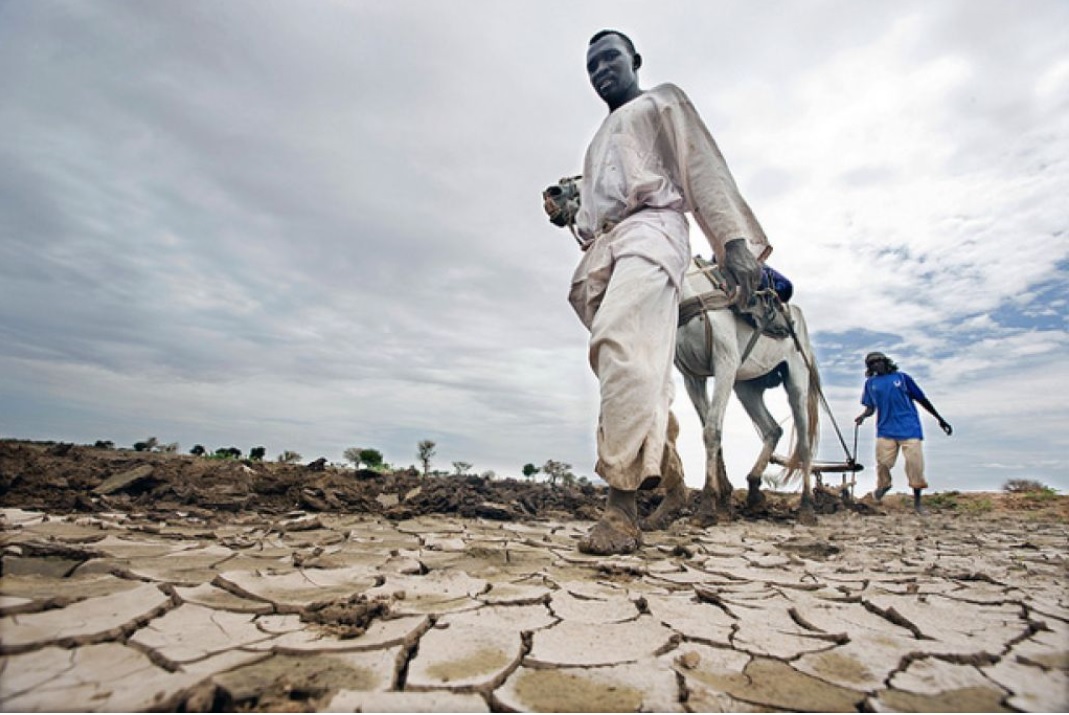
Building resilience in fragile regions must be a priority, not an afterthought, in our efforts to reach global goals. Climate change impacts vulnerable communities hardest.

We’ve known for a while that conflict and political instability—especially when coupled with extreme weather events such as hurricanes or drought—inevitably leads to poverty, food insecurity, limited access to clean water and sanitation, unreliable infrastructure and displacement.
Related topics: How to impact climate change adaptation and mitigation around the world – How to Address Nature Risks and Climate Change – Sustainable Leaders Reducing the Impact of Agriculture on Climate Change
What we’ve learned more recently is how global warming exacerbates all this, at a rapid pace, and with no respect to borders. In 2019 alone, there has been an unprecedented number of major reports linked to food, climate change and biodiversity (including the Global Commission on Adaptation report, the IPCC Climate Change and Land report, the EAT–Lancet report, the FSIN 2019 Global Report on Food Crises and IPBES report, along with hundreds of other studies).
We know, unequivocally, that the climate crisis will hurt the world’s most vulnerable populations first and hardest, but will the 193 United Nations member states who pledged to “leave no one behind” live up to their promise? And will the socio-political momentum of the Global Climate Strikes, Climate Action Summit and Covering Climate Now commitment by mainstream media do anything to focus the spotlight on these vulnerable communities who struggle most to have their voices heard?
It’s difficult to say. Despite this wealth of knowledge and momentum on the world stage, current data still points to disappointing trends. In recent years, we‘ve seen growing levels of food insecurity at the global level, with the number of undernourished people increasing from 783 million in 2014 to 821 million in 2018.
As is usually the case, increases in food insecurity are concentrated in those places facing both extreme weather events and conflicts. At the same time, over 70 million people are currently displaced by persecution, violence and conflict, a figure that has risen year on year for the last seven years. Compounding these threats are widespread losses in the resilience of agricultural landscapes due to plummeting biodiversity levels, including a 60 per cent loss of vertebrate animal populations since the 1970s and two in five insect species now facing extinction.
The situation will almost certainly get worse before it gets better; research has shown that countries with a high dependence on agriculture, a recent history of conflict and discriminatory political institutions in a position of power are particularly likely to experience more violence, food crisis and displacement due to climate change.
How can we stem the tide? One tangible step in the right direction is sharing and amplifying work already being done to boost resilience in these countries and communities.
This is exactly what initiatives like the Global Resilience Partnership (GRP) are doing. GRP is comprised of public and private organizations joining forces to ensure vulnerable people in fragile regions are able to thrive in the face of uncertainty, surprise and change. The GRP and its partners believe resilience is fundamental to meeting the Sustainable Development Goals and staying true to the commitment of leaving no one behind. Since more of the world’s poor and hungry will become concentrated in regions that face the combination of extreme weather events and political instability, our focus should be accelerating resilience innovation in these areas. Vulnerable communities are a priority.
An example of this is the Linking Social and Financial Capital to Enhance Resilience of Agro-Pastoral Communities (LEAP) initiative, in which the GRP and partner Mercy Corps worked to strengthen the resilience of farmers, livestock herders and others working in agriculture in Mali and Niger by expanding their access to financial services.
By making informed decisions about their household finances and learning to better manage risk, participants were able to access new credit options, including warehouse credit for farmers and tailored credit products for women’s groups. More than 200,000 people signed up to receive financial education on a regular basis, and the percentage of women involved in financial decision-making increased substantially.
Going forward, the GRP will build on its experience bringing resilience projects and concepts to Africa and Asia, focusing its future innovation support on fragile regions facing the triple challenge of extreme weather events, food and water insecurity, and political instability.
As part of its efforts to synthesize and accelerate learning, GRP also launched its GRP Resilience Insights report at the UN Secretary General’s Summit. It distills learning from more than 60 programs across 16 countries and 150 reports, offering key takeaways regarding how the most effective resilience strategies can be deployed.
While there is great urgency in the climate movement and a need to have “less talk, more action,” we must remember at the same time that steamrolling ahead with ideas that haven’t been researched or tested can backfire (so, too, can projects that haven’t taken local or grassroots opinions into consideration).
Yes, let’s act now, but let us also amplify the voices of the least-developed countries and most fragile populations. Let’s allow the voices of these vulnerable communities to influence the global policy agenda and ensure that future climate investments are reaching the people who need them most.
About the author: Nathanial Matthews is Program Director at Global Resilience Partnership; Deon Nel is the organization’s CEO
EDITOR’S NOTE: The opinions expressed here by Impakter.com columnists are their own, not those of Impakter.com. Photo Credit: IISD