Nothing is assured or predictable in terms of when and how the War involving Iran, the United States, and Israel will end, and therefore, it does not allow for any objective assessment of its effect. Not in terms of economic or political fallout, nor in terms of the broad effects on global, regional, and individual-country health.
For diplomats and politicians, the war in Iran is a geopolitical event. For epidemiologists, physicians, veterinarians, agronomists, and ecologists, the perspective is very different: what is happening is likely to affect humans, animals, crop systems, and the environment in both the near and long term. The One Health framework — the interdependence of human, animal, plant, and ecosystem health — is a lens through which the war’s legacy should be considered and how to ameliorate its negative consequences.
Some of the One Health Concerns
The existing and future risks to public health are multiple. Extensive bombing and sanction measures, which isolate Iran, have led to a breakdown of its health facilities and services, limited surveillance capability of communicable diseases and/or containment of any spread, and reduced vaccination programs and maternal care.
Iran’s food production and supply chains have also been seriously disrupted, with the prospect of reduced food availability for people and livestock and lower future crop yields due to a lack of fertilizer, pesticides, and labor, all resulting in significant scarcity.
Further, the war’s harmful environmental effects on Iran and in the Middle East include air and water pollution, damage to waste management systems, oil spills in Iran and in the Strait of Hormuz, and widespread human, domestic animals, and wildlife habitat destruction. Such widespread destruction has important implications in assessing the likelihood of infectious disease spillover between humans and animals, e.g., zoonotic disease spread.
Another effect of the above is increased migration both within and outside Iran. It is known that the influx of significant numbers of new arrivals to an unprepared area over a short period of time exacerbates the risks of diseases spreading among people and across borders, challenging any existing health system, whether inside Iran or its neighbors.
Planning for One Health Needs to Begin Now
The Iran war will undermine the inherent linkages among human, animal, plant, and environmental health systems. How well such damage is handled will largely hinge on the duration of the war, the actions taken to stabilize Iran and its relations with neighboring areas, and, once some degree of peace is reached or is approaching, what policies, programs, and projects are planned and supported.
While a resolution of political, military, and diplomatic points of contention will be good news, it will not suffice in dealing with the underlying health-related problems described.
Related Articles
Here is a list of articles selected by our Editorial Board that have gained significant interest from the public:
What will it take?
While this may be a “pipe dream” now, and certainly not before there is an Iranian government concerned about the health and wellbeing of its people, it is nevertheless worth considering at this juncture. A forward-looking, comprehensive One Health approach would make a difference in fostering collaboration and coordination across multiple sectors and institutions.
The process of thinking through a One Health post-Iran war approach will require some organization or combination of international, national, non-governmental organizations, and academic or research institutes, all recognizing the value of such an undertaking, each with key technical competence, and committed to providing initial funding.
It will need a lead institution to work with a multisectoral team of experts to address the many aspects of the plan. If there is interest, the 9th World Health Congress in Portugal in September could be where the subject is discussed and determine if there is interest in pursuing this idea. Past recent venues that brought new thinking to the global One Health community include meetings in South Africa, Denmark, and this year, the One Health Summit in France.
The sooner there is a process to draft a One Health strategy to address post-Iran War critical concerns, the better it will be for all of us. As a global community, we need to prepare now or pay the price of being unprepared later.
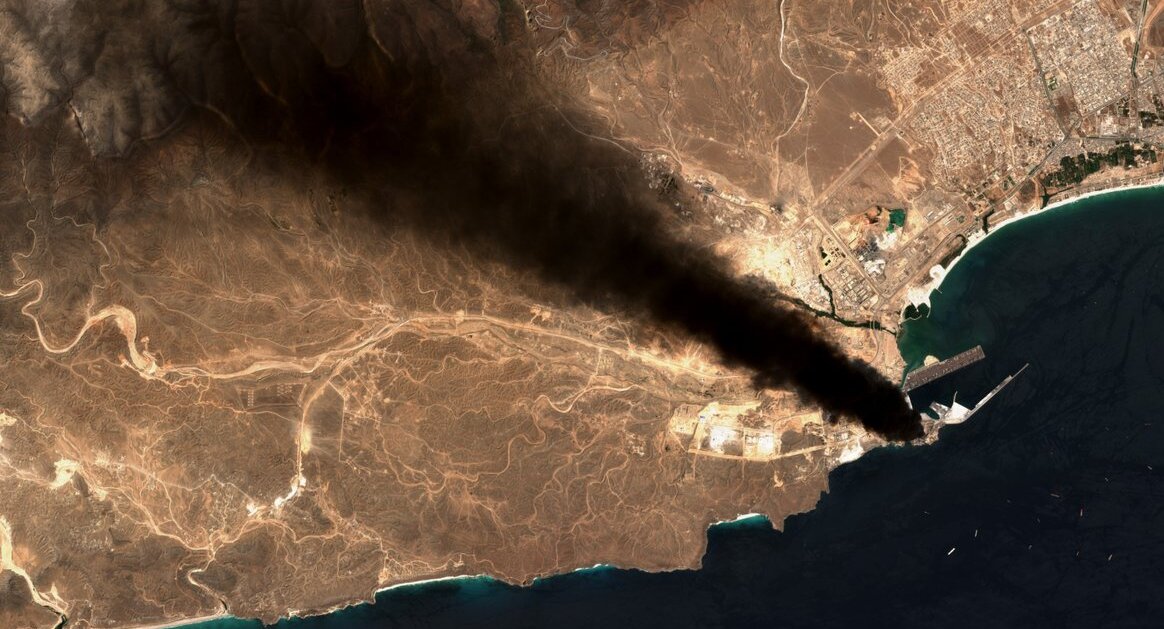
Editor’s Note: The opinions expressed here by the authors are their own, not those of impakter.com — In the Cover Photo: Satellite imagery of black smoke rising from Salalah port, March 13, 2026. Cover Photo Credit: Wikimedia Commons.