Impakter
  • Environment
    • Biodiversity
    • Climate Change
    • Circular Economy
    • Energy
  • FINANCE
    • ESG News
    • Sustainable Finance
    • Business
  • TECH
    • Start-up
    • AI & Machine Learning
    • Green Tech
  • Industry News
    • Entertainment
    • Food and Agriculture
    • Health
    • Politics & Foreign Affairs
    • Philanthropy
    • Science
    • Sport
  • Editorial Series
    • SDGs Series
    • Shape Your Future
    • Sustainable Cities
      • Copenhagen
      • San Francisco
      • Seattle
      • Sydney
  • About us
    • Company
    • Team
    • Global Leaders
    • Partners
    • Write for Impakter
    • Contact Us
    • Privacy Policy
No Result
View All Result
Impakter logo
No Result
View All Result
Can Nature-Based Solutions Offer Climate Resilience in El Salvador?

Can Nature-Based Solutions Offer Climate Resilience in El Salvador?

Antonia Van DunembyAntonia Van Dunem
January 21, 2021
in Environment
0

El Salvador, home to around six million people, is the most densely populated country in Central America. With a history of being repeatedly affected by drought, intense rain, cyclones and the El Nino Southern Oscillation (ENSO), the isthmus connecting North and South America is recognised for its vulnerability to the adverse effects of climate change.

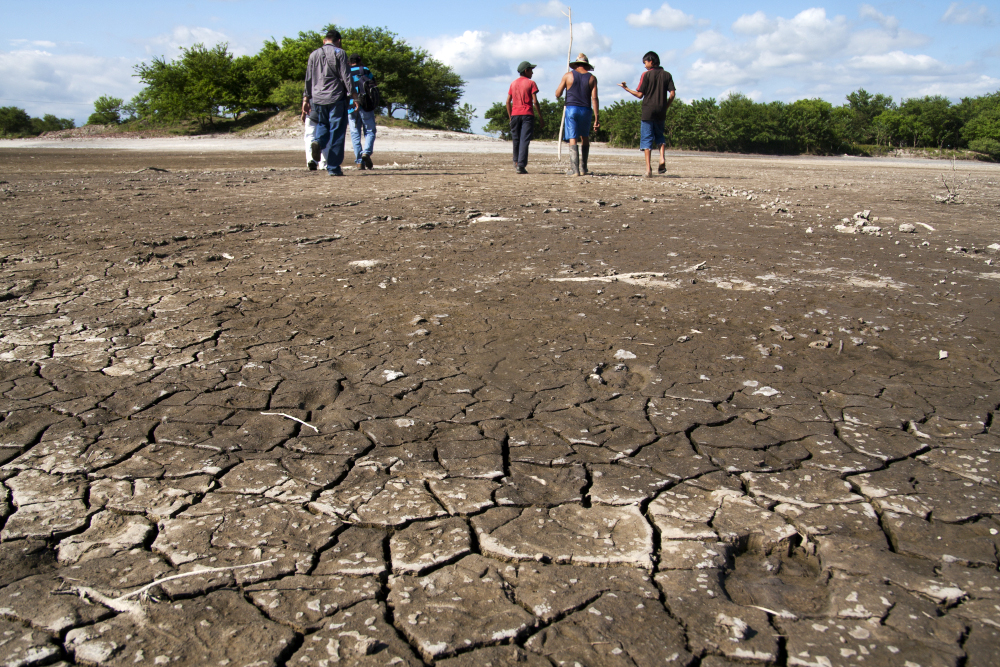
Since 2012, successive years of drought in El Salvador have been jeopardising water and food security, resulting in the first declaration of a water shortage emergency in 2016. Still depleting rapidly due to climate change, poor services, pollution and unregulated commercial exploitation, El Salvador’s water reserves were the lowest in the region in 2019. One study estimates that within 80 years El Salvador will completely run out of water.
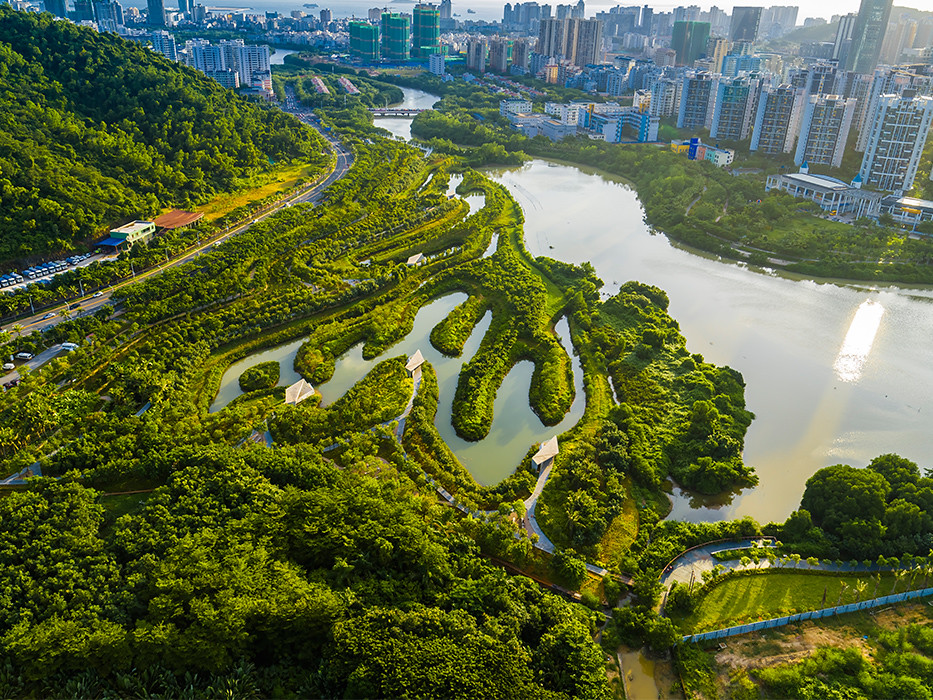
In the photo: Mangrove park built in central Sanya city, China, to protect against flooding. Photo Credit: Monica Abreu.

Vulnerability to extreme weather events underscores Central America’s exposure to the dangers of climate change. These include earthquakes, tropical storms, cyclones as well as hurricanes, among others. In May 2020 tropical storm Amanda descended on El Salvador, activating over 150 landslides and 20 major floods in the capital, San Salvador. The storm devastated crop production, destroyed roads, electrical lines, and nearly 30,000 homes. President Nayib Bukele declared a 15-day state of emergency, stating that the storm had caused $200m worth of damage. 


Related Articles: Strengthening Climate Services for Agriculture in Latin America | Building Resilient Climate Smart Agricultural Systems

Severe weather conditions pose a great threat to the country’s coffee production and consequent exportation, once a major source of income. According to The Week, the Salvadoran Coffee Council claims that exports have fallen by more than half in the last decade. The industry’s decline is the outcome of a multitude of issues; diminishing coffee prices, decrease in investment, agricultural pests and undoubtedly climate-related effects. The International Food Policy Research Institute estimated that by 2050, climate change could affect El Salvador’s coffee sector more than anywhere else in the world.
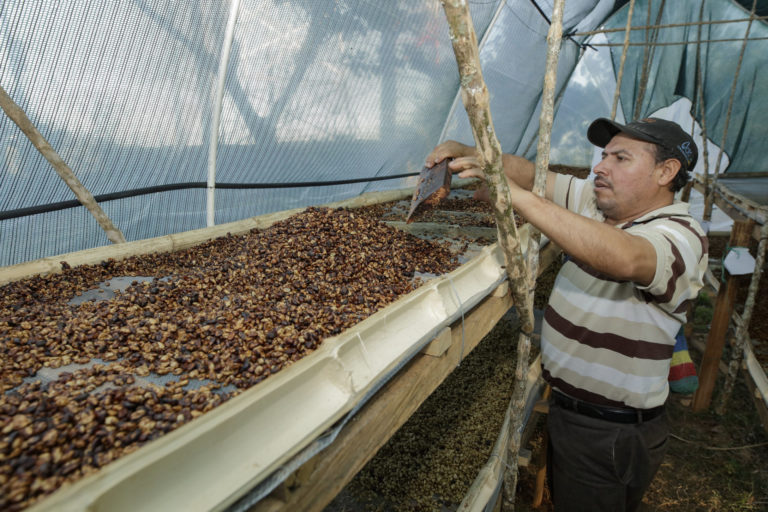
In the Photo: Coffee grains to be dried at a coffee mill in El Salvador. Photo Credit: Maren Barbee.

As climate change threatens to tip the nation deeper into crisis, city officials and farmers, working alongside the United Nations Environment Programme (UNEP), have launched an operation to revive 1,150 hectares of forests and surrounding coffee plantations. The construction of buildings, road paving and prolonged droughts in San Salvador have prevented rainfall from being absorbed into the ground. 

The design, “CityAdapt,” is grounded on the hypothesis that vegetation can draw vast amounts of water into the soil; limiting erosion, reducing floods and recharging groundwater supplies during droughts. CityAdapt aims to improve infiltration in the area by creating ditches which copy natural drainage networks provided by streams and rivers. The barriers, which will be built in the forest and nearby coffee plantations, will be made of stone, wood and a Spineless Yucca plant found in the region — all of which helps to alleviate erosion. Once decomposed, organic material retained in the ditches will also be used as fertiliser. The project hopes to build over 62km of infiltration ditches in San Salvador.

According to UNEP, the project has already reduced the risk of flooding for around 16,000 people in San Salvador. This figure is expected to reach 115,000 by the project’s completion in 2022. The innovative method, which works to harness ecosystems to protect people and the environment from the impacts of climate change, has been coined Ecosystem-based Adaptation. The project also operates in Mexico and Jamaica. 

Ecological drainage systems, which include “replacing concrete pavements with wetlands, green rooftops and rain gardens,” are being used in 16 cities across China to tackle flooding and are also set to be piloted in 30 other cities.

Known as “Sponge Cities,” these nature-based solutions aim to ensure that “80% of the urban land in each city includes sponge like features.” The design is also being pursued in Berlin in preparation for a projected increase in heat waves and rainstorm, as the effects of climate change worsen.

In the photo: Mangrove park built in central Sanya city, China, to protect against flooding. Photo Credit: Monica Abreu.

Editor’s Note: The opinions expressed here by Impakter.com columnists are their own, not those of Impakter.com. — In the Featured Photo: Dried out shrimp tank in El Salvador. Featured Photo Credit: Christian Aid.




Tags: AgricultureClimate ChangeEcosystem-based AdaptationEnvironmentfloodingLatin America
Previous Post

An Encounter With White Feminism

Next Post

Exit Trump, Enter Biden: Can America Make a Comeback?

Related Posts

President Donald Trump delivers remarks at a press conference at Mar-a-Lago in Palm Beach, Florida, following Operation Absolute Resolve in Venezuela
Energy

Regime Change in Venezuela and the Crisis of Global Order

The US capture of Venezuela’s President Nicolás Maduro and his wife, Cilia Flores, from their official residence in Caracas in a military...

byCarlos Frederico Pereira da Silva Gama - Author & Assistant Professor at the Shiv Nadar Institution of Eminence
January 12, 2026
soil
Biodiversity

To Prevent Ecological Collapse, We Must Start With the Soil

Soil is the single most biodiverse habitat on Earth, home to at least 59% of all species, including over 80%...

byMarcela Quintero - Associate Director General of Research Strategy and Innovation at the Alliance of Bioversity International and CIATand1 others
January 6, 2026
coal mine
Business

Can the War on Coal Still Be Won?

Ten years ago, I embedded in the war on coal. I spent a month inside the Sierra Club’s Beyond Coal campaign, watching an organization...

byCanary Media
January 6, 2026
Impakter’s Most-Read Stories of 2025
Society

Impakter’s Most-Read Stories of 2025

In 2025, as in previous years, Impakter readers turned in large numbers to stories examining climate change and pollution, environmental...

byImpakter Editorial Board
December 31, 2025
Year in Review: Trump 2.0 and the Environment
Editors' Picks

Year in Review: Trump 2.0 and the Environment

So much has happened this year. It seems that every day there is a new headline that is just as...

bySarah Perras
December 30, 2025
Is It Time to Recognize Climate Refugees?
Climate Change

Is It Time to Recognize Climate Refugees?

Climate displacement has become a defining feature of our present. Climate shocks now shape human (im)mobility, humanitarian crises, and political...

byDr. Shepherd Mutsvara - Research Fellow at the University of Münster, Germany
December 30, 2025
What’s Next for Sustainable Development in 2026
Climate Change

What’s Next for Sustainable Development in 2026

As governments confront rising misinformation, constrained budgets, and intensifying climate risks, the need for evidence-based policy has never been greater....

byInternational Institute for Sustainable Development (IISD)
December 23, 2025
women and extreme heat
Climate Change

Women and Extreme Heat: Simple Adaptations Make a Big Difference

One of the more damaging impacts of climate change is extreme heat. From Spain to Bolivia to Burkina Faso, unusual...

byKate Schecter - CEO of World Neighbors
December 23, 2025
Next Post
Exit Trump, Enter Biden: Can America Make a Comeback?

Exit Trump, Enter Biden: Can America Make a Comeback?

Recent News

Diamond Painting Designs

7 Beautiful Diamond Painting Designs You’ll Love Working On 

January 13, 2026
ESG News regarding the DOJ’s investigation into Federal Reserve Chair Jerome Powell, Orsted’s U.S. offshore wind lawsuits, Stegra’s Non-Prime Steel Deal With thyssenkrupp, and Ghana repaid $1.47 of energy debt

US Federal Reserve Chair Under Investigation

January 12, 2026
Steakhouse in Tucson

7 Factors That Define a Premium Steakhouse Experience

January 12, 2026
  • ESG News
  • Sustainable Finance
  • Business

© 2025 Impakter.com owned by Klimado GmbH

No Result
View All Result
  • Environment
    • Biodiversity
    • Climate Change
    • Circular Economy
    • Energy
  • FINANCE
    • ESG News
    • Sustainable Finance
    • Business
  • TECH
    • Start-up
    • AI & Machine Learning
    • Green Tech
  • Industry News
    • Entertainment
    • Food and Agriculture
    • Health
    • Politics & Foreign Affairs
    • Philanthropy
    • Science
    • Sport
  • Editorial Series
    • SDGs Series
    • Shape Your Future
    • Sustainable Cities
      • Copenhagen
      • San Francisco
      • Seattle
      • Sydney
  • About us
    • Company
    • Team
    • Global Leaders
    • Partners
    • Write for Impakter
    • Contact Us
    • Privacy Policy

© 2025 Impakter.com owned by Klimado GmbH