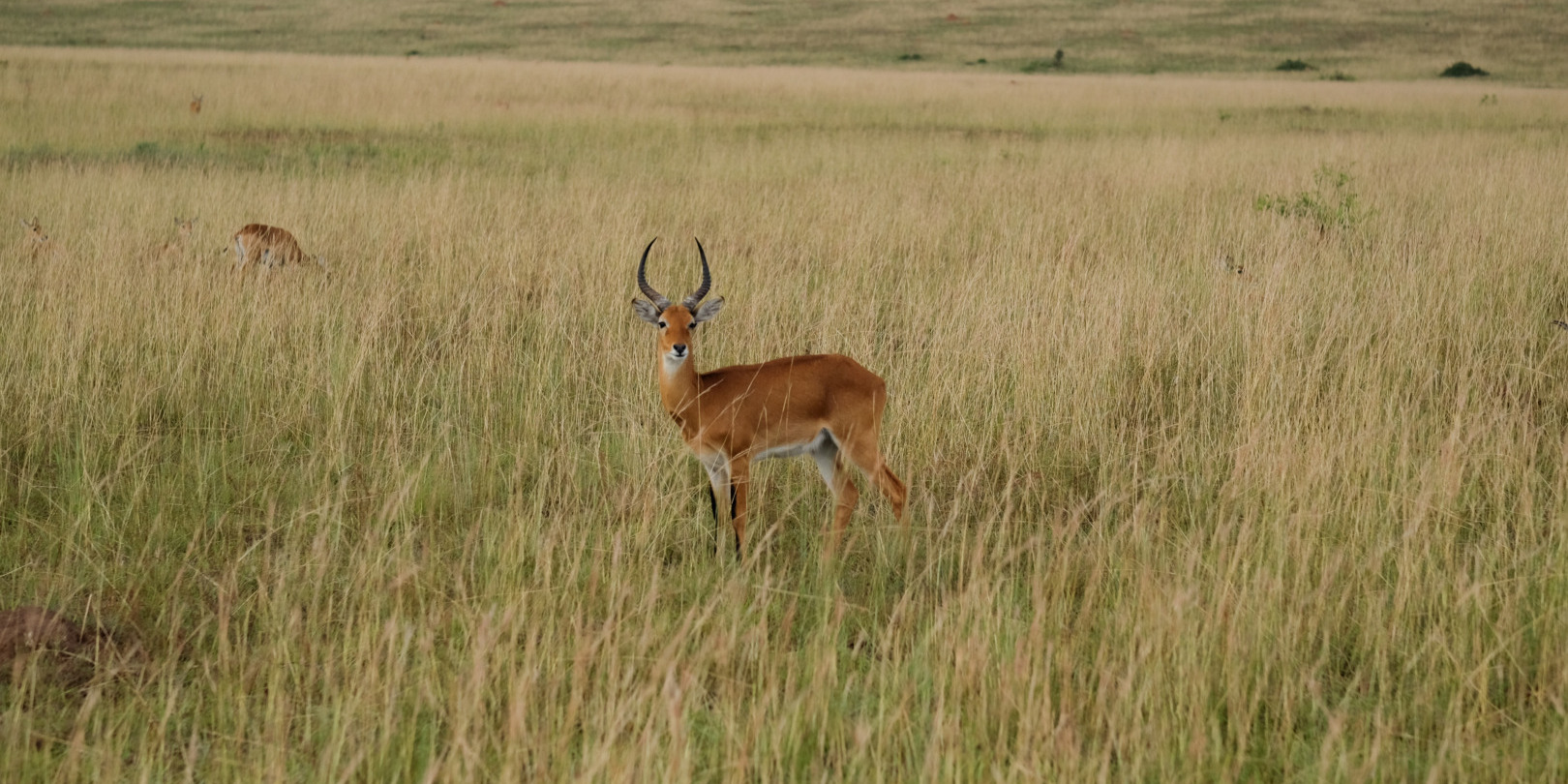
The Rwenzori Mountains loom large over the surrounding scenery in southwestern Uganda. Here, snowmelt and rainwaters flow through alpine meadows and forests of otherworldly flora, including giant lobelia and heather taller than a person, to provide the source waters of the Nile. Moving south, the lakes, rivers, and grasslands of Queen Elizabeth National Park are home to not only elephants, buffalo, and hippopotami but also vast herds of kob — and the tree-climbing lions that prey on them.
Standing within these beautiful settings, you could be forgiven for thinking that nature is thriving. However, these exceptional places, inscribed as part of our collective natural heritage by UNESCO, are increasingly islands of ecosystem health in fragmented landscapes and seascapes beset by outside pressures.
The Sixth Extinction
It is a well-known story, and the headlines are often dire. Rates of species extinction and ecosystem degradation are accelerating; according to the 2019 Global Assessment Report by the Intergovernmental Science-Policy Platform on Biodiversity and Ecosystem Services (IPBES), 1 million animal and plant species are currently threatened with extinction, many within decades, unless urgent, transformative action is taken. Abundance has plummeted for many of those species not yet gone; WWF’s 2022 Living Planet Report notes an average decline of 69% in the relative abundance of monitored wildlife populations around the world between 1970 and 2018. The scale of the problem is so large that it is now commonly referred to as the sixth extinction: the loss of an unusually large number of species in a short time, driven by human activities.
Compounding Crises
IPBES cites five anthropogenic factors as key drivers of this crisis: land- and sea-use change; direct exploitation of natural resources; climate change; pollution; and invasive species.
Nature has a foundational role in global health, food systems, livelihoods, climate adaptation, economies, and security. Thus, the acceleration of nature loss, when considered in the context of rising demands from growing populations for both ecosystem services and natural resources, means that avoiding further degradation or loss of biodiversity and ecosystem services should be an increasingly important consideration for governments, communities, and the private sector.
This crisis is unfolding in the context of rising global temperatures. The climate crisis is having a significant impact on the natural world. While land- and sea-use changes are currently the greatest drivers of nature loss, a failure to limit planetary warming to 1.5°C will result in climate change becoming the dominant cause of global biodiversity loss and ecosystem degradation in the coming decades.
Climate change is disrupting natural feedback loops and altering the habitats and ranges of various fauna and flora. Its impacts also undermine the delivery of ecosystem services, harming human lives and livelihoods and compromising efforts to eradicate poverty and hunger and provide safe water for billions of people. Achieving the United Nations Sustainable Development Goals, alongside the Paris Agreement and the Kunming-Montreal Global Biodiversity Framework, will depend on a coordinated response to these deeply connected emergencies.
How Can Nature-based Solutions Build Climate Change Resilience?
But while climate change and biodiversity loss often act to reinforce one another, so do effective climate change adaptation and nature protection. Nature-based Solutions (NbS) have emerged as an integrated concept beyond climate change adaptation and traditional conservation. NbS may have the potential to tackle multiple societal challenges, such as protecting, managing, and restoring biodiversity and ecosystems. Their services are increasingly seen as an effective way to address some of the shared root causes and impacts of the biodiversity and climate crises.
In Belize, Fiji, and the Greater Virunga and Kavango-Zambezi (KAZA) landscapes in sub-Saharan Africa, NbS are being rolled out to increase the resilience of both communities and ecosystems to climate change. Through the Climate Adaptation and Protected Areas (CAPA) Initiative, IISD is working with the Wildlife Conservation Society, the World Wide Fund for Nature, and local partners and communities within these spaces to conserve, protect, restore, and sustainably manage protected areas.
More than 50 km from the mainland of Belize, Glover’s Reef atoll lies just inches above the deep blue waters of the western Caribbean. Glover’s is a critical link in a chain of reefs and islands that form the largest barrier reef in the Western Hemisphere. Here, IISD and the Wildlife Conservation Society are working to strengthen the reef’s health and its ability to support local livelihoods, remain a suitable habitat for marine species, and provide coastal protections against extreme weather events.
Related Articles: Over Two-Thirds of Wildlife Lost in Less Than a Lifetime | What Have Cats Got to do With Climate Change? An Interview with Dr. John Goodrich | The Mass Extinction Crisis: Can the Private Sector Help Solve It?
Half a world away, in southwestern Uganda, lies what is arguably Africa’s most biodiverse landscape. The Greater Virunga Landscape stretches along the shared borders of Uganda, Rwanda, and the Democratic Republic of Congo — a mosaic of mountains, savannas, rivers, lakes, swamps, tropical rainforests, and volcanoes. Here, conservation interventions implemented by the World Wide Fund for Nature and partners focused on reforestation, invasive species removal, land restoration, and nature-based livelihoods will help build the resilience of three national parks (Rwenzori Mountains, Queen Elizabeth, and Bwindi Impenetrable) and the communities that surround them to rising temperatures, increased flood risk, landslides, and erosion. Even more work is happening under the project in the KAZA landscape and in Fiji to support reforestation, restock wildlife, promote sustainable fisheries, and improve flood mitigation, among other activities.
The threats facing these ecosystems — and, by extension, the conservation practitioners that manage and support them; the communities that sustain and depend on them; the flora and fauna that make them indispensable — can often seem insurmountable. But there is hope. CAPA is one small part of a growing movement of projects, partnerships, and approaches using NbS to simultaneously address these two existential emergencies. Scaling up this work to match the urgency and reach of the crises will be a challenge, but it is a challenge we must embrace.
** **
 This article was originally published by the International Institute for Sustainable Development (IISD) and is republished here as part of an editorial collaboration with the IISD. It was authored by Alec Crawford, Director of Nature for Resilience at IISD.
Editor’s Note: The opinions expressed here by the authors are their own, not those of Impakter.com — In the Cover Photo: Ugandan Kob, Murchison Falls NP, Uganda, September 2015. Cover Photo Credit: Brian Harries.