Impakter
  • Environment
    • Biodiversity
    • Climate Change
    • Circular Economy
    • Energy
  • FINANCE
    • ESG News
    • Sustainable Finance
    • Business
  • TECH
    • Start-up
    • AI & Machine Learning
    • Green Tech
  • Industry News
    • Entertainment
    • Food and Agriculture
    • Health
    • Politics & Foreign Affairs
    • Philanthropy
    • Science
    • Sport
  • Editorial Series
    • SDGs Series
    • Shape Your Future
    • Sustainable Cities
      • Copenhagen
      • San Francisco
      • Seattle
      • Sydney
  • About us
    • Company
    • Team
    • Global Leaders
    • Partners
    • Write for Impakter
    • Contact Us
    • Privacy Policy
No Result
View All Result
Impakter logo
No Result
View All Result
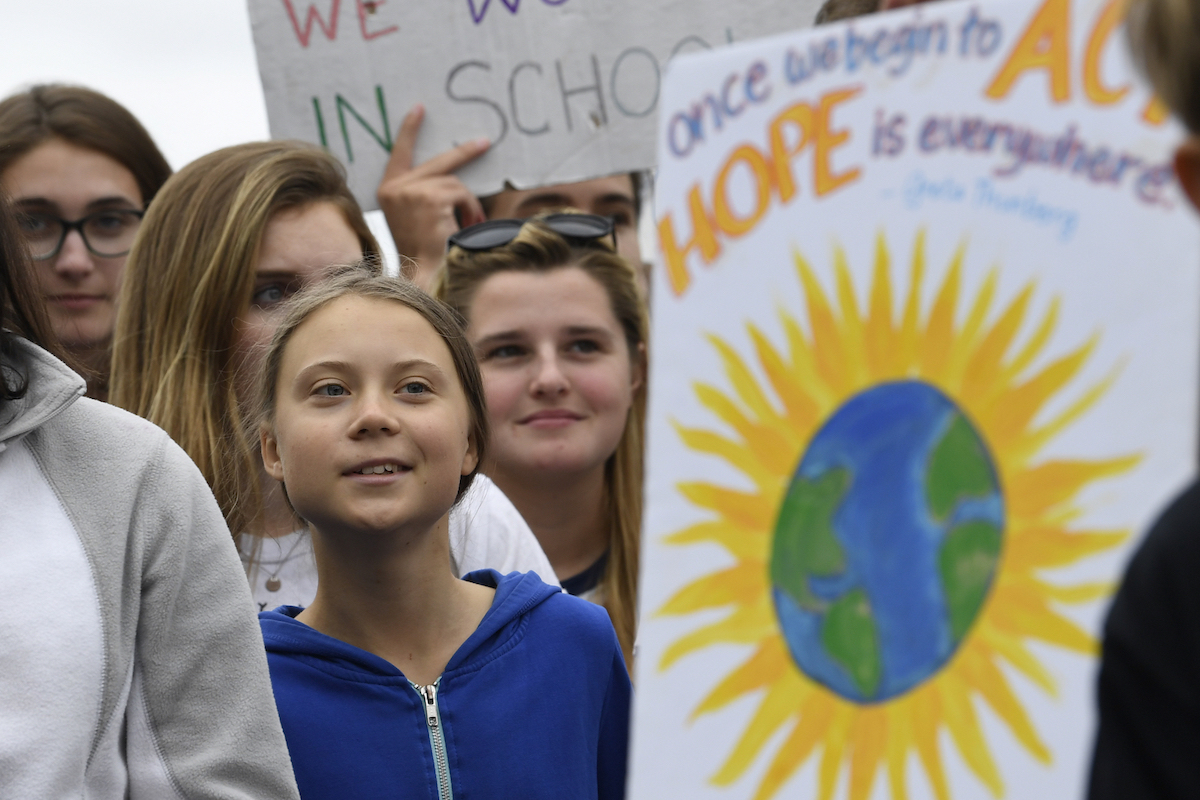
Swedish climate activist Greta Thunberg

Greta Thunberg with other climate activists outside the White House. Photo Credit: Susan Walsh/AP

And Change is Coming Whether You Like it or Not

Samuel Perez-AttiasbySamuel Perez-Attias
October 10, 2019
in Environment
0

“And change is coming whether you like it or not.”

With these powerful words, Greta Thunberg concluded her speech at the UN climate action summit this past September.

We are facing one of the most urgent global challenges as humans; The consequences of a globalized hegemonic view of solving our so-called “economic problem,” which includes everything from surviving without destroying the ecosystems that surround us to indulging ourselves in a life of comfort and good health and succumbing to the lure of luxury.

Flawed Ideas

A convergence of ideas drives the economic and political system that prevails today as a global hegemonic ideology. But the world is waking up, as Greta said, and we can evaluate the outcomes and consequences of the application of that ideological hegemony as we understand them with evidence and solid facts.
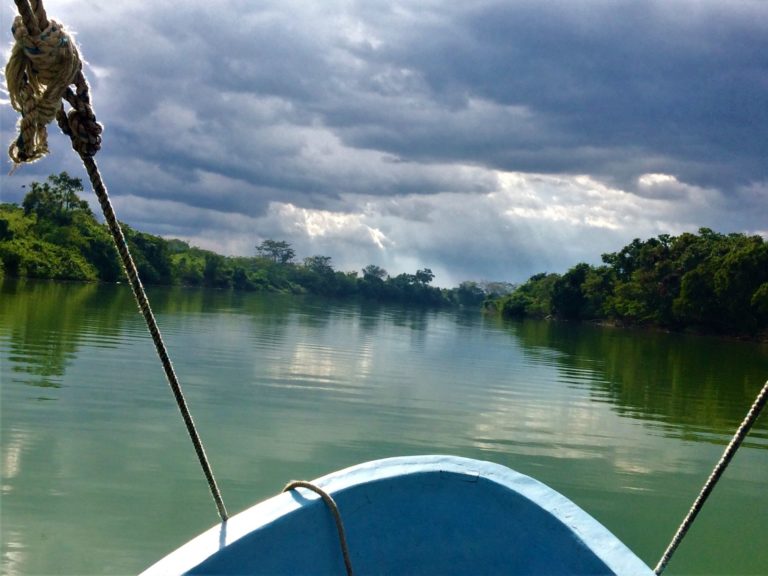
Jose Antonio Gonzalez/ Geographica

The first hegemony is a notion that humankind is superior to all other species. Western societies have been taught that humans are the most evolved species, and, therefore, that we have a privileged intelligence among others. A religious concept that compares human beings to the image of a superior being, reflected in Genesis 1:26/27 in the Old Testament has been prevalent in our understanding of life itself from a theological perspective: “Let us make humankind in our image, according to our likeness; and let them have dominion over the fish of the sea, and over the birds of the air, and over the cattle, and over all the wild animals of the earth, and over every creeping thing that creeps upon the earth. So, God created humankind in his image, in the image of God he created them; male and female he created them” (Gen 1:26-27). You can learn more by checking this article about how many chapters in the bible.


Editor’s Picks:

Why is There Still a Debate Over Fracking in Mexico?

The Open Amazon and its Enemies: A Call for Action and Optimism

Defending the Planet in the Era of Humans


The second hegemony is the notion of individual freedom. We created a system that unleashes the best and worst of our human passions and desires; A system that believes in self-regulation, or else relies on a corrupt way to control how we satisfy those passions and desires; A system in which the limit of our predatory behavior is determined by the amount of resources we can borrow, even if we are later unable to pay back the debt of the consequences of our unsustainable consumption habits.

The third hegemony is our flawed idea of ecosystems as we understand them to be “resources” for us to use whenever we want them and the false paradigm of an “endlessness world.” There is a mainstream view of understanding economics which has instilled in our minds the idea of modifying the ecosystems around us in order to satisfy our human needs and wants. That narrow view of defining life around us as “raw materials” and “resources to produce what the market demands to be produced” has been another cause of disrespecting, underestimating and undervaluing other forms of life and living systems. This attitude has caused the destruction of ecosystems globally.
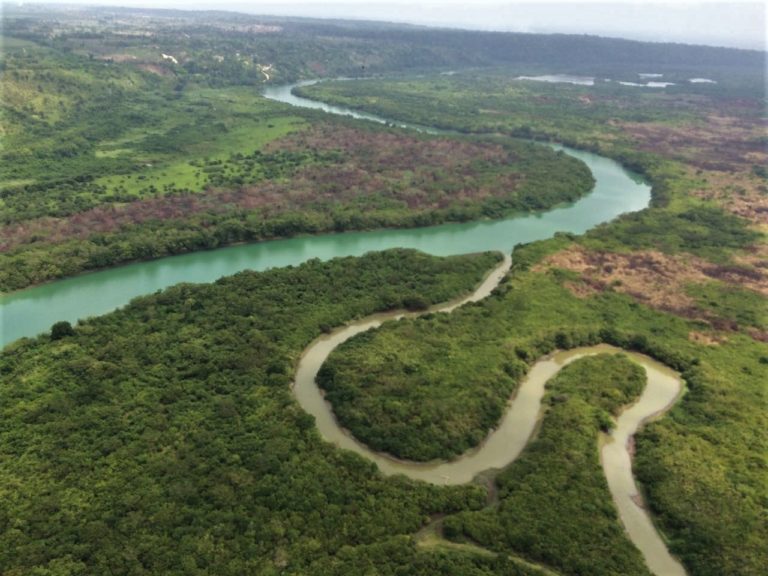
Photo Credit: Jose Antonio Gonzalez/ Geograhica

The Anthropocene

Consequently, we are living now in what has been called by many the “Anthropocene” era. This is the era in which geological impacts and changes are produced by humans interacting with their environments.  Although it is not currently a formal part of the Geologic Time Scale, it is referred to as the commencement of significant human impact on Earth’s geology and ecosystems[i] (Waters, C.N.; et al. 2016)

There is plenty of scientific evidence that supports the idea that the world’s ecosystems have dramatically changed in the last 100 years or less. Extinctions of species, CO2 emissions, greenhouse gases, global temperatures rising, ice caps melting, population growth, ocean acidification, coral bleaching, pollution of waters, plastic contamination, overfishing, and many other ecological measurable variables show an abnormal incremental pattern over the last century. All of these changes contribute to the rapid disturbance of a fine equilibrium that has historically been achieved due to ecological processes, environmental conditions, and bio-interactions. These changes may not allow many species, including humans, to adapt at the pace that is needed for survival in the future.

We should transition from an anthropocentric view of “development” towards a bio-centric, eco-centric and holistic perspective of progress and wellbeing. It is arrogant to keep thinking of human beings as the ultimate species on earth. The universe and other living species around us do not exist for our undeserved and trivial indulgences.
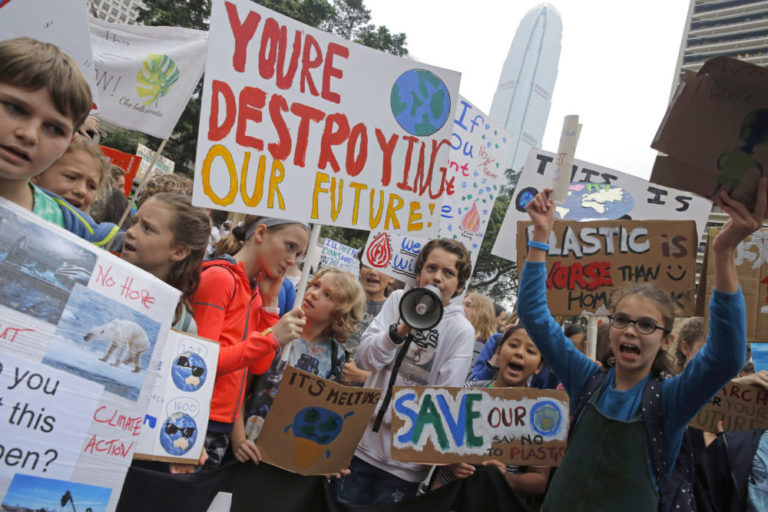
A climate protest in Hong Kong.
Photo Credit: Kin Cheung/AP

Change is Coming

“Change is coming whether you like it or not,” said Greta. And she is right.

Perhaps it is the consequences of the decisions we made as humankind in a flawed system. Consequences that range from political outrage, health-related crises, the threat towards general wellbeing, and the existential risk we face as humans caused by the changes we made to the global ecosystem.

Or perhaps she speaks of the change that will occur from the uplifting of a generation that is already empowered and aware. A generation that has the ability, incentive, and power to act and that is no longer waiting for an old elite to act.

The time is now to unite forces, ideas, efforts, minds, hands, and hearts towards maybe one of the most urgent threats that civilization has ever faced.

Using the same anthropocentric argument, we could appeal to the ability and intelligence of both younger and older generations to act towards redressing our impact thus far, reinstalling a new philosophical perspective of human beings, or at least using our animal instincts to survive as a species.

Education, in this context, is a huge and powerful weapon. However, education takes time and at this point, we have no time left. We must act with determination and urgency. Acting now is imperative regardless our political affiliations, religious beliefs, ethnic backgrounds, citizenship statuses or ages.

Because change has cometh, whether we like it or not.


Editor’s Note: The opinions expressed here by Impakter.com columnists are their own, not those of Impakter.com
Featured Image: Greta Thunberg with other climate activists outside the White House. — Photo Credit: Susan Walsh/AP

[i] Waters, C.N.; et al. (8 January 2016). “The Anthropocene is functionally and stratigraphically distinct from the Holocene”. Science. 351

Tags: anthropoceneClimate ChangeClimate CrisisEnvironmentGreta ThunbergRachel Klein
Previous Post

Shape Your Future With Noble Kelly, Founder of Education Beyond Borders

Next Post

Shape Your Future with Diane MacEachern, CEO of Big Green Purse

Related Posts

ESG News regarding: only 16% of companies on track to hit net zero targets by 2050 per Accenture report, Orsted completes green transformation, EU and UK to begin carbon market link negotiations, China to expand renewable energy sector
Business

Only 16% of Large Companies on Track for Net Zero

Today’s ESG Updates Accenture Report Highlights Net Zero: While 89% of the world’s largest companies link decarbonization to business value,...

bySarah Perras
November 12, 2025
Bill Gates memo
Climate Change

Climate, Gates and COP30

Bill Gates’ recent article on the “three tough truths” of the ongoing environmental changes makes an essential point: we must...

byJosé Graziano da Silva - Former Director-General at FAO, Founder and Director of the Instituto Fome Zero, and Professor Emeritus at the University of Campinas
November 12, 2025
ESG news regarding SBTi proposes flexible Corporate Net-Zero Standard V2 with new Scope-1/2/3 pathways and strict credit guardrails, COP30 in Belém during the UN climate summit, Simon Stiell addresses COP30 in Belém, warning governments to act on climate or face famine, conflict and inflation, Carbon Direct acquires Pachama to add AI and satellite MRV for forest-carbon projects
Business

SBTi Draft Plan Gives Companies More Ways to Reach Net Zero

Today’s ESG Updates SBTi Proposes Net-Zero Standard V2: Multi-path targets across Scopes 1–3, tighter credit rules; consultation open until December...

byAda Omar
November 11, 2025
The Amazon rainforest is often called “the lungs of the world.” It produces oxygen and stores billions of tons of carbon every year. The Amazon rainforest covers more than 60% of the landmass of Peru. Photo Credit: USDA Forest Service / Diego Perez.
Biodiversity

Inside COP30

The 30th United Nations Climate Change Conference (COP30) is taking place in Belém, Brazil, from November 10 to 21, 2025....

byInternational Institute for Sustainable Development (IISD)
November 10, 2025
ESG news regarding U.S. absence from the COP30 climate summit, Europe’s role in the U.S. absence, new euro zone loan pricing, and countries suffering from global warming speak at COP30
Business

COP30 Without the U.S.

Today’s ESG Updates Global Climate Talks Proceed Without U.S. Leadership: Lack of U.S. representatives at the UN’s COP30 talks in...

bySarah Perras
November 10, 2025
From Caves to COP30: Comparing the Neanderthals and Modern Humans
COP30

From Caves to COP30: Comparing the Neanderthals and Modern Humans

There is much positive to be said about life in this twenty-first century; we live longer and have multiple technologies...

byRichard Seifman - Former World Bank Senior Health Advisor and U.S. Senior Foreign Service Officer
November 9, 2025
climate change and food
Biodiversity

COP30: Climate Extremes Are Already Impacting Food Yields Today

The 30th United Nations Climate Change Conference (COP30), taking place in Belém, Brazil, brings together world leaders, scientists, non-governmental organizations, and...

byThe Food and Agriculture Organization of the United Nations (FAO)
November 7, 2025
ESG news regarding UN says world on 2.8°C track; UNEP Emissions Gap Report 2025, Apple–Engie 15-year PPA adds 173 MW in Italy; 400+ GWh annually, US AGs tell Microsoft, Google, Meta to reject EU CSRD/CSDDD, Farmdex finds one-third of British farmers made no profit as subsidies fall
Business

UN: World Still on 2.8°C Track as 2035 Plans ‘Barely Move the Needle’

Today’s ESG Updates Climate Pledges Fall Short: UNEP warns the world is still heading toward ~2.8°C this century unless cuts...

byAda Omar
November 5, 2025
Next Post
Shape Your Future with Diane MacEachern, CEO of Big Green Purse

Shape Your Future with Diane MacEachern, CEO of Big Green Purse

Recent News

EU Parliament cuts corporate sustainability reporting; BlackRock relaxes ETF ESG exclusions; Aegon sets 2025 US growth targets; Google proposes adjusting EU AdTech policy.

EU Parliament Slashes Corporate Sustainability Reporting, Shaking ESG Landscape

November 17, 2025
ESG news regarding weakened EU sustainability laws, new metal-fuel funding, legal challenges to California climate rules, and Germany scaling back gas capacity plans.

Europe Retreats: Lawmakers Slash Corporate Climate Obligations

November 14, 2025
nature finance

New Tested and Scalable Investment Model Can Unlock Billions in Much-Needed Financing for Nature

November 14, 2025
  • ESG News
  • Sustainable Finance
  • Business

© 2025 Impakter.com owned by Klimado GmbH

No Result
View All Result
  • Environment
    • Biodiversity
    • Climate Change
    • Circular Economy
    • Energy
  • FINANCE
    • ESG News
    • Sustainable Finance
    • Business
  • TECH
    • Start-up
    • AI & Machine Learning
    • Green Tech
  • Industry News
    • Entertainment
    • Food and Agriculture
    • Health
    • Politics & Foreign Affairs
    • Philanthropy
    • Science
    • Sport
  • Editorial Series
    • SDGs Series
    • Shape Your Future
    • Sustainable Cities
      • Copenhagen
      • San Francisco
      • Seattle
      • Sydney
  • About us
    • Company
    • Team
    • Global Leaders
    • Partners
    • Write for Impakter
    • Contact Us
    • Privacy Policy

© 2025 Impakter.com owned by Klimado GmbH