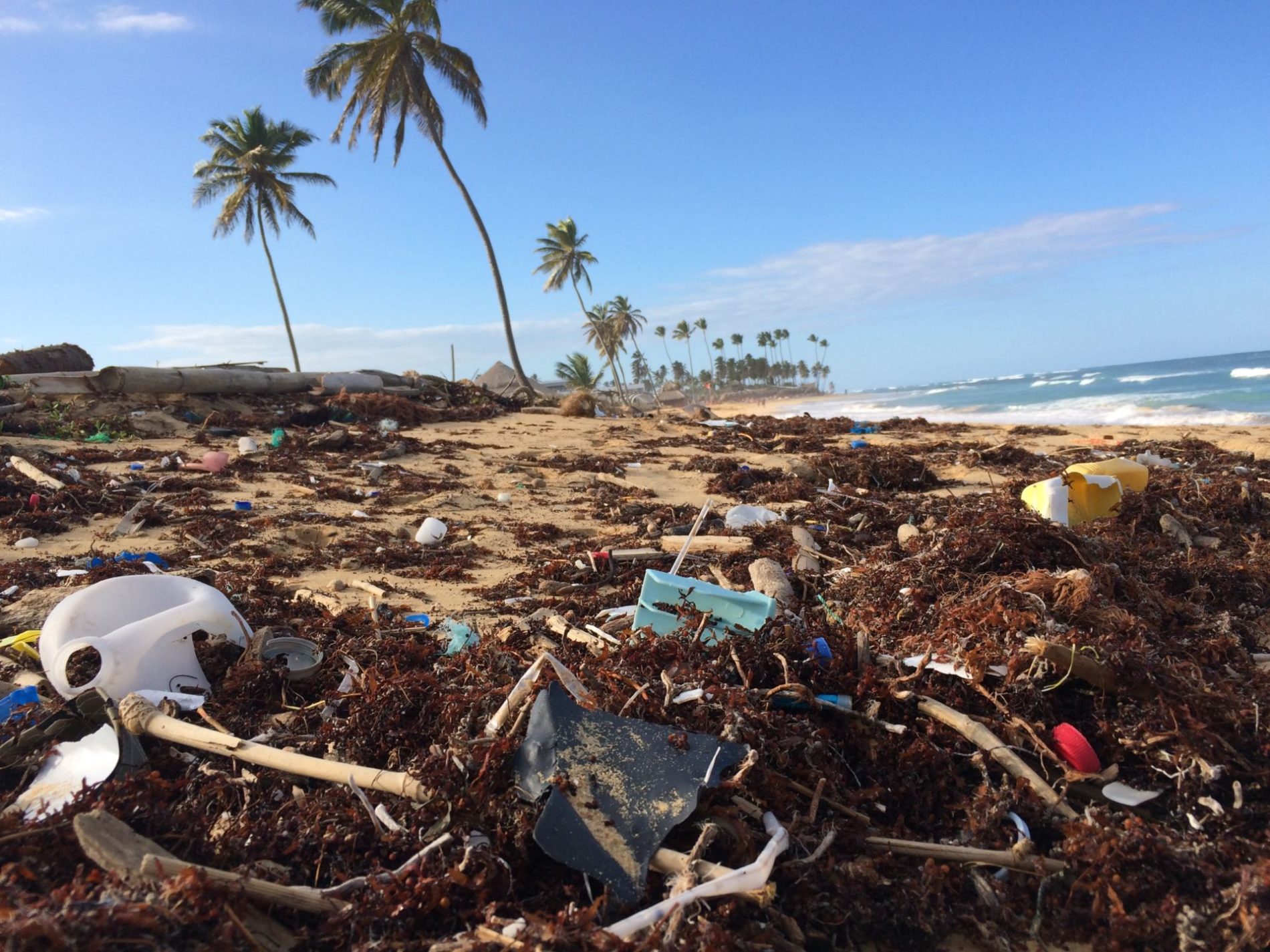
The Earth is sick and humans are the cause of their own discomfort. We were one of the last species to appear on the planet, but our presence has been so shocking to it that we have irreversibly modified the basic conditions that make humans and other forms of life possible as we know them. Our past and present-day activities have forced the planet to dangerously readjust, making Earth less inhabitable for ourselves and for humans in the near future.
We are many humans. We have many needs and we generate a lot of waste. We are responsible for our own dependence on renewable and non-renewable natural resources which we have used to construct buildings and to transport and feed ourselves. The industries on which we depend degrade ecosystems, pollute natural resources, and cause the extinction of other species at unprecedented rates. We are in the era of humans and plastic; the era of the Anthropocene.
However, many people are still not aware of this situation to its fullest extent, and believe that they live on an inexhaustible planet. In reality, we are in the midst of a globally declared environmental emergency. For more than five decades, notable scientists and academics such as Leopold, Carson, Boulding and Commoner, among many others, have pointed out that a change is required in our development models and in our patterns of production and consumption for the Earth to sustain itself. But, human political action has been very slow despite the negative effects of our actions becoming increasingly evident.

Roads for the Protection of the Environment: The Use of the Law
The legal defense of the environment today is more complex than it was 40 years ago. Environmental problems are becoming more serious and we have seen a significant increase in the number of environmental conflicts occurring globally. Right now, there are 2830 conflicts related to the environment around the world. As a result, human rights such as the rights to life, health, and equality have been imposed upon.
Environmental law emerged at the beginning of the 20th century to fight against ecological degradation and pollution. It became a platform for major concerns of countries and made their commitment to sustainability tangible through national laws, declarations, and international treaties. It has been a regulatory framework to protect us from ourselves and from what we are capable of doing to the planet. The law is an instrument used to consider biological and ecosystem characteristics in addition to controlling the negative impacts of the economy on the environment.
The creation of environmental law also allowed people to demand their essential right to a healthy environment. As a result, many countries have established public legal actions that anyone can take to ask judges to enforce regulations or stop projects that would cause loss of biodiversity, deterioration of nature, or the violation of human rights.
Victories around the world in emblematic environmental cases have also been achieved through strategic litigation. These cases seek to curb the dynamics of environmental injustice and transform the structures that promote inequality. Social groups fight for the conservation of rivers and forests, the mitigation of climate change, and better air quality.
However, environmental law has not been sufficient in addressing the complexity of the crisis in which we find ourselves. Despite the environmental regulatory boom after the Stockholm Land Summit in 1972, and the “greening” of constitutions with the consecration of the right to a healthy environment since the nineties worldwide, this crisis is detrimental to life as we know it. A recent UN Environment report found that, although it is true that there is a large number of environmental laws, they aren’t being effectively implemented or adhered to. The scarce coordination among state institutions, corruption, and weak citizen participation are some of the causes of the lack of effectiveness.
Caring for the Earth: Environmental Democracy at the Service of Humanity
The planet is in danger and we must protect it from ourselves. However, to defend it, there is no need to be a lawyer or scientist. Only will and empathy for the world we inhabit are required. Politicians and decision makers are not the only ones responsible for implementing sustainability. The role of people in all sectors and at all levels is key to incorporating environmental issues into legal, economic, and daily life arrangements.
At the international level, there are binding instruments through which countries can commit themselves to guarantee Principle 10. In 1998, the Aarhus Convention, which 47 European and Asian countries participated in, occurred. This convention developed the three rights of access: Access to information, public participation, and justice in environmental matters. Today, these are considered the three pillars of environmental democracy.
More recently in 2018, the countries of Latin America and the Caribbean adopted the Escazu Agreement. This agreement established application standards on information, public participation, and justice in environmental matters to achieve inclusive and participative environmental management that guarantees sustainable development and the rights of future generations in this region. This agreement will enter into force when 11 countries have ratified it, and its implementation will be the roadmap for the environmental democracy of the future.
The Aarhus Convention and Escazu Agreement are at the core of relations between governments, the private sector, and civil society. They are not only multilateral environmental treaties, but they also protect human rights and fundamental values of public administration, such as transparency and accountability. In particular, the Escazu Agreement recognizes the work of those dedicated to defending the environment and the territory. It also calls on states to establish safe and adequate environments for this defense.
Editor’s Picks — Related Articles:
How Decarbonizing Shipping Just Got a Push – From Banks
Is Oil Really Worth More Than the Planet?
Making Waste Useful: An Interview with LONO
We Can All Be Environmental Defenders
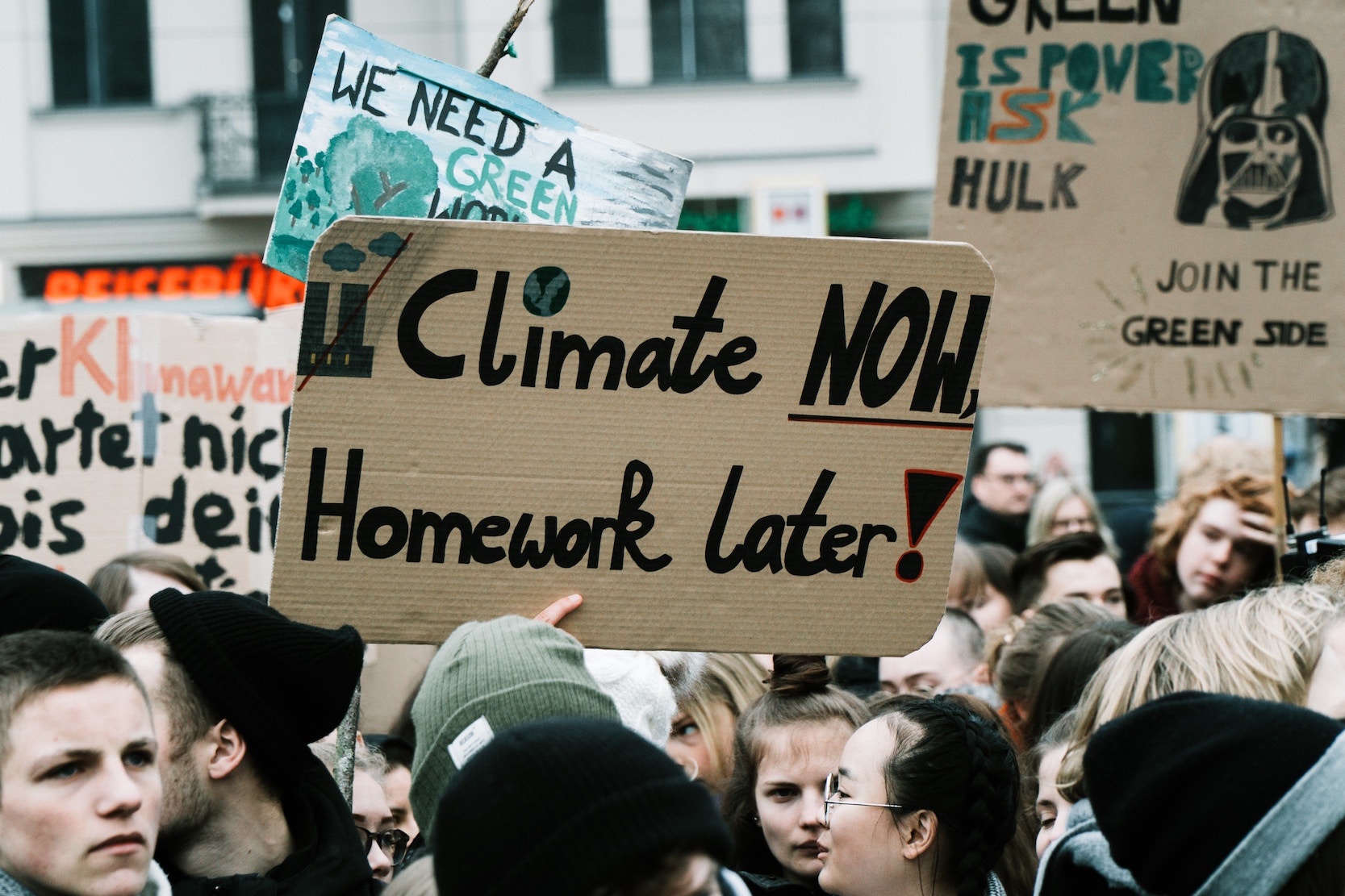
At the moment of history in which we find ourselves, we should all be environmental defenders. Currently, the fight for the planet occurs in all countries of the world by all kinds of people: men, women, children, journalists, social leaders, and indigenous groups, regardless of their nationality, religion, or political affiliation. Unfortunately, this defense has become very dangerous since it often negatively affects the political and economic interests of powerful actors.
According to Global Witness, it is more dangerous than ever to defend the Earth and the environment. In 2017 there were a total of 201 murders in Colombia and Brazil related to environmental activism. These countries lead the list of the riskiest places for environmental work. Demanding effectiveness of environmental laws, suing companies for non-compliance with environmental standards, and demanding strong environmental impact assessments have been some of the reasons why defenders are being threatened by corporations, armed actors, and even their own governments.
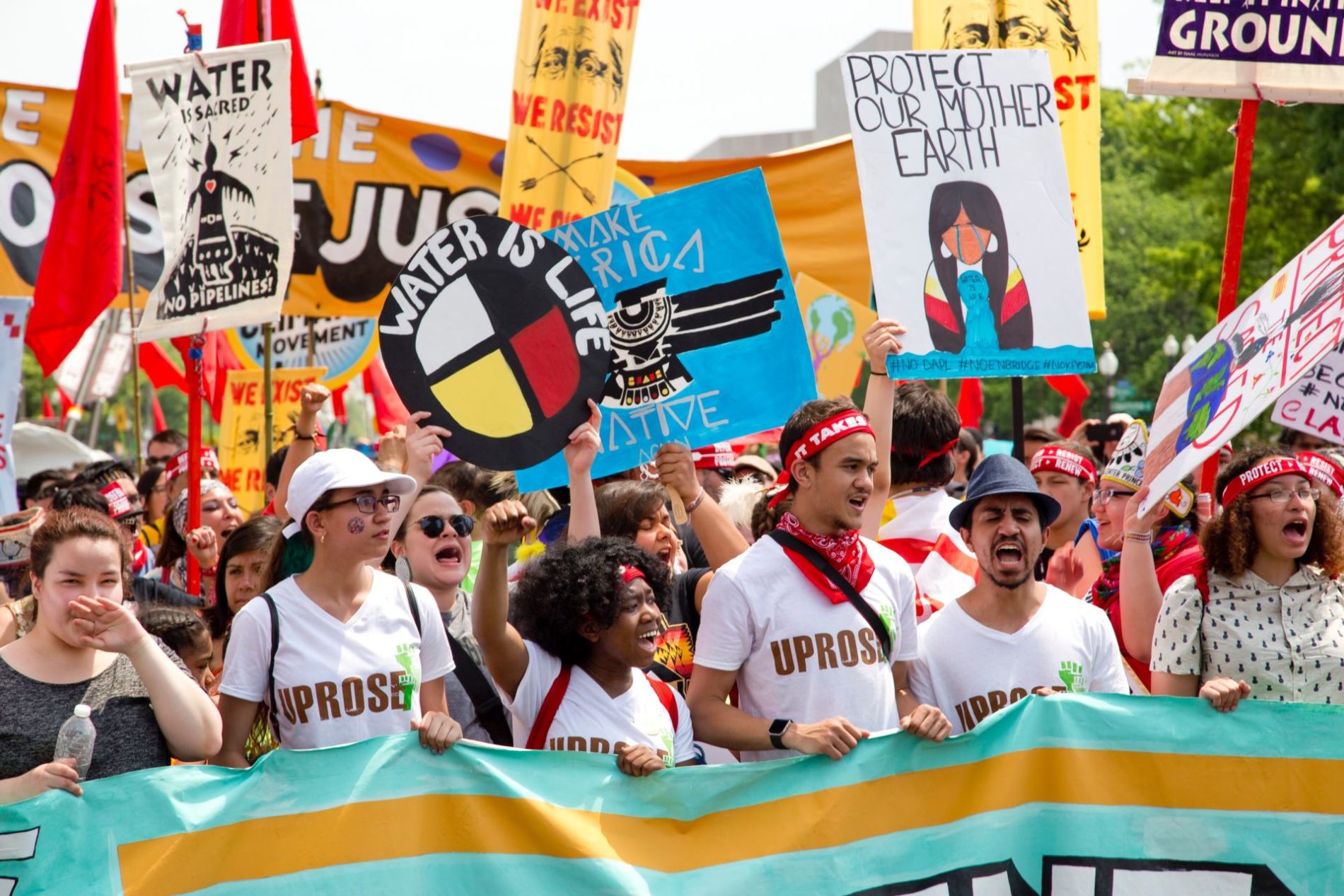
No person should see their life or that of their family threatened for defending the public. It is paradoxical that defending collective assets implies risks to personal integrity. I had the privilege of meeting two brave women environmental defenders from Latin America.
Marcela is an indigenous woman who lives in the desert of La Guajira, a peninsula on the Caribbean Sea in the northern corner of Colombia. She is always wearing vibrantly colored blankets that highlight the courage and strength of her character. She is a wife, mother of three children, leader of her people and defender of the environment. She and her husband have received death threats for defending the water from extractive projects. She is passionate about protecting the Earth and believes that defenders are people who understand the value of life and what it represents on the planet.
Lida is a young peasant who has lived her entire life in a small town in the Andes Mountains in Colombia. She walks to school every day which has allowed her to get to know her environment. Her struggle is against economic activities that pollute the rivers of the region. In her own words, her actions seek to protect all forms of life against any interest that puts them at risk and to leave a positive mark on the environment. According to her, “a peasant without the land is not a peasant.”
Despite their adversities and living in different contexts, Marcela and Lida have something in common. They will not lose their optimism or their hope of living in a healthy environment. They do not give up their defense work despite the risks. In this context, it is essential that countries take decisive measures such as ratifying and implementing the Escazú Agreement to stop these situations, improve protection measures, and eliminate impunity for crimes committed.
Decalogue to Defend the Planet: Tasks for Everyone
Defending the planet in the Anthropocene era requires urgent action to stop its definitive degradation and to protect its defenders. There are many possible futures that we can imagine, but in only some of them will we survive in a world like the one we know today.
To create a better future, we must:
- Understand that the defense of the planet is a responsibility of actors at the local, national, and international levels.
- Take immediate action because we have everything to lose.
- Believe that no action is insignificant. Each measure adds up.
- Have strength in numbers as together we achieve more.
- Generate interdisciplinary alliances between the humanities and the natural sciences.
- Be multipliers of the knowledge and information available.
- Inspire and motivate others to participate in environmental action.
- Learn from the actions of others rather than reinventing the wheel.
- Be aware of your environmental impact every day: food, transportation, etc.
- Demand the implementation of environmental democracy.