Yesterday, US President Joe Biden said that India was an exception among Washington’s allies with its “somewhat shaky” response to the Russian invasion of Ukraine. The statement, with its implication that something is seriously wrong with India, reverberated around the world.
What happened to India? Here I explore some of the possible reasons for this dramatic change. But let’s start at the beginning when India was born as a model democracy.
Mahatma Gandhi inspired the world with nonviolent protests, opposition to colonialism, racism, and violence, resulting in 1947 the creation of India as an independent country. At the time, and for much of the last century, India was an inspiration, the largest democracy in the world, a founding member of the G-77 in 1964, and its presiding country in 1979.
For many India was a beacon, an example of a new country growing economically, politically, and socially. Unfortunately, it has not carried this banner into the twenty-first century.
Today, its international and domestic performance is contrary to what it once was.
Why it has turned away from its past principles and policies is complex, a reflection of shifting geopolitics and positions, and domestic politics. India borders on Russia and sees as its main threat China with which it shares a much more contentious border and relationship.
The political landscape has dramatically changed.
Near absolute power is in the hands of Prime Minister Narendra Modi and his Hindu nationalist Bharatiya Janata Party (BJP) since 2014. The Indian National Congress, the party of India’s independence-movement leaders, including Jawaharlal Nehru and Gandhi is no longer a potent force.
India’s changing performance in international affairs
Perhaps the most shocking event in recent years came with the Ukraine crisis: Seeing India’s performance on the international scene, one can only ask, how could they? Where is the India that once was, a standard-bearer of democracy?
The UN Charter is founded on the notion of a world where countries settle disputes by peaceful means, without the threat or use of force. In a very rare instance, a special session of the UN General Assembly was held and approved a resolution condemning the Russian invasion into Ukraine on March 2, 2022.
The vote was 144 in favor, 5 against, and 34 abstentions. India abstained from voting against Russia during the debate, saying merely that it was “deeply disturbed,” and that dialogue is the only answer, with its prime minister Narendra Modi saying, “India is on the side of peace.”
This stance helped Vladimir Putin by implicitly diluting his isolation while offering little support to Ukraine.
Other South Asian countries did the same, namely Bangladesh, Pakistan, and Sri Lanka. That’s only four countries, but when considering numbers of people, they total nearly 1.5 billion people out of a global population of 8 billion, and they saw their representatives stand aside and fail to condemn – which was the only moral choice.
As for India, its reasons are complex.
Russia with which it has a border often voted to support India in international forums, including refraining from criticism of its nuclear weapons tests in the 1990s.
India’s main threat is China as I mentioned above, with which it shares a border and competes for influence in the region. Its other principal adversary, Pakistan, has recently agreed to press ahead with a Russian-built gas pipeline.
Relations with Pakistan can often verge on the side of open conflict, retreating at the last moment from full war. We recently witnessed just such an instance when an Indian missile was accidentally launched on March 9, landing in Pakistan, fortunately without loss of lives.
So, treading lightly in matters far from it, lies at the heart of the Indian vote at the UN.
India is caught between China which it sees as a major threat and its main rival in the years to come, and two allies: On the one hand, Russia which has now set up a close agreement with China on February 4, a joint statement that runs a whopping 5,364 words; and on the other hand, the United States with which India has close diplomatic and trade relations that have now increased as Biden is relaunching Obama’s policy aimed at containing China.
India has always tried to keep both its allies happy. Russia is India’s largest arms supplier, but its share has dropped to 49% from 70%. This drop reflects India’s decision to diversify its portfolio and boost domestic defense manufacturing, and to move closer to the United States.
One reason why India is refraining from criticizing Russia over the invasion in Ukraine most likely is traceable to its dependence on Russia as a key supplier of its missile defense system which India sees as a necessary strategic deterrence against China and Pakistan.
This dependence on Russia has been going forward despite threats of looming US sanctions and shifting some of its military acquisitions to U.S. suppliers, going from virtually nothing to about $20 billion in a little over a decade.
Shortcomings at home
Perhaps of greater concern is what is happening on the domestic front. Here the factors working against democratic freedoms are in full display. Briefly put:
- Religious Intolerance
Since Modi and his Bharatiya Janata Party (BJP) assumed power in India in 2014, international observers and human rights defenders within India have noted an alarming rise in violence and hatred against marginalized communities and religious minorities, particularly Muslims but also Christians, Dalits, and indigenous people. This was underlined by Sunita Viswanath, executive director of Hindus for Human Rights, in an emailed interview with PassBlue.
The United States Independent Commission on Religious Freedom (USICRF), a government-sponsored organization, in its 2021 report described India this way:
“Mobs sympathetic to Hindu nationalism operated with impunity, using brutal force to single out Muslims, attack mosques, and destroy homes and businesses in majority-Muslim neighborhoods. The Delhi Minorities Commission investigated and found that the violence and allegations of police brutality and complicity were “seemingly planned and directed to teach a lesson to a certain community which dared to protest against a discriminatory law.”
Policies prohibit interfaith marriages or relationships using the false narrative of “forced conversion.” In late 2020, Uttar Pradesh, India’s most populous state, passed an ordinance voiding any marriage conducted for the “sole purpose of unlawful conversion or vice-versa.”
Disinformation and intolerant content have emboldened intimidation, harassment, and mob violence in recent years, including numerous instances of violence mainly against Dalits, Muslims, Christians, Adivasis, and other religious communities.
Government action—including the acquittal of all individuals accused of demolishing the Babri Masjid mosque—as well as government inaction to address religious violence contributed to a culture of impunity for those promulgating hate and violence toward religious minorities.
The U.S. Government bypassed its Commission’s recommendation to “red list” India as a country engaged in “systematic, ongoing and egregious violations of religious freedom”, and as “a country of concern” for the second consecutive year. Simply put, the underlying reason is China.
Yet new anti-conversion laws have intensified religious intolerance. As is notably the case for Christians in India, even though they have been established there for centuries:
Increasing attacks on churches and Christian gatherings in India in recent years are often sparked by allegations of forced conversions of Hindus to Christianity. This has led several states in India to enact strict anti-conversion laws. But these laws, as explained in the video above, are often abused by right-wing groups to harass Christians and attack their churches.
- Gender
In 2018 India was ranked as the world’s most dangerous country for women due to the high risk of sexual violence and being forced into slave labor, according to a poll of global experts. Government data shows reported cases of crimes against women in India rose by 83% between 2007 and 2016 when there were four cases of rape reported every hour.
“India has shown utter disregard and disrespect for women … rape, marital rapes, sexual assault and harassment, female infanticide has gone unabated,” said Manjunath Gangadhara, an official at the Karnataka state government. This is where they have been heckled by a Hindu mob for wearing the hijab.
In bizarre contrast to how toxic India is for women generally, India’s entrant to the Miss Universe contest, Harnaaz Kaur Sandhu, was crowned its 70th winner in 2021. In a recent interview when asked what were among her most important causes, she responded, “women’s health.”
- Hindu Caste System
For 2,000 years India’s Hindu caste system regulated religious and social life. The system bestowed privileges on the upper castes while sanctioning repression of the lower castes by the privileged groups.
At the top of the pyramid are the Brahmins or the priest group, who are considered “most intelligent” by Hindu texts. As per the texts, only Brahmins only have the right to education. Next to them are the Kshatriyas or the warrior clan who serve in the army and are kings. The third category is Vaishyas. Their occupation is mainly agriculture, cattle rearing, trade and business pursuits.
The lowest in the caste hierarchy is the Shudras. They are the ones who have to ‘serve’ the upper castes. The last group, which are excluded from the Brahmanical varna system, are the Dalits or ‘Untouchables’.
Officially abolished in 1950, about 25% of India’s population of 1.3 billion people, are grouped under the scheduled castes (Dalits) and scheduled tribes (Adivasis) in India’s constitution. Adivasis are indigenous Indians who have been socially and economically marginalized for centuries.
However, despite the abolition of caste, the system persists because it is rooted in one of India’s major religions, Hinduism which validates it. Hindu scriptures justify caste, establishing the notion of caste hierarchy and can be found in the Manusmriti or the Manava Dharmasastra, the most prominent Hindu scripture that advocates the doctrines of the caste system and is believed to be the first legal text and constitution of the Sanatan Dharma (roughly translates as “the natural and eternal way to live”).
With a Hindu nationalist party in power, it should come as no surprise that there is a resurgence of the caste mentality that tends to deepen once more the gap between the scheduled castes (Dalits and Adivasis) and the rest of society.
According to the United Nations Development Program (UNDP) and the Oxford Poverty and Human Development Initiative (OPHI)’s global multidimensional poverty index (MPI), half of the scheduled tribes were considered poor compared to 15% of higher castes.
Such poverty makes lower castes more vulnerable during emergencies, such that many Dalits continue to consider that the coronavirus pandemic reinforces inequality in India.
Economics: The role of income inequality in democracy
Who loses and who wins economically is a determinant of democracy. Governance and government policies reflect the degree to which groups in society are advantaged and disadvantaged.
When inflation climbs, resulting in higher costs for basic foodstuffs, such as wheat, it is the lower cohorts that feel the brunt. The trickle-down is ultimately the same with fuel costs.
At this point, while India imports around 85% of its oil, its state-owned fuel companies have resisted raising prices for more than four months, in part because of looming state elections.
Last week the BJP secured a big electoral success in Uttar Pradesh, the country’s most populous state; fuel prices are expected to rise any day. And, as is known, global wheat production has been seriously affected by the Russo-Ukraine war and will be felt in India, especially its poor.
Both will likely add to growing concerns over inflation. In January, the annual rate of inflation passed 6%, the central bank’s upper limit. The rate in February is likely to be similar.
India may be steering clear from the conflict in Ukraine diplomatically, but its economy will feel the effects.
This means that at least 25% of its population – the scheduled castes, the Dalits and Adivasis – will be deeply affected, thus adding to existing social tensions that could ultimately threaten both government stability and democracy’s functioning.
This conjunction of factors helps explain to some extent India’s sudden retreat from the international scene and the weakening of its democracy. Hopefully, Indians themselves will find a way to address those issues – religious intolerance, gender and caste – and reclaim their country for democracy.
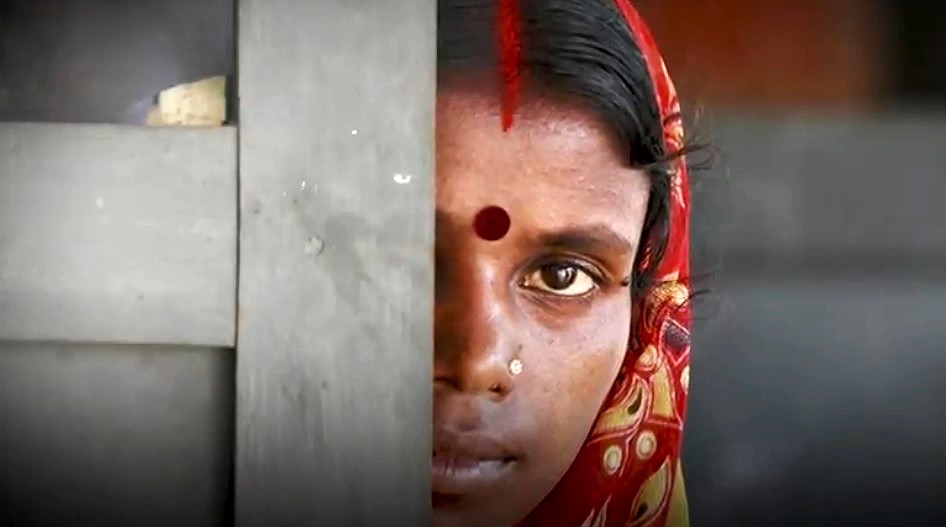
Editor’s Note: The opinions expressed here by Impakter.com columnists are their own, not those of Impakter.com. — In the Featured Photo: Screenshot from India Times video: The Covid Lockdown Has Triggered a Rise in Violence against Women