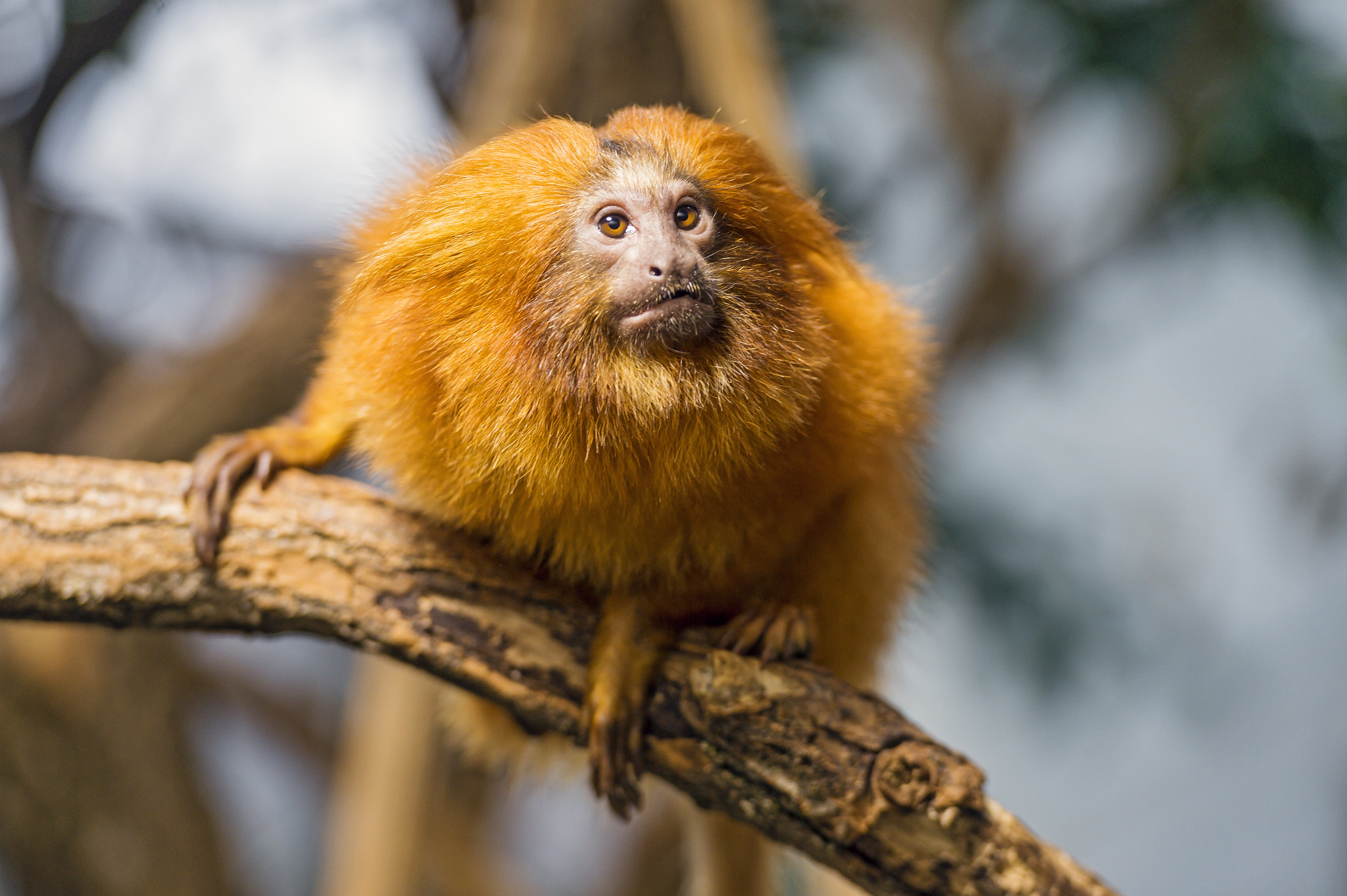
In Brazil’s Atlantic Forest, the Golden Lion Tamarin Association have been vaccinating the primates against yellow fever. The disease has wiped out a third of the endangered golden lion tamarin population, and this vaccine may well be the key to the species’ survival. This has, however, raised questions about vaccination in the role of conserving endangered animals. Is this a vital new strategy or going a step too far? And is it even viable?
Vaccinating wildlife is not a new idea, in fact, it was first conceived in the 1960s. Following trials and research, oral rabies vaccines were administered throughout Western Europe from the 1980s onwards, focusing on red foxes and leading to the virtual elimination of the virus in the region.
In 2022, the UK government reduced the paperwork necessary to vaccinate badgers against tuberculosis. Meanwhile, the US Department of Agriculture has conditionally approved an accelerated track to market for a vaccine that will protect honeybees against American foulbrood, a disease that has run rampant through bee colonies since the 1800s.
The honeybee vaccine is administered to queen bees in a jelly that contains dead versions of Paenibacillus larvae, the bacterium that causes the disease. This then means that the queen bee’s offspring have resilience against the disease.
What all of these wildlife vaccinations have in common, however, is their immediate benefit to humans. This certainly comes as no surprise to anyone acquainted with the One Health concept, the idea that health in humans, animals and the preservation of the environment form a continuum and depend upon each other to ensure both human and animal health and the planet’s ecological balance. This approach was recently endorsed by The Lancet, one of the world’s most prestigious medical publications.
Vaccinating foxes for rabies prevents humans from contracting the disease, while vaccinating badgers for tuberculosis is part of an effort to protect cattle and eradicate bovine tuberculosis by 2039.
Although bees may not be domesticated as such, vaccinating them is done to protect honey production, as well as the production of the plants that they pollinate.
Vaccinating golden lion tamarins against yellow fever however, is one of the first instances of vaccinating wildlife purely for the sake of conservation.
The case of the golden lion tamarins
Golden lion tamarins are native only to Brazil’s Atlantic forest. However today, that forest stands at only 12% of its former size, and as a result, by the 1970s the population of golden lion tamarins had dropped to as low as 200 remaining members.
Painstaking conservation efforts began in order to rebuild the population.
Zoos around the world rebred the monkeys, and in 1984 scientists began reintroducing them to the Atlantic forest. Since then, they have had to carefully relocate populations in order to prevent inbreeding and keep the species genetically diverse.
The reintroduction was a success: by 2014, the species had reached around 3700.
However, the 2016 yellow fever outbreak in Brazil infected both humans and primates; there were more than 2000 human infections, around 750 people died, and with them, 32% of the golden lion tamarin population was depleted as well.
The Golden Lion Tamarin Association, the organisation vaccinating the monkeys, helped to develop the human vaccine initially, and also administered it in the region.
It was their work on the initial vaccine that gave them the idea to inoculate the small primates. They developed the lowest dose they could that would ensure immunity.
The Association had 42 captive monkeys that could not be released into the wild or allowed to reproduce, and after obtaining permission from the ethics board, they trialled the vaccine on them.
After observing no adverse side effects, they began to vaccinate the monkey population, beginning with a trial size of 100 animals. They did this by luring the tiny primates into cages with food, transporting them to a veterinary centre, aestheticising them, taking blood, urine and faeces samples, and vaccinating them.
Then, the animals were then tagged, transported back to the forest, and released. Thirty days later, the animals would be recaptured in order to monitor their progress.
Este trabalho é executado pela AMLD em parceria com o Centro Nacional de Pesquisa e Conservação de Primatas Brasileiros (CPB/ICMBio), Centro de Primatologia do Rio de Janeiro (CPRJ), Fiocruz e Universidade Estadual do Norte Fluminense (foto: Luiz Thiago de Jesus/AMLD) pic.twitter.com/fDO1n7hKrk
— Associação Mico-Leão-Dourado (@amld_oficial) February 2, 2023
Translation of the above tweet: “This work is carried out by AMLD in partnership with the National Center for Research and Conservation of Brazilian Primates (CPB/ICMBio), Rio de Janeiro Primatology Center (CPRJ), Fiocruz and Universidade Estadual do Norte Fluminense.”
When both the initial and expanded cohorts of monkeys were confirmed to have been successfully vaccinated, the scientists continued their vaccination efforts in the face of the Covid-19 pandemic.
Now they have vaccinated more than 300 golden lion tamarins, and in order to ensure the future of these primates against any future yellow fever outbreaks, they aim to vaccinate a further 500 animals in different groups across the Atlantic Forest.
The herd immunity that this provides should protect the primates in future.
Why vaccinate wild animals?
Traditionally, conservationists have adopted a “hands-off” attitude, letting nature run its course. However, attitudes around this are beginning to change.
In 2018, documentary-makers for the BBC’s “Dynasties” series chose to dig a channel to help penguins climb out of a gully in a snow-storm, raising controversy over the role of conservationists to intervene.
However, as climate change renders many species’ existences even more precarious, it is becoming increasingly difficult to know which threats are natural, and which are the result of an anthropocene, the current geological time period in which human activity has begun having an impact on Earth’s environment and climate.
While disease exists in nature, human activity has been shown to exacerbate the spread of disease in wild animal populations. Disease can now cross borders and populations faster than ever, while loss of habitat also renders species far more vulnerable to decimation by disease.
Related articles: Bird Flu is Making Your Weekly Food Shop More Egg-Spensive | The Ocean Got so Loud That Dolphins Must Now ‘Shout’ Over Noise Pollution | It’s Time to Rethink How We Live With Animals | Our Emissions Are Aggravating Almost 60% of All Infectious Diseases | Could the Rate at Which Glaciers Are Melting Cause the Next Pandemic?
A prime example of this is the ongoing avian flu pandemic.
The current virus, H5N1, was first identified in commercial geese in China in 1996, before spreading through poultry in Europe and Africa in the 2000s. By 2005, the virus was killing vast numbers of wild birds, first in East Asia and then Europe.
Since then, H5N1 seems to have become more adapted to wild birds through repeated spillovers, where a virus becomes feasible in another species.
In October 2021, the latest outbreak began. Since then, the virus has killed huge numbers of wild birds, with sea birds worse affected, including 10% of the breeding population of barnacle geese in Svalbard and hundreds of Dalmation Pelicans in Greece.
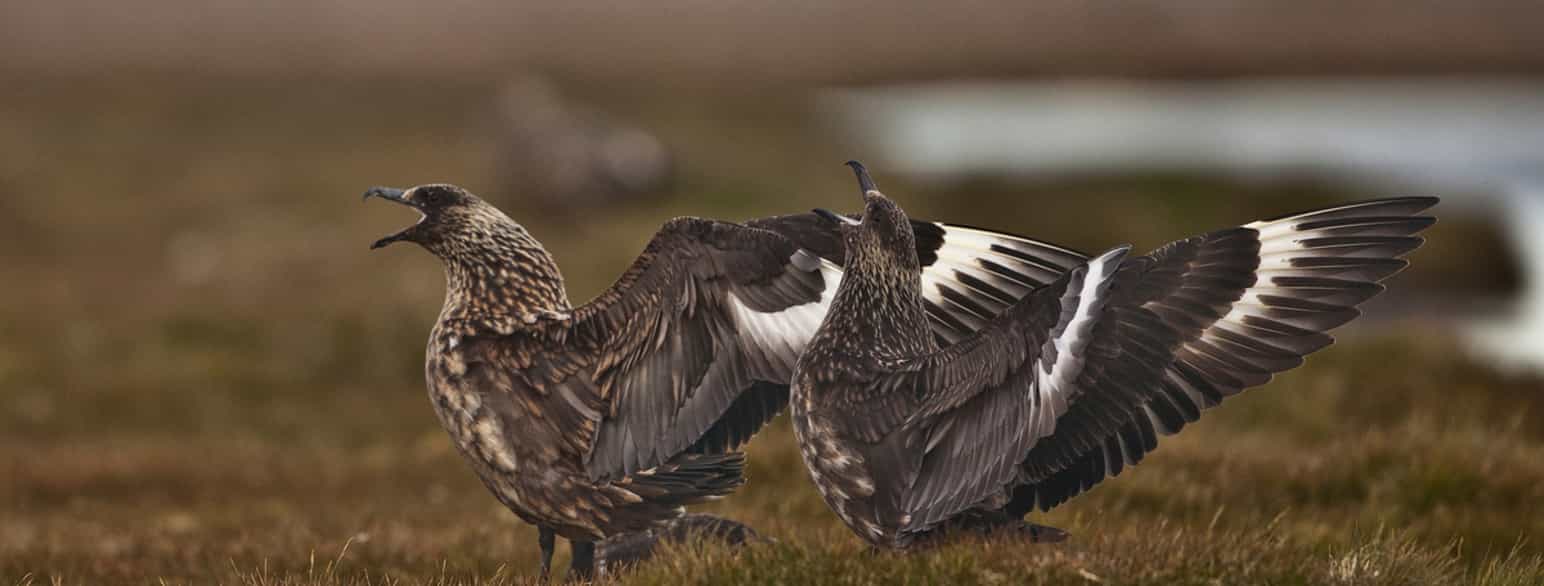
In the UK, 13% of the great skua population died from the disease, representing 8% of the global population. The UK has also seen huge numbers of gannets and sandwich terns succumb to the disease.
Since then, the disease has been found to infect other species, including otters and foxes in the UK, mink in Spain, and even grizzly bears in the US.
Some countries, like Ecuador and China have started to vaccinate their domestic poultry flocks, although this comes with strict export controls.
More countries have culled their flocks in response to the disease, with 193 million birds having been culled worldwide in response to the disease, while a further 15 million have died from it.
How feasible is vaccinating wild animals on a larger scale?
Given that wild birds are believed to have spread the disease more quickly through migration routes, would it be worth vaccinating them like the golden lion tamarins? What’s more, would it be even feasible?
Joe Llanos, the policy officer for the Wildlife Trusts thinks not. “Vaccinating wild birds against avian flu will never be a viable option,” he told Impakter. “The focus must be on addressing the root causes of the problem, such as intensive poultry farming.
“Farmed birds kept in cramped conditions provide the perfect breeding grounds for outbreaks of new diseases. Until we move away [from] unsustainable farming methods, wild birds and other wildlife will continue to pay the price,” says Llanos.
Indeed, the scale alone makes the practical effects of capturing, vaccinating, and releasing wild birds a Herculean task. This is before one considers the trials that would have to go into developing vaccines for each species, testing for unwanted side effects, and making sure that they don’t inadvertently disrupt the natural order by giving one species an advantage over another.
This being said, there are some instances where wild animals have been vaccinated in the name of conservation, or where vaccines are in the process of being trialled.
In Australia, koalas are being vaccinated against chlamydia, while in the US, prairie dogs and black-footed ferrets are being vaccinated against sylvatic plague.
The Ethiopian wolf is being vaccinated not only against rabies, but canine distemper, as are tigers, lions and African wild dogs.
Meanwhile, scientists in Northern America are developing a vaccine to protect hibernating bats against white-nose syndrome.
Overall, while these cases suggest that vaccinating wild animals is becoming a more routine technique in conservation processes, it does appear to be a last line of defence.
Human activity and climate change are exacerbating the threat of disease to wild populations
Firstly, smaller animal populations, due to falling biodiversity and habitat loss, mean that species are more vulnerable to the attacks of disease.
Secondly, human activity such as increased travel and unsustainable farming practices increase the vectors of diseases, allowing them to travel further more easily.
Finally, climate change itself will be changing the threat of disease to animals: as temperatures increase and glaciers melt, once recumbent pathogens will unfreeze, and be at large again. Meanwhile, expanding warmer regions mean that the vectors of certain insect-borne diseases, such as malaria, are becoming more common as a result of extreme weather and flooding.
Although these factors are often approached with an anthropogenic lens, it is impossible to imagine that they do not affect wild populations at the same time.
Vaccination may well become a key conservation strategy, and it is an invaluable tool, but it does have its limitations.
Even where vaccinating wild animals is viable, it must be remembered that this is, in many ways, the treatment of an environmental symptom: Without tackling the root causes of devastation, the relief it provides is temporary at best.
After all, vaccinated and unvaccinated koalas are both at serious risk from wildfires.
Editor’s Note: The opinions expressed here by Impakter.com columnists are their own, not those of Impakter.com — In the Featured Photo: Golden Lion Tamarin on a branch. Featured Photo Credit: Tambako the Jaguar