Today’s ESG Updates
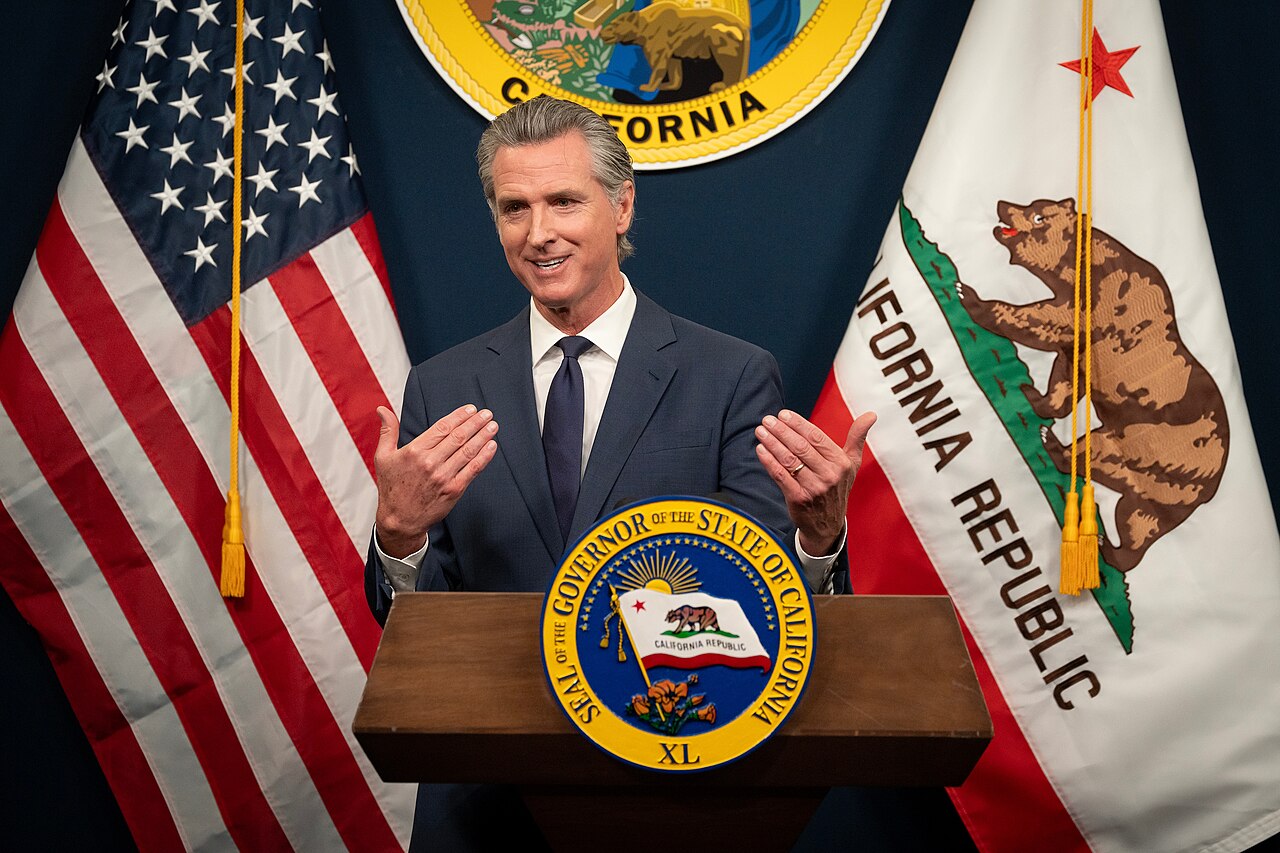
- U.S. Governor Signs AI Worker Protection Order: California Governor Newsom signed an executive order to subsidize companies that prioritize workers over AI.
- Global Economic Growth Estimates Drop: The UN lowered its 2026 global GDP growth forecast, with the EU and South Africa also revising their projections due to the ongoing U.S.-Israel-Iran conflict.
- EU Launches Digital Waste Tracking System:The European Commission introduced DIWASS alongside a revised Waste Shipment Regulation to digitally track cross-border waste.
- TotalEnergies and EPH Form European Gas Giant: The French oil firm entered into a partnership with the Czech energy company, becoming a 50% stakeholder.
U.S. governor signs worker protection order against AI
California Governor Gavin Newsom signed an executive order Thursday intended to protect jobs in the state from the threat of AI. The order focuses on subsidizing companies that keep workers, as opposed to replacing them with AI. It would explore expanding job training for white-collar roles, such as software developers and customer service workers, and giving residents stakes in assets like stocks or wealth funds.
Newsom argued that traditional unemployment insurance won’t be sufficient, citing warnings from AI leaders about rapid, large-scale job losses. Anthropic co-founder Dario Amodei has estimated that around half of white-collar jobs could vanish within five years. AI-related layoffs have already begun, with Meta firing 8,000 employees on Wednesday.
The order is the first of its kind by a U.S. governor and reflects broader global concern, with countries such as China, Japan, South Korea, and England also exploring responses to AI-related unemployment.
***
Further reading: California’s Governor Signs A.I. Order Aimed at Protecting Workers
Klimado – Navigating climate complexity just got easier. Klimado offers a user-friendly platform for tracking local and global environmental shifts, making it an essential tool for climate-aware individuals and organizations.
Global economies cut growth forecasts, citing Israeli-US war in Iran

In January, UN economists estimated that the global gross domestic product (GDP) would grow by 2.7% this year and 2.9% in 2027. Now, with the ongoing conflict between the U.S., Israel, and Iran, those numbers have changed. The UN’s Department of Economic and Social Affairs now predicts that the global GDP will grow by 2.5% in 2026 and 2.7% the following year. Economists are citing market volatility and rising energy prices as the reasons for this drop in growth. Western Asia will be hit the hardest, with GDP growth predictions dropping from 4.1% to 1.4%.
The European Commission announced Thursday that the bloc’s estimated GDP growth would be around 1.1%, down from the initial prediction of 1.4%. On Tuesday, the Institute of International Finance claimed that South Africa’s GDP growth would be cut from 1.7% to 1.3%.
***
Further reading: UN cuts global growth forecast, blaming Middle East crisis
Related Articles
Here is a list of articles selected by our Editorial Board that have gained significant interest from the public:
EU implements new Waste Shipment Regulation

The European Commission launched its Digital Waste Shipment System (DIWASS) alongside a revised Waste Shipment Regulation. The DIWASS will track cross-border waste across the EU, increasing efficiency, security, and transparency. Moving forward, waste movements must be digitally processed through the system and will require the prior informed consent (PIC) procedure. This will include mixed municipal waste, contaminated waste, hazardous waste, and waste destined for disposal.
Jessika Roswall, Commissioner for Environment, Water Resilience and a Competitive Circular Economy, said, “In today’s geopolitical landscape, access to raw materials is not just an economic issue — it’s a strategic imperative. A fully digital, EU-wide operational system to track waste shipments will help Europe take control of its own resource flows, turning waste into a secure, sustainable source of critical materials. This is how we build a resilient, self-reliant Europe while cutting red tape and fighting illegal trade.”
***
Further reading: EU’s new Waste Shipment Regulation and DIWASS digital platform go live

TotalEnergies signs deal with Czech energy firm EPH

French oil company TotalEnergies has partnered with Czech energy firm EPH, creating a gas giant in Europe. The deal will give TotalEnergies a 50% stake in EPH’s flexible power generation portfolio. The portfolio encompasses several European countries, including the UK, Ireland, Italy, France, and the Netherlands. The partnership also gives TotalEnergies 14 gigawatts (GW) of capacity, 12.5 GW of which will be fossil-fuel powered. EPH will become one of TotalEnergies’ most significant stakeholders, receiving the equivalent of about €5.1 billion in shares.
The companies claim that the partnership will give Europe more flexibility in energy generation, claiming that the venture will bring intermittent renewable energy into the power generation mix. Berlin-based non-profit Beyond Fossil Fuels (BFF) argues that this deal will “deepen Europe’s dependence on costly imported fossil gas, increase energy bills and slow down Europe’s clean energy transition.”
Brigitte Alarcon, a campaigner for BFF, said, “Everyone loses in this deal – except the oil and gas companies already cashing in big. Far from putting Europe on the path of energy security, TotalEnergies and EPH will be engineering further dependency on fossil gas… under the bogus pretence of adding ‘flexgen’ capacity.”
***
Further reading: Major new gas deal promises ‘flexible’ power – but is it locking Europe into more fossil fuels?
Editor’s Note: The opinions expressed here by the authors are their own, not those of impakter.com — In the Cover Photo: California Governor Gavin Newsom. Cover Photo Credit: Wikimedia Commons.