Impakter
  • Environment
    • Biodiversity
    • Climate Change
    • Circular Economy
    • Energy
  • FINANCE
    • ESG News
    • Sustainable Finance
    • Business
  • TECH
    • Start-up
    • AI & Machine Learning
    • Green Tech
  • Industry News
    • Entertainment
    • Food and Agriculture
    • Health
    • Politics & Foreign Affairs
    • Philanthropy
    • Science
    • Sport
  • Editorial Series
    • SDGs Series
    • Shape Your Future
    • Sustainable Cities
      • Copenhagen
      • San Francisco
      • Seattle
      • Sydney
  • About us
    • Company
    • Team
    • Global Leaders
    • Partners
    • Write for Impakter
    • Contact Us
    • Privacy Policy
No Result
View All Result
Impakter logo
No Result
View All Result
oil ang gas production

‘Planet Wreckers’: 5 Rich Western Countries Responsible for Half of All New Oil and Gas Projects

The "Planet Wrecker In Chief" is America (accounting for over a third) followed by Canada; only 20 countries will cause 90% of carbon emissions from new oil and gas projects by 2050, report shows

Andrej Pavicevic - Managing EditorbyAndrej Pavicevic - Managing Editor
September 13, 2023
in Climate Change
0

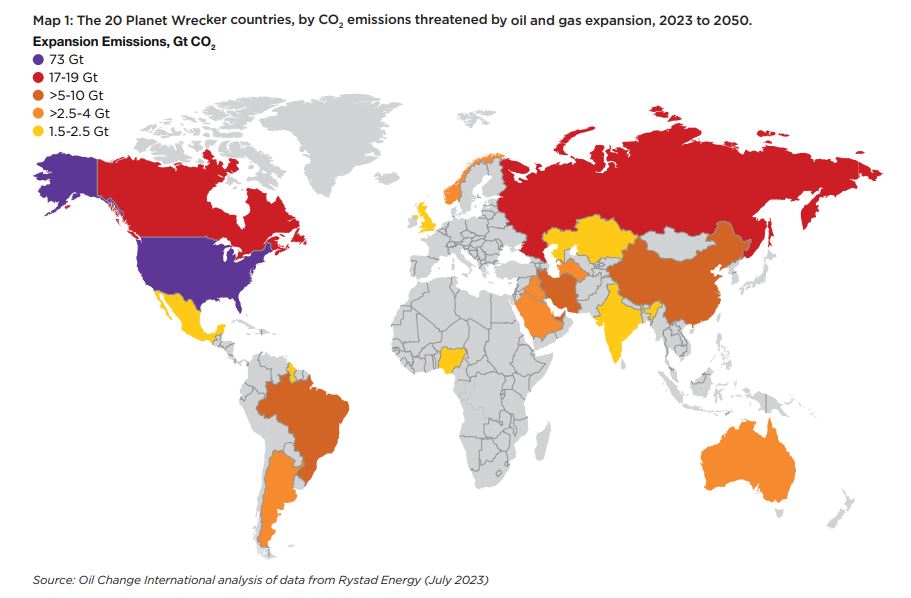
“Planet Wreckers,” a new report by Oil Change International — a research and advocacy organization working to “expose the true costs of fossil fuels” — reveals that just 20 “Planet Wrecker” countries are responsible for almost 90% of carbon dioxide (CO2) emissions set to be released from new oil and gas projects planned between 2023 and 2050.

The United States, Canada, Australia, Norway, and the United Kingdom — “five global north countries with the greatest economic means and moral responsibility to rapidly phase out production,” as the report describes these “climate hypocrites” — account for 51% of the planned expansion.
Backing their accusations of hypocrisy, the authors write:

“New drilling in countries with high incomes, diversified economies and outsized historical responsibility for causing the climate crisis, while claiming to be climate leaders, is inexcusable. These countries must not only stop expansion immediately but also move first and fastest to phase out their production and pay their fair share to fund a just global energy transition.”

Already the world’s largest oil and gas producer as well as historical polluter, the United States, which the report authors aptly call “Planet Wrecker In Chief,” is behind over one-third of the planned production expansion. Next in line is Canada, followed by Russia.

The United Arab Emirates (UAE), host of this year’s United Nations Climate Conference (COP28), will soon also be joining the top of the Planet Wrecker list, according to the report.


Related articles: Expanding Offshore Oil and Gas Drilling Is Incompatible With a Livable Future | US To Allow Oil and Gas Drilling in Gulf of Mexico | The People vs. Arctic Oil: The Court Battle Between Activists & Norway | Governments Must Live Up to Promises to Stop Funding Oil and Gas Internationally

Unless halted, these planned oil and gas expansion projects would release 173 billion tonnes (Gt) of carbon into the atmosphere, an “equivalent to the lifetime pollution of nearly 1,100 new coal plants, or more than 30 years of annual U.S. carbon emissions,” as noted in the report, putting the numbers in perspective.

As the authors warn, this — alongside existing oil and gas projects — would make it impossible to limit the global temperature rise to 1.5°C above pre-industrial levels.

Alarmingly, even if this new expansion in fossil fuels projects were stopped, achieving the 1.5°C goal, the report notes, would also be impossible: “Even extracting just the fossil fuels from existing sites globally would result in 140% more carbon pollution than the allowed budget for 1.5°C.”

But moving forward with new extraction projects would bring this number to 190%, the report finds.

Even if we were to somehow manage not to issue a single new oil and gas drilling license anywhere in the world, which UN Secretary-General Antonio Guterres is calling for, global production of these fossil fuels would decline by only 2% per year by 2030 and by 5% per year from 2030 to 2050.

Stopping new oil and gas production is clearly insufficient; to have a chance at meeting the 1.5°C goal, governments must shut down already existing operations as well.

As Global Policy lead and report co-author at Oil Change International, Romain Ioualalen put it:

“It’s simple: when you are in a hole, the first step is to stop digging.”


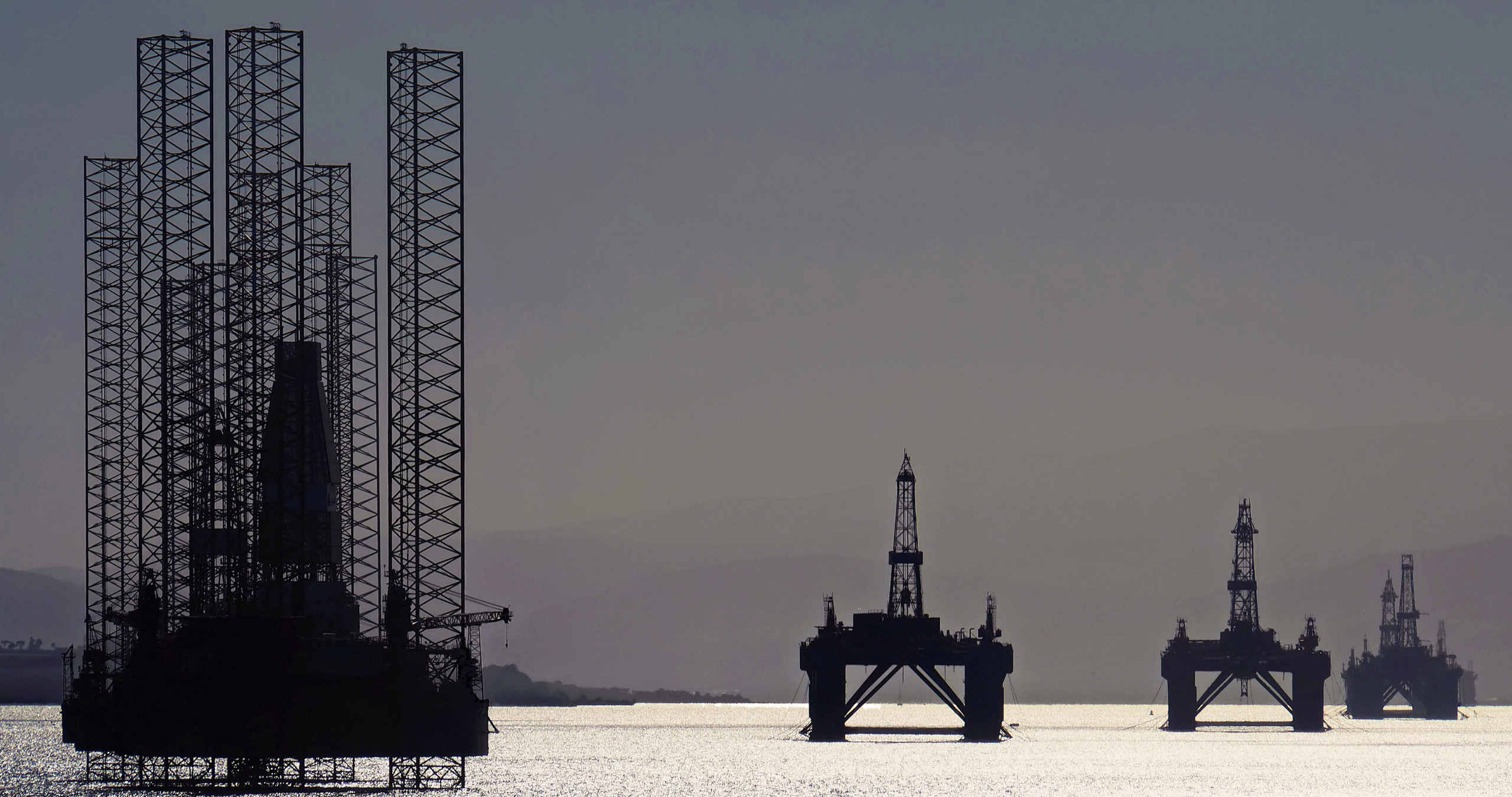
Editor’s Note: The opinions expressed here by the authors are their own, not those of Impakter.com — In the Featured Photo: An oil rig graveyard. Featured Photo Credit: Joiseyshowaa.
Tags: Climate ChangeClimate hypocritesCOP28Paris AgreementPlanet Wreckers
Previous Post

Dying for the Planet: 177 Environmental Activists Killed in 2022

Next Post

Planetary Intelligence: A Way Out of the Climate Crisis?

Related Posts

Impakter’s Most-Read Stories of 2025
Society

Impakter’s Most-Read Stories of 2025

In 2025, as in previous years, Impakter readers turned in large numbers to stories examining climate change and pollution, environmental...

byImpakter Editorial Board
December 31, 2025
Year in Review: Trump 2.0 and the Environment
Environment

Year in Review: Trump 2.0 and the Environment

So much has happened this year. It seems that every day there is a new headline that is just as...

bySarah Perras
December 30, 2025
Is It Time to Recognize Climate Refugees?
Climate Change

Is It Time to Recognize Climate Refugees?

Climate displacement has become a defining feature of our present. Climate shocks now shape human (im)mobility, humanitarian crises, and political...

byDr. Shepherd Mutsvara - Research Fellow at the University of Münster, Germany
December 30, 2025
coal mine
Business

Can the War on Coal Still Be Won?

Ten years ago, I embedded in the war on coal. I spent a month inside the Sierra Club’s Beyond Coal campaign, watching an organization...

byCanary Media
December 25, 2025
What’s Next for Sustainable Development in 2026
Climate Change

What’s Next for Sustainable Development in 2026

As governments confront rising misinformation, constrained budgets, and intensifying climate risks, the need for evidence-based policy has never been greater....

byInternational Institute for Sustainable Development (IISD)
December 23, 2025
women and extreme heat
Climate Change

Women and Extreme Heat: Simple Adaptations Make a Big Difference

One of the more damaging impacts of climate change is extreme heat. From Spain to Bolivia to Burkina Faso, unusual...

byKate Schecter - CEO of World Neighbors
December 23, 2025
Canada Sets Green Investment Rules; UK Regulator Probes WH Smith; Louvre Workers Call Off Strike;Trump Allies Clash With Fannie, Freddie Staff.
Business

A New Rulebook for Green Capital: Canada

Today’s ESG Updates Canada Sets Green Investment Rules: Canada will introduce a sustainable investment taxonomy by 2026 to label green...

byEge Can Alparslan
December 19, 2025
How a Framework Convention Could Address Climate and Socio-Economic Displacement
Editors' Picks

How a Framework Convention Could Address Climate and Socio-Economic Displacement

The unprecedented shift in human (im)mobility has seen over 120 million forced to flee their homes due to war, violence,...

byDr. Shepherd Mutsvara - Research Fellow at the University of Münster, Germany
December 18, 2025
Next Post
planetary intelligence

Planetary Intelligence: A Way Out of the Climate Crisis?

Recent News

President Donald Trump delivers remarks at a press conference at Mar-a-Lago in Palm Beach, Florida, following Operation Absolute Resolve in Venezuela

Regime Change in Venezuela and the Crisis of Global Order

January 12, 2026
ESG News regarding U.S. lifting more sanctions on Venezuela, Egypt securing $1.8 billion renewable energy deals, U.S. pushing G7 allies to reduce reliance on China for critical minerals, richest 1% exceeding annual carbon share in just 10 days.

U.S. Considers Lifting More Venezuela Sanctions

January 12, 2026
Full-Cycle Engineer at work

Why Full-Cycle Engineering Is Becoming Critical for Sustainable Innovation

January 11, 2026
  • ESG News
  • Sustainable Finance
  • Business

© 2025 Impakter.com owned by Klimado GmbH

No Result
View All Result
  • Environment
    • Biodiversity
    • Climate Change
    • Circular Economy
    • Energy
  • FINANCE
    • ESG News
    • Sustainable Finance
    • Business
  • TECH
    • Start-up
    • AI & Machine Learning
    • Green Tech
  • Industry News
    • Entertainment
    • Food and Agriculture
    • Health
    • Politics & Foreign Affairs
    • Philanthropy
    • Science
    • Sport
  • Editorial Series
    • SDGs Series
    • Shape Your Future
    • Sustainable Cities
      • Copenhagen
      • San Francisco
      • Seattle
      • Sydney
  • About us
    • Company
    • Team
    • Global Leaders
    • Partners
    • Write for Impakter
    • Contact Us
    • Privacy Policy

© 2025 Impakter.com owned by Klimado GmbH