In the near future, feeding the world will become the number one challenge for scientists, as the on-going demographic explosion rolls on.
 In the photo: A mammoth political rally in New Delhi. When the picture was take, in 1975, India had a population of 600m people. Today we are at 1.26 Bn
We are now 7 billion people on this planet and likely to be 9 billion by 2040. And other factors come into play, making a bad situation worse:
1) increasing mean life duration: it is already over 80 years in several countries (Japan, Italy), it was just 45 years only a century ago;
2) increasing urbanization: more than 50% of the present world population lives in urban areas, a century ago it was less than 20%;
3) increasing demand for food both in terms of quantity and quality as more countries attain higher development with an expanding middle class, especially in China and India;
4) decreasing availability of agricultural land; for example, in Italy, each person disposes of less than half an acre of productive land per person -about half of what is normally needed – while every Egyptian has only one seventh of that amount.
Nearly 1 billion people are now starving and another billion are suffering from malnutrition. Almost all European, African, Near East and Asian countries currently import most of the basic food commodities they need while only about a dozen countries are able to supply them.
………………………………………………………………………………………………………….. Related articles : OVERFISHING, CLIMATE CHANGE and HUNGER article by Claude Forthomme KEEPING UP THE FOCUS article by Laurent Thomas…………………………………………………………………………………………………………..
These are the facts. In the last 15-20 years, the food production sector has been practically under- evaluated and ignored by public opinion and politicians. Yet, from the 1960s to the 1980s, it had enjoyed high priority. Thanks to the so called “Green Revolution” in developing countries and progress in animal breeding, agricultural chemistry and mechanization in developed countries, a spectacular expansion in crop and livestock production had been achieved, with yearly increases of 3-4% in food production every year. But, in the last 15 years, that figure has fallen to 1-1,5%, mainly as a result of lower investment in food research and development.
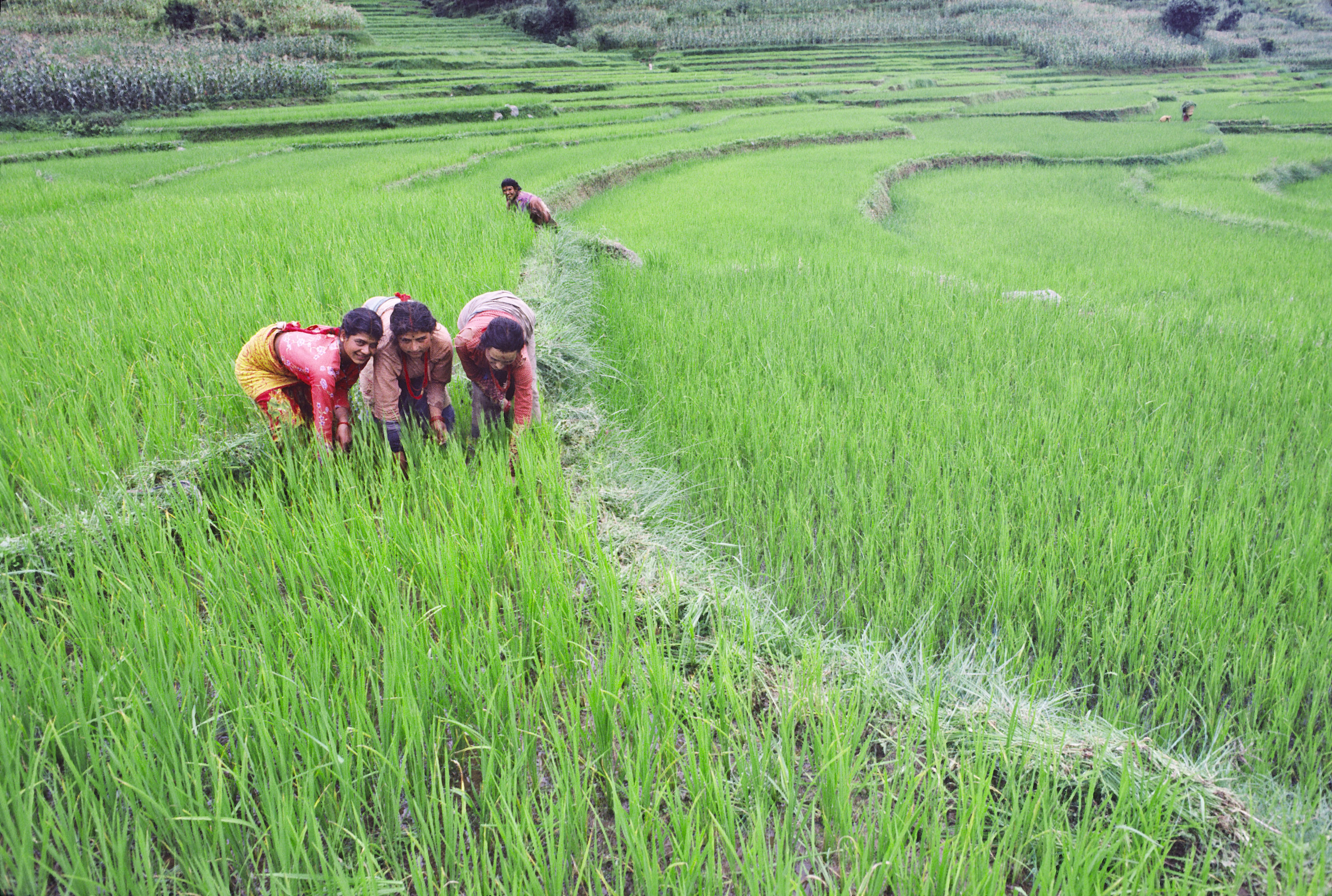 In the photo: Rice cultivation in Nepal. Women working in a rice field in Palung. UN Photo/John Isaac
We now need to seriously reconsider giving high priority to food production. And that means investing in innovation.
Several new technologies are promising and deserve high priority, among them those aimed at:
- increasing organic matter in the soils to improve soil fertility: in many areas, soil organic matter content has dropped from the 3,0-3,5% of a few decades ago to the present low 0,5-1,0%; incidentally, improving organic content would also help to trap CO2, reducing the greenhouse effect caused by agriculture;
- improving water utilization; agriculture already uses some 70% of available fresh water but in future, water could be the main limiting factor for food production in many areas;
- adapting plants and animals to specific environments, using all available technologies, including innovative cultivation systems and breeding of new cultivars; this means that applied biological research should be given a more fundamental role in introducing genetic traits into domesticated species;
- transferring genes for tolerance to toxic and anti-nutritional substances into the domesticated plants genomes, thus going beyond the current research that is focused on resistance to diseases and parasites;
- investigating the possibility of using a kind of vaccination technology in crops, with a mechanism similar to the one produced by vaccines in animals. Some positive data are available, but till now, this technology is practically ignored;
- turning the most important species of cereals, grain legumes and oil crops (now normally annuals) into pluriannual crops that could last several years in the same plot, thus decreasing cultivation costs associated with the usual annual crop rotations; also a perennial root system helps decrease soil erosion and improves utilization of soil water and available fertilizers;
- expanding our knowledge of the mechanisms of absorption, translocation and utilization of most important macro- and micro-elements and water absorption in crops inoculated with symbiotic endophytic fungi and N-fixing bacteria, particularly in perennial cereals and oil crops; a systematic utilization of these technologies could decrease the cost for crop fertilization and improve productivity, particularly in poor areas;
- genetically enriching most important plant foods with vitamins, microelements and nutraceutical substances, increasing human good health;
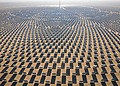
- identifying strategies to rationalize food production through (i) limiting high food crop losses, before and after harvest and through food waste; and (ii) banning the utilization of edible grains for production of biofuels and bioenergy in general. Other physical energy sources (like wind, photovoltaic etc.) should not be installed in productive land.
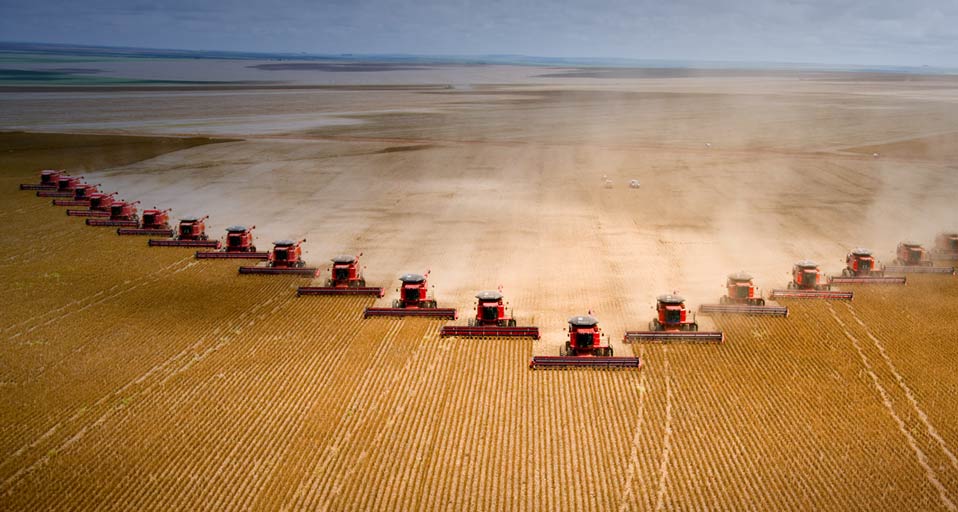 In the photo: Soy harvesting in Brazil
But all this may not be enough. We may have to adopt more drastic measures, though they may meet resistance at first in the general public. Chief among them:
- slow-down meat production; currently, many more animals are grown in “animal bio-industries” than there are humans on the planet;
- work at direct human utilization of grain legumes and cereals, as is currently the case with soy- and rice- milks and derived solid products with a chemical and nutritional composition similar to animal milk and meat. For example, we could use different types of malt, produced by common cereals, not only to produce beer or alcoholic drinks, as done now, but also to obtain liquid and solid products rich in carbohydrates, proteins, fats etc. Now, at least in some countries, industrial hamburgers can be legally produced adding up to 30% of soybean proteins to beef meat.
- use proteins derived from beans, peas, lupines, chickpea, several species of Vigna, lentils, etc., to produce food products more adapted to human needs; this could be achieved through conventional and/or innovative breeding technologies, with essential amino acids and proper lipids.
The benefit of such radical approaches is that humans would be in a position to directly use plant products instead of growing and killing several billion animals every year. Bypassing the animal factories, characterized by very low transformation efficiency rates, particularly of proteins, could help satisfy better the future food needs of all humans.
However such changes won’t come easily. It is evident that they will need a close collaboration of plant breeders and physiologists, biochemists, nutritionists, food technologists, cooking experts etc. in order to realize the desired plant-derived products intended to substitute meat, like hamburgers, sausages, salami, rolls, juices and gravies etc.
Such a future diet would not cause a health loss, as amply demonstrated by the fact that millions of strict vegetarian Indians have been living in good health for centuries. On the contrary, reducing the consumption of animal products would lead to lower rates of cholesterol, saturated fats etc. and help control circulatory diseases, obesity and other health disorders. Also, as domestic animals become fewer, methane in the atmosphere would decrease; this is important, considering that the atmosphere is already compromised by our current high fossil fuels consumption.
In short, the goal of human food producers, from scientist to farmer, should be re-directed to provide good health and nutrition to all future generations. And the science exists, it can be done.