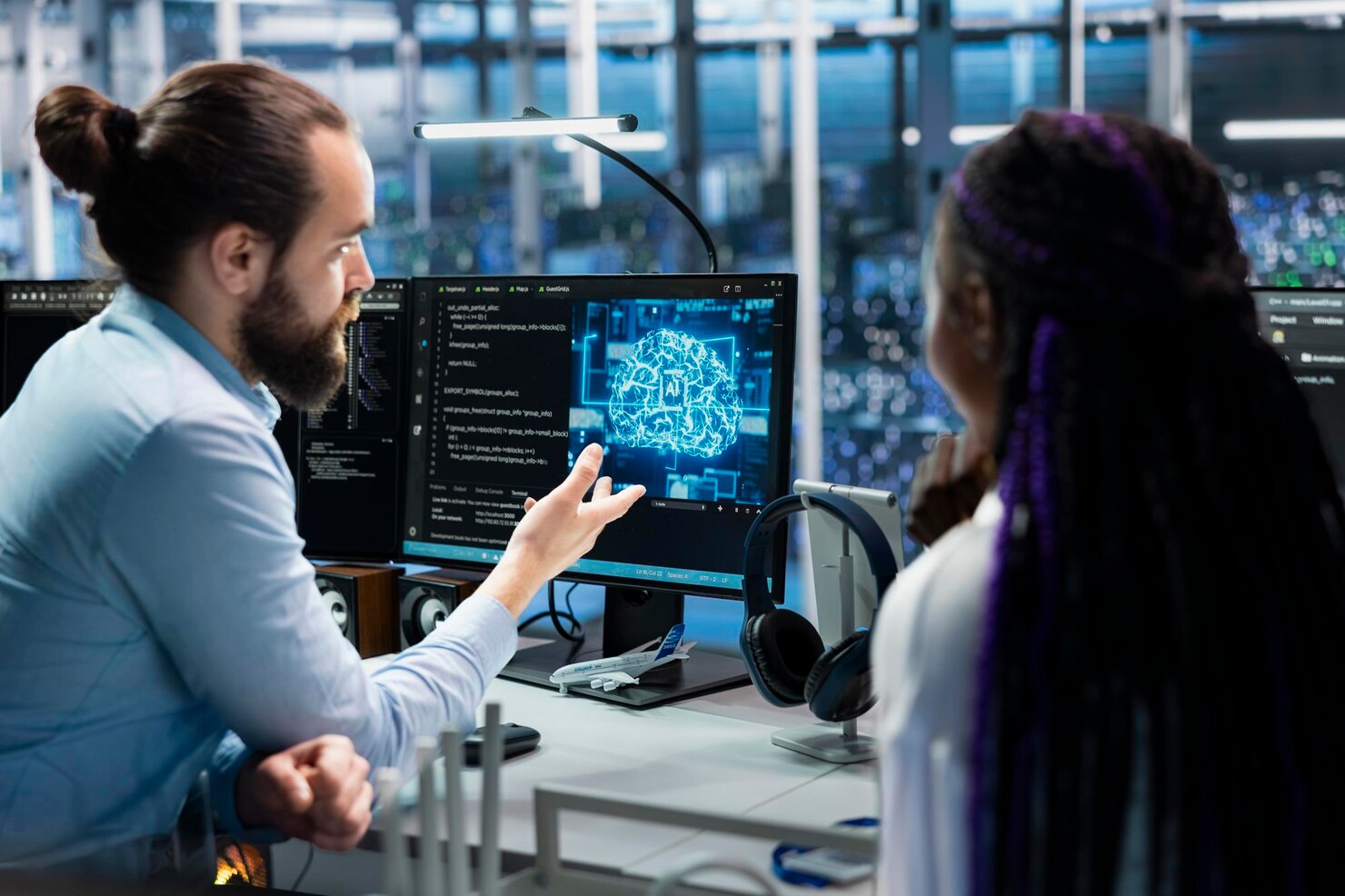
As IT environments grow more complex, the gap between what systems require and what teams can manage is widening.
Demand for skilled professionals continues to outpace supply, particularly in cloud, cybersecurity, and automation, while modern stacks now span multiple tools and environments, making them difficult to oversee end-to-end. At the same time, traditional responses, i.e., hiring and training, are failing to keep pace with technological shifts.
AI agents are emerging in direct response to this pressure. Rather than relying solely on scarce human expertise, organizations are beginning to embed intelligence into workflows, using agents to handle routine decisions, surface insights, and support day-to-day operations at scale.
In this article, we explore why the IT skills gap is becoming structural, how AI agents support IT teams in practice, and how they add the most value to human expertise.
Why the IT skills gap is becoming structural, not temporary
The IT talent shortage now reflects a deeper mismatch between rapidly evolving systems and the slower pace at which expertise can be developed. Roles across cybersecurity, cloud, and data remain persistently underfilled, as required skills shift faster than training pipelines can adapt.
AI solutions for enterprises have become a go-to for managing growing operational complexity, not just to drive innovation. At the same time, knowledge is fragmented across tools and platforms, making it harder for teams to maintain full system visibility.
This fragmentation contributes to burnout and turnover, further reducing the availability of expertise. Scaling systems often introduce hidden constraints, akin to that of AI’s sustainability problem. The IT skills gap is now one of them.
There are roughly 4.8 million unfilled cybersecurity positions worldwide, with the workforce needing to expand by 87% to meet current demand, highlighting a growing structural shortage of IT talent.
How AI agents augment IT teams in practice
AI agents are systems programmed to carry out specific tasks within IT workflows, operating with a degree of autonomy while referencing contextual information from their surroundings.
They can handle repeated or structured operations, leaving humans to tackle tasks that require judgment or specialized knowledge.
These agents integrate directly into existing platforms, and many organizations are realizing the benefits of using enterprise resource planning software for enterprise-grade deployments alongside AI tools. This will link operational procedures and standardise routine processes without requiring constant human supervision.
In day-to-day operations, AI agents can:
- Sort incoming tickets, routing each to the correct team or system
- Monitor system logs to flag anomalies that might indicate misconfigurations
- Compare new alerts against historical data to suggest likely causes
Even though they operate automatically, AI agents are designed to collaborate rather than replace. Editor’s Note: The opinions expressed here by the authors are their own, not those of impakter.com — In the Cover Photo: Prime Minister Victor Orbán speaks to media on arrival at the European Council, June 2025. Cover Photo Credit: Wikimedia Commons
They carry out steps you would normally do manually, present options, and surface insights that guide the next action, letting your team focus on complex problem-solving that machines cannot replicate.
Key areas where AI agents close capability gaps
AI agents take on tasks that would otherwise require senior IT expertise, allowing teams to focus on intricate problem-solving.
- IT support and service desks: Process repetitive queries, route tickets, and apply standard workflows.
- Cybersecurity: Monitor logs, correlate alerts, and flag unusual patterns in line with predefined protocols, helping teams handle high volumes of events.
- Infrastructure management: Track server performance, anticipate maintenance needs, and recommend scaling actions as system load shifts.
- Knowledge management: Surface institutional knowledge on demand, linking live issues to past resolutions, policies, and documented procedures.
- Governance and decision support: Structure and prioritise complex information flows, showing how automated systems handle dense data networks while humans retain control over judgment-heavy decisions.
These examples show AI agents functioning as extensions, not replacements, of expertise.
Limits, risks, and where human expertise still dominates
AI agents handle structured tasks well, but contextual judgment and edge cases remain firmly human territory. They can follow rules, compare patterns, and suggest likely outcomes, yet novel situations often require experience, intuition, and discretion that machines cannot replicate.
Over-automation carries risks. Agents may generate false positives, misclassify events, or apply protocols inappropriately, creating operational friction rather than resolving it. Governance and compliance introduce additional constraints, as regulations demand traceability and accountability that must be auditable by humans.
Reports show that while 93% of organizations are using AI, only 8% have fully embedded governance, 54% lack formal AI risk policies, and just 4% report that their infrastructure is fully AI-ready.
Human-in-the-loop systems are essential. You need oversight at critical points, review of escalated issues, and the authority to override automated recommendations, ensuring that AI acts as a collaborator rather than an unchecked operator.
From skills shortage to capability leverage
The IT skills gap highlights how much operational knowledge resides in people rather than documented processes.
Mapping expertise and capturing routine decisions make that knowledge accessible, reducing reliance on a few key individuals. Teams can identify dependencies, sequence tasks, and manage workloads with greater visibility into system behavior.
The real shift is structural: organizations start treating knowledge and workflows as assets that can be tracked, measured, and improved over time, turning scarcity into a manageable framework rather than a bottleneck.
Editor’s Note: The opinions expressed here by the authors are their own, not those of impakter.com — In the Cover Photo: AI agents at work. Cover Photo Credit: DC Studio