 Supporting more resilient food systems for improved food security and nutrition needs implementing climate change policies in the agricultural sector.
Article in collaboration with: CGIAR Research Program on Climate Change, Agriculture and Food Security (CCAFS) seeks to address the increasing challenge of global warming and declining food security on agricultural practices, policies and measures through strategic, broad-based global partnerships.
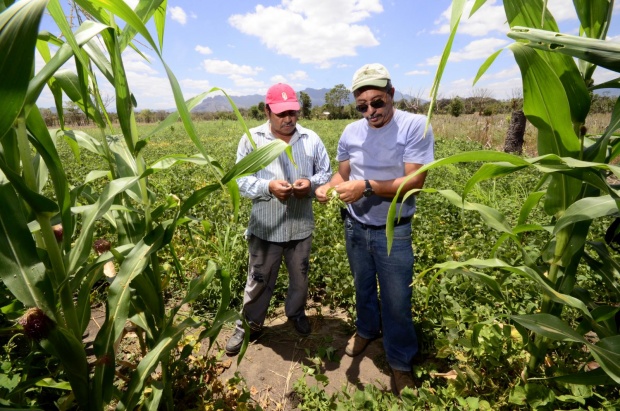
Representatives of the agrifood sector of Honduras studied the opportunities for implementing climate change policies in the agricultural sector.
Within the project “Shaping equitable climate change policies for resilient food systems across Central America and the Caribbean” the CGIAR Research Program on Climate Change, Agriculture and Food Security (CCAFS) works closely with countries and regional bodies in Central America to improve decision making processes, policy design and implementation. The objective of the project is to support more resilient food systems for improved food security and nutrition in the context of progressive climate change. In April 2019, a workshop was organized in Honduras in order to assess the progress of the project in the country and develop next steps.
Related topics: Gender, climate change and agriculture: Guatemala leads regional dialogue – Climate-Smart Village Cauca: an example of agricultural and social transformation – The Climate Emergency: How Humanity Can Avoid the Fate of Dinosaurs
The workshop was attended by government representatives, such as the Technical Unit for Food and Nutrition Security (UTSAN), the Regional Bureau of Food and Nutrition Security and the Secretary of Agriculture and Livestock (SAG), as well as international cooperation agencies, such as the Food and Agriculture Organization of the United Nations (FAO), World Bank, the German Society for International Cooperation (GIZ), and non-governmental organizations, such as the Honduran Alliance for Climate Change (AHCC) and Ayuda en Acción.
The objective of the workshop was to validate the gaps and opportunities in the implementation of public policies in Honduras, considering the challenges to agriculture in the face of climate change, as well as to advance in the modeling of agricultural practices and policy measures to favor their adoption in the Dry Corridor.
Main results
Based on the main findings presented in the Mapping and Policy Implementation study, workshop attendees learned:
- At the level of the analysis of policy documents: in spite of the existence of established political frameworks and clear guidance in terms of climate change (CC) management, there is little implementation;
- At the stakeholder mapping level: despite the existence of government institutions responsible for climate change in the country, there is little communication between these actors, there are possible risks of overlapping mandates and little practical application by the committees;
- At the level of implementation of interventions: a wide range of interventions are already being implemented in relation to adaptation to climate change, but the multiplicity of approaches to solve the climate challenge can be contradictory, and leads to the fragmentation of interventions (Figure 1.).
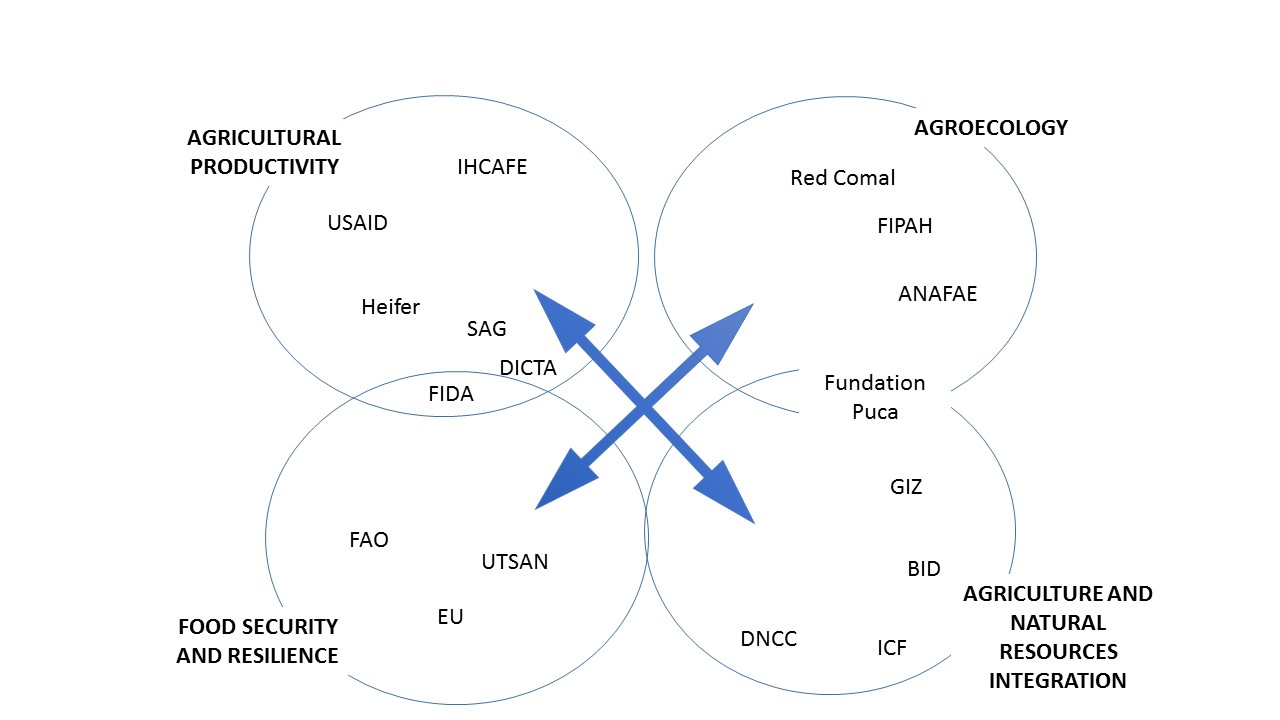
Figure 1. Approaches to responses to the challenges of agriculture and food security in the context of climate change based on De Varax M. 2017
In the second part of the meeting, a synthesis of the identified future scenarios from the socio-economic scenarios workshop held in November 2018 in Honduras was presented. This presentation gave participants the opportunity to discuss and give suggestions about the next steps for this project; the socio-economic modeling of policy measures (policy interventions, actions) that could contribute to a consensual and desired future. The work of formulating possible futures enabled the identification of two possible poles of socio-political scenarios:
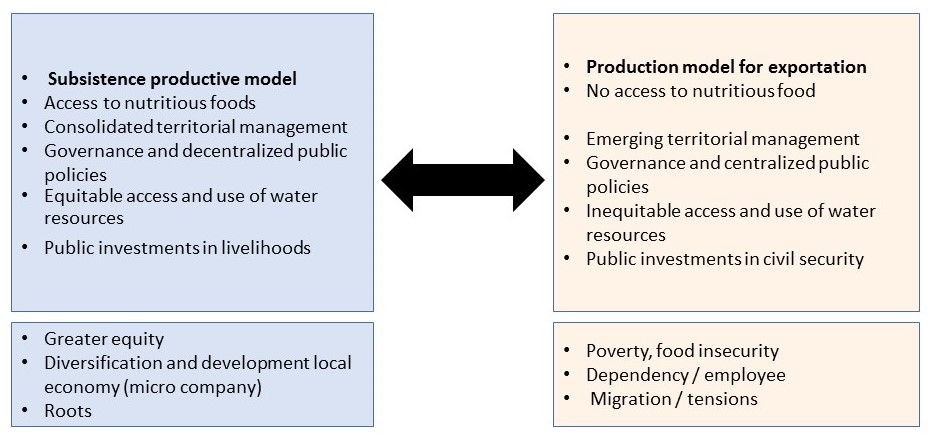
Figure 2. Large dilemmas between possible futures in Honduras Dry Corridor based on future scenarios workshop in Honduras
From these two poles it was possible to discuss the modeling opportunities for ex-ante evaluation of public action options and interventions, in a dry corridor under climate change.
The participants prioritized the Quesungual system and the diversified agroforestry systems as production systems. Corn and beans were the two most prioritized monoculture grains, and sorghum has been mentioned as well. However, it is recommended to also investigate the other crops produced by indigenous peoples. The high-value items selected by the participants were coffee and banana.
As to public policies, agricultural production according to productive potential and market, and economic incentives for the adoption of climate-smart agriculture practices were prioritized. It was recommended to adjust the policy instruments according to the level of vulnerability of the communities and define criteria for municipal financial support and investment.
Finally, for the policy instruments at the local level, the strengthening of territorial decision spaces including women and young people, and the promotion of structures of local organizations were prioritized.
About the author: Jean Francois Le-Coq is researcher for the the French Agricultural Research Centre for International Development (CIRAD) – International Center for Tropical Agriculture (CIAT) and leader of the “Shaping equitable climate change policies for resilient food systems across Central America and the Caribbean” CCAFS project.
EDITOR’S NOTE: The opinions expressed here by Impakter.com columnists are their own, not those of Impakter.com. Photo Credit: Neil Palmer (CIAT)