
This article is part of Food Diplomacy Perspectives, an editorial series produced in partnership with the Food Diplomacy Network. Read the introduction to the series here.
Food systems are agricultural and economic systems, but also arenas of geopolitical power, conflict, climate change, trade, inequality and human rights. Their governance has consequences for peace.
In an interdependent world, food security also depends on the terms under which countries and communities participate in international relations, and on their capacity to shape their food systems.
Lebanon illustrates these connections.
Lebanon’s food system faces intersecting pressures: economic collapse, import dependence, environmental and climatic stresses, displacement and war. A 2025 assessment by the Food and Agriculture Organization of the United Nations, with the Ministry of Agriculture and the National Council for Scientific Research–Lebanon, estimated $118 million in agricultural damage and $586 million in losses from the conflict between October 2023 and November 2024. Southern Lebanon and the Bekaa were most affected.
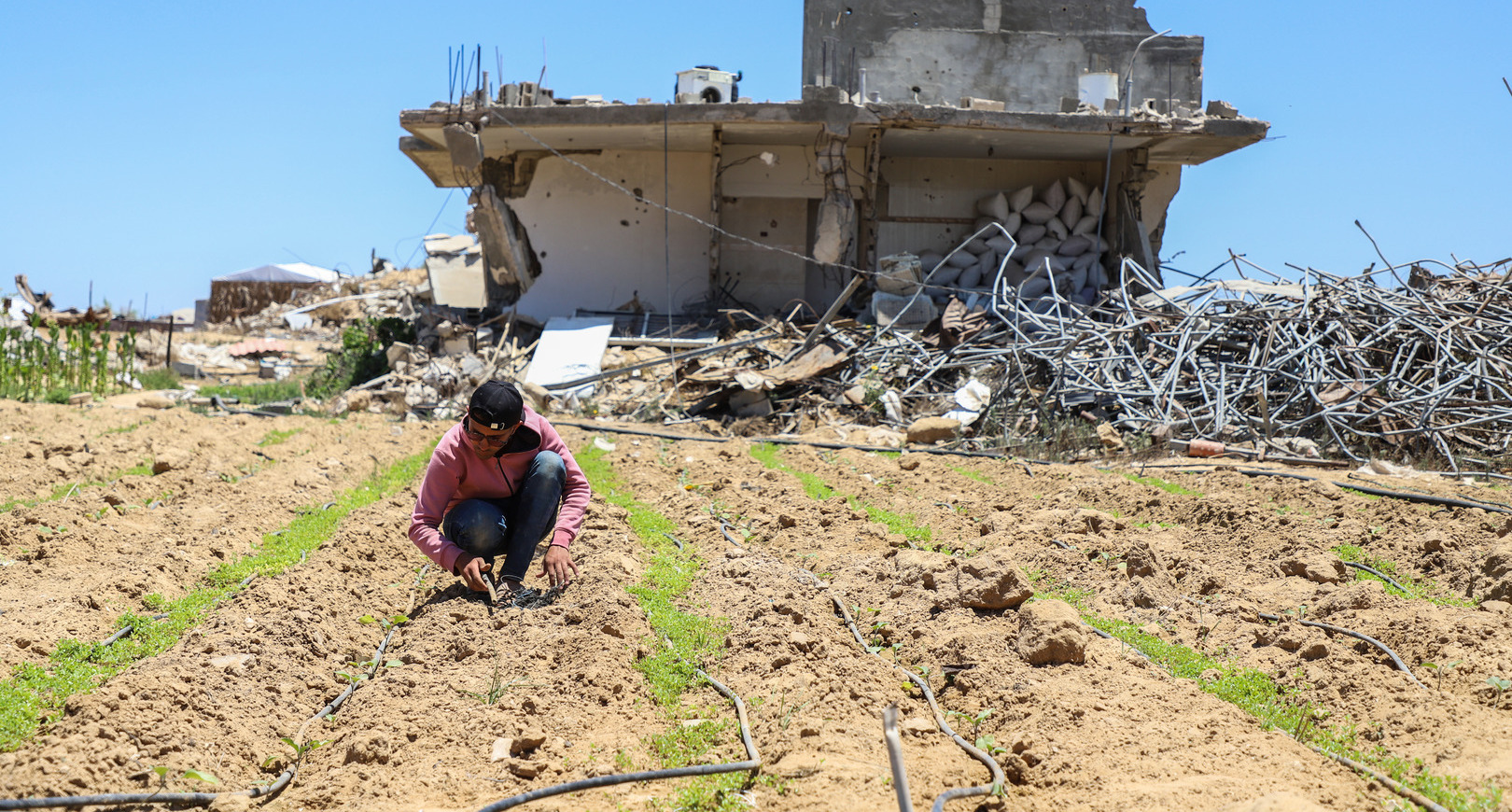
These figures capture only part of the damage. Destroyed farmland, displaced farmers, lost crops and livestock, damaged irrigation and restricted fishing access undermine the foundations of food production.
Livelihoods, ecosystems, local markets and social relations are disrupted. Farming knowledge accumulated across generations becomes harder to transmit. Communities lose some of their capacity to determine how their food systems recover.
This experience calls for a clearer distinction, and stronger connection, between food security, the Right to Food and food sovereignty.
From food security to rights and agency
Food security concerns the sustained availability, access, utilization and stability of sufficient, safe and nutritious food. These outcomes alone do not establish who is accountable or who makes decisions.
The Right to Food establishes access to adequate food as a human right, with corresponding state obligations to respect, protect and fulfil it. It turns food access into a matter of accountability.
Food sovereignty brings agency and power into the analysis.
Although food sovereignty has multiple definitions, its central questions are concrete. Who controls land, water, seeds and productive resources? Whose knowledge informs policy? Who sets priorities, bears risks and captures benefits? How much decision-making space remains for countries and communities?
These concepts address distinct but connected dimensions. Food security describes essential outcomes; the Right to Food establishes legal obligations; food sovereignty interrogates control, participation and the distribution of power.
Food diplomacy concerns the negotiation of these outcomes, obligations and power relations across borders.
Interdependence without dependency
Food sovereignty need not imply isolation or complete self-sufficiency.
Trade, science, technology, investment and international cooperation remain necessary. The issue is the terms of interdependence: who sets them, who benefits and who can revise them.
Interdependence can deepen vulnerability through concentrated supply chains, unequal market access and restrictive policy conditions. It can also diversify supplies, share knowledge and expand collective capacity.
Food diplomacy must address the distribution of bargaining power within these relationships.
Countries negotiate with unequal fiscal resources, technologies and market influence. Inequalities also operate within national food systems.
Farmers, fishers, women, small producers and local communities often bear risks without commensurate influence over decisions affecting their livelihoods.
Armed conflict intensifies these asymmetries. War can dismantle food systems through destruction of farmland, water resources, crops, livestock and infrastructure, and through displacement of farming communities.
The consequences are humanitarian, ecological and developmental, often persisting beyond hostilities. International humanitarian law protects objects indispensable to civilian survival, including foodstuffs, agricultural areas, crops, livestock, drinking-water installations and irrigation works; attacks affecting them require scrutiny under the applicable rules.
Resilience policies remain inadequate when the destruction of productive resources continues. Food diplomacy should place the protection of food systems, prevention of harm, accountability and conditions for recovery on diplomatic agendas.
Related Articles
Here is a list of articles selected by our Editorial Board that have gained significant interest from the public:
Broadening the meaning of diplomacy
Food diplomacy also operates beyond relations between governments.
Farmers, fishers, women, youth, researchers, civil society, businesses and consumers should participate in defining problems, setting priorities, negotiating trade-offs and evaluating outcomes.
Scientific evidence must be considered alongside farmers’ knowledge and the experience of communities managing land, water and food resources across generations. The proposed Food Diplomacy Network could create an institutional space for this work.
Food security, trade, climate, environment, humanitarian response, human rights and diplomacy are still governed through fragmented institutional processes. Their decisions interact, sometimes generating contradictory objectives and unequal consequences.
The Network could make these interactions visible and negotiable.
It could convene governments, international organizations, researchers, practitioners, producers and communities to identify policy contradictions, examine whose interests are represented and develop practical avenues for cross-sector cooperation.
Such diplomacy would connect negotiations between states with structured dialogue among sectors, disciplines and communities.
Its agenda could integrate four dimensions: food security as a measurable outcome; the Right to Food as an enforceable normative obligation; food sovereignty as collective agency over food-system decisions; and food diplomacy as the negotiation and cooperation through which these dimensions are advanced.
The central question extends beyond how people are fed. It concerns the institutions and relationships through which people secure adequate diets, sustain livelihoods, exercise rights and influence the future of their food systems.
The Food Diplomacy Network can test its value through specific exchanges, joint analysis and negotiated initiatives that confront power, conflict and inequality. Its contribution should be judged by the policy space and practical protections it helps create. Through such work, food diplomacy can contribute to trust, equity, resilience and peace.
Editor’s Note: The opinions expressed here by the authors are their own, not those of Impakter.com