
Today’s ESG Updates
- Diesel Claimants Denied Appeal Route but Vow to Press On: A London judge has refused to let 1.6 million motorists challenge the July judgment that went the carmakers’ way, so their lawyers will take the request straight to the Court of Appeal.
- Brussels Sets Common Pollution Standards for Pig and Poultry Farms:Shared EU-wide requirements on ammonia, nitrogen and phosphorus will replace the separate national regimes, reaching farms between 2030 and 2032 according to their size.
- Extraction Licences Overlap Vast Areas of Protected Tropical Land: Oil and gas blocks sit on more than 61 million hectares of conservation territory and mining concessions on a further 42.7 million, raising doubts about the 30×30 target weeks before talks open in Yerevan.
- UK Defence Objections Pile Up Against Onshore Wind Projects: Military concerns that turbines could mask aircraft on radar have hit at least four schemes in a year, including one the energy secretary will rule on.
Diesel claimants denied appeal route but vow to press on
A High Court judge has blocked 1.6 million motorists from challenging July’s ruling, though their lawyers will now approach the Court of Appeal directly.
Motorists pursuing one of Britain’s largest group claims have lost their first attempt to overturn a judgment that went against them. On Thursday, the High Court in London declined to grant permission to appeal against a July decision that was found largely in favour of several major vehicle manufacturers.
The litigation traces back to the scandal that engulfed Volkswagen a decade ago and now covers roughly 1.6 million claimants. Proceedings opened in October 2025 and examined 20 sample vehicles produced by Mercedes-Benz, Ford, Nissan, Renault and the Stellantis-owned brands Peugeot and Citroen. Most of the allegations that those cars had been fitted with unlawful defeat devices were rejected.
Judge Sara Cockerill, who handed down the July ruling, turned down the request herself and said she would set out her full reasoning at a later date.
The claimants’ legal teams plan to go over her head, applying to the Court of Appeal directly. Martyn Day, a senior partner at Leigh Day, one of the firms bringing the case, said the outcome was disappointing but insisted the fight on behalf of the 1.6 million clients was far from finished.
Klimado – Navigating climate complexity just got easier. Klimado offers a user-friendly platform for tracking local and global environmental shifts, making it an essential tool for climate-aware individuals and organizations.
Brussels sets common pollution standards for pig and poultry farms

Livestock producers across the bloc will follow shared minimum requirements on ammonia, nitrogen and phosphorus, replacing a patchwork of national regimes.
The European Commission has adopted uniform conditions for operating rules, known as UCOL, covering the rearing of poultry and pigs. The measure sits under the Industrial and Livestock Rearing Emissions Directive and targets three pollutants associated with respiratory illness, damage to ecosystems and contaminated water.
Until now, member states have handled farm emissions through their own separate arrangements. The new framework puts a shared floor beneath all of them while sparing producers the heavier administrative machinery that applies to industrial installations. The revised directive already permits governments to register pig and poultry holdings rather than run them through a full permitting regime.
Rather than prescribing equipment, the rules concentrate on how farms operate day to day, manure handling, animal nutrition and housing among them. Producers may select their own techniques provided the environmental standards are met, and methods absent from the list remain available where a member state confirms, on scientific grounds, that they perform equally well.
Smaller holdings face requirements scaled to their size. The rules take effect for farms between 2030 and 2032, depending on how large they are.
Related Articles
Here is a list of articles selected by our Editorial Board that have gained significant interest from the public:
Extraction licences overlap vast areas of protected tropical land

Oil, gas and mining interests hold rights across huge stretches of tropical land already set aside for conservation, according to spatial analysis by the US environmental group Earth Insight. Published on Thursday, the study found energy blocks overlapping more than 61 million hectares, an area approaching the size of France. Mining concessions covered a further 42.7 million hectares.
Governments have promised to conserve 30% of land, freshwater and ocean by 2030. Earth Insight puts current pledges at 23%, and says closing the gap by counting hectares achieves little if industrial development can still go ahead inside those boundaries.
Madhu Rao, who chairs the World Commission on Protected Areas at the IUCN, said attention has fastened on the numerical side of the target at the expense of everything else.
Cambodia shows the problem. Nearly all its undisturbed tropical forest sits within protected zones, yet 71% faces oil and gas development and 21% mining pressure. One wildlife sanctuary has already lost 10,000 hectares to an open-pit gold mine.
Delegates meet in Yerevan on 18 October.

UK defence objections pile up against onshore wind projects
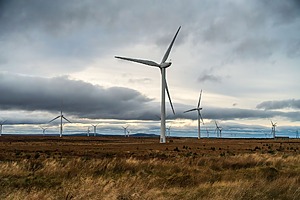
The Ministry of Defence has opposed at least four schemes in a year, warning that turning blades could hide military aircraft from radar.
Britain’s armed forces have objected repeatedly to wind developments, most recently in late June over a project in County Durham. In a letter to the planning authority, officials said aircraft might go undetected within an RAF Low Flying Area. The Hope Moor scheme would put up 23 turbines reaching 200 metres.
That puts the ministry at odds with the Department for Energy Security and Net Zero, which lifted England’s decade-long block on onshore wind after Labour took office in 2024. Ministers want to double onshore capacity by 2030. Hope Moor is classed as nationally significant, so the energy secretary will decide it.
Other objections cover six turbines at Burton Agnes in the East Yorkshire Wolds, a 13-turbine site near the Scottish borders, and an 87-turbine offshore array in the Irish Sea that could affect radar at Warton Aerodrome in Lancashire.
Industry sources say such warnings rarely stop projects. Talks usually lead to small changes in turbine height or size. Opponents still cite them in campaigns.
DESNZ said planning weighs defence, local views and environmental impact. The ministry did not comment.
Editor’s Note: The opinions expressed here by the authors are their own, not those of impakter.com — Cover Photo Credit: Matt Boitor