
The defining struggle of modern climate policy is not setting targets; it is enforcing them. Ambitious promises mean little unless they translate into decisions that properly confront the environmental challenges we face. But effective enforcement is impossible without the full knowledge of what those challenges actually are. As Lord Leggatt, one of five Supreme Court justices in Finch v Surrey County Council, observed in the landmark judgement, “you can only care about what you know.”
The story of Finch began in 2019, when Surrey County Council granted planning permission for commercial oil production at Horse Hill, a rural site in Surrey within the oil-rich Weald basin. The project formed part of UK Oil & Gas’s wider ambitions for expansive drilling across the region, envisioning around 2,400 oil wells across 100 locations. Local resident Sarah Finch, alongside the Weald Action Group (WAG), a coalition of local campaigns opposing fossil fuel extraction in the region, launched a legal challenge against the approval. She argued that the planning permission was unlawful because it ignored the massive carbon emissions generated when the extracted oil was burned. After raising funds through community campaigns to cover legal costs, Finch took the case through multiple unsuccessful challenges before finally reaching the Supreme Court.
In June 2024, the Court delivered a landmark victory, quashing the permit and setting a new standard for environmental accountability. Finch’s decade-long campaign was recognised in 2026 when she received the Goldman Environmental Prize, one of the world’s most prestigious environmental honours.
Two years on, the impact of the Supreme Court ruling has been seismic. By requiring decision-makers to confront the full climate consequences of fossil fuel developments before granting consent, the judgment closed a longstanding blind spot in environmental law. Its influence has been felt across the UK fossil fuel industry and beyond. Yet key practical issues surrounding the implementation of Finch remain unresolved. Now that the law forces us to look at the true climate cost of our infrastructure, the question remains: how do we cope with that knowledge?
The case that changed what counts
At the heart of Finch was the Environmental Impact Assessment (EIA). The EIA is a tool used to identify and disclose the likely environmental effects of a proposed development before planning permission is granted.
An EIA does not decide whether a project should proceed. Its purpose is to ensure that environmental impacts are properly understood before a decision is made. That principle reflects the Aarhus Convention, which guarantees the public’s rights to environmental information, participation in environmental decision-making and access to justice.
The dispute in Finch centered on one deceptively simple question: what environmental effects must an EIA include?
Specifically, the case concerned whether an EIA for a fossil fuel project must assess the greenhouse gas emissions released when the extracted oil is eventually burned — known as “Scope 3” emissions. Sarah Finch often explained her case with a simple analogy: “If you look at the impact of a chocolate cake on your diet, it’s not when you make it that affects you, it’s when you eat it.”
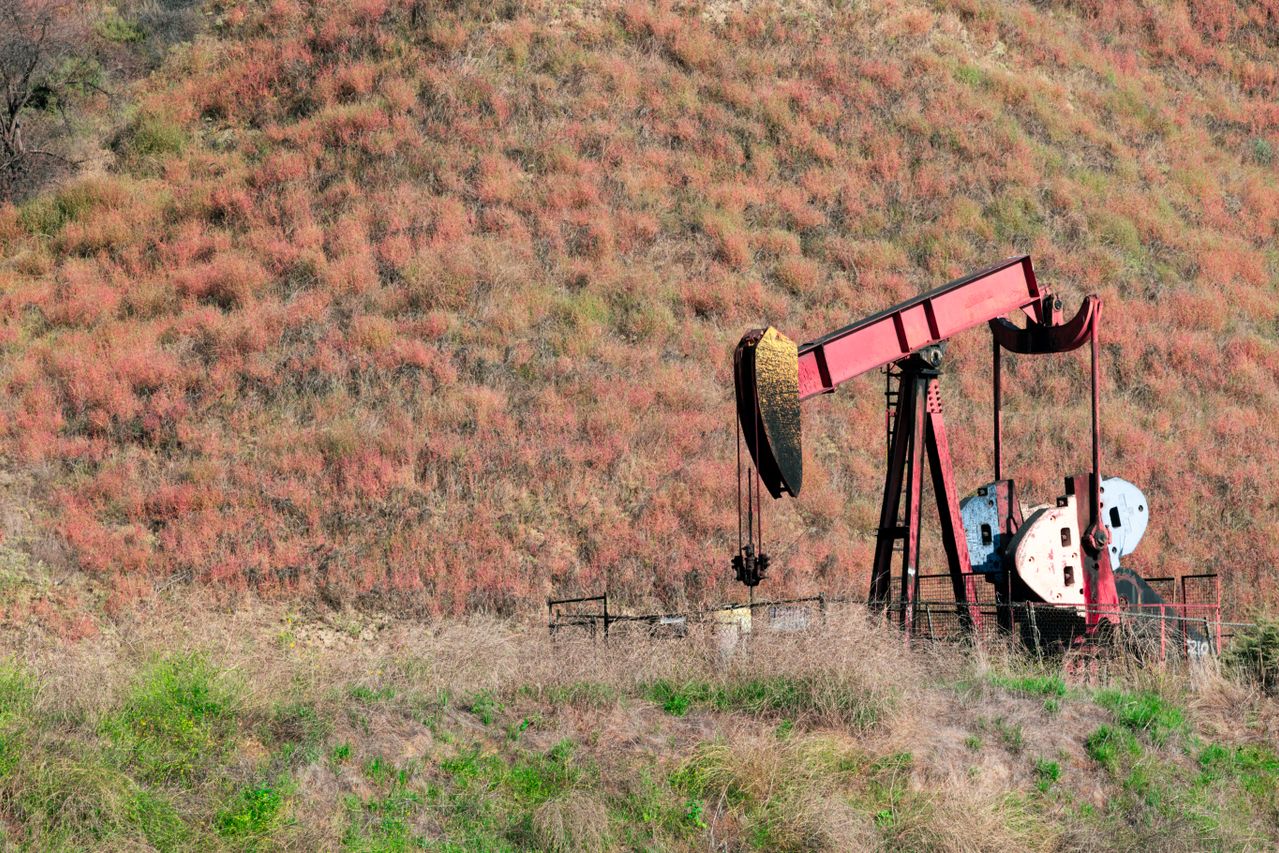
Initially, Surrey County Council instructed the developer to include these emissions in its assessment. When the developer objected, however, the council relented. As a result, the environmental statement accounted for around 114,000 tonnes of CO₂e from the site’s operations but omitted the estimated 10.6 million tonnes of CO₂ that would be released when the extracted oil was burned.
After years of litigation, the case reached the UK Supreme Court — the first climate case in its history. By a 3–2 majority, the Court held that the council had acted unlawfully by granting planning permission without assessing those downstream emissions. Since burning the extracted oil was an “inevitable” consequence of extraction, those emissions must be considered before permission is granted.
The judgment fundamentally redefined the scope of environmental impact assessments. When evaluating the “direct and indirect significant effects” of a fossil fuel project, Finch determined, councils cannot confine their analysis to immediate, localized impacts. Instead, they must evaluate the “global” and “transboundary” consequences of the fossil fuels being extracted — and burned.
From precedent to practice
The impact of Finch was felt almost immediately. In September 2024, the High Court applied the Supreme Court’s reasoning for the first time, quashing planning permission for a proposed Cumbrian coal mine. The project would have extracted 2.8 million tonnes of coal a year until 2050, producing an estimated 220 million tonnes of CO₂ from both extraction and burning. The Court confirmed that these downstream emissions could not be excluded from environmental assessment.
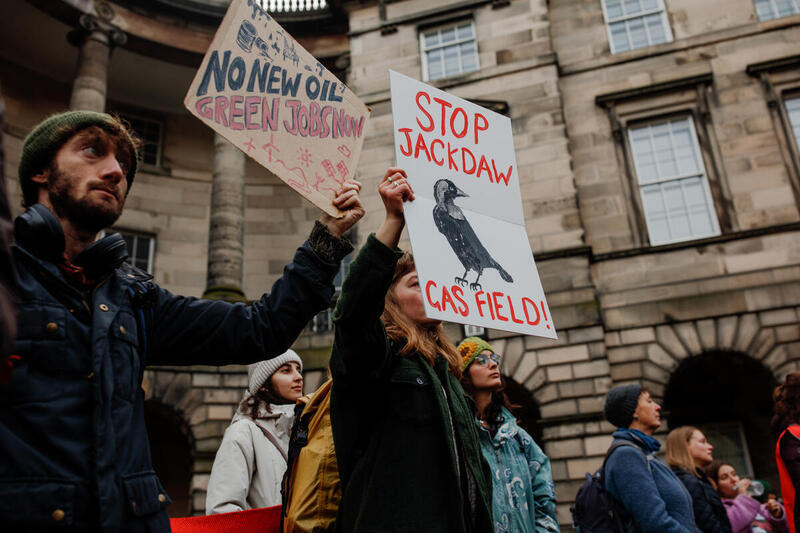
The ripple effects continued in January 2025, when the Scottish Court of Session applied the Finch principle retrospectively, overturning approval for two major North Sea oil and gas developments: Rosebank and Jackdaw.
The ruling also prompted regulatory change. In June 2025, the Department for Energy Security and Net Zero (DESNZ) issued supplementary guidance on assessing downstream Scope 3 emissions from offshore oil and gas projects. The guidance sets out expectations for environmental statements, requiring decision-makers to recognize “the full effects of fossil fuel extraction on the environment” before granting consent.
Although Finch is not binding on foreign courts, its reasoning has also influenced climate litigation overseas, particularly in European Union member states, where courts operate under the same EIA Directive and Aarhus Convention framework as the UK.
For example, the judgment was cited in an October 2025 European Court of Human Rights (ECHR) case concerning Norway’s approval of new oil and gas extraction. While the claim was ultimately dismissed on other grounds, the ECHR emphasized a principle closely aligned with Finch: states must comprehensively assess the climate impacts of fossil fuel projects and ensure that their decisions are compatible with their obligations to address climate change.
Shortly afterwards, a Norwegian court declared licences for three North Sea oil fields unlawful, finding that the projects had been approved without adequately considering their wider climate consequences.
Beyond fossil fuels
The Supreme Court framed Finch as a narrow precedent, closely tied to fossil fuel extraction. Nonetheless, the judgment has quickly become a tool for challenging high-emitting developments beyond the fossil fuel sector.
In intensive agriculture, for example, Finch was successfully relied upon to challenge two large-scale factory farming projects: planning permission for a major pig and poultry complex in West Norfolk was blocked by the local counsel, whilst approval for a 200,000-bird poultry facility in Shropshire was overturned by the High Court.

Aviation has presented a more difficult test. Campaigners challenging the expansion of Gatwick and Luton airports relied on Finch to argue that environmental assessments should account for emissions from additional flights and wider non-CO₂ climate effects.
The challenges against both airports ultimately failed, with the expansions approved. The obstacle was causation. In Finch, Lord Leggatt emphasized that an environmental effect must be sufficiently connected to the project itself: where there is no reasonable basis to conclude that an effect is “likely,” there is no requirement to assess it.
The courts found that uncertainty around the scale and impact of aviation emissions made this causal link too difficult to establish. Unlike fossil fuel combustion, where the connection between extraction and emissions is “inevitable,” more diffuse climate impacts may fall outside Finch’s reach.
Approving anyway: the political limits of Finch
Finch has transformed what governments and developers must know about the climate consequences of major projects. But knowing the consequences is not the same as preventing them. An EIA only lays out the risks: it does not determine whether planning consent will be granted. Once those impacts have been assessed, planning authorities retain wide discretion over the outcome.
Despite the UK’s commitment to cut emissions by 68% by 2030 and achieve net zero by 2050, national policy continues to support domestic oil and gas production. The government has justified this approach largely on energy security grounds, arguing that increased domestic production can reduce reliance on imported fossil fuels. Yet the scale of UK output complicates this argument: the UK is Europe’s third-largest producer of oil and gas, with most extraction taking place in the North Sea. In 2024, it produced around 31 million tonnes of oil, approximately 80% of which was exported and ultimately burned overseas.
The ongoing controversy over the Rosebank and Jackdaw oil and gas fields illustrates this unresolved tension sharply. Following Finch, developers were required to submit revised environmental assessments accounting for downstream Scope 3 emissions. Equinor resubmitted its environmental statement for Rosebank in 2025, revealing that the project could generate an estimated 254 million tonnes of CO₂e over its lifetime. This figure is equivalent to almost 70% of the UK’s annual emissions in 2024, according to campaign group Uplift.
The judgment has made the climate consequences of Rosebank and Jackdaw impossible to ignore, but ultimately, the decision over whether these projects proceed remains a political one. The outcome is expected imminently, following the close of the public consultation period on Aug. 10, 2026. While the decision could still go either way, early reports indicate new Prime Minister Andy Burnham will support the developments.
Related Articles
Here is a list of articles selected by our Editorial Board that have gained significant interest from the public:
Accountability at a crossroads
The future of Finch now sits at the center of a wider dilemma: how to balance climate accountability with competing government ambitions for growth, energy security, and infrastructure.
Critics argue that Finch has created an excessively adversarial planning environment. Emma Conwell, Director at the law firm Freeths, warned that the “seemingly over-application of Finch” risks creating a “quagmire, slowing down decision making at all levels.” At the heart of the debate is a question of scope: if “inevitable indirect effects” must be assessed, where should the causal chain end?
Some have argued that this uncertainty will complicate the delivery of critical low-carbon infrastructure, including nuclear power, renewable energy projects and grid expansion.
Concerns have been particularly prominent in the nuclear sector. In a government-commissioned review of the UK’s nuclear industry, economist John Fingleton CBE recommended that the government “legislate to overturn the Finch judgment.” Shortly afterward, then Prime Minister Keir Starmer stated that the government would implement all 47 recommendations of the review as part of its wider overhaul of industrial strategy.
The latest news is that the UK government intends to scrap the EIA system altogether. In its place, they will introduce Environmental Outcomes Reports. Framed as “an opportunity to increase growth while protecting nature,” the reforms are expected by the end of 2027.
The legacy of Finch
The repeated and wide-ranging invocation of Finch in climate litigation over the past two years demonstrates the scale of its impact on the UK fossil fuel industry and beyond. Its most significant impact, though, may be unseen. Companies and planning authorities across multiple sectors are now forced to reckon with more comprehensive environmental assessments and greater scrutiny of the climate consequences of development. Finch has fundamentally shifted the baseline for how future developments are planned and approved.
Whether that legacy survives the government’s proposed replacement of Environmental Impact Assessments with Environmental Outcomes Reports remains to be seen. But Finch has permanently changed the conversation. Even if the legal framework evolves, the judgment has made it far more difficult for governments and developers to ignore downstream emissions or exclude them from environmental decision-making
Knowledge alone will not stop high-emitting projects from being approved. But it does make those decisions visible, contestable, and accountable. To paraphrase Lord Leggatt, knowledge gives us the chance to care. And people like Sarah Finch prove that caring can go a very long way.
Editor’s Note: The opinions expressed here by the authors are their own, not those of impakter.com