The goal of establishing an EU common defense mechanism has been around since the European community integration idea was born in the 1940s. Unfortunately, the goal never took shape, defeated, on the one side, by nationalist interests that could not envision giving up sovereignty to a European force, and on the other, by allegiance to NATO and continuing fear of incurring American displeasure. As a result, across the continent, nationalists and Atlantists alike could agree that Europe’s participation in NATO was sufficient, and the idea of EU common defense found itself without supporters.
A first inkling that things might change came when Donald Trump accused Europeans of free-riding NATO and not paying their due share. To be precise, Trump was not the first American President to manifest annoyance at what was perceived as a lack of European support for NATO. And undoubtedly, over the decades of the Cold War and even subsequently, Europeans relied too much on NATO, a reliance that was universally seen as a way to economize on defense spending. But Trump’s accusations couched in aggressive language acted as a wake-up call. Suddenly Europeans realized they could not count on America as a trusted ally forever.
America, Europeans learned, could not be trusted. And it was not just a matter of common defense systems. America could not be trusted either as an economic partner and the comprehensive trade agreement proposed and promoted by the Obama administration was thrown in the bin. A similar trade agreement was signed with Canada during the Trump years, but nothing like that was envisaged with the United States. Trump even objected to one of Germany’s darling energy projects, Nord Stream, a twin-pipeline system of offshore natural gas running under the Baltic Sea from Russia to Germany.
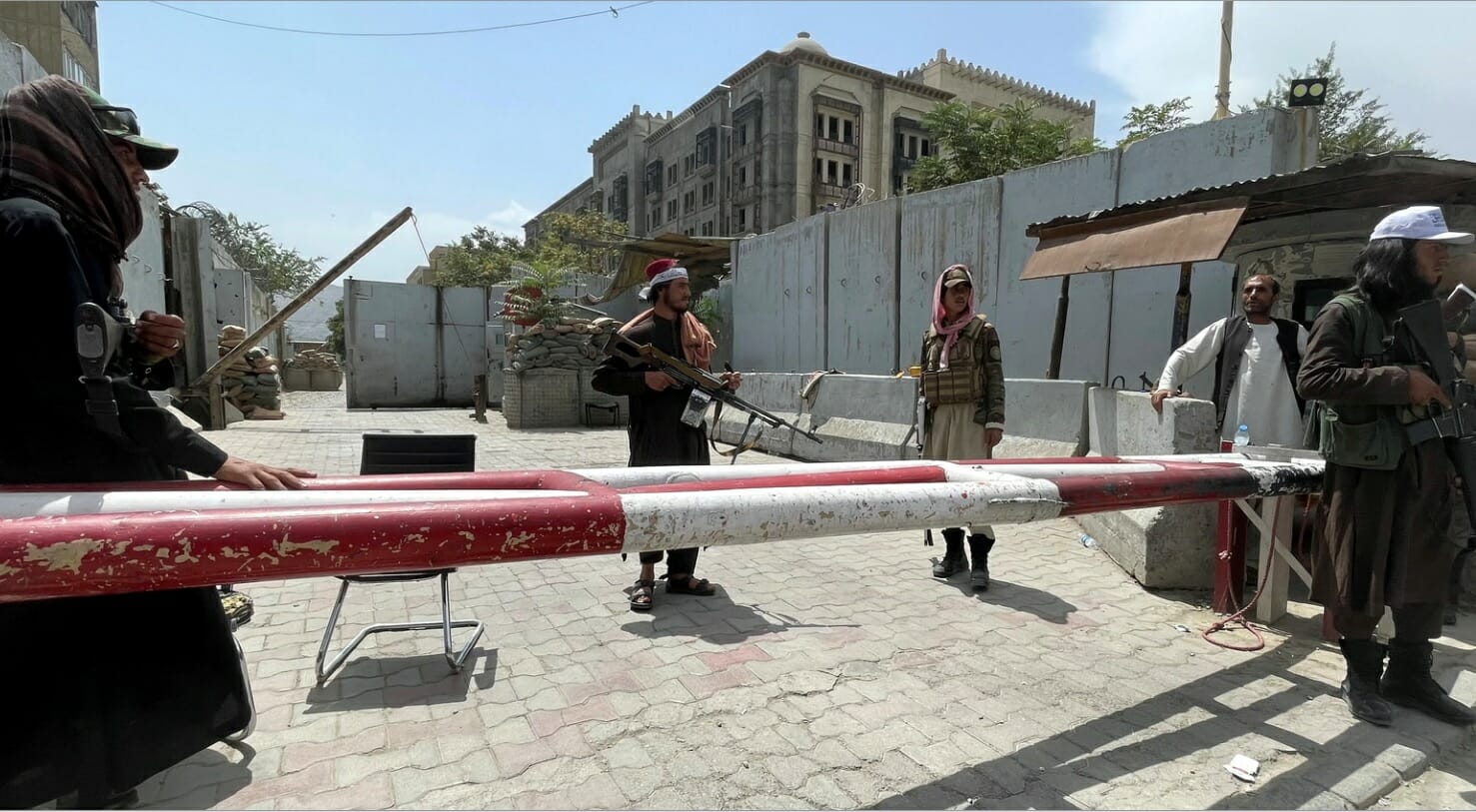
The Biden administration has done everything it could to try and mend relations with Europeans. But the Afghanistan debacle put paid to those efforts. Suddenly Europeans realized that they had to rely on the American army to get their nationals out of Kabul. A fact that poignantly underlined once more the pointlessness of the so-called strategic autonomy of Brussels.
One EU official was quick to capitalize on the notion: Josep Borrell, the EU foreign affairs Minister whose full title is a mouthful: High Representative of the Union for Foreign Affairs and Security Policy – and he is also Vice-President of the Commission for a Stronger Europe in the World. “Sometimes events catalyze history, create a rupture, and I think events in Afghanistan are one such case,” Borrell said at an informal meeting of defense ministers held in Slovenia last Thursday and Friday. The need for greater European defense, he added, “has never been so evident as today”. And, in line with his work in the Commission for a Stronger Europe, he also referred to the need to increase the specific weight of the EU on the international stage.
Borrell’s call for greater European defense was echoed by the Commissioner for the Internal Market, Thierry Breton, who wrote in his speech that it was time for the EU to evolve from «Europe Market to Europe Power».
The term “Europe Market” is a clear reference to what one astute academic observer of the European scene has called the “Brussels Effect”. I am referring, of course, to Columbia University Law professor Anu Bradford’s ground-breaking book The Brussels Effect, How the European Union Rules the World, published in 2020. As I wrote in an earlier article, her claims that the EU “rules the world” are no doubt a step too far, the EU has no military power nor any imperial ambitions. But it is true that its regulations cover a broad range of sectors, from food safety and animal welfare to citizen privacy and environmental protection. And because Europe is a major export market, EU regulations do shape markets around the world.
But shaping global markets is of no use at all when your citizens need to be evacuated out of a dangerous place like the Taliban’s Afghanistan. Hence the need for “Europe Power”, something that only an autonomous military force can give.
Fortunately, the process to achieve the goal of a common defense was already underway before the Afghan crisis. Work had begun in Brussels in 2020 for the constitution of the so-called Strategic Compass for security and defense, to be ready by March 2022. The first semester of 2021 was the phase of the ‘strategic dialogue’ with the member states and institutions of the EU, including the involvement of think tanks and other stakeholders, such as the Clingendael Institute in the Netherlands or Finabel, the European Army Interoperability Centre. The “strategic compass”, the most ambitious defense plan to date, is designed to indicate the EU’s main objectives, challenges and threats on the international front. A “European battalion” is included in the package, but it is not clear what the numbers and methods of establishing the project should be.
How To Make the Common Defense Mechanism Operational
Two problems need to be solved before the common defense mechanism can become operational: One is the size of the military force; the other is the modality to get EU member states to agree to use it. Both problems were discussed at the Defense Ministers’ informal meeting.
Size of the Military Entry Force
Borrell made a modest proposal: He suggested a 5,000-strong entry force, at least to test the ground. Slovenian Defense Minister Matej Tonin raised the bar, calling for a contingent “of 5 thousand units, to be expanded to 20 thousand, depending on the discussion”.
Others were even more ambitious and dismissing the figures suggested by Borrell as “symbolic”, called for a minimum of 60 thousand units.
In short, we are nowhere near agreeing on a number. But the likelihood that Borrell’s proposal – the lowest common denominator – wins the day is of course very high.
Modality of Approval
The second problem, as always with EU matters, relates to the modality of approval, and how EU member states might participate in a community contingent.
The Slovenian Minister Tonin surprisingly came forward with support for a “majority mechanism” (i.e. deciding on a majority vote to avoid the obstacle paused by a requirement of unanimity). This would have the obvious advantage of allowing the “willing” to come forward without forcing the most reluctant countries.
This is a surprising position coming from a country – Slovenia – that purports to be aligned with the Visegrad Group (Poland, Hungary, Czech Republic and Slovakia) that generally fights Brussels, especially on the migration question. But it would appear the times may be ripe for it.
Annegret Kramp-Karrenbauer, the German defense minister, declared herself open to a “coalition of the brave” that intervenes when necessary, on the “joint decision” of the countries. And once again, the catalyzing event that changed everyone’s opinion was Afghanistan. She even tweeted about it:
Bei Treffen der #EU-Verteidigungsminister habe ich klargemacht: Die nüchterne Wahrheit zu #Afghanistan ist: Wir Europäer haben gegen die Entscheidung der #USA zum Abzug kaum Widerstand geleistet, weil wir mangels eigener Fähigkeiten keinen leisten konnten. 1/9
— A. Kramp-Karrenbauer (@akk) September 2, 2021
In short, she has moved far away from the position when she once described European defense as “an illusion”.
But German support is based on two preconditions. The first is to draw on existing military forces, without creating an army with new resources. The second is an appeal to caution: one should avoid confrontation with the US and/or NATO. “If the conclusions from Afghanistan were a rupture between the EU and NATO or between Europe and the US, or a withdrawal from international commitment”, Kramp-Karrenbauers said on Twitter, “then the West would really have lost”:
Wenn die Schlussfolgerungen aus #Afghanistan eine Spaltung zwischen #EU und #NATO oder zwischen #Europa und #USA wären, oder ein Rückzug aus dem internationalen Engagement, dann hätte der Westen tatsächlich verloren. 3/9
— A. Kramp-Karrenbauer (@akk) September 2, 2021
German concerns are based on their diplomatic experience. They have found that the notion of a European army has irritated both America and NATO in the past, and they see the risk that it will again be an irritant. A NATO source expressed all his perplexity to the Politico newspaper, reflecting on how a new force can “only weaken” the existing ones and foster divisions.
Bloomberg reports that the Defense ministers also discussed what type of conditions would need to be established before engaging with the new Taliban rulers. “We have to develop a condition-based engagement for everything, even to provide humanitarian assistance,” Borrell said. Separately, France and Germany circulated a paper setting five conditions:
- Afghans who want to leave the country should not be stopped from doing so.
- Ties with terrorist organizations, including al-Qaeda, must be broken.
- Full access to humanitarian aid must be allowed.
- Human rights, especially women’s rights, must be respected.
- An inclusive, representative government must be established.
The Franco-German paper also called for the need to fight against the drug trade.
At the time of writing, the EU is moving forward on the Afghan question relying on the usual channels for action: On the one hand, as I reported last week, it is looking for ways to address an eventual Afghan wave of refugees, and on the other, it is proceeding down the diplomatic road. The EU Commission’s foreign affairs service informed EU ambassadors on Friday that evacuations of EU citizens from Kabul had not yet been completed and that it is sending an envoy to the region this week to look into the creation of a humanitarian corridor. Humanitarian issues are bound to arise in the coming months as the Taliban must grapple with governing a country faced with economic chaos:
So, for now, the EU appears to have set aside any decision regarding the proposed European military force. But before assuming nothing will be done, it is worth noting that this EU Defense Ministers discussion was informal, a form of pulse-taking to figure out where everyone stood. It helped lay the ground for further decisions. And bottom line, it is encouraging to see that the ministers rallied around a 5,000-strong “entry force” as a minimum, and raised the question of putting aside the need for unanimity. Setting it aside would be an important first step to enable such a military force to finally see the light of day.
Editor’s Note: The opinions expressed here by Impakter.com columnists are their own, not those of Impakter.com. — In the Featured Photo: In an interview with Sunday Newspaper on August 29, Emmanuel Macron announced that France was going to bring, along with the United Kingdom, on August 30, a draft resolution to the United Nations Security Council in order to “define, under UN control, a safe zone in Kabul which allows humanitarian operations to continue ” Source: Then24.com article published 30 August 2021