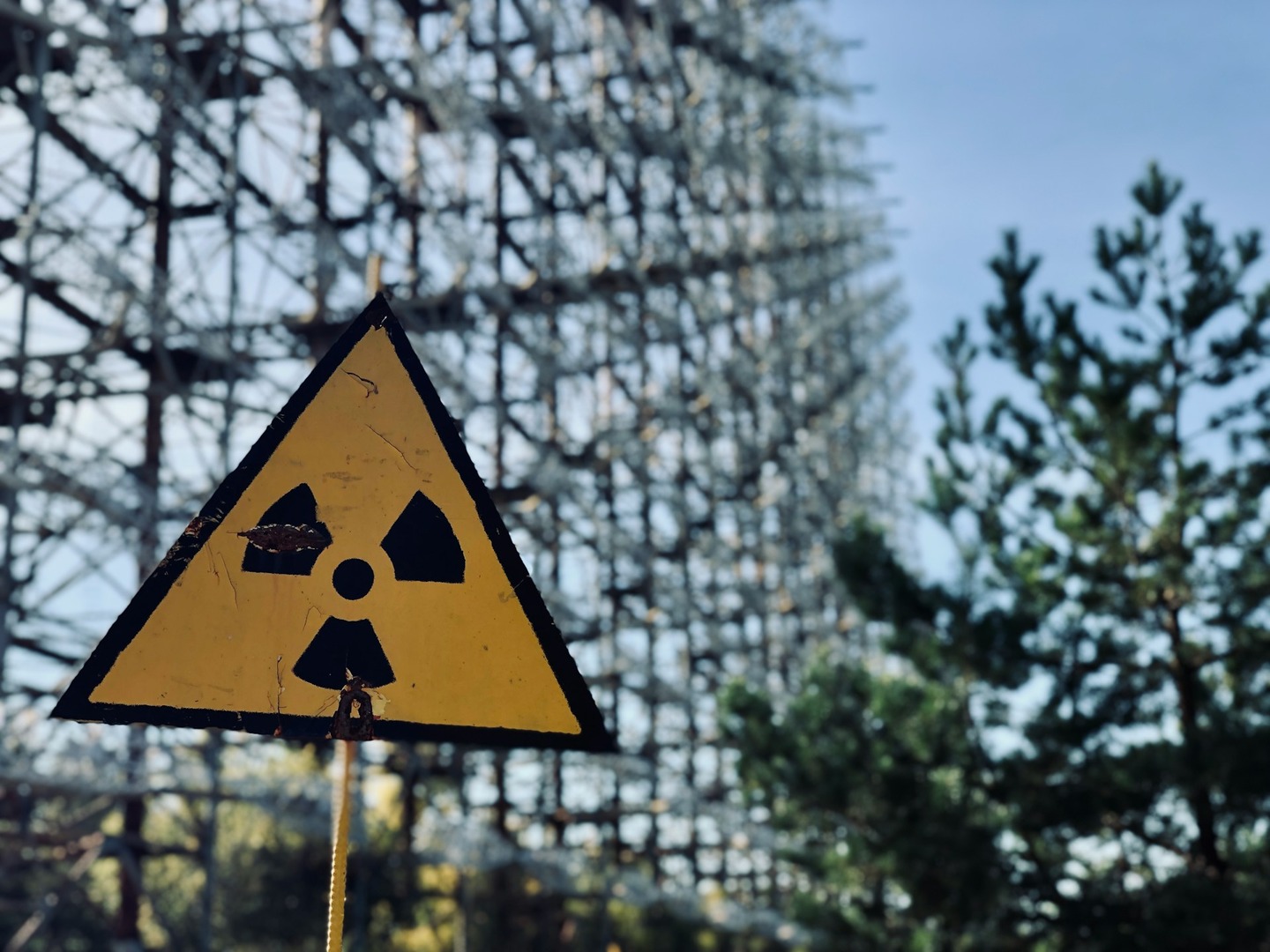
In northern Ukraine, about 104 kilometers (65 miles) from Kyiv, sits the infamous ghost town of Pripyat. Located within the Chernobyl Exclusion Zone, Pripyat has sat abandoned for the last 40 years.
The city has become a fascination, as “dark tourism” seekers from around the world are drawn to this city frozen in time. Now, as Greenpeace warns, the region could face another radioactive disaster.
The Chernobyl Disaster
On April 26, 1986, the Chernobyl 4 nuclear reactor exploded, sending expansive amounts of radioactive materials into the atmosphere.
Twenty-four hours before the explosion, plant operators attempted an experiment, shutting down emergency safety systems and the reactor’s power-regulating system. This, paired with the reactor’s design, blew off the top of the reactor at around 1:24 am on April 26.
Fires burned out of control for four hours, and radioactive particles were carried off by air currents, affecting regions across Ukraine, Belarus, and Russia, and even traveling as far as France and Italy.
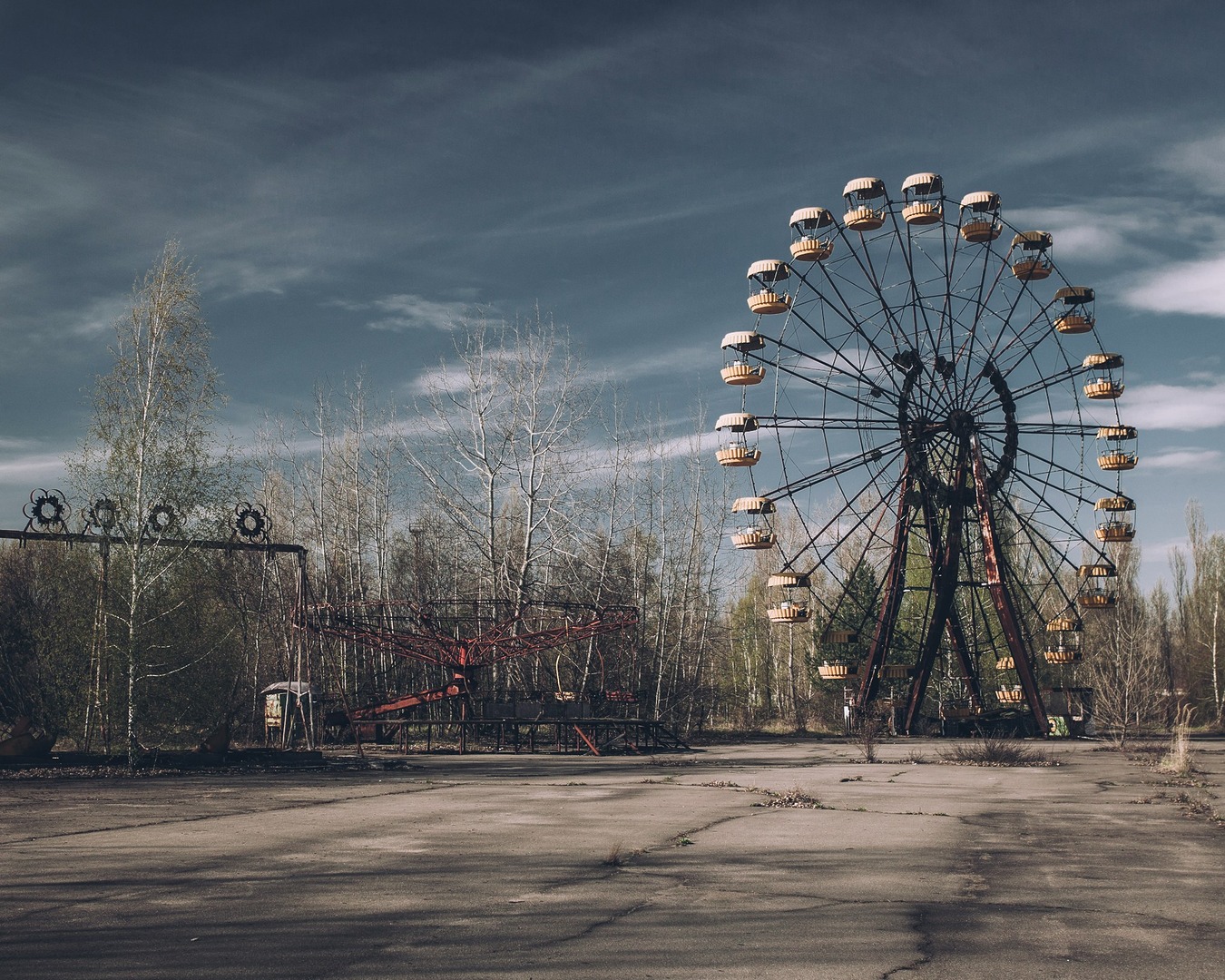
Located just 3 kilometers (1.9 miles) from the nuclear plant, Pripyat was evacuated on April 27. Yet the harmful effects of the nuclear explosion had already taken root. An estimated twenty-eight people died of acute radiation sickness following the explosion. Farmland was severely contaminated, and the lasting health impacts have been studied by organizations worldwide.
The radioactive material released into the atmosphere that day was greater than the atomic bombs dropped by the United States on Hiroshima and Nagasaki in the second World War. As a result, the Soviet Union created an exclusion zone, with a radius of 30 kilometers (18.6 miles), around the nuclear power plant.
Construction of the Sarcophagus and NSC
To continue nuclear operations at Chernobyl, a cement structure called the sarcophagus was hastily constructed in October 1986 around the Chernobyl reactor 4. However, the cement structure, lacking durability and strength, was just a temporary fix.
Chernobyl’s three other reactors continued operations for years following the explosion, after $400 million was invested into the plant in the early 1990’s. Reactor 2 was shut down after a fire in 1991, and reactor 1 operated until 1997. The final reactor, unit 3, was officially decommissioned in December 2000.
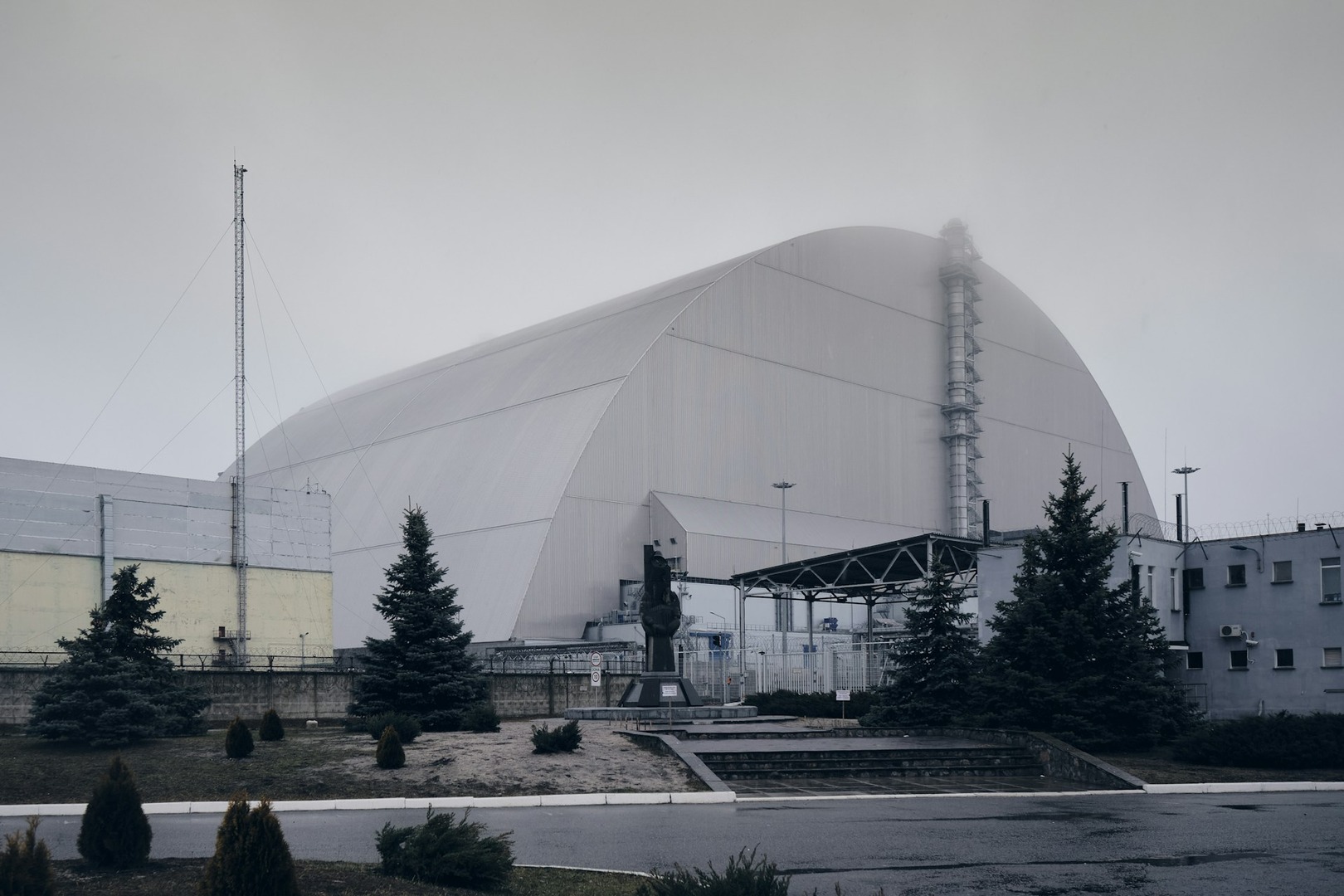
Work on the New Safe Confinement (NSC) structure was completed in 2017. Constructed from 36,000 tonnes of tubular steel, the NSC encases both the Chernobyl 4 reactor and the 1986 sarcophagus.
The Potential of Collapse
In February 2022, Russia’s military took control of Chernobyl’s facilities. As heavy military machinery rolled in, levels of gamma radiation rose from the disturbed topsoil. Approximately one month later, control was returned to Ukraine, with the International Atomic Energy Agency (IAEA) establishing a permanent rotating mission. In early 2023, the IAEA stationed nuclear safety and security experts at the site.
Three years after their initial takeover, in February 2025, a Russian drone struck the NSC, damaging the internal and external cladding of the structure’s arch. The IAEA reported normal and stable levels of radiation after the attack, yet a new report by Greenpeace Ukraine is now ringing alarm bells.
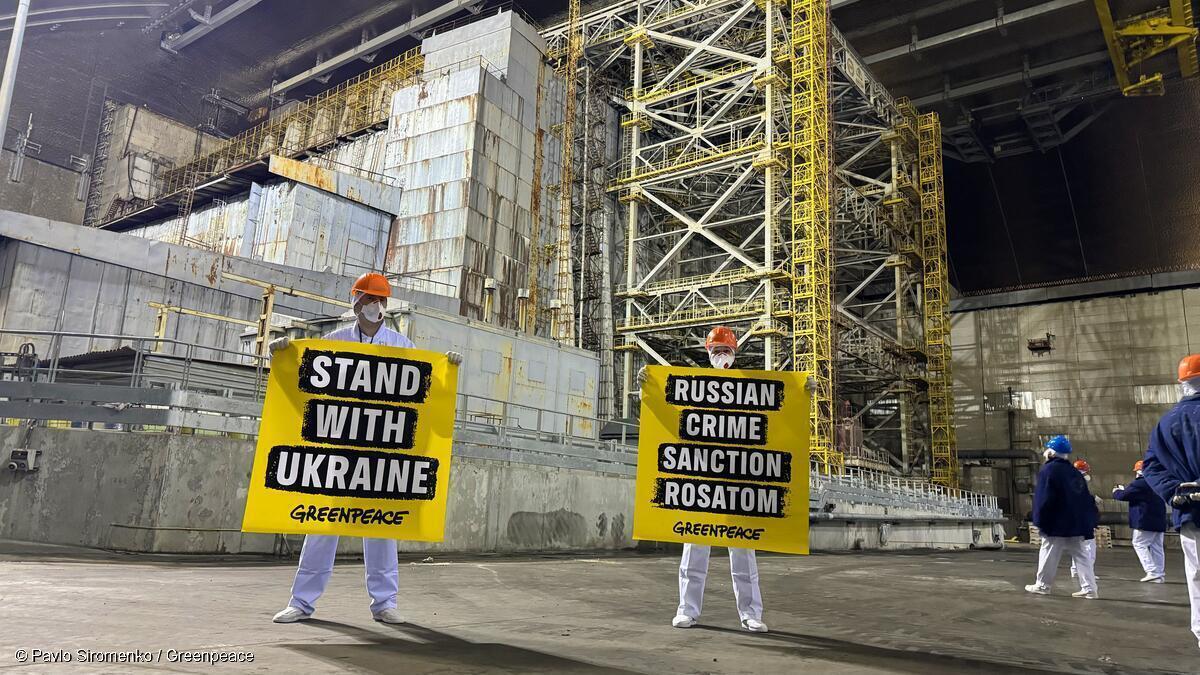
In the report, Eric Schmieman, a civil engineer and senior technical adviser on the Chernobyl New Safe Confinement, warns that without immediate repairs to the NSC, the sarcophagus is at risk of collapse.
Shaun Burnie, senior nuclear specialist at Greenpeace Ukraine, said:
“In April 1986, Ukraine and the world suffered the worst nuclear disaster in history. Today, decades later, the radioactive hazards at Chornobyl remain – with all efforts being made to contain and manage its toxic legacy. These are incredibly complex challenges. The Russian drone strike has now increased the risk that the Sarcophagus will collapse before it can be carefully dismantled.”
At a meeting of G7 nations in March, French Foreign Minister Jean-Noël Barrot estimated that the New Safe Confinement would require €500 million in repairs.
While Ukraine and international donors have agreed on a four-year timeline for repairs to the NSC, the structure is under constant threat of further drone and missile strikes from Russia.
Related Articles
Here is a list of articles selected by our Editorial Board that have gained significant interest from the public:
Speaking to French news agency AFP, Burnie stated that the collapse of the 1986 structure would be “catastrophic because there’s four tonnes of dust, highly radioactive dust, fuel pellets, enormous amounts of radioactivity inside the sarcophagus.”
The release of this dust could have an impact across Europe, spreading radioactive material that has spent 40 years in the dark.
Editor’s Note: The opinions expressed here by the authors are their own, not those of impakter.com — In the Cover Photo: Nuclear warning signs in Pripyat, Ukraine. Cover Photo Credit: Vladyslav Cherkasenko