Impakter
  • Environment
    • Biodiversity
    • Climate Change
    • Circular Economy
    • Energy
  • FINANCE
    • ESG News
    • Sustainable Finance
    • Business
  • TECH
    • Start-up
    • AI & Machine Learning
    • Green Tech
  • Industry News
    • Entertainment
    • Food and Agriculture
    • Health
    • Politics & Foreign Affairs
    • Philanthropy
    • Science
    • Sport
  • Editorial Series
    • SDGs Series
    • Shape Your Future
    • Sustainable Cities
      • Copenhagen
      • San Francisco
      • Seattle
      • Sydney
  • About us
    • Company
    • Team
    • Global Leaders
    • Partners
    • Write for Impakter
    • Contact Us
    • Privacy Policy
No Result
View All Result
Impakter logo
No Result
View All Result
COVID-19, Conflict and Ecological Threats in Yemen

COVID-19, Conflict and Ecological Threats in Yemen

Institute for Economics & PeacebyInstitute for Economics & Peace
September 22, 2020
in Politics & Foreign Affairs, Society, United Nations
0

The COVID-19 pandemic will intensify the impacts of ongoing conflict and ecological threats in Yemen.

Yemen is considered an ecological hotspot, facing high exposure to all three resource depletion indicators measured in the Ecological Threat Register (ETR) – water stress, food security and population growth – and with low resilience to respond to such threats.

Since 2015, ongoing conflict in Yemen has led to what the United Nations (UN) describes as the “worst humanitarian crisis in the world.” Armed conflict has resulted in the displacement of millions, caused a deep economic crisis and led to a widespread food insecurity crisis. More than 80% of the country’s population is at risk of hunger and disease. The COVID-19 pandemic is set to exacerbate the humanitarian crisis, with some estimates predicting 17 million people are in need of humanitarian assistance. This represents the largest food insecure population in the world.

Prior to the civil war, Yemen was primarily dependent on food imports with only around 25% of food being produced domestically. Food affordability is a critical concern to households, as pre-existing global food price increases and currency depreciation interact with COVID-19 related trade restrictions. Remittances, which play a critical role in the economy, have been substantially reduced and other income is expected to decline further as COVID-19 disruptions affect businesses.

Yemen’s health care system was already under stress prior to the pandemic, following years of conflict and outbreaks of communicable diseases, such as cholera. Many healthcare facilities have been destroyed by airstrikes and shelling, with the country also facing a shortage of healthcare workers. With the onset of the COVID-19 pandemic, the rise in case numbers and limited supply of medical equipment has led to the effective collapse of Yemen’s health care system.

The ongoing civil war fought between the Saudi-backed Yemeni government and Houthi armed movement, along with their allies, has meant that no central government is in charge, making the COVID-19 pandemic much harder to contain. This has created significant challenges for aid organizations to understand the level of disease transmission and prepare accordingly as reporting on case numbers vary widely between government and rebel-held areas.

Heavy rains and intense floods have also disrupted access to health and sanitation services, and created ideal conditions for the spread of water-borne diseases, like cholera and dengue fever. In 2019, the UN estimated that approximately 19.7 million people lacked access to adequate health care.[ix]

Collectively, ongoing conflict and recurring ecological threats have led to widespread displacement across Yemen. Since 2015, over 3.4 million new displacements were recorded as a result of conflict, while disasters, mainly floods, resulted in 177,000 new displacements.


Related Articles: Why the Yemen Humanitarian Crisis Matters | Yemen’s Ongoing Conflict | COVID-19 and Conflict: Is Peace the Cure?

Positive Peace in Yemen

Using IEP’s Positive Peace Index (PPI), the ETR analyses the relationship between countries with high ecological threats and low levels of resilience to identify ecological “hotspots”, or countries most at risk from resilience breakdown. Yemen ranks among the world’s least resilient countries, ranking 162nd out of 163 countries in the 2019 PPI. Yemen is considered most vulnerable to the impacts of ecological threats, including deteriorations in civil unrest, political instability, social fragmentation and economic collapse.

The figure below illustrates the significant decline in Yemen’s Positive Peace since 2013, which has worsened as a result of prolonged conflict.

Like in Yemen, the COVID-19 pandemic has also had a triple-negative impact on other fragile nations. Firstly, the pandemic caused a large number of fatalities and stretched already precarious health systems. Secondly, the global recession reduced household incomes through decreased investment and trade. And lastly, the severe economic contraction expected for advanced economies in 2020 will most likely curtail the foreign aid flows fragile countries need to preserve social stability.

With very low and deteriorating levels of Positive Peace, Yemen will face significant challenges in tackling ecological threats and the COVID-19 pandemic. Without assistance from the international community, the COVID-19 pandemic will only intensify Yemen’s suffering and leave the country unable to cope with recurring ecological threats in the future.

This article was written by IEP Research Fellow Olivia Adams, a Research Fellow at the Institute for Economics and Peace based in Sydney, Australia.


EDITOR’S NOTE: The opinions expressed here by Impakter.com columnists are their own, not those of Impakter.com. 

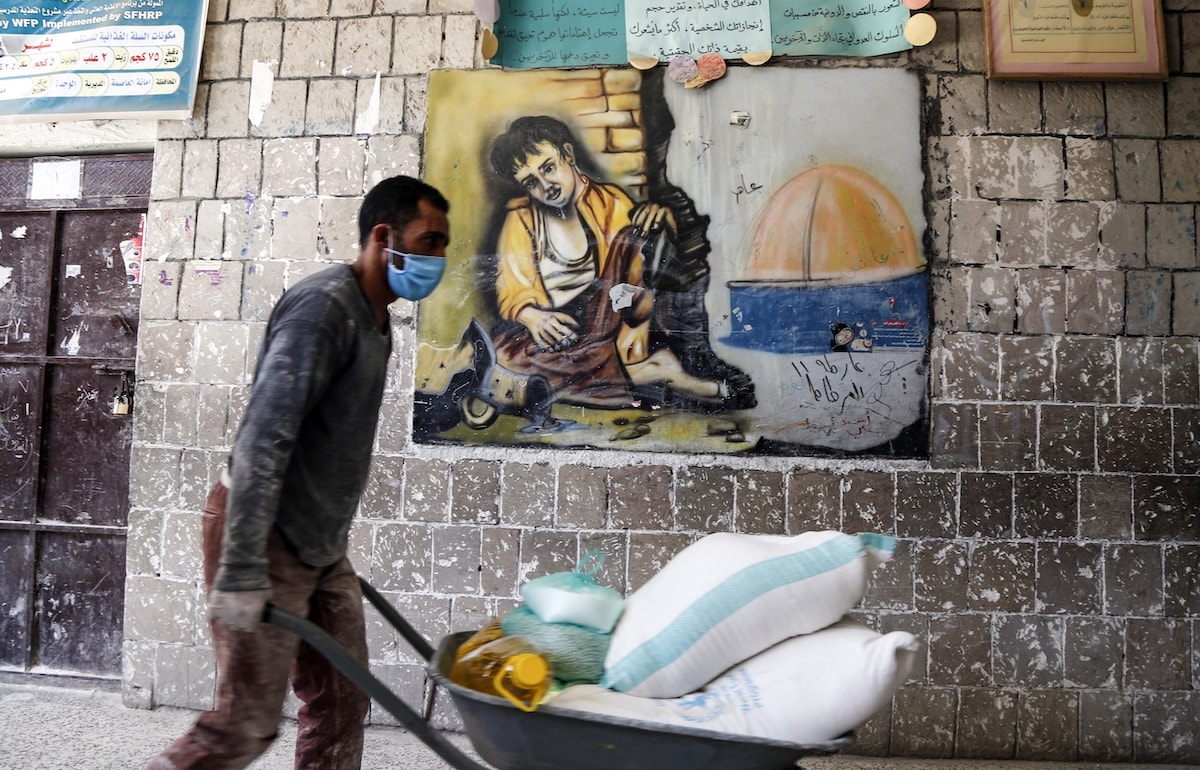
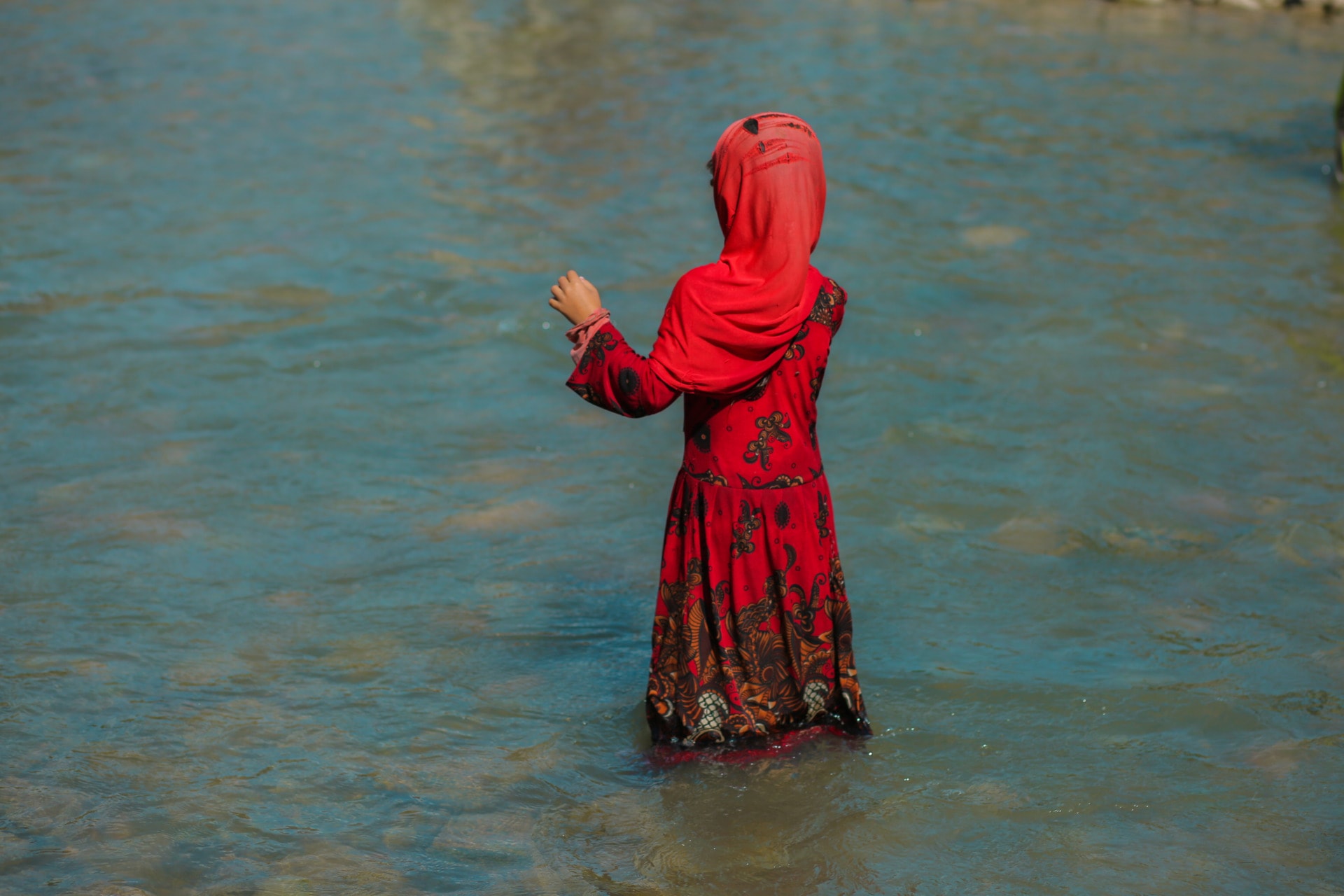
In the Photo: Food aid sent by the World Food Program (WFP) is being distributed to needy people in Yemeni capital city Sanaa on 3 June 2020. Photo Credit: Mohammed Hamoud/Anadolu Agency
Tags: Adequate Health CareAidCOVID-19DISPLACEMENTFood securityHumanitarian CrisisYemen
Previous Post

What a Difference 40 Miles Makes: Policing Mental Illness

Next Post

What COVID-19 Means for Investment in Agriculture

Related Posts

How Climate Change Could Help Foster Peace in Yemen
Climate Change

How Climate Change Could Help Foster Peace in Yemen

Yemen's tragedy is traditionally depicted through the limited perspective of humanitarian need and political divisiveness, but there is a greater...

byTareq Hassan - Executive Director of the Sustainable Development Network Canada (SDNC)
December 15, 2025
How a Framework Convention Could Address Climate and Socio-Economic Displacement
Editors' Picks

How a Framework Convention Could Address Climate and Socio-Economic Displacement

The unprecedented shift in human (im)mobility has seen over 120 million forced to flee their homes due to war, violence,...

byDr. Shepherd Mutsvara - Research Fellow at the University of Münster, Germany
December 3, 2025
Transboundary Animal Diseases Pose Urgent Threat to Global Food Security
Biodiversity

Transboundary Animal Diseases Pose Urgent Threat to Global Food Security

The Director-General of the Food and Agriculture Organization of the United Nations (FAO), QU Dongyu, urged Member Countries to reinforce...

byThe Food and Agriculture Organization of the United Nations (FAO)
December 1, 2025
Animal Health
Biodiversity

Better Animal Health Is the Low-Risk, High-Reward Climate Investment We Need

Imagine if there was a way to reduce emissions from the meat, egg and dairy sector by nearly a quarter,...

byCarel du Marchie Sarvaas
November 26, 2025
One Health
Biodiversity

Why and How to Apply the One Health Concept

One Health can be a complex and sometimes jargon-filled concept. Put simply: "One Health is the collaborative efforts of multiple...

byOne Health Initiative
November 6, 2025
Blue Economy Yemen
Biodiversity

Can the Blue Economy Save Yemen?

Editor’s note: This article is the second in a two-part series exploring the profound potential of the Blue Economy as...

byTareq Hassan - Executive Director of the Sustainable Development Network Canada (SDNC)
November 6, 2025
World Restoration Flagships
Food and Agriculture

Healthy Nature for Better Food Systems: UN Awards New World Restoration Flagships

The United Nations (UN) has named four new World Restoration Flagships under the UN Decade on Ecosystem Restoration. Recognizing global efforts...

byThe Food and Agriculture Organization of the United Nations (FAO)
October 16, 2025
blue economy
Biodiversity

Blue Economy: A Solution for Yemen?

Editor's note: This article is the first in a two-part series exploring the profound potential of the Blue Economy as...

byTareq Hassan - Executive Director of the Sustainable Development Network Canada (SDNC)
October 15, 2025
Next Post
What COVID-19 Means for Investment in Agriculture

What COVID-19 Means for Investment in Agriculture

Recent News

ESG News regarding Microsoft’s wind power deal with Iberdrola in Spain, OECD and EPO findings on the quantum sector’s maturation, SBTi’s pilot of a net-zero standard for power companies, and the European Commission’s proposed expansion of the Carbon Border Adjustment Mechanism.

Microsoft Signs 150 MW Wind Power Agreements in Spain With Iberdrola 

December 17, 2025
Australia Social Media Age Ban

What Australia’s Social Media Age Ban Really Means

December 17, 2025
women and extreme heat

Women and Extreme Heat: Simple Adaptations Make a Big Difference

December 17, 2025
  • ESG News
  • Sustainable Finance
  • Business

© 2025 Impakter.com owned by Klimado GmbH

No Result
View All Result
  • Environment
    • Biodiversity
    • Climate Change
    • Circular Economy
    • Energy
  • FINANCE
    • ESG News
    • Sustainable Finance
    • Business
  • TECH
    • Start-up
    • AI & Machine Learning
    • Green Tech
  • Industry News
    • Entertainment
    • Food and Agriculture
    • Health
    • Politics & Foreign Affairs
    • Philanthropy
    • Science
    • Sport
  • Editorial Series
    • SDGs Series
    • Shape Your Future
    • Sustainable Cities
      • Copenhagen
      • San Francisco
      • Seattle
      • Sydney
  • About us
    • Company
    • Team
    • Global Leaders
    • Partners
    • Write for Impakter
    • Contact Us
    • Privacy Policy

© 2025 Impakter.com owned by Klimado GmbH