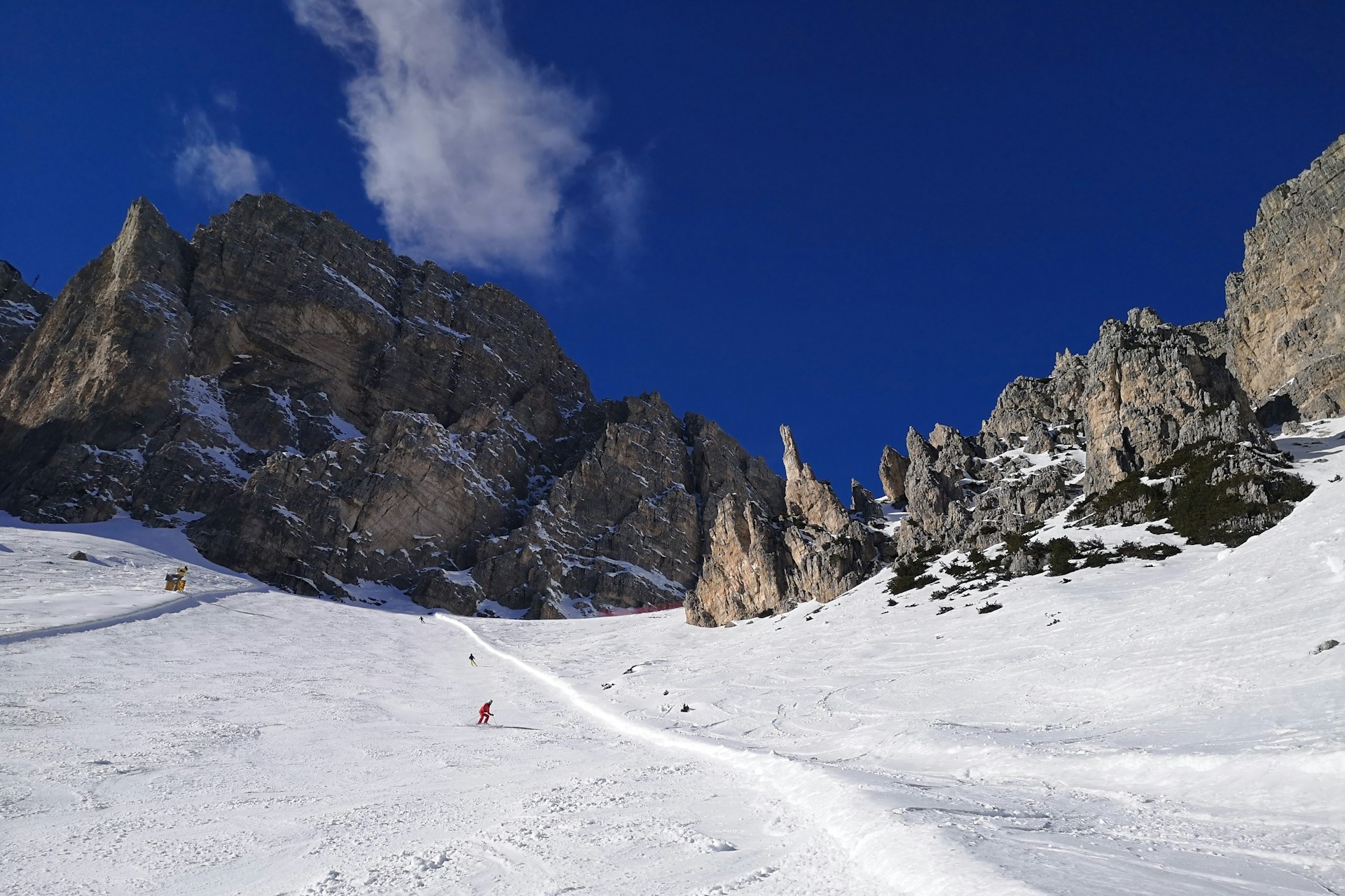
The 2026 Winter Olympic Games are set to begin in Italy next month. Scattered across towns in northern Italy, from Milan to the Dolomites, Milano Cortina 2026 faces a challenge: a lack of snow.
The Climate Change Problem
Temperatures are rising in the Alps at a rate that’s double the global average. In the Swiss Alps, there has been a decline in snow of 8 centimeters per decade, a statistic that has increased in recent years. Michael Zehnder, a researcher from the WSL Institute for Snow and Avalanche Research (SLF) in Davos, Switzerland, said:
“On average, as a result of climate change, the ambient temperature is almost two degrees Celsius warmer after the disappearance of snow cover than it was 25 years ago.”
Due to climate change and rising global temperatures, 265 ski resorts in Italy have closed their doors in the past five years. To combat this melting snow, organizers for the Olympics announced plans to create 2.4 million cubic meters of artificial snow, a process that requires 948,000 cubic meters of water.
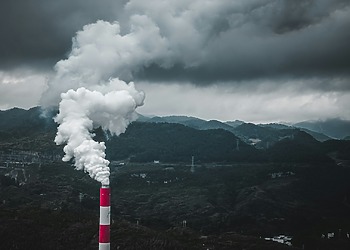
According to a new report, Olympics Torched, the Winter Games will generate 930,000 tons of CO2 emissions, which could contribute to the loss of 2.3 square kilometers of snow cover.
The report, published by Scientists for Global Responsibility and the New Weather Institute, found that just three of the Olympics’ big sponsors, Eni, Stellantis, and ITA Airways, are expected to generate 1.3 million tonnes of CO2 emissions.
These three climate-polluting sponsors will more than double the event’s carbon footprint, contributing to 5.5 square kilometers of snow loss, equivalent to 3,000 Olympic-sized ice skating rinks.
Sponsorship Emissions: The Main Offenders
The Olympics famously attract people from every corner of the world. About 410,000 tons of the estimated 930,000 tons of CO2 will come from spectator travel. This year’s sponsor is ITA Airways, Italy’s national airline. Although the airline is taking steps toward becoming carbon neutral through offsetting emissions, experts warn that this is not enough. In addition to carbon emissions, airline travel also releases gases such as nitrous oxide and sulfur dioxide into the atmosphere.
Italian automaker Stellantis is among the top three polluting sponsors for the Olympic Games. With 14 automotive brands, from Fiat to Maserati, Stellantis reported 415,000,000 metric tons of carbon emissions in 2024 across Scopes 1, 2, and 3. The company ranked second in Scope 1 emissions that year, closely behind Chinese automaker BYD.
The biggest polluter sponsoring the 2026 Winter Olympics is Eni, an Italian oil and gas giant. The report authors estimate that the sponsorship with Eni will produce about 693,000 tons of CO2, leading to 1.7 square kilometers of snow loss and 11 million tons of glacier ice melting.
Related Articles
Here is a list of articles selected by our Editorial Board that have gained significant interest from the public:
The Solution: Ending Sponsorships with Polluters
The authors of the Olympics Torched report recommend that the International Olympic Committee (IOC) end its sponsorship deals with these heavily polluting companies and replace them with lower-carbon companies.
Researchers highlight the importance of avoiding carbon offsets and claiming carbon neutrality. They also call on athletes and individuals to speak out against the high-carbon industries that sponsor the Games.
From the birth of the modern Olympics in 1896 until 1987, tobacco companies were major sponsors. In 1987, John Read, a physician and father of Canadian Olympic skier Ken Read, started a campaign to ban tobacco and smoking advertisements. That year was the first smoke-free Olympics.
John Read’s campaign is a prime example of the power of speaking out. Just as tobacco sponsorships were cut out in the 1980s, the IOC should ban fossil fuel and other high-carbon emitters from sponsoring the games.
Editor’s Note: The opinions expressed here by the authors are their own, not those of impakter.com — In the Cover Photo: Olympic skier flies through the air. Cover Photo Credit: Wikimedia Commons.