As women face unprecedented upheavals, the development community has an opportunity to not only meet immediate needs, but to support a more innovative, equitable future.

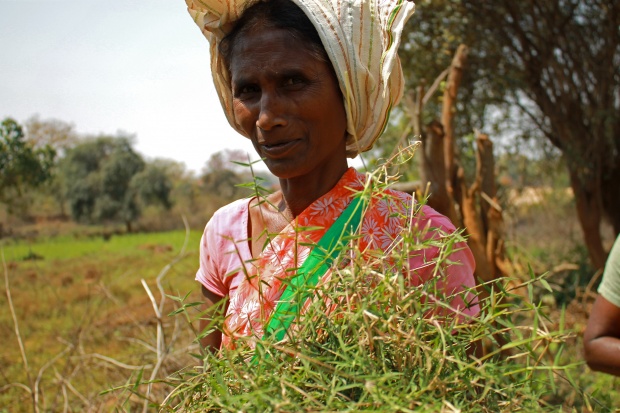
While agriculture is the primary source of income and food security for billions of people globally, the sector suffers from a gender gap which often leaves women with limited access to resources, finance, decision-making spaces, and information. Generally, these limitations contribute to the differences in agricultural productivity between women and men. During times of crisis, however, these barriers leave women with fewer resources to manage shocks and makes recovery an uphill battle.
System shocks, such as COVID-19, illustrate the fragility of global economic, political, and social systems and may undo much of the gender-related progress made over the last decade. For women in developing countries, who struggled to meet the needs of their families before the pandemic, COVID-19 has made their situations even more untenable. These upheavals are taking place against the backdrop of climate change, which contributes its own set of shocks through extreme weather events and shifting, long-term weather patterns.
Without a doubt, the issues that women farmers face are serious and will require coordinated efforts across sectors to overcome. It is too simplistic, however, to view women only through the lens of vulnerability. For example, research which links women leaders with more gender equitable outcomes during crisis, including successful country-level responses to COVID-19, illustrate how women are catalysts for rebuilding more equitable, resilient systems.
Gender and system shocks
In most countries, women are the primary caretakers for the sick, both professionally as healthcare workers and in the home. In the case of COVID-19, this puts them on the frontlines of a deadly, novel disease, while also taking up an enormous amount of time and energy. Closed borders and restrictions on movement place burdens on women and their ability to earn an income. Families may experience a loss of financial security as assets are sold to cope with income loss. Women also face higher rates of domestic violence, food insecurity, and an overall loss of traction in gender equality gains.
Related Articles: The Effects of Globalisation on Diversity | The Virtual Island Summit | Impact of Climate Change on the Economy
While the world is focused on COVID-19, climate change remains a stressor, especially for those who rely on natural resources to meet their needs. For example, weather shifts stress crops and animals, making agricultural activities less productive. Nearby water sources may be depleted, forcing women and girls to walk long distances to locate water for cooking, cleaning, and drinking. Climate-induced disasters, such as floods, can displace entire populations, making them even more susceptible to disease.
To address these concerns and possibilities, the CGIAR GENDER Platform recently hosted a virtual conversation to discuss gender considerations in agriculture during crises.
#GenderConversations
The virtual conversation, the first in a series hosted by the CGIAR GENDER Platform, took place on 12 Aug. and included presentations by gender experts as well as interactive breakouts for participants.
Sophia Huyer, Gender and Social Inclusion Research Leader with the CGIAR Research Program on Climate Change, Agriculture and Food Security (CCAFS), stressed the need to support women producers, especially through the promotion of women in decision-making spaces and agricultural innovations which reduce labor. Building on this, Maureen Miruka, Director for Gender, Youth and Livelihoods with CARE USA, pointed to the work that still needs to be done in shifting social norms towards equitable workloads.
“To ease workload for women, it is not only important to provide tools to help but also having deeper #gender conversations along workload at community level is critical ” @MaureenMiruka @CARE #GenderinAg #Covid-19 #climatechange pic.twitter.com/5d995Uyqdv
— CGIAR GENDER (@CGIARgender) August 12, 2020
Miruka spoke about the centering of women in her work at CARE USA, explaining the need for knowledge about gender needs at the household level. For instance, understanding how household assets are divided, decisions are made, and women access productive resources, help organizations more effectively meet the needs of women during crisis. Huyer also stressed the need for more research to support women producers to meet the quality and quantity demands of the market at moments of crisis.
As the development community continues to grapple with the realities of COVID-19, including the implications for entire systems, stakeholders have an opportunity to not only meet the needs of vulnerable populations, but to rethink the future.
About the author: Kathlee Freeman is a Communications Consultant with the Gender and Social Inclusion Research Leader for the CGIAR Research Program on Climate Change, Agriculture and Food Security (CCAFS)
Editor’s Note: The opinions expressed here by Impakter.com columnists are their own, not those of Impakter.com.