Impakter
  • Environment
    • Biodiversity
    • Climate Change
    • Circular Economy
    • Energy
  • FINANCE
    • ESG News
    • Sustainable Finance
    • Business
  • TECH
    • Start-up
    • AI & Machine Learning
    • Green Tech
  • Industry News
    • Entertainment
    • Food and Agriculture
    • Health
    • Politics & Foreign Affairs
    • Philanthropy
    • Science
    • Sport
  • Editorial Series
    • SDGs Series
    • Shape Your Future
    • Sustainable Cities
      • Copenhagen
      • San Francisco
      • Seattle
      • Sydney
  • About us
    • Company
    • Team
    • Global Leaders
    • Partners
    • Write for Impakter
    • Contact Us
    • Privacy Policy
No Result
View All Result
Impakter logo
No Result
View All Result
The Women of Bihani Dairy in Nepal Give Back to Community, Adapt to Pandemic Changes

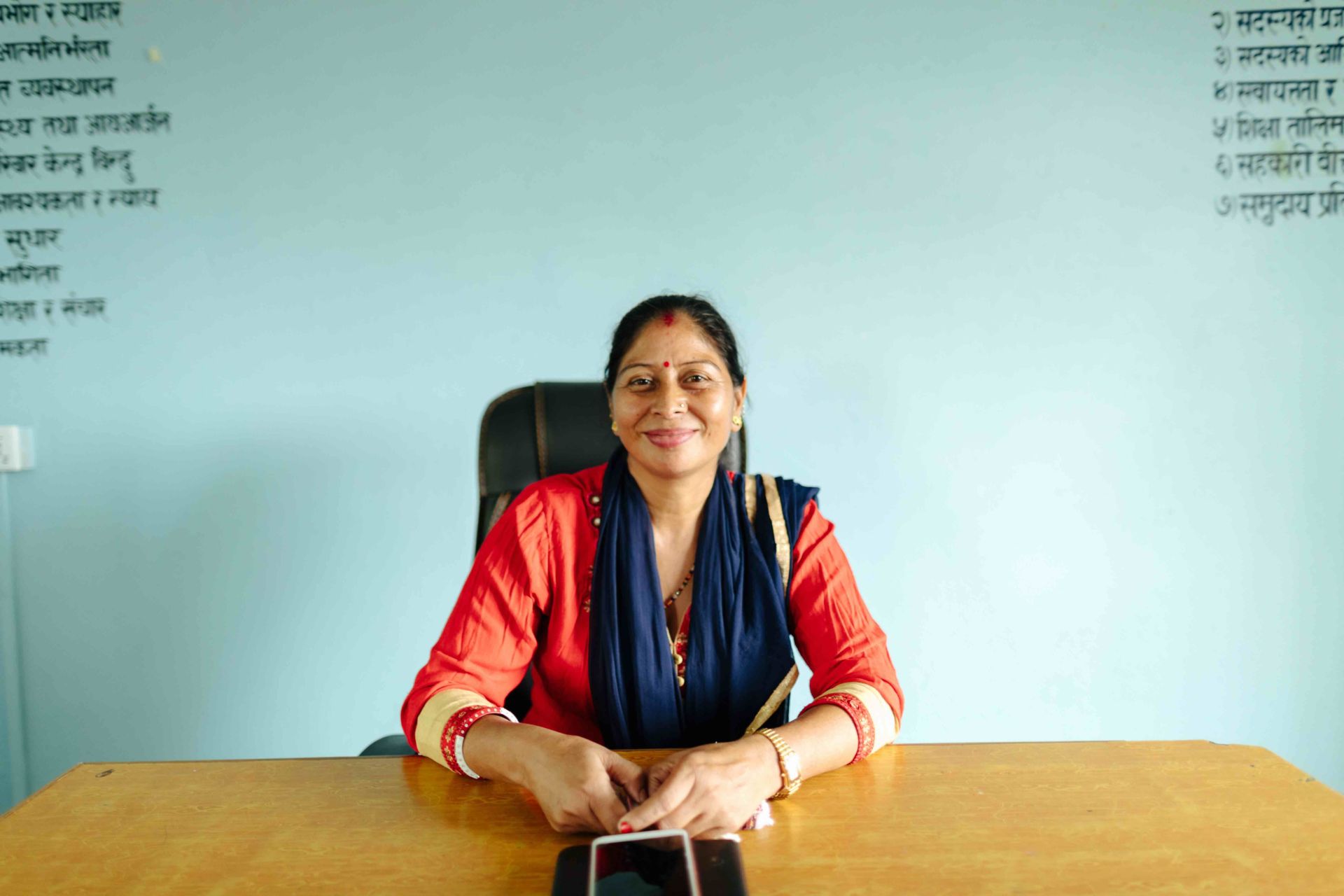
Portraits of Tulsi Thapi in Kopawa, Nepal

The Women of Bihani Dairy in Nepal Give Back to Community, Adapt to Pandemic Changes

Jason WoodsbyJason Woods
March 19, 2021
in Climate Change, Environment, Equal Rights, Society
0

This article is part of an editorial collaboration with Heifer International. It was first published on the Heifer International blog. 


For many years, Tulsi Thapa felt like she was alone. Like most women in Kopuwa, Nepal, her husband did not allow her to leave home often, and she was dependent on him for income.

But she was far from alone — she found five other women in her community who felt similarly and wanted to do something about it. After starting to work with Heifer Nepal, Thapa and her neighbors formed a group dedicated to sharing labor and saving money to invest in themselves and the community. Then they helped other women do the same.

“We realized that we couldn’t work singlehandedly, that we had to work together,” Thapa said. “We got to know our sisters. It unites us.” Soon after, with 64 savings groups formed, the women unified further by starting a cooperative, with Thapa serving as chairperson.

We realized that we couldn’t work singlehandedly, that we had to work together. We got to know our sisters. It unites us.

— Tulsi Thapa

To put back savings, the women needed a steady source of income. “We should become entrepreneurs, we realized,” Thapa said. The cooperative assessed the needs of their area and noted that while many farmers owned dairy cows and buffalo, there was nowhere to store the milk. That meant much of the milk went to waste, and farmers generally sold their milk to traders, who paid much less than market value. So, with the support of Heifer Nepal, the cooperative worked with the municipality to convert a vegetable collection center into Bihani Dairy.

In the Photo: The leadership team for Bihani Dairy stands outside their facility several months before the COVID-19 pandemic reached Nepal. Photo Credit: Joe Tobiason.

The dairy started out collecting just 150 liters of milk a day, and the women traveled to each farm to convince farmers to sell their milk to Bihani. But after only four years, Bihani’s production increased to 1,850 liters, and now the farmers come to them.

“Many people didn’t trust us since it was an exclusively women-led business,” said Mina Ale, cooperative manager. “But we faced this challenge. Now people respect us.” Now, Ale said, competition is becoming an issue since, after seeing the success of Bihani, three other groups have opened dairies.

In the Photo: Mina Ale distributes ice cream outside the Bihani facility in late 2019. Photo Credit: Joe Tobiason.

One reason for the cooperative’s success is their adaptability. When the dairy first began operation, it processed and sold paneer, yogurt and ghee in addition to milk. At the suggestion of a Heifer technician, Bihani added kulfi, or ice cream, to its list of products. The climate of Nepal’s flatlands, where summers can get as hot as 108 degrees Fahrenheit, created a loyal customer base for the product, which was previously scarce in the area. Now Bihani kulfis are sold at local markets, in a nearby school and via rickshaw.

Since it was just starting, we named the dairy Bihani (which means “morning”).  It’s also a sign of a good thing beginning.

— Tulsi Thapa

Adaptability became even more crucial in March 2020, when the COVID-19 pandemic led to a nationwide lockdown. Nepal’s Lumbini Province, where Bihani is located, was one of the regions affected the most. The cooperative quickly adopted social distancing measures so they did not miss a single day of milk collection, although they had to reduce milk intake to 1,200 liters daily. They also encouraged farmers to make curd and clarified butter to reduce any excess milk and worked with local authorities to make sure their farmers could procure feed and forage for their livestock during the lockdown.

In the Photo: Mina Kandel rides the ice cream rickshaw outside the Bihani cooperative in Kopawa, Nepal. Photo Credit: Joe Tobiason.

As a social enterprise, Bihani Dairy invests most of the money it earns back in the community, with the rest reserved for further improvements for the business. Before the pandemic, the group put together a fund to financially support families who lost a loved one and supported new mothers by creating a savings account for their newborn children.


Related Articles: How the Women of Rural Senegal Are Fighting Drought, Hunger and Inequity | Farmers in Ecuador Innovate a Whole New Food System

Recently, the group used some of their funds to create both low-interest loans for struggling farmers and a contribution of 10,000 rupees, or $84, to the municipality’s COVID response fund. Bihani also connected with other like-minded institutions in the area to form the COVID Control Group, which raised funds for relief and helped establish a 20-bed quarantine facility.

“We are exploring creating a high-volume storing system so we don’t have to suffer like we did this time due to COVID-19,” Thapa said. “We are also in the process of diversifying the milk into various products in a larger volume so that milk does not have to go to waste. We are hopeful that the future holds better prospects for us.”

Part of that future includes expanding the scope of Bihani Dairy. As of now, the majority of milk collected is sold to a larger regional dairy. The women of Bihani are preparing their facility to take on more of a processing role, and they are also creating a brand for Bihani Dairy to then market products in a wider range. In Nepali, “bihani” means “morning,” and that imagery is included in the logo.

“Since it was just starting, we named the dairy Bihani,” Thapa said. “It’s also a sign of a good thing beginning.”


Editor’s Note: The opinions expressed here by Impakter.com columnists are their own, not those of Impakter.com. — In the Featured Photo: Portrait of Tulsi Thapi in Kopawa, Nepal. Featured Photo Credit: Joe Tobiason.

Tags: COVID-19Heifer InternationalHeifer NepalNepalpandemicwomen
Previous Post

Tackling Sustainability, Food, and Social Inequalities

Next Post

The Most Powerful Tool to Save Yourself (and Your Team) from Burnout

Related Posts

women and extreme heat
Climate Change

Women and Extreme Heat: Simple Adaptations Make a Big Difference

One of the more damaging impacts of climate change is extreme heat. From Spain to Bolivia to Burkina Faso, unusual...

byKate Schecter - CEO of World Neighbors
December 23, 2025
One Health
Biodiversity

Why and How to Apply the One Health Concept

One Health can be a complex and sometimes jargon-filled concept. Put simply: "One Health is the collaborative efforts of multiple...

byOne Health Initiative
November 6, 2025
financial bubble
ESG FINANCE

Waiting for a Bubble to Burst: Decoding the Next American Financial Crisis

For much of the last century, financial logic was governed by a simple, foundational rule: equities for growth, representing a...

byDeepanshu Mohan - Professor of Economics and Dean, IDEAS, Jindal School of Liberal Arts and Humanities, O.P. Jindal Global Universityand1 others
November 5, 2025
Nepal gen z
Politics & Foreign Affairs

Gen-Z’s Challenge to Elite Dominance in South Asia

In the tenuous history of Nepal’s still-emerging democracy, September 8, 2025, the first time young demonstrators broke into the prime minister’s official...

byDeepanshu Mohan - Professor of Economics and Dean, IDEAS, Jindal School of Liberal Arts and Humanities, O.P. Jindal Global University
September 29, 2025
Avian Influenza
Health

Avian Influenza: First Global Dialogue Targets the Rising Pandemic Threat

In an unprecedented response to the rapid global spread of high pathogenicity avian influenza (HPAI), stakeholders and experts from across...

byThe Food and Agriculture Organization of the United Nations (FAO)
September 12, 2025
education girls
Education

The World Is Failing Girls. We Must Change the Rules.

In 2025, the systems meant to protect girls are faltering. Global aid is in retreat. Gender rights are being rolled...

byLena Alfi - CEO of Malala Fund
June 30, 2025
Karnali river
Environment

The Fight to Save Glaciers and Free-Flowing Rivers From False Climate Solutions

The United Nations' theme for World Water Day this year is glacier preservation — an important reminder of the need...

byMarc Yaggi - CEO of Waterkeeper Alliance
March 21, 2025
Water women
Equal Rights

Turning Challenges Into Choices: How Access to Safe Water Empowers Women

Working alongside women across Latin America, I have seen how access to safe water reshapes daily life — reducing hours...

byRocio Cavazos - Regional Director, Latin America, Water.org
March 7, 2025
Next Post
The Most Powerful Tool to Save Yourself (and Your Team) from Burnout

The Most Powerful Tool to Save Yourself (and Your Team) from Burnout

Recent News

End-to-End Logistics

Understanding the Role of Transportation in End-to-End Logistics

January 22, 2026
Work Visa Agents in Australia

10 Trusted Skilled and Work Visa Agents in Australia for Visa Applications

January 22, 2026
ESG News regarding China’s wind power strategy, global renewable energy leadership, U.S. criticism at Davos, and the future of low-carbon energy cooperation

China Defends Wind Power Strategy at Davos

January 22, 2026
  • ESG News
  • Sustainable Finance
  • Business

© 2025 Impakter.com owned by Klimado GmbH

No Result
View All Result
  • Environment
    • Biodiversity
    • Climate Change
    • Circular Economy
    • Energy
  • FINANCE
    • ESG News
    • Sustainable Finance
    • Business
  • TECH
    • Start-up
    • AI & Machine Learning
    • Green Tech
  • Industry News
    • Entertainment
    • Food and Agriculture
    • Health
    • Politics & Foreign Affairs
    • Philanthropy
    • Science
    • Sport
  • Editorial Series
    • SDGs Series
    • Shape Your Future
    • Sustainable Cities
      • Copenhagen
      • San Francisco
      • Seattle
      • Sydney
  • About us
    • Company
    • Team
    • Global Leaders
    • Partners
    • Write for Impakter
    • Contact Us
    • Privacy Policy

© 2025 Impakter.com owned by Klimado GmbH