

Today’s ESG Updates
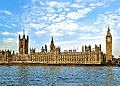
- Britain’s Biggest Carbon Emitter Signs a £20 Billion Data Centre Deal: Drax supplies land and grid connections at its North Yorkshire site, where up to 100MW of computing should run from early 2028.
- No Deadlines in Brazil’s Blueprint for Leaving Fossil Fuels Behind:The COP30 presidency sets out voluntary steps on flaring, subsidies and renewables, leaves each country to judge its own dependence, and puts forest financing needs at $300 billion a year by 2030.
- Six Million Tonnes of Standing Forest, Priced and Sold: Gabon’s ART-TREES credits qualify under CORSIA and reach Germany’s SEFE by the first quarter of 2027, with proceeds held in a dedicated account until national rules on sharing them take effect.
- UK Puts a Number on Fifteen Years of Climate Finance: The government credits £11.6 billion of recent spending and two earlier pledges with 201 million tonnes of emissions cut or avoided since 2011.
Britain’s biggest carbon emitter signs a £20 billion data centre deal
Up to 100 megawatts of computing power is meant to be running at Drax’s North Yorkshire site by the first quarter of 2028. Eventually, the data centre could draw more than 1 gigawatt, which would make it the largest in the country. Drax announced the project on Tuesday with Brookfield, an infrastructure investor, and Radiant, which builds AI platforms, and put the potential investment above £20 billion.
At first, Drax is only the landlord. It provides the site and the grid connections. Supplying the data centre with its own electricity is a later step, planned for the early 2030s, and the regulatory side has to be cleared before 2031 if Drax wants that revenue. After the announcement, the share price gained almost 9% and the company is now valued at nearly £3 billion.
Then there is the plant itself. It burns wood pellets, covers nearly 5% of UK electricity demand and, by most analysts’ reckoning, emits more carbon dioxide than any other site in the country. None of that shows up in the government’s accounts. Drax’s case is that the forests supplying its pellets soak up the same carbon again. Ministers have promised the plant a smaller role anyway, and its £2 million-a-day support halves from 2027.
Will Gardiner, Drax’s chief executive, said the deal would “protect hundreds of jobs.” The electricity to run it still has to come from somewhere.
Klimado – Navigating climate complexity just got easier. Klimado offers a user-friendly platform for tracking local and global environmental shifts, making it an essential tool for climate-aware individuals and organizations.
No deadlines in Brazil’s blueprint for leaving fossil fuels behind
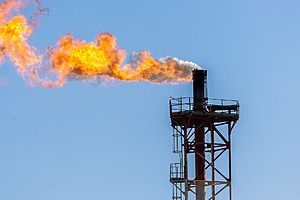
Two documents landed on Tuesday. One covers moving energy systems off coal, oil and gas; the other, deforestation. Brazil promised both at COP30 in Belém, when delegates failed to agree on fossil fuel language and the presidency offered roadmaps as a compromise.
Neither has a deadline, and neither binds anybody. Countries work out their own level of dependence and pick from the measures on offer. Brazil puts flaring and venting near the top; methane warms the atmosphere about 80 times as strongly as carbon dioxide, so stopping it pays off quickly. Cutting fossil fuel subsidies and adding renewable capacity are in there too.
“They are documents of implementation,” said André Corrêa do Lago, who presided over COP,30. He wants finance, energy, transport and infrastructure ministries to take them on rather than climate negotiators.
The forest roadmap is mostly about money. Around $300 billion a year will be needed by 2030 and $500 billion by 2050. Roughly $85 billion is available now. It also notes how little is checked on goods crossing from forested countries into consumer markets. Joeri Rogelj of Imperial College London called the documents useful but said they set no pace.
Related Articles
Here is a list of articles selected by our Editorial Board that have gained significant interest from the public:
Six million tonnes of standing forest, priced and sold
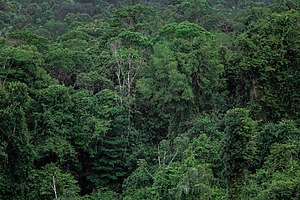
Six million tonnes is the size of the forest carbon deal Gabon has signed with SEFE, the German state-owned energy company, and the government says nothing like it has been done before in Africa at the state level. The credits are due to be handed over by the end of the first quarter of 2027. What SEFE is paying was not disclosed.
Two labels make this sale unusual. The credits are certified under ART-TREES, and they qualify under CORSIA, the scheme airlines use to offset emissions from international flights. Most African credits never reach a compliance buyer. They come from forests, farming, and land use, and they sell on voluntary markets, as Anthony Nyong of the African Development Bank pointed out last year.
Gabon falls into the High Forest, Low Deforestation category, so the credits rest on leaving standing forest alone rather than growing anything new. The revenue will sit in a dedicated account. It stays there until the country sets rules on who gets what, including local communities.
The Gabonese Agency for the Development of the Green Economy announced the agreement on Tuesday. Africa’s 54 countries emit little by global standards and get hit hardest.

UK puts a number on fifteen years of climate finance
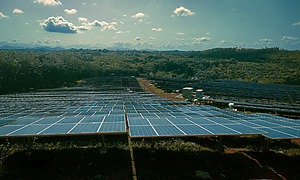
201 million tonnes is the UK government’s estimate of the greenhouse gas emissions its international climate finance has cut or avoided since 2011, published on Wednesday. The programmes it counts include swapping fossil fuels for renewables and slowing deforestation. Officials expect the running total to grow, saying “the expected total lifetime results are much higher than the results achieved so far.”
Other numbers came with it. 159 million people helped to adapt. Almost 6GW of clean generation was built. Improved energy access for 92.7 million people.
The spending itself came in three pledges: £3.9 billion for 2015-16, £5.8 billion for 2020-21, then £11.6 billion ($15.6 billion) last year. All three were met, the government says. It did not publish a breakdown of where the money actually went, which the cross-party International Development Committee asked for in September.
More came from elsewhere. £12.6 billion from governments abroad, UN bodies and development banks, and £13.4 billion from banks, companies, NGOs and the voluntary carbon market. Mitigation took 60% of the overall total, adaptation 8%. Private money leaned harder towards mitigation still, at 76%. COP31 opens in Antalya next week, and finance will come up again.
Editor’s Note: The opinions expressed here by the authors are their own, not those of impakter.com — Cover Photo Credit: Tyler