


Today’s ESG Updates
- The World’s Wettest Storms Are Getting Shorter and Fiercer: A study of more than 19,000 rain gauges finds the storms that deliver about half of global rainfall have lost roughly 86 minutes per decade since 1980.
- Chernobyl’s Damaged Dome Needs €500 Million to Fix: The EBRD puts the repair bill for the New Safe Confinement, hit by a Russian drone in February 2025, at about €500 million, with G7 states already pledging €260 million.
- Brussels Turns to AI to Simplify EU Law: The Commission uses tools that aim to help staff find overlaps and duplicates across legal acts. It estimates its 12 omnibus packages will save €22.3 billion.
- NSW Inquiry Says Data Centre Approvals Ignore the Bigger Picture: The report finds approvals fail to weigh cumulative effects on water, power and infrastructure, yet the committee voted 6-1 to drop moratorium recommendations.
Half of global rain now arrives in shorter storms
The planet’s heaviest rainstorms now release their water faster than they did four decades ago. A study in Earth’s Future by Chiyuan Miao and colleagues reviewed daily data from over 19,000 rain gauges from 1980 to 2022.
Roughly half of annual global precipitation arrives in about nine multi-day storms, which together last close to 28 days. Each intense storm has lost about 86 minutes per decade, so total delivery time has dropped by over 9.5 hours. All continents show the shift, but Europe and South America lead, with the wettest storms shortened by up to 144 minutes per decade.
The same water now falls in a tighter window, which alters flash flood and drought risk, with effects that differ by region. As a result, water supply, crop yields, soil loss, and wildfire exposure could all shift.
Klimado – Navigating climate complexity just got easier. Klimado offers a user-friendly platform for tracking local and global environmental shifts, making it an essential tool for climate-aware individuals and organizations.
Chernobyl safe confinement repair faces €500 million shortfall, EBRD warns
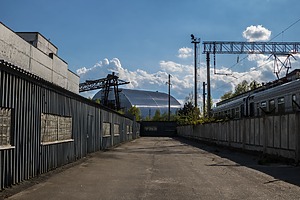
The European Bank for Reconstruction and Development needs about €500 million to repair the protective dome over Chernobyl’s Reactor 4.
A Russian drone strike in February 2025 hit the New Safe Confinement, the steel arch that allows safe management of the radioactive remains. Bank president Odile Renaud-Basso says there is no immediate danger, but repairs must be done before 2030. If they are not, moisture could corrode the infrastructure beneath the arch and make the radioactive material harder and costlier to manage.
G7 states pledged €260 million in October, over half the estimated cost, so a gap remains. A Paris conference on November 9 aims to draw more pledges, and the bank hopes to award contracts and start the main work in 2028, a task expected to last about two years. Renaud-Basso calls it a matter of global nuclear safety and trust, not only a Ukrainian concern.
Related Articles
Here is a list of articles selected by our Editorial Board that have gained significant interest from the public:
EU Commission uses AI to simplify laws as infringement cases hit 10-year high

The European Commission now uses artificial intelligence tools to draft new laws and simplify old ones, its annual simplification report states. The tools aim to help staff find overlaps, inconsistencies, and duplicates. The Commission also adds legal training and staff to keep new rules clear.
Commissioner Valdis Dombrovskis said small business owners now spend less time on forms. The Commission estimates the 12 omnibus packages so far will save the EU economy €22.3 billion. Between August 2025 and July 2026, it opened 874 infringement procedures to press governments to apply EU laws properly, the most in 10 years. It expects a pact with governments by year-end to stop extra-national requirements.
Dombrovskis warned that governments often water down proposals, so some omnibuses may deliver much less simplification than planned. Parliament President Roberta Metsola urged care and said AI should not replace critical thought, and democratic accountability must stay.

Australia data centre inquiry flags weak approval checks, skips moratorium

A cross-party inquiry in New South Wales has found that data centre approvals fail to weigh combined effects on resources and infrastructure. Projects are assessed mostly alone, though impacts add up across communities and other industries.
The report adds that the state has no unified plan to handle effects on water, power and infrastructure, and that current guidelines may understate future power demand and water limits. Yet the committee did not call for a halt to approvals. It urged a full strategy and closer coordination across the approvals process.
Members voted 6-1 to drop recommendations for state and national moratoriums. Chair Abigail Boyd, a Greens member who cast the lone vote to keep them, wrote that an “AI-fuelled data centre frenzy” threatens to consume vast volumes of energy and water. NextDC and OpenAI await approval for a data centre, and a state election is due next March.
Editor’s Note: The opinions expressed here by the authors are their own, not those of impakter.com — Cover Photo Credit: Th2city Santana