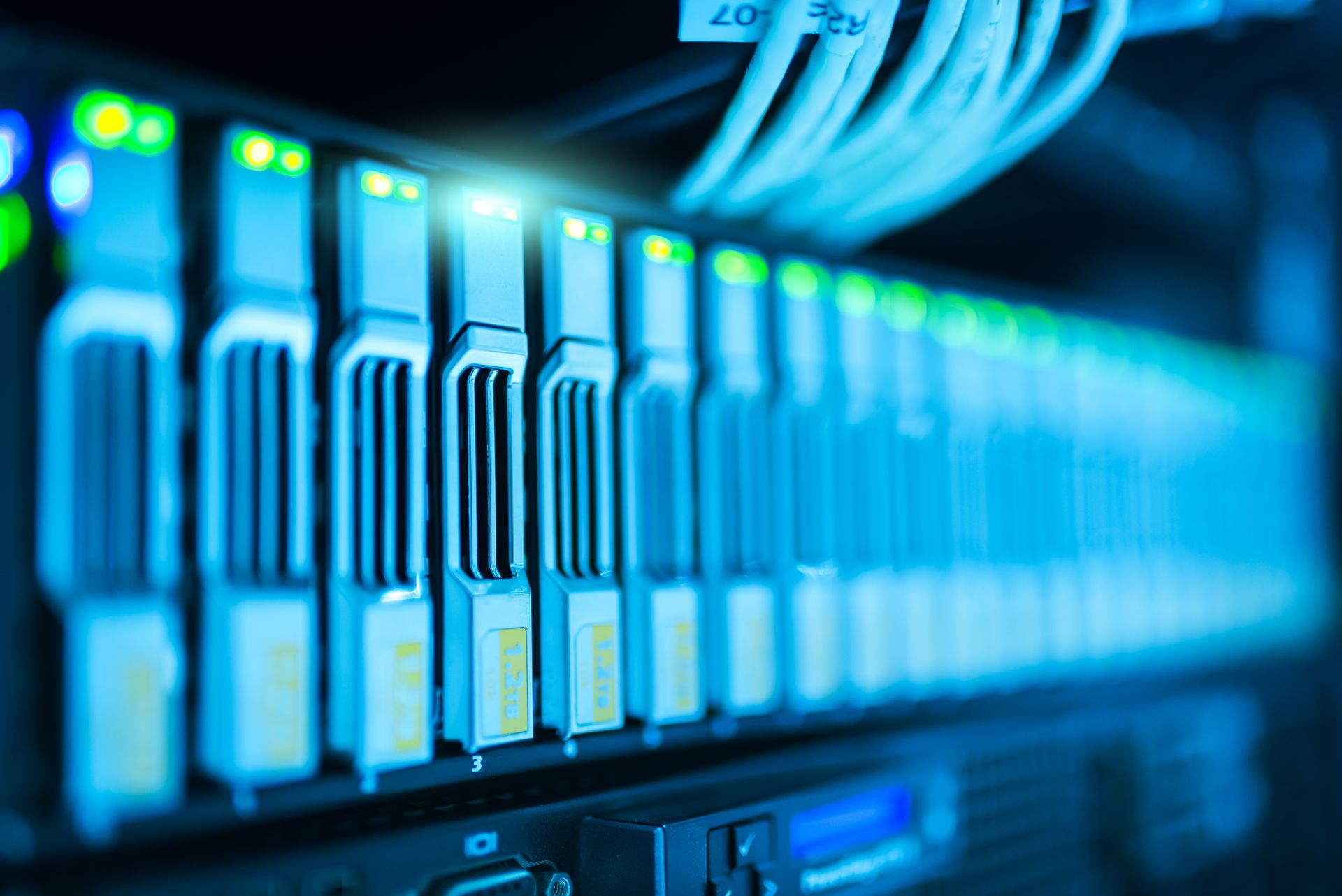
Most digital services feel intangible to the people using them. The infrastructure that makes them possible is not. Every cloud application, artificial intelligence (AI) model, streaming platform, and online transaction depends on buildings filled with computing equipment, power systems, cooling infrastructure, networks, and increasingly dense hardware.
That physical footprint is growing quickly. The International Energy Agency (IEA) estimates that electricity use by data centers will rise from about 485 terawatt-hours (TWh) in 2025 to 950 TWh in 2030, almost doubling in five years. Electricity demand from AI-focused data centers is expected to triple over the same period. By 2030, data centers could account for about 3% of global electricity demand.
That raises a less comfortable question about data-center sustainability. Improving the efficiency of individual facilities matters, but it does not tell us whether those gains can keep pace with the amount of new computing infrastructure being added. The environmental pressure can also move from one part of the system to another.
The growth problem is bigger than efficiency
A more efficient server does not necessarily reduce total electricity use when thousands of additional servers are installed.
The issue becomes harder to ignore as AI increases both the amount and density of computing. The IEA expects data-center electricity use to reach about 3% of global electricity demand by 2030, while AI-focused data centers are expected to grow considerably faster than the sector overall.
MarkNtel Advisors‘ February 2026 research shows how quickly investment in the greener side of the sector is moving. Its Green Data Centers Market study projects the market to rise from $52.76 billion in 2026 to $235.4 billion by 2032, representing a 28.31% compound annual growth rate (CAGR). North America is identified as the largest regional market.
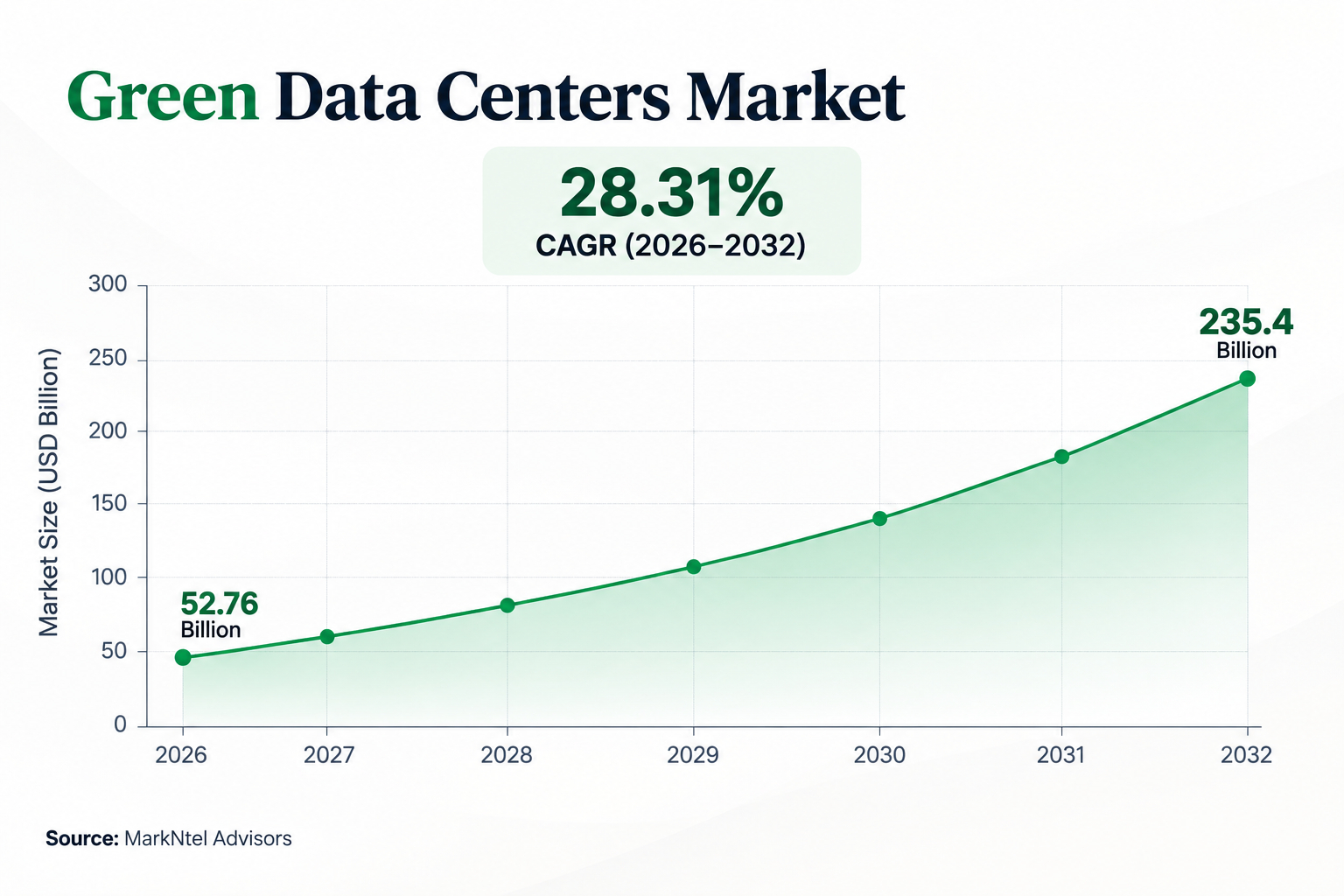
That growth reflects genuine changes in the way operators build and run facilities. Renewable electricity, lower-energy systems, improved cooling and more efficient designs are all receiving greater attention. But there is another side to the same numbers. The market for greener data centers is expanding partly because the underlying data-center footprint is expanding.
That makes the following questions important:
- Total electricity demand: How much additional power will new capacity require?
- Location: What are the grid and water conditions where the facility is being built?
- Hardware intensity: How much equipment is needed to support the new capacity?
- Replacement cycles: How long will that equipment remain in service?
- Local resources: Can surrounding infrastructure absorb the additional demand?
Efficiency remains necessary. It is simply harder to treat it as the whole answer when the amount of computing infrastructure is rising so quickly.
Power is becoming a location constraint
Electricity is becoming part of the siting decision, not just an operating cost.
The IEA’s 2026 electricity outlook says data centers could account for about half of U.S. electricity-demand growth through 2030. In 2025 alone, data centers accounted for around 50% of total electricity-demand growth in the United States. A June 2026 assessment from Lawrence Berkeley National Laboratory (LBNL) estimates that data centers could account for 11.8% of total U.S. electricity consumption by 2030. Its modeled scenarios range from 9.5% to 15.3%.
These figures do not mean every region will face the same level of pressure. They do show why access to electricity is becoming an important part of deciding where new computing capacity can be added.
For a new facility, several power questions need to be answered:
- Grid capacity: Can the local network take on a large new load?
- Generation mix: What sources are actually supplying the electricity reaching the site?
- Transmission: Can additional generation reach the data center without creating prolonged grid constraints?
- Reliability: What backup and firm-power systems are needed to keep the facility operating around the clock?
A data center can buy renewable electricity and still require new transmission capacity, substations, backup generation, or other grid investment.
Where the facility is built also affects its environmental impact. The same technical design can place very different demands on the wider system depending on the local grid, available transmission capacity, and electricity mix.
That is why the question is not only how efficiently a data center uses electricity. It is also whether the surrounding power system can accommodate the load.
Where the sustainability trade-offs occur
| System | Main pressure | What changes the outcome |
| Electricity | Higher and more concentrated loads | Grid mix, generation, transmission, and storage |
| Water | Cooling and electricity-related water use | Climate, cooling design, utilization, and grid water intensity |
| Construction | Materials and embodied emissions | Building design, equipment and material choices |
| Hardware | Manufacturing and replacement | Equipment efficiency, utilization and refresh cycles |
| End of life | E-waste and resource loss | Reuse, refurbishment, recovery and recycling |
These pressures are connected. A measure that improves one area can have an effect somewhere else. Water shows this particularly well.
Water makes the sustainability question local
Global estimates are useful for showing the scale of data-center activity. They are less helpful when the question is whether a particular facility is appropriate for its location.
A 2025 Lawrence Berkeley National Laboratory study found that workload-level water use can vary by more than 10,000-fold. The study identified server efficiency, electricity-grid water consumption, server utilization, cooling system type, infrastructure efficiency, climate, inactive servers and hardware refresh cycles among the main factors behind the difference.
That makes broad claims about “the water footprint of AI” difficult to assess without knowing how and where the computing is taking place. The practical questions are local:
- What cooling system does the facility use?
- What is the climate where it operates?
- How water-intensive is the electricity supplying it?
- How heavily are the servers being used?
- What is the local availability of water, and what other users depend on it?
Cooling technology matters, but it is only one part of the calculation. Electricity generation can carry an indirect water footprint, while climate affects how much heat a facility needs to reject and how hard its cooling system has to work.
There is therefore no single cooling arrangement that will use the least water in every location. The LBNL study points instead to a combination of factors. Equipment efficiency, server utilization, cooling technology, infrastructure performance and local conditions all shape the result.
Related Articles
Here is a list of articles selected by our Editorial Board that have gained significant interest from the public:
For communities, that difference is important. Water used by a data center comes from a particular local system. The same system may also support homes, agriculture, industry, and ecosystems. A facility can therefore meet a demanding internal efficiency target and still raise a difficult question about the resources available around it.
The carbon footprint does not end at the power meter
Operational electricity is only one part of a data center’s physical footprint.
New capacity requires buildings, transformers, switchgear, cooling systems, generators, batteries, racks, servers, networking equipment, storage systems, and other supporting infrastructure. Those materials already carry an environmental cost before the facility begins processing workloads. Manufacturing, processing, transportation, and installation all require energy and materials.
AI makes the issue more visible because high-density computing can change the physical requirements of the facility itself.
Larger computing loads can require:
- more electrical capacity;
- higher-capacity cooling systems;
- denser networking infrastructure;
- additional backup systems; and
- more frequent equipment upgrades.
The IEA estimates that global data-center electricity consumption is on course to more than double by 2030, with AI the main driver of the increase. Using less electricity for the same computing output is still a worthwhile improvement. But lower operating intensity does not remove the emissions associated with building additional capacity or manufacturing the equipment that fills it.
The footprint therefore starts before a server is switched on.
Hardware is the overlooked sustainability ledger
The hardware side becomes particularly important in fast-growing data-center markets. MarkNtel Advisors’ July 2026 research estimates the India Data Center Market at $4.30 billion in 2026 and $7.92 billion by 2032, representing a 10.73% CAGR. Hyperscale data centers account for an estimated 56% of the 2026 market value, while hardware represents approximately 67% of the market by component.
Those figures put the physical side of data-center expansion into perspective. Much of the investment is tied to equipment, not simply the buildings that house it.
New capacity means more servers, networking equipment, storage systems, and supporting electrical and cooling hardware. Each category has its own manufacturing requirements and supply chain. Some equipment can also move through relatively short technology cycles as operators seek more computing power, capacity, or efficiency.
From installation to replacement
The lifecycle is broader than installation:
- Manufacturing: Components require extracted materials, processing, energy, and complex supply chains.
- Deployment: Equipment has to be transported, installed, powered, cooled, and integrated with supporting systems.
- Refresh: Older hardware may be replaced because newer systems offer substantially better performance or energy efficiency.
- End of life: Retired equipment creates questions around reuse, refurbishment, component recovery and recycling.
The wider electronics industry is already dealing with a large waste problem. The Global E-waste Monitor 2024 reported 62 million tonnes of e-waste in 2022, with the amount projected to reach 82 million tonnes by 2030. Only 22.3% of the 2022 total was documented as formally collected and recycled. The report links the growing gap to factors including shorter product lifecycles, technological change, limited repair options, and weak waste-management systems.
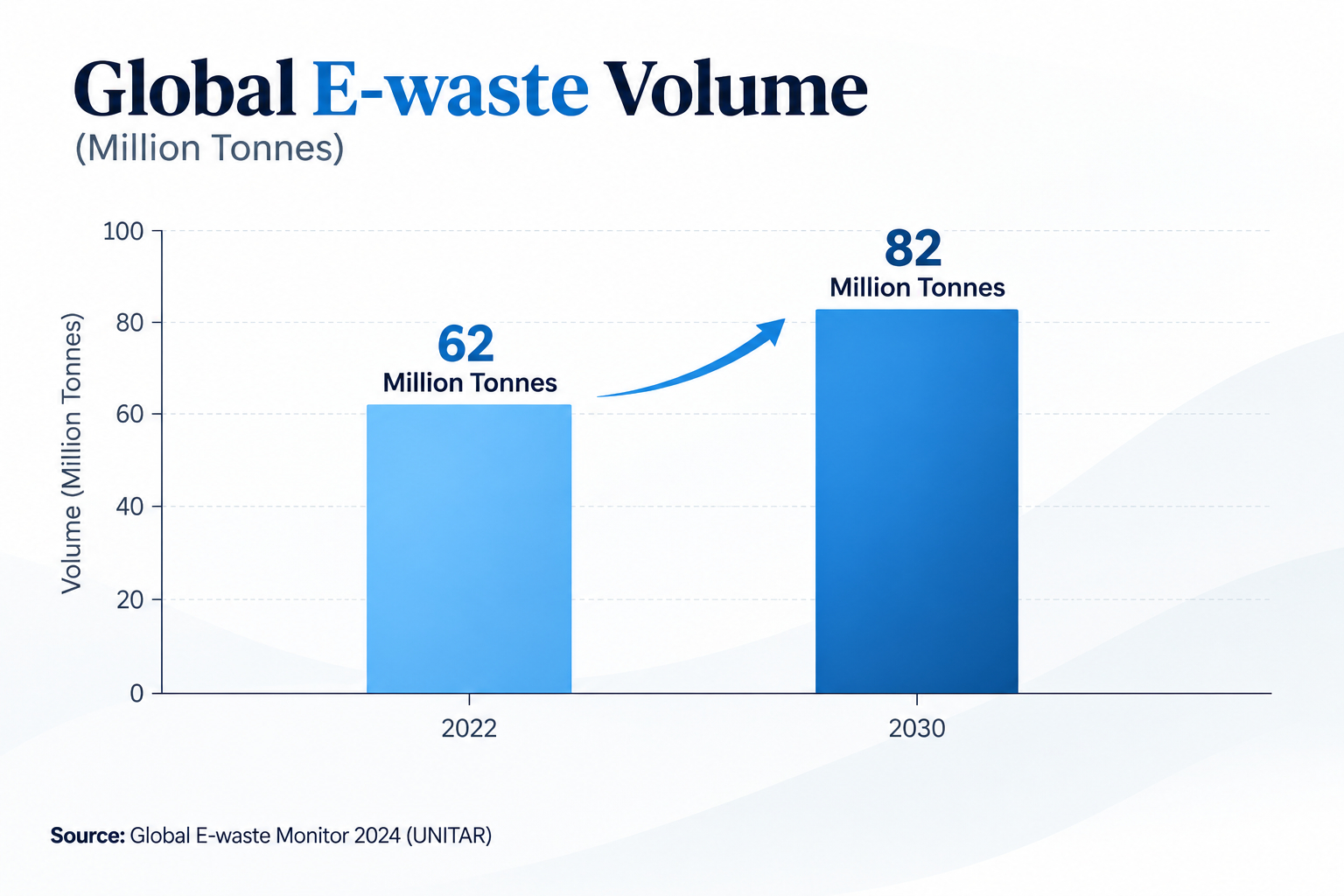
Those figures cover global e-waste, not data centers specifically. That distinction should be kept clear.
The connection to data centers is the growing amount of physical equipment required by a more hardware-intensive computing economy. Extending equipment life, finding uses for retired hardware, and recovering materials at the end of a product’s service life become more important as that economy expands.
What sustainable expansion actually requires
The data-center industry is going to continue expanding. The more useful question is how that expansion is managed. Absolute resource demand needs to be considered alongside efficiency. A lower energy or water intensity is valuable, but it does not automatically offset a rapid increase in installed capacity.
Power and water decisions also need to be looked at together. A lower-carbon electricity source can have different water implications, while a cooling system that works well in one climate may not make sense in another. Location should also be treated as an environmental decision, not only a real estate decision. Grid capacity, water availability, climate, transmission requirements, and nearby demand all influence what a new facility means for the surrounding area.
Hardware deserves the same attention. Procurement, utilization, refresh timing, refurbishment, recovery, and end-of-life treatment all affect the material side of computing infrastructure. The test for the data-center boom is therefore larger than whether each new facility is more efficient than the last. It is whether those efficiency gains can keep pace with the infrastructure being added.
That means looking at the whole system: the electricity that powers a facility, the water used to cool it, the materials needed to build and equip it, the grid and communities around it, and the hardware that eventually reaches the end of its useful life.
Digital infrastructure is not inherently incompatible with sustainability. The harder part is that its growth is happening quickly enough to make efficiency alone an incomplete measure of its environmental impact.
Editor’s Note: The opinions expressed here by the authors are their own, not those of impakter.com — Cover Photo Credit: panumas nikhomkhai.